
Stephen Toulmin (1922–2009)
Author of Wittgenstein's Vienna
About the Author
Stephen Toulmin is Henry R. Luce Professor at University of Southern California
Works by Stephen Toulmin
Associated Works
A Glorious Accident: Understanding Our Place in the Cosmic Puzzle (1993) — Contributor — 236 copies, 7 reviews
Tagged
Common Knowledge
- Canonical name
- Toulmin, Stephen
- Legal name
- Toulmin, Stephen Edelston
- Birthdate
- 1922-03-25
- Date of death
- 2009-12-04
- Gender
- male
- Education
- King's College, Cambridge (BA|1943|MA|1947|D.Phil|1948)
- Occupations
- philosopher
lecturer (Oxford)
Department Chair (Leeds)
professor - Organizations
- University of Oxford
University of Leeds
Nuffield Foundation (History of Ideas)
University of Southern California
Northwestern University
University of Chicago - Awards and honors
- Jefferson Lecture (1997)
Österreichisches Ehrenzeichen für Wissenschaft und Kunst (2006) - Relationships
- Goodfield, June (2nd wife)
- Cause of death
- heart failure
- Nationality
- UK
- Birthplace
- London, Middlesex, England, UK
- Place of death
- Los Angeles, California, USA
- Map Location
- England, UK
Members
Reviews

Set in the hot bed of ideas at the end of the nineteenth century this book covers the man at the center of philosophic discussions, Ludwig Wittgenstein. But more than that this is a work of cultural history defining the meaning of the changes abounding from the preoccupations of a society undergoing profound changes.
The arc of the books narrative takes the reader from Habsburg Vienna during the last days of empire through changes to language, culture, and philosophy. Leavened by references show more to art, music, and literature the book attempts to make a case for the intelligibility of these changes.
One reads about the impact of the thought of Sigmund Freud; the music of Arnold Schonberg; and the art of Klimt, Kokoschka, and others. If you are interested in the roots of Robert Musil's early work or the impact of the philosophy of Arthur Schopenhauer you should read this book. It is a seminal work in the history of ideas. show less
The arc of the books narrative takes the reader from Habsburg Vienna during the last days of empire through changes to language, culture, and philosophy. Leavened by references show more to art, music, and literature the book attempts to make a case for the intelligibility of these changes.
One reads about the impact of the thought of Sigmund Freud; the music of Arnold Schonberg; and the art of Klimt, Kokoschka, and others. If you are interested in the roots of Robert Musil's early work or the impact of the philosophy of Arthur Schopenhauer you should read this book. It is a seminal work in the history of ideas. show less

Quite an erudite book. The author argues for an evolutionary analysis of human thought where each discipline, culture or epoch may have its own criteria for rationality. Interesting stuff, and his analysis of the nature of scientific disciplines and scientific thought is excellent. However, I don't think the arguments quite reach the broader goals the author claims for himself, it all becomes a bit muddled especially in the final section of the book. But I did like this book and it certainly show more gave me a lot to think about for the future. As far as I could determine, the intended follow-up volumes 2 and 3 were never published. show less
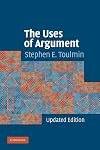
Got to page 50 or so and realized I wasn't really getting much of what was being discussed. Not impenetrable but the overall point wasn't making any impression on me.
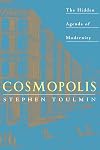
I've long been interested in how one Zeitgeist gives way to another. The modern era is arguably less humane, but it's definitely more mathematical.
Awards

You May Also Like


Associated Authors
Statistics
- Works
- 29
- Also by
- 4
- Members
- 3,211
- Popularity
- #7,968
- Rating
- 4.0
- Reviews
- 12
- ISBNs
- 120
- Languages
- 9
- Favorited
- 6