
Jim Shooter (1951–2025)
Author of Marvel Super Heroes Secret Wars
About the Author
Image credit: NY Comic-Con 2007
Copyright © 2007 Ron Hogan
Copyright © 2007 Ron Hogan
Series
Works by Jim Shooter
Marvel Treasury Edition #28, Featuring Superman and Spider-Man (1981) — Author — 40 copies, 2 reviews
DC Comics Classics Library: The Legion of Super-Heroes: The Life and Death of Ferro Lad (2009) 26 copies
Marvel Masterworks, Volume 247: The Avengers Volume 17 [#164-177 + Annual #7 + Marvel Two-in-One Annual #2] (2017) 14 copies
Marvel Masterworks, Volume 310: The Avengers Volume 21 [#217-226 + Annual #11 + Vision & Scarlet Witch #1-4] (2021) 12 copies
Marvel Super Heroes Secret Wars #3: Tempest Without, Crisis Within! (1984) — Author — 11 copies, 1 review
Marvel Masterworks, Volume 313: Ghost Rider Volume 3 [#21-35 + Marvel Premiere #28] (2021) 10 copies
Marvel Super Heroes Secret Wars part 2 (Ultimate Marvel Graphic Novel Collection issue 40) (2013) 8 copies
The Avengers, Vol. 1 #214 5 copies
Marvel Archive Edition: Marvel Super Heroes Secret Wars Gallery Edition Mike Zeck Original First Issue Cover (2025) 4 copies, 1 review
The Avengers, Vol. 1 #211 4 copies
The Avengers, Vol. 1 #217 — Author — 4 copies
The Avengers, Vol. 1 #215 4 copies
Leven in een Hel 3 copies
The Avengers, Vol. 1 #224 3 copies
Valiant Masters: Harbinger Volume 1 - Children of the Eighth Day (Valiant Masters Harbinger Hc) (2015) 3 copies
Fantastic Four [1961] #296 — Author — 3 copies
The Avengers, Vol. 1 #176 3 copies
The Avengers, Vol. 1 #220 3 copies
Legion of Super-Heroes [2005] #45 3 copies
The Avengers, Vol. 1 #213 3 copies
The Avengers, Vol. 1 #222 3 copies
The Avengers, Vol. 1 #219 3 copies
Thor, Vol. 1, # 385 3 copies
Doctor Solar, 04: Stofgoud 2 copies
The Avengers, Vol. 1 #204 2 copies
BATTLESTAR GALACTICA The New Millennium 1 Fear of Flying (Realm Press) (BATTLESTAR GALACTICA) (1999) 2 copies
Tajni ratovi 1: Bitka počinje 2 copies
Adventure Comics # 373 2 copies
Adventure Comics # 372 2 copies
Tajni ratovi 2: Uspon Doktora Duma 2 copies
Legion of Super-Heroes [2005] #41 2 copies
Legion of Super-Heroes [2005] #40 2 copies
The Avengers, Vol. 1 #164 2 copies
Legion of Super-Heroes [2005] #48 2 copies
Legion of Super-Heroes [2005] #38 2 copies
Legion of Super-Heroes [2005] #49 2 copies
The Avengers, Vol. 1 #174 2 copies
The Avengers, Vol. 1 #175 2 copies
Legion of Super-Heroes [2005] #39 2 copies
Adventure Comics # 366 2 copies
Legion of Super-Heroes [2005] #42 2 copies
Superboy [1949] #135 2 copies
Legion of Super-Heroes [2005] #43 2 copies
Legion of Super-Heroes [2005] #44 2 copies
Legion of Super-Heroes [2005] #47 2 copies
Legion of Super-Heroes [2005] #37 2 copies
Official Marvel Index to the Avengers (Vol 2), Vol. 1, No. 1 A — Editor — 2 copies
Star Brand (1986-1987) #2 1 copy
Avengers (1963-1996) #158 1 copy
The Avengers 171 (CB) 1 copy
The Avengers #188 (CB) 1 copy
The Avengers #201 (CB) 1 copy
The Avengers #202 (CB) 1 copy
The Avengers #204 (CB) 1 copy
The Avengers #211 (CB) 1 copy
The Avengers #222 (CB) 1 copy
Star Brand (1986-1987) #3 1 copy
Marvel Age #28 July 1985 1 copy
The Avengers, Vol. 1 #159 1 copy
Doctor Solar 23 1 copy
The Avengers, Vol. 1 #163 1 copy
Doctor Solar 22 1 copy
Charlemagne #0 1 copy
The Avengers Omnibus Vol. 6 1 copy
The Avengers, Vol. 1 #166 1 copy
The Avengers, Vol. 1 #167 1 copy
The Avengers, Vol. 1 #170 1 copy
The Avengers, Vol. 1 #172 1 copy
Iron Man Vol. 1 #90 1 copy
Daredevil, Vol. 1 #144 1 copy
Splatterball 1 copy
Rai (1992-1995) #0 1 copy
Fatale #4 1 copy
The Avengers, Vol. 1 #168 1 copy
The Avengers, Vol. 1 #156 1 copy
Captain Marvel, Vol. 1, #56 1 copy
Superman [1939] #290 1 copy
Superman [1939] #206 1 copy
Adventure Comics # 375 1 copy
Adventure Comics # 349 1 copy
Action Comics # 340 1 copy
Archer & Armstrong 1992 0 1 copy
The Great Grimmax 1 copy
To Battleworld and Back 1 copy
DC Special (1968) #19 — Author — 1 copy
Secret Wars II Volume 2 1 copy
Ghost Rider, Vol. 2 #27 — Author — 1 copy
Daredevil, Vol. 1 #145 1 copy
Daredevil, Vol. 1 #147 1 copy
Action Comics # 378 1 copy
Ghost Rider, Vol. 2 #23 — Author — 1 copy
Ghost Rider, Vol. 2 #24 — Author — 1 copy
Ghost Rider, Vol. 2 #25 — Author — 1 copy
Ghost Rider, Vol. 2 #26 — Author — 1 copy
Adventure Comics # 355 1 copy
Secret Wars II Volume 3 1 copy
Secret Wars II Volume 4 1 copy
Captain America [1968] #259 1 copy
Adventure Comics # 354 1 copy
Adventure Comics # 359 1 copy
Adventure Comics # 362 1 copy
Adventure Comics # 364 1 copy
Adventure Comics # 367 1 copy
Adventure Comics # 378 1 copy
Adventure Comics # 380 1 copy
Superman [1939] #195 1 copy
Superman [1939] #190 1 copy
Associated Works
The Valiant Era Collection (Reprinting Six Of The Most Sought After Valiant Comics) — Contributor — 4 copies
The Transformers 43: Crisis of Command! (Part 2: "Bumblebee Alone!") (1986) — Editor — 1 copy, 1 review
Tagged
Common Knowledge
- Legal name
- Shooter, James
- Other names
- Creddick, Paul (pseudonym)
- Birthdate
- 1951-09-27
- Date of death
- 2025-06-30
- Gender
- male
- Occupations
- comics writer
comics editor
comics executive - Organizations
- Marvel Comics (editor-in-chief)
DC Comics
Valiant Comics
Dark Horse Comics - Cause of death
- esophageal cancer
- Nationality
- USA
- Birthplace
- Pittsburgh, Pennsylvania, USA
- Associated Place (for map)
- Pennsylvania, USA
Members
Reviews

In 1986, to celebrate the 25th anniversary of the use of the name Marvel Comics, Marvel decided to launch a new line of comics, set in a completely separate fictional continuity that they called, naturally enough, the "New Universe". The idea was that the new fictional universe would be just like our Earth, right up to a specific event called the "White Event" that supposedly took place in 1986 and sparked the development of super-heroes and super-villains. Star Brand was one of the initial show more eight titles in the new continuity, and was initially written by Jim Shooter, who was the editor-in-chief at Marvel at the time it was launched. This series was intended to be the flagship title for the New Universe, and is something of a hybrid of Green Lantern, Lensman, and Superman in tone. This volume covers roughly half of the entire run of the series, from October 1986 through November 1987, with a couple of crossover issues included in which the Star Brand character featured.
The basic premise of Star Brand is pretty straightforward. Kenneth Connell is in the countryside outside of Pittsburgh riding his motorcycle and practicing stunts when he comes across an alien creature who gifts him with the "Star Brand", a tattoo-like mark that, when used properly, acts as a powerful weapon. The Brand, when activated, makes Kenneth nigh-invulnerable, super-strong, and gives him the ability to fly, even in outer space. The Brand also grants an array of other powers, mostly involving throwing energy blasts and blowing things up. Since Kenneth doesn't know the full range of powers of the Brand, the reader really doesn't either, and every now and then the writers pop out a new power when they need for Kenneth to have it. Even with the impressive array of powers of the Brand at his disposal, Kenneth is conflicted and unsure of what to do, and this is one of the central themes that runs through the entire volume. Armed with world altering (or even potentially world-ending) power, Kenneth is at a loss as to best use it, or even if he should use it at all.
Being wishy-washy seems to be one of Kenneth's central character traits. When the series opens, he is dating the beautiful blonde Barb, but also fooling around with the Debbie "the Duck" on the side. Despite his professions of love for Barb, Kenneth is afraid to commit to a stable relationship with her, and also unwilling to set "the Duck" aside, even though through much of the volume he treats Debbie awfully, exploiting her devotion to him to get his laundry done while also shoving her out the back door so Barb won't find her. Kenneth is wishy-washy about his career as well, working as an auto mechanic at an auto dealer without much thought of trying to advance his career or do anything else to improve his situation. Kenneth is, quite simply, a terrible choice to have the power of the Star Brand because he is terrible at actually making choices. It isn't that Kenneth makes bad choices, it is that he simply doesn't make choices, but rather spends his time drifting along and refusing to actually choose. The fact that there is really no reason for Kenneth's angst just makes the book a bit more tedious: Over the course of the volume, he has three attractive women pining for him. He's tall, handsome, and has a job that provides sufficient income for him to pay all of his bills and have motorcycle that he basically uses as a toy, and the only reason that he doesn't have a better job is that he basically doesn't seem to want one. Plus, he gets the power of the Star Brand handed to him at the outset of the novel. He's a mopey character who is mopey for no identifiable reason.
There is something somewhat interesting in the idea that an ordinary person could be blessed with great power and then find themselves at a loss as to what to do, but the ongoing paralysis Kenneth experiences just becomes tiresome after a while. There are nice touches where the story tries to illustrate the difficulties one might have as a super-hero - Kenneth frequently has to navigate using rivers and large landmarks while flying around, and even then he sometimes gets lost. He is confronted with problems that even his powers cannot solve, such as a child with a fatal ailment caused by the chemical plant in the town where he lives. He worries that if he reveals himself, he may be targeted by the government and forced to either serve as its agent or become a pariah who is hunted. The trouble is, these background details really amount to what should be little more than the scenery of a super-hero story, rather than the main plot, and they simply aren't enough to carry the series on their own. Much of this volume feels like the side story in a super-hero comic that fills in the pages in between the real story.
This feeling that one is reading the filler in between the real story, to a certain extent, encapsulates the New Universe as a whole. The idea behind the line of comics was that the fictional world would look "just like the world outside your window" and the stories would strive for more realism, but the net result was that the stories were kind of pedestrian and plodding. Kenneth wallows in self-doubt for far too long - essentially this entire volume - only rousing himself to action once in a while, and then only in fitful spurts. The very last story in this book is essentially an extended flashback that ends with Kenneth distraught over actually doing something to prevent the likely onset of World War III. Some of the best storylines in this volume take place when the Star Brand title crossed over with, notably Spitfire and the Troubleshooters and then later Nightmask, but these stories are mostly interesting because Kenneth basically plays second fiddle to the other heroes in them. The Spitfire crossovers are especially interesting because they show the titular characters actually taking action to try to make the world around them better and dealing with the fallout that ensues, a marked contrast to Kenneth's frequent melancholy malaise.
To a certain extent, the promise and problems that Star Brand has is reflective of the promise and problems of the New Universe series as a whole. One of the taglines used for the line was that it was just like "the world outside your window", which was kind of an interesting idea, but all too often the writers seemed to forget to add "but with super-heroes and super-villains", and that is in evidence all too frequently in this collection. Sure, Kenneth has the powers of the Star Brand, but he doesn't really use them for much, and with a tiny number of exceptions, never faces an opponent that even comes close to matching him. The only real recurring villain is the "old man" who is also the alien who originally gifted the Star Brand to Kenneth, but there seems to be no rhyme or reason to his actions: First he gives the brand to Kenneth, then tries a couple times to take it back, getting increasingly vicious in the process, but as a character he remains almost entirely opaque to the reader. The end result is that it is difficult for the reader to really care about much of what is going on in the story. The book is "the world outside your window", and not much more, and that's just not all that interesting. There was a lot to like about the premise of the series, but the execution simply left a lot to be desired.
Overall, Star Brand is an intriguing idea that had fatally flawed execution. This volume compiles a year's worth of issues of the title, and by the end it feels like essentially nothing of real consequence has taken place. The most notable difference between the beginning and the end of the book is that Kenneth has stopped dating Barb, gotten a short-term girlfriend in Switzerland killed, and is kind of in a committed relationship with the Duck. Pretty much everything else is essentially the same in the final issue of the book as it was in the opening issue of the book. In the end, Star Brand feels like a missed opportunity, just like the rest of the New Universe, with a possibly brilliant but definitely interesting premise presented in the most pedestrian manner possible.
This review has also been posted to my blog Dreaming About Other Worlds. show less
The basic premise of Star Brand is pretty straightforward. Kenneth Connell is in the countryside outside of Pittsburgh riding his motorcycle and practicing stunts when he comes across an alien creature who gifts him with the "Star Brand", a tattoo-like mark that, when used properly, acts as a powerful weapon. The Brand, when activated, makes Kenneth nigh-invulnerable, super-strong, and gives him the ability to fly, even in outer space. The Brand also grants an array of other powers, mostly involving throwing energy blasts and blowing things up. Since Kenneth doesn't know the full range of powers of the Brand, the reader really doesn't either, and every now and then the writers pop out a new power when they need for Kenneth to have it. Even with the impressive array of powers of the Brand at his disposal, Kenneth is conflicted and unsure of what to do, and this is one of the central themes that runs through the entire volume. Armed with world altering (or even potentially world-ending) power, Kenneth is at a loss as to best use it, or even if he should use it at all.
Being wishy-washy seems to be one of Kenneth's central character traits. When the series opens, he is dating the beautiful blonde Barb, but also fooling around with the Debbie "the Duck" on the side. Despite his professions of love for Barb, Kenneth is afraid to commit to a stable relationship with her, and also unwilling to set "the Duck" aside, even though through much of the volume he treats Debbie awfully, exploiting her devotion to him to get his laundry done while also shoving her out the back door so Barb won't find her. Kenneth is wishy-washy about his career as well, working as an auto mechanic at an auto dealer without much thought of trying to advance his career or do anything else to improve his situation. Kenneth is, quite simply, a terrible choice to have the power of the Star Brand because he is terrible at actually making choices. It isn't that Kenneth makes bad choices, it is that he simply doesn't make choices, but rather spends his time drifting along and refusing to actually choose. The fact that there is really no reason for Kenneth's angst just makes the book a bit more tedious: Over the course of the volume, he has three attractive women pining for him. He's tall, handsome, and has a job that provides sufficient income for him to pay all of his bills and have motorcycle that he basically uses as a toy, and the only reason that he doesn't have a better job is that he basically doesn't seem to want one. Plus, he gets the power of the Star Brand handed to him at the outset of the novel. He's a mopey character who is mopey for no identifiable reason.
There is something somewhat interesting in the idea that an ordinary person could be blessed with great power and then find themselves at a loss as to what to do, but the ongoing paralysis Kenneth experiences just becomes tiresome after a while. There are nice touches where the story tries to illustrate the difficulties one might have as a super-hero - Kenneth frequently has to navigate using rivers and large landmarks while flying around, and even then he sometimes gets lost. He is confronted with problems that even his powers cannot solve, such as a child with a fatal ailment caused by the chemical plant in the town where he lives. He worries that if he reveals himself, he may be targeted by the government and forced to either serve as its agent or become a pariah who is hunted. The trouble is, these background details really amount to what should be little more than the scenery of a super-hero story, rather than the main plot, and they simply aren't enough to carry the series on their own. Much of this volume feels like the side story in a super-hero comic that fills in the pages in between the real story.
This feeling that one is reading the filler in between the real story, to a certain extent, encapsulates the New Universe as a whole. The idea behind the line of comics was that the fictional world would look "just like the world outside your window" and the stories would strive for more realism, but the net result was that the stories were kind of pedestrian and plodding. Kenneth wallows in self-doubt for far too long - essentially this entire volume - only rousing himself to action once in a while, and then only in fitful spurts. The very last story in this book is essentially an extended flashback that ends with Kenneth distraught over actually doing something to prevent the likely onset of World War III. Some of the best storylines in this volume take place when the Star Brand title crossed over with, notably Spitfire and the Troubleshooters and then later Nightmask, but these stories are mostly interesting because Kenneth basically plays second fiddle to the other heroes in them. The Spitfire crossovers are especially interesting because they show the titular characters actually taking action to try to make the world around them better and dealing with the fallout that ensues, a marked contrast to Kenneth's frequent melancholy malaise.
To a certain extent, the promise and problems that Star Brand has is reflective of the promise and problems of the New Universe series as a whole. One of the taglines used for the line was that it was just like "the world outside your window", which was kind of an interesting idea, but all too often the writers seemed to forget to add "but with super-heroes and super-villains", and that is in evidence all too frequently in this collection. Sure, Kenneth has the powers of the Star Brand, but he doesn't really use them for much, and with a tiny number of exceptions, never faces an opponent that even comes close to matching him. The only real recurring villain is the "old man" who is also the alien who originally gifted the Star Brand to Kenneth, but there seems to be no rhyme or reason to his actions: First he gives the brand to Kenneth, then tries a couple times to take it back, getting increasingly vicious in the process, but as a character he remains almost entirely opaque to the reader. The end result is that it is difficult for the reader to really care about much of what is going on in the story. The book is "the world outside your window", and not much more, and that's just not all that interesting. There was a lot to like about the premise of the series, but the execution simply left a lot to be desired.
Overall, Star Brand is an intriguing idea that had fatally flawed execution. This volume compiles a year's worth of issues of the title, and by the end it feels like essentially nothing of real consequence has taken place. The most notable difference between the beginning and the end of the book is that Kenneth has stopped dating Barb, gotten a short-term girlfriend in Switzerland killed, and is kind of in a committed relationship with the Duck. Pretty much everything else is essentially the same in the final issue of the book as it was in the opening issue of the book. In the end, Star Brand feels like a missed opportunity, just like the rest of the New Universe, with a possibly brilliant but definitely interesting premise presented in the most pedestrian manner possible.
This review has also been posted to my blog Dreaming About Other Worlds. show less

I was introduced to (and fell in love with) the Legion of Super-Heroes via later collections like The Great Darkness Saga, The Curse, and Legion Lost. This caused me to want to dip further back and see the Legion's earlier adventures... well, hopefully some of the others are better, because this stuff is the Silver Age at its goofiest. Tons of characters, developed in piecemeal and arbitrary fashion, weird out-there plots. I know I love these characters from their later appearance, but show more they're largely interchangeable exposition-spouters here; it's like reading a Gardner Fox Justice League of America story. I want Saturn Girl to be awesome, damnit! Lots of potential, but Cary Bates and Jim Shooter aren't Paul Levitz, apparently. Mike Grell's art is fantastic, though, even if I feel a little skeevy looking at all these very well-developed teenage girls. show less
Marvel Archive Edition: Marvel Super Heroes Secret Wars Gallery Edition Mike Zeck Original First Issue Cover by Jim Shooter
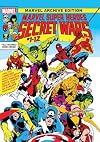
I was nine years old. I made a trade with my brother. I don’t remember what it was for—possibly cash, or a book—but I got the complete run of Secret Wars II. Heady stuff, for a nine-year-old. An omnipotent, omniscient force comes to Earth and tries to figure out the meaning of life. He gets in a bunch of fights with all the superheroes. Pretty fun. I knew there must have been a Secret Wars I, at some point, but I never read it. Until this week, at age 41. The problem with old comics is show more that the dialog and character complexity doesn’t hold up. You have to push hard to suspend your disbelief in order to think of them as real people. The offensive gender stereotypes don't help. The problem with ensemble, big crossover events is that no single character gets to have a good story, complex motivation, etc. Secret Wars is a series of reasons to have beloved heroes and villains get into big fights. Over and over. They do so on a made up planet, and there's no key character to follow and identify with. This is why I never read the original Secret Wars: what could it be but a long series of fights, with hollow, half-realized characters? I was right about all the flaws. And since the events of Secret Wars take place in a made-up, far-off never-never land, you don't get to see the characters topple the Statue of Liberty, you don't get to see real people, like yourself, reacting on the street. The story does very little to connect you to the real world. The art is really good, especially for the time. The character portraits are bad but everything else is quite good. You should read Secret Wars if you like comic book universe history, as there are lots of little things that you will enjoy knowing. There are also some very big ideas in there. The Molecular man is interesting...and he continues to be, to this day. The main reason to read Secret Wars is for Doom’s failure. It's got levels. You can sit and think about why and how he failed, and it's useful. It reminds me of an old Twilight Zone episode or a poem by Edgar Allen Poe. show less
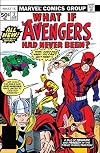
By the time What If? came along, I was well into my comic book collecting phase. I remember reading the first couple and, while I loved the concept, I found the stories didn't quite grab me like I'd hoped.
But, forty-seven years after I first paid my fifty cents to buy issue three off the local variety store's spinner rack, I can still remember taking this one home and being blown away by it. Shooter's story, and even more Gil Kane and Klaus Janson's artwork just transported me into the show more alternate history of the Avengers. And Iron Man's flawed plan hooked me.
Reading this again all these years later made me that fourteen-year-old kid again, at least for a little bit. The story, to be honest, didn't grab me quite as much this time around, maybe because I could see the set dressings, the scaffolding, and the lights behind the production more this time around. But Kane and Janson's art still held every little bit of magic that it had the first time.
All these years later, I still don't think I've read a better What If story. show less
But, forty-seven years after I first paid my fifty cents to buy issue three off the local variety store's spinner rack, I can still remember taking this one home and being blown away by it. Shooter's story, and even more Gil Kane and Klaus Janson's artwork just transported me into the show more alternate history of the Avengers. And Iron Man's flawed plan hooked me.
Reading this again all these years later made me that fourteen-year-old kid again, at least for a little bit. The story, to be honest, didn't grab me quite as much this time around, maybe because I could see the set dressings, the scaffolding, and the lights behind the production more this time around. But Kane and Janson's art still held every little bit of magic that it had the first time.
All these years later, I still don't think I've read a better What If story. show less
Lists
Awards


You May Also Like


Associated Authors
Statistics
- Works
- 323
- Also by
- 34
- Members
- 2,451
- Popularity
- #10,463
- Rating
- 3.6
- Reviews
- 57
- ISBNs
- 133
- Languages
- 13
- Favorited
- 3
