
Harry Stephen Keeler (1890–1967)
Author of The Riddle of the Traveling Skull
About the Author
Image credit: From http://site.xavier.edu/polt/keeler/keeler.jpg
Series
Works by Harry Stephen Keeler
10 hours: A mystery novel 6 copies
The Iron Ring 6 copies
By third degree 2 copies
The Magic Eardrums 2 copies
El caso del trapero enjoyado 2 copies
The Monocled Monster 2 copies
Find actor Hart : a mystery novel 2 copies
Kats I have known 2 copies
The Gallows Waits, My Lord 1 copy
La calle de los mil ojos 1 copy
Una versión del Beowulf 1 copy
Thieves' Nights 1 copy
El misterioso señor Yo 1 copy
El caso Jaarvik 1 copy
28 sospechosos 1 copy
El testamento extraño 1 copy
Ladrones de circos 1 copy
Las lágrimas de Cleopatra 1 copy
El hombre que cambió de piel 1 copy
El cubo carmesí 1 copy
Thieves’ Night 1 copy
The Case of the Ivory Arrow 1 copy
Murder in the mills 1 copy
The Flyer Holdup 1 copy
Hangman's Night 1 copy
10 Story Book July 1934 1 copy
Find Actor Hart 1 copy
Matilda Hunter Murder 1 copy
The Six From Nowhere TPB 1 copy
The Black Mailer 1 copy
The 16 Beans 1 copy
On Webwork 1 copy
Las gafas del sr. Cagliostro 1 copy
Associated Works
The Man Who Found Zero: Early Science Fiction and Weird Fantasy from The Black Cat, 1896-1915 (2011) — Contributor — 5 copies, 1 review
Tagged
Common Knowledge
- Birthdate
- 1890-11-03
- Date of death
- 1967-01-22
- Gender
- male
- Occupations
- novelist
- Nationality
- USA
- Birthplace
- Chicago, Illinois, USA
- Places of residence
- Chicago, Illinois, USA
- Associated Place (for map)
- Chicago, Illinois, USA
Members
Reviews

La novela comienza muy a lo Keeler. Al Lipke pone un anuncio en un periódico de Chicago en el que busca a 1200 hombres , con maletín, para media hora de faena a cierta hora exacta de la mañana. Se encuentra hospedado en un hotel de Nueva York, donde también sucede algo atípico, ya que se dispone a hacer una serie de entrevistas a personas que sepan realizar tareas circenses únicas. Sin embargo la historia va por otros lares en sucesivos capítulos, ya que al abogado David Crosby, el show more protagonista, va a defender el caso de su novia, Lindell Trent, acusada de robo. Y esto no es más que el principio de una serie de sucesos, enredos y coincidencias más que increíbles.
‘La trama asombrosa’ (The Amazing Web, 1921), del genial escritor Harry Stephen Keeler, empieza muy bien, para hacerse un tanto farragosa durante los juicios. Eso sí, Keeler sabe hacerlo fantásticamente y en ningún momento pierdes el interés. Pero donde de verdad se pone bien la novela es en su tercio final, donde todas las piezas que el escritor ha ido enseñándote empiezan a encajar. Lo dicho, no se hace pesada, aunque quizás le sobran páginas. show less
‘La trama asombrosa’ (The Amazing Web, 1921), del genial escritor Harry Stephen Keeler, empieza muy bien, para hacerse un tanto farragosa durante los juicios. Eso sí, Keeler sabe hacerlo fantásticamente y en ningún momento pierdes el interés. Pero donde de verdad se pone bien la novela es en su tercio final, donde todas las piezas que el escritor ha ido enseñándote empiezan a encajar. Lo dicho, no se hace pesada, aunque quizás le sobran páginas. show less
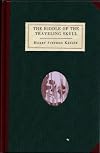
Until I read this book, I never understood the phrase, “so bad it’s good.” What an absurd phrase! Except that in Keeler’s case, it’s true, and I’ll go one further: “so bad it’s insanely brilliant.” So bad that you can almost see the author winking at you, so bad that it becomes a sort of metafictional commentary on the mystery novels of the time. As the author assures us (through the mouth of one of his characters) in the last chapter of the book, “To tell you the truth, show more I—I really wanted to show you how easy it is to—to construct dramatic fiction plot—what a racket these damned fictioneers have!—so that never again will you pay $2.00 for a mystery novel.”
Keeler’s prose is bad. The writing is riddled with ridiculously self-conscious similes and metaphors. His dialects are insane. “Unt I know dot you two don’t zee dot your bags iss now geshifted, mid dot car uf ours now going der odder vay…,” states the German tram conductor. Indeed. The narrative tends to circle back on itself drunkenly as the protagonist goes off on tangents, then lurches back to the beginning, or runs around telling friends in great detail about events that have already been narrated to the reader. The characters include Philodexter Maxellus, Ichabod Chang, and Sophie Kratzenschneiderwumpel (the woman with the “world’s longest name,” who—spoiler alert!—marries the man with the world’s shortest name)—oh, and Legga the Human Spider.
If the plot seems to contain a number of arbitrary and tenuously relevant events, one may be interested to know that this novel is an example of Keeler’s “webwork” fiction. That is, he would cut out interesting newspaper articles, throw them in a pile, pick out a fistful at random and try to tie them all together. The story lurches along until three-quarters of the way through the novel, the protagonist offers an explanation of the situation that is, if somewhat lacking in plausibility, at least neat and rational. Mystery solved, right? Wrong. In the last quarter of the book, Keeler gleefully tears apart that conclusion in favor of a crazy web of extraordinarily unlikely coincidences that has the reader scratching his or her head until the final sentence—and even then s/he is left screaming, “What? What?!” I won’t spoil the ending, but trust me, it’s, well, avant-garde.
Now, if I’ve made the novel sound so bad that you’re about to strike it from your wishlist, let me assure you: I have rarely had so much fun reading a book. My husband and I read this novel aloud to each other, guffawing all the way through. We came away quoting, “Life! What a tangle it is, isn’t it? Gott! People—objects—all bound together—in all sorts of odd relationships!” I urge you to read Paul Collins’s masterful introduction before beginning, as it frames the book perfectly. (I assume the reader will be picking up the widely available McSweeney’s Collins Library edition. The Riddle of the Traveling Skull and almost all of Keeler’s other works are also published by a small press called Ramble House.)
Caveat lector: this book is extremely politically incorrect. show less
Keeler’s prose is bad. The writing is riddled with ridiculously self-conscious similes and metaphors. His dialects are insane. “Unt I know dot you two don’t zee dot your bags iss now geshifted, mid dot car uf ours now going der odder vay…,” states the German tram conductor. Indeed. The narrative tends to circle back on itself drunkenly as the protagonist goes off on tangents, then lurches back to the beginning, or runs around telling friends in great detail about events that have already been narrated to the reader. The characters include Philodexter Maxellus, Ichabod Chang, and Sophie Kratzenschneiderwumpel (the woman with the “world’s longest name,” who—spoiler alert!—marries the man with the world’s shortest name)—oh, and Legga the Human Spider.
If the plot seems to contain a number of arbitrary and tenuously relevant events, one may be interested to know that this novel is an example of Keeler’s “webwork” fiction. That is, he would cut out interesting newspaper articles, throw them in a pile, pick out a fistful at random and try to tie them all together. The story lurches along until three-quarters of the way through the novel, the protagonist offers an explanation of the situation that is, if somewhat lacking in plausibility, at least neat and rational. Mystery solved, right? Wrong. In the last quarter of the book, Keeler gleefully tears apart that conclusion in favor of a crazy web of extraordinarily unlikely coincidences that has the reader scratching his or her head until the final sentence—and even then s/he is left screaming, “What? What?!” I won’t spoil the ending, but trust me, it’s, well, avant-garde.
Now, if I’ve made the novel sound so bad that you’re about to strike it from your wishlist, let me assure you: I have rarely had so much fun reading a book. My husband and I read this novel aloud to each other, guffawing all the way through. We came away quoting, “Life! What a tangle it is, isn’t it? Gott! People—objects—all bound together—in all sorts of odd relationships!” I urge you to read Paul Collins’s masterful introduction before beginning, as it frames the book perfectly. (I assume the reader will be picking up the widely available McSweeney’s Collins Library edition. The Riddle of the Traveling Skull and almost all of Keeler’s other works are also published by a small press called Ramble House.)
Caveat lector: this book is extremely politically incorrect. show less

How do you go about rating a thing like this? Was HSK a genius, or a loon? The answer is yes. I get the impression most folks consider the "Marceau Case" tetralogy to be HSK's 'masterwork' but since this quartet of books is the one I started with, it has a permanent place in my heart as my entry point to this very VERY strange fictional world. Suffice to say that you don't get the usual stuff from Keeler novels. You get other things. Lots of other things. Probably more of these other things show more (coincidences, unlikelinesses, unnameables) than you ever thought could be dished up by someone who seems to have considered himself a writer of fiction. Whether the time spent with all this is worth it for you is entirely ... up to you. show less
‘El caso de la Mujer Transparente’, del fabuloso y desconcertante escritor Harry Stephen Keeler, comienza de forma anodina, presentándonos a Helmon Hobersteed, jefe de la Sección de Investigación de Homicidios del Departamento de Policía de Chicago, preocupado por su aspecto y sobre todo por su edad. Su día no ha empezado nada bien, con broncas con su mujer y su jefe. Entonces recibe una llamada urgente de la dueña de una casa de huéspedes, informándole de un posible asesinato: show more espiando por el ojo de la cerradura ha observado a una de sus inquilinas en una caja de vapor, artilugio este del que sólo asoman la cabeza y los pies, dando lugar a una especie de sauna en miniatura. ¿Por qué sospecha de un crimen? Pues porque lleva horas sin moverse de dicho lugar. Esto es sólo la premisa, el comienzo de un caso extraordinario y memorable. La trama se embrolla de manera increíble y te lleva hasta un final sorprendente.
Estamos ante un Keeler en estado puro, con una historia intrigante y enrevesada, con casualidades únicas, que funciona como un mecanismo de relojería. Sencillamente magnífica. show less
Estamos ante un Keeler en estado puro, con una historia intrigante y enrevesada, con casualidades únicas, que funciona como un mecanismo de relojería. Sencillamente magnífica. show less
Lists
You May Also Like


Associated Authors
Statistics
- Works
- 184
- Also by
- 6
- Members
- 943
- Popularity
- #27,255
- Rating
- 3.6
- Reviews
- 50
- ISBNs
- 110
- Languages
- 2
- Favorited
- 8