
Matt Alt
Author of Yokai Attack!: The Japanese Monster Survival Guide
Series
Works by Matt Alt
Japandemonium Illustrated: The Yokai Encyclopedias of Toriyama Sekien (2017) — Translator — 63 copies, 1 review
Manga, Arcades y Karaokes : cómo la cultura pop japonesa reinventó el mundo (2022) 3 copies, 1 review
Associated Works
Tagged
Common Knowledge
- Canonical name
- Alt, Matt
- Legal name
- Alt, Matthew
- Birthdate
- 1973
- Gender
- male
- Occupations
- translator
- Organizations
- AltJapan Co., Ltd.
- Relationships
- Yoda, Hiroko (wife)
- Nationality
- USA
- Places of residence
- Tokyo, Japan
- Associated Place (for map)
- Tokyo, Japan
Members
Reviews
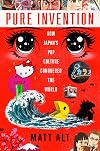
Достаточно побывать в Японии лишь раз, чтобы понять, что это просто другой мир. Иногда даже ездить не надо, чтобы в этом удостовериться: издавна достигающие нас оттуда протуберанцами вещи и явления кажутся настолько необычными и революционными, как будто с другой show more планеты. В позапрошлом веке еще европейцев будь здоров цепляло – Ван Гог после знакомства с искусством Хокусая и Утамаро позабросил работу в студии и рванул на пленэр в поисках “японского света”. Не стоит хихикать по поводу столь импульсивной реакции голландца – многие из нас тоже недавно вняли голосу японских сирен и стали адептами нового поветрия, радостно выкидывая из гардероба всё, что не по «Мари Кондо».
«Бомбардировка» японщиной успешно продолжилась и в XX веке, и в XXI-ом. Если вам удалось увернуться от «старой» эстетики – каллиграфия, самураи/ниндзя, единоборства, бонсай, чайная церемония, дзэн-коаны, оригами в какой-то мере, то то, что обрушила на нас Империя за последние лет семьдесят, вас точно зацепило. (И я ни за что, не поверю, что вас временами не тянет за раменом или суши).
Мэтт Олт, писатель и переводчик, давно живущий в да-да Стране Восходящего Сонца (а вот так!), решил пролить свет на феномен всего самого приставучего, что извергла на нас Япония после Второй мировой, и написал о том, как японская поп-культура покорила мир (Pure Invention: How Japan's Pop Culture Conquered the World).
После той войны Япония представляла собой невпечатляющее зрелище: значительно покоцанная американцами – как бомбами, так и психологически. Всё американское было Лучшим. Японское производство ещё долгое время было чем-то вроде нынешнего бангладешского. Бродяга Раджа Капура в «Господине 420» (фильм 1955 г.) распевает «Башмаки на мне японские». Т.е. японцы экспортировали обувь в Индию....Даже сейчас, в 2020, я не знаю, куда падать ниже, чем экспортировать чоботы в Индию.
Но, как показывает Олт, японцы уверенно отталкивались ото дна. Первым в череде примеров японской смётки и несгибаемости появляется г-н Косуге, еще до войны имевший бизнес на детских игрушках. После нее он решил сделать мини-копии вездесущих джипов американских оккупантов. Более того он преуспел в нанесении чувствительного ответного удара:
"Обычно производители игрушек ориентировались на каталоги и рекламные материалы, выпущенные автопроизводителями, для разработки своих игрушек. Это был не вариантом для военной техники. Поэтому мастер Косуге воспользовался единственным инструментом, который был у него с собой, чтобы снять мерки, - банным полотенцем. Вытянув его, чтобы запечатлеть примерные размеры шасси джипа, он поспешил домой, чтобы нарисовать чертеж. Он повторял этот процесс с полотенцем в последующие вечера, чтобы усовершенствовать дизайн. Вскоре все чертежи были готовы.
Почти сразу же, как они появились на полках американских магазинов, подробно выполненные и недорогие японские автомобили начали вытеснять модели местного производства. К концу пятидесятых годов Япония превратилась в крупнейшего в мире экспортера игрушек, производя целых три четверти игрушек, потребляемых по всему миру (Даже всеамериканский идол Барби на самом деле был сделан на японской фабрике). Мировые производители игрушек не могли конкурировать с великолепной высококвалифицированной рабочей силой, трудившихся за крайне низкую по западным стандартам зарплату. В 1959 году разъяренные британские игрушечные компании ответили запретом японских игрушек..."
Если бы с остальной продукцией было так легко. Плеер Walkman и компьютерные игрушки Space Invaders, Pac-Man и Donkey Kong порвали конкурентов. Gameboy и приставки их добили. А покемоны, которые родом из Годзиллы, пульверизировали в атомную пыль. Какими-то волнами японских “напастей” мир уже переболел – караоке, тамагочи – но новых “штаммов” других жадно ждет: фильмы Миядзаки, например, или ещё чего-нибудь эдакого от создателей Hello Kitty (яичко Gudetama просто прекрасно легло на душу). И, к слову, об аниме:
«В 1972 году голливудский журнал Variety пренебрежительно отозвался об новинке - аниме для взрослых "Клеопатра: королева секса" - аниматора Осаму Тэдзуки, заявив, что «трудно представить, чтобы кто-то возбудится от обнаженной груди мультяшного персонажа. "В 2018 году американский сайт Pornhub объявил, что “хентай” – второй по популярности поисковый запрос в течение двух лет подряд…”
P.S. iPhone, запущенный в 2007, не имел успеха в Японии до 2011, пока Apple не внедрила «эмодзи»...т.е. не сделала «Ку!». show less
«Бомбардировка» японщиной успешно продолжилась и в XX веке, и в XXI-ом. Если вам удалось увернуться от «старой» эстетики – каллиграфия, самураи/ниндзя, единоборства, бонсай, чайная церемония, дзэн-коаны, оригами в какой-то мере, то то, что обрушила на нас Империя за последние лет семьдесят, вас точно зацепило. (И я ни за что, не поверю, что вас временами не тянет за раменом или суши).
Мэтт Олт, писатель и переводчик, давно живущий в да-да Стране Восходящего Сонца (а вот так!), решил пролить свет на феномен всего самого приставучего, что извергла на нас Япония после Второй мировой, и написал о том, как японская поп-культура покорила мир (Pure Invention: How Japan's Pop Culture Conquered the World).
После той войны Япония представляла собой невпечатляющее зрелище: значительно покоцанная американцами – как бомбами, так и психологически. Всё американское было Лучшим. Японское производство ещё долгое время было чем-то вроде нынешнего бангладешского. Бродяга Раджа Капура в «Господине 420» (фильм 1955 г.) распевает «Башмаки на мне японские». Т.е. японцы экспортировали обувь в Индию....Даже сейчас, в 2020, я не знаю, куда падать ниже, чем экспортировать чоботы в Индию.
Но, как показывает Олт, японцы уверенно отталкивались ото дна. Первым в череде примеров японской смётки и несгибаемости появляется г-н Косуге, еще до войны имевший бизнес на детских игрушках. После нее он решил сделать мини-копии вездесущих джипов американских оккупантов. Более того он преуспел в нанесении чувствительного ответного удара:
"Обычно производители игрушек ориентировались на каталоги и рекламные материалы, выпущенные автопроизводителями, для разработки своих игрушек. Это был не вариантом для военной техники. Поэтому мастер Косуге воспользовался единственным инструментом, который был у него с собой, чтобы снять мерки, - банным полотенцем. Вытянув его, чтобы запечатлеть примерные размеры шасси джипа, он поспешил домой, чтобы нарисовать чертеж. Он повторял этот процесс с полотенцем в последующие вечера, чтобы усовершенствовать дизайн. Вскоре все чертежи были готовы.
Почти сразу же, как они появились на полках американских магазинов, подробно выполненные и недорогие японские автомобили начали вытеснять модели местного производства. К концу пятидесятых годов Япония превратилась в крупнейшего в мире экспортера игрушек, производя целых три четверти игрушек, потребляемых по всему миру (Даже всеамериканский идол Барби на самом деле был сделан на японской фабрике). Мировые производители игрушек не могли конкурировать с великолепной высококвалифицированной рабочей силой, трудившихся за крайне низкую по западным стандартам зарплату. В 1959 году разъяренные британские игрушечные компании ответили запретом японских игрушек..."
Если бы с остальной продукцией было так легко. Плеер Walkman и компьютерные игрушки Space Invaders, Pac-Man и Donkey Kong порвали конкурентов. Gameboy и приставки их добили. А покемоны, которые родом из Годзиллы, пульверизировали в атомную пыль. Какими-то волнами японских “напастей” мир уже переболел – караоке, тамагочи – но новых “штаммов” других жадно ждет: фильмы Миядзаки, например, или ещё чего-нибудь эдакого от создателей Hello Kitty (яичко Gudetama просто прекрасно легло на душу). И, к слову, об аниме:
«В 1972 году голливудский журнал Variety пренебрежительно отозвался об новинке - аниме для взрослых "Клеопатра: королева секса" - аниматора Осаму Тэдзуки, заявив, что «трудно представить, чтобы кто-то возбудится от обнаженной груди мультяшного персонажа. "В 2018 году американский сайт Pornhub объявил, что “хентай” – второй по популярности поисковый запрос в течение двух лет подряд…”
P.S. iPhone, запущенный в 2007, не имел успеха в Японии до 2011, пока Apple не внедрила «эмодзи»...т.е. не сделала «Ку!». show less

Ninja Attack!: True Tales of Assassins, Samurai, and Outlaws is the second Attack! book by wife and husband team Hiroko Yoda and Matt Alt, although this time they are working with a different illustrator, Yutaka Kondo. I read and thoroughly enjoyed the first Attack! guide, Yokai Attack!, finding it to be both entertaining and informative. In fact, I liked Yokai Attack! so well that I was immediately interested in Ninja Attack!, first published by Kodansha International in 2010. While Yokai show more Attack! looked at traditional Japanese creatures from folklore and urban legend, Ninja Attack! primarily focuses on real-life figures from Japanese history. As is explained in the books foreword, "Actual, historical ninja are fascinating enough subjects without needing to muddy the waters with fantasy." Yoda and Alt go on to prove that to be true.
Like Yokai Attack!, Ninja Attack! is organized thematically as opposed to chronologically which might be expected with a book dealing with history. Ninja Attack! features thirty-one important or notable historical figures divided into six groups: "Ninja's Ninja," those who served as role models, epitomizing what it means to be a ninja; "Ninja Gone Bad," which is just what it sounds like; "Ninja Magic," those that seem supernatural in their abilities; "Ninja Rivals," samurai and lawmen who interacted with ninja; "Ninja Masters," those who made good use of and employed ninja; and "Ninja Destroyer," which is pretty much just Oda Nobunaga. Additional information and fun facts are given throughout the book in the form of sidebars, sections called "The Illustrated Ninja," in which the authors talk about ninja and ninjutsu more generally, and a brief history of Japan. A glossary, bibliography, and index are also provided, as well as a foreword and an "About This Book" section.
Although there is some variation, most entries in Ninja Attack! consist of five major parts: a full-page, color illustration; a quick fact sheet about the person; a section called "The Man" (or "The Woman" where appropriate), which is a brief biography or introduction of sorts; a section called "The Moment of Glory" which describes an exploit for which the person is known; and a section called "The End" which explains how things ultimately turn out. Some entries have additional sections and in a few cases may be missing some of the ones just listed. One of my few complaints about Yokai Attack! was that the color pages were dropped partway through the book. So, I was very happy to see that this was not the case with Ninja Attack!, which continues to alternate between color and black and white pages from beginning to end.
As much as I loved Yokai Attack!, I think I enjoyed Ninja Attack! even more. The very informal, conversational tone that Yoda and Alt adopt make the book extremely approachable. Even readers who don't consider themselves history buffs should find Ninja Attack! interesting and probably won't be scared off. Readers who already know some Japanese history will most likely recognize a number of the people mentioned, but there were plenty who at least I was previously unfamiliar with. A few important fictional ninja are also included in the book, but for the most part Ninja Attack! focuses on historical figures who are known or are believed to have existed, exploring the truth behind the myths and legends that surround ninja even today. Ninja Attack! isn't the definitive source for its subject area, but it makes a fantastic introduction. Ninja Attack! is lighthearted, thoroughly engaging, and very informative. I wouldn't hesitate to recommend the book.
Experiments in Manga show less
Like Yokai Attack!, Ninja Attack! is organized thematically as opposed to chronologically which might be expected with a book dealing with history. Ninja Attack! features thirty-one important or notable historical figures divided into six groups: "Ninja's Ninja," those who served as role models, epitomizing what it means to be a ninja; "Ninja Gone Bad," which is just what it sounds like; "Ninja Magic," those that seem supernatural in their abilities; "Ninja Rivals," samurai and lawmen who interacted with ninja; "Ninja Masters," those who made good use of and employed ninja; and "Ninja Destroyer," which is pretty much just Oda Nobunaga. Additional information and fun facts are given throughout the book in the form of sidebars, sections called "The Illustrated Ninja," in which the authors talk about ninja and ninjutsu more generally, and a brief history of Japan. A glossary, bibliography, and index are also provided, as well as a foreword and an "About This Book" section.
Although there is some variation, most entries in Ninja Attack! consist of five major parts: a full-page, color illustration; a quick fact sheet about the person; a section called "The Man" (or "The Woman" where appropriate), which is a brief biography or introduction of sorts; a section called "The Moment of Glory" which describes an exploit for which the person is known; and a section called "The End" which explains how things ultimately turn out. Some entries have additional sections and in a few cases may be missing some of the ones just listed. One of my few complaints about Yokai Attack! was that the color pages were dropped partway through the book. So, I was very happy to see that this was not the case with Ninja Attack!, which continues to alternate between color and black and white pages from beginning to end.
As much as I loved Yokai Attack!, I think I enjoyed Ninja Attack! even more. The very informal, conversational tone that Yoda and Alt adopt make the book extremely approachable. Even readers who don't consider themselves history buffs should find Ninja Attack! interesting and probably won't be scared off. Readers who already know some Japanese history will most likely recognize a number of the people mentioned, but there were plenty who at least I was previously unfamiliar with. A few important fictional ninja are also included in the book, but for the most part Ninja Attack! focuses on historical figures who are known or are believed to have existed, exploring the truth behind the myths and legends that surround ninja even today. Ninja Attack! isn't the definitive source for its subject area, but it makes a fantastic introduction. Ninja Attack! is lighthearted, thoroughly engaging, and very informative. I wouldn't hesitate to recommend the book.
Experiments in Manga show less
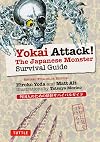
Hiroko Yoda and Matt Alt's Yokai Attack!: The Japanese Monster Survival Guide is one of the primary reasons I have become increasingly interested in yokai and Japan's supernatural heritage. The book was first published by Kodansha International in 2008, going out of print with the unfortunate demise of its publisher. I was thrilled to learn that Tuttle would be publishing a revised edition of Yokai Attack! in 2012, completely in color with more pages, more yokai, and more illustrations by show more the book's artist Tatsuya Morino. I was even more delighted when Alt arranged to have a review copy of the new edition of Yokai Attack! sent to me by Tuttle. It makes me incredibly happy that Yokai Attack!, the first book in Yoda and Alt's Attack! series (all of which I love), is available once again. And the new edition is even better than the first.
Traditionally, books of yokai lore are organized by the types of places that different yokai are generally found (mountains, bodies of water, households, and so on.) Yokai Attack! takes a different approach to classifying yokai, arranging them and their respective chapters by personality: "Ferocious Fiends," "Gruesome Gourmets," Annoying Neighbors," "The Sexy and the Slimy," and "The Wimps." (I think this is a great way to introduce yokai to an audience which may be unfamiliar with them.) Each yokai entry includes useful information such as what the yokai look like, their history and habits, and how to survive an attack or avoid an encounter among many other fun facts. Every yokai included in the guide is illustrated by Morino and many entries are also accompanied by artwork from more traditional sources. Yokai Attack! also includes a preface, a glossary of yokai terminology, a list of resources and recommended reading and viewing, and an index listing the yokai covered in the book in alphabetical order.
Probably my favorite thing about the new edition of Yokai Attack! is the fact that every single page is in full color. The volume simply looks great. I'm particularly pleased to be able to see all of Morino's artwork in color this time around--it leaves much more of an impression in color than it does in greyscale. I didn't realize it when I was reading Yokai Attack! for the first time, but Morino was actually an assistant to Shiegeru Mizuki, an influential mangaka who was particularly well known for his yokai stories. Mizuki's influence on Morino's artwork can bee seen in Yokai Attack!, making Morino an ideal choice for the guide's artist. The other great thing about the revised edition of Yokai Attack! is that it includes more yokai than the original, adding entries for te-no-me (which I hadn't read about before), tsuchi-gumo, and yuki-onna (which I was more familiar with.) This brings the total number of yokai addressed in detail in Yokai Attack! to forty-nine.
Yokai Attack! is a fantastic resource and one of the very few books available on the subject of yokai in English. Yoda and Alt's approach is both entertaining and informative. Yokai Attack! is a collection of conventional wisdom; most Japanese would probably be familiar with the creatures and stories it contains. However, the guide is written in a style that is accessible for readers who have no previous knowledge of yokai. At the same time, the guide is still engaging for those who do. I particularly appreciate the attention that the authors give to the cultural and historical influences that yokai have had on Japan. It is utterly fascinating stuff. Having previously read Yoaki Attack! and subsequently other books about yokai, I can safely say that it is one of the best and most approachable introductions to yokai available in English. This is even more true of the revised edition of Yokai Attack!. I enjoyed reading it even more than I did the original.
Experiments in Manga show less
Traditionally, books of yokai lore are organized by the types of places that different yokai are generally found (mountains, bodies of water, households, and so on.) Yokai Attack! takes a different approach to classifying yokai, arranging them and their respective chapters by personality: "Ferocious Fiends," "Gruesome Gourmets," Annoying Neighbors," "The Sexy and the Slimy," and "The Wimps." (I think this is a great way to introduce yokai to an audience which may be unfamiliar with them.) Each yokai entry includes useful information such as what the yokai look like, their history and habits, and how to survive an attack or avoid an encounter among many other fun facts. Every yokai included in the guide is illustrated by Morino and many entries are also accompanied by artwork from more traditional sources. Yokai Attack! also includes a preface, a glossary of yokai terminology, a list of resources and recommended reading and viewing, and an index listing the yokai covered in the book in alphabetical order.
Probably my favorite thing about the new edition of Yokai Attack! is the fact that every single page is in full color. The volume simply looks great. I'm particularly pleased to be able to see all of Morino's artwork in color this time around--it leaves much more of an impression in color than it does in greyscale. I didn't realize it when I was reading Yokai Attack! for the first time, but Morino was actually an assistant to Shiegeru Mizuki, an influential mangaka who was particularly well known for his yokai stories. Mizuki's influence on Morino's artwork can bee seen in Yokai Attack!, making Morino an ideal choice for the guide's artist. The other great thing about the revised edition of Yokai Attack! is that it includes more yokai than the original, adding entries for te-no-me (which I hadn't read about before), tsuchi-gumo, and yuki-onna (which I was more familiar with.) This brings the total number of yokai addressed in detail in Yokai Attack! to forty-nine.
Yokai Attack! is a fantastic resource and one of the very few books available on the subject of yokai in English. Yoda and Alt's approach is both entertaining and informative. Yokai Attack! is a collection of conventional wisdom; most Japanese would probably be familiar with the creatures and stories it contains. However, the guide is written in a style that is accessible for readers who have no previous knowledge of yokai. At the same time, the guide is still engaging for those who do. I particularly appreciate the attention that the authors give to the cultural and historical influences that yokai have had on Japan. It is utterly fascinating stuff. Having previously read Yoaki Attack! and subsequently other books about yokai, I can safely say that it is one of the best and most approachable introductions to yokai available in English. This is even more true of the revised edition of Yokai Attack!. I enjoyed reading it even more than I did the original.
Experiments in Manga show less
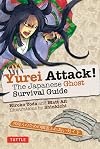
This non fiction book is a collection of information about Japanese ghosts. It profiles each ghost individually, as well as profiles of haunted places. Each ghost/place gets it's own 4 page section. The book is beautifully illustrated, with amazing original drawings by Shinkichi, and photographs of historical artwork featuring ghosts. Shinkichi's drawings were my favorite part of the book.
Because of the format, this book is great for reading in small doses as time allows. The stories of the show more ghosts were interesting, but after awhile, began to get a little repetitive.
I think anyone interested in ghosts, and Japanese ghosts in particular, will find something of interest in this book. show less
Because of the format, this book is great for reading in small doses as time allows. The stories of the show more ghosts were interesting, but after awhile, began to get a little repetitive.
I think anyone interested in ghosts, and Japanese ghosts in particular, will find something of interest in this book. show less
Lists
Asia (1)
You May Also Like


Associated Authors
Statistics
- Works
- 12
- Also by
- 2
- Members
- 809
- Popularity
- #31,537
- Rating
- 4.1
- Reviews
- 15
- ISBNs
- 31
- Languages
- 3