
Mimi Sheraton (1926–2023)
Author of The German Cookbook: A Complete Guide to Mastering Authentic German Cooking
About the Author
Mimi Sheraton is a former New York Times restaurant critic who now free-lances for The New York Times, Travel & Leisure, and other magazines. Her cookbook The Whole World Loves chicken Soup won both the IACP Julia Child Award and the James Beard Award. She lives in New York City. (Bowker Author show more Biography) show less
Image credit: Uncredited photo found at topnews.us
Series
Works by Mimi Sheraton
Associated Works
Choice Cuts: A Savory Selection of Food Writing from Around the World and Throughout History (2002) — Contributor — 368 copies, 2 reviews
Leave Me Alone with the Recipes: The Life, Art, and Cookbook of Cipe Pineles (2017) — Contributor — 53 copies, 2 reviews
Food Tales: A Literary Menu of Mouthwatering Masterpieces (1992) — Introduction, some editions — 41 copies, 1 review
Ethnic Chicago Cookbook: Ethnic-Inspired Recipes from the Pages of The Chicago Tribune (1998) — Contributor — 15 copies
Food and the memory : proceedings of the Oxford Symposium on Food and Cookery, 2000 (2001) — Contributor — 9 copies
Tagged
Common Knowledge
- Other names
- Solomon, Miriam (birth name)
- Birthdate
- 1926-02-10
- Date of death
- 2023-04-06
- Gender
- female
- Education
- Midwood High School
New York University School of Commerce
New York School of Interior Design - Occupations
- Food critic
- Nationality
- USA
- Birthplace
- Brooklyn, New York, USA
- Places of residence
- New York, New York, USA
- Place of death
- Greenwich Village, New York, USA
- Associated Place (for map)
- New York, USA
Members
Reviews

I read this, bit by bit, at the kitchen table while enjoying (?) solitary meals. It is a wonderful reminiscence, and evocation of a time and place -- rising middle-class urban Jewish life after WW II. The recipes are excellent, and the food delicious -- but the time and fussing it takes to prepare them! It is a chronicle of a life in service to the consumption of food by others, leading to a perhaps unsavory mix of subservience and domination, love and guilt. But there are pleasures, too, in show more succumbing to the comfort of a Jewish mother. show less
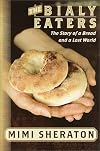
I grew up with bialys in New York City. Places that sold bagels sold bialys. When you got bored of bagels, you had a bialy. But fast forward several decades, and I can barely remember them. They were never popular outside of New York, and though a quintessentially Jewish food, they were nowhere to be found in Israel. Eventually, I started making my own. And when I read about Mimi Sheraton’s book — knowing that she was the New York Times’ food writer, my expectations were high. But I show more was disappointed. This book is less about the bialys than it is about Mimi Sheraton’s “journey”. Though the book was researched and written at a time when the Internet was taking off, it is very Old School about research. She finds out someone’s name and tries to phone them and then someone answers in a foreign language, and of course she doesn’t speak any of the languages essential for this book (Yiddish, Polish, Hebrew, etc). She describes in some detail getting the address of someone who might know something, and knocking on the door and finding out that it is not the right address. This was starting to feel like a book that desperately wanted to be a magazine article. The book ends with a bialy recipe that goes on for pages and pages. The one I use is a couple of paragraphs long. Oh, and Mimi Sheraton learned from some Esperanto speakers in Israel (because Bialystok is the birthplace of both the bialy and the international language Esperanto) what the word for bialy is in that language. “Kuko”, she was told. And even that was wrong — kuko is Esperanto for “cake”, any cake at all. show less
Read all my reviews on https://www.urlphantomhive.com
I have to confess: according to my parents I'm obsessed with talking about food. And when I start to think about it, yes, I like talking about food (and browsing recipes) at least as much as the food itself. But I'll try to keep it short.
I'm not even that much of an exotic eater. Yes, I like my curry and I've eaten Chinese in China, but I wouldn't really buy something on the street I think. (The book gives some tips on what to buy, and show more more useful what foods not to buy on the street). This doesn't mean that I did not enjoy this book. The 1000 recipes (and foods, shops etc) that are presented come from all different kitchens,
While it's obviously not a book to read from A to Z I do think it has something for everyone (if you like food that is). I was especially pleased with the part on the Dutch and Belgian cuisine (since the talk is always in the Netherlands that there is no such thing. I mean, imagine going to a Dutch restaurant instead of, like, an Italian one. Now I come to think about it, there is a Dutch 'pannenkoeken' (pancakes) restaurant in London, but I digress). The other parts also have some interesting stories, and also some of the foods come with a recipe.
Would recommend!
Thanks to the publisher and Netgalley for providing me with a free copy of this book in exchange for an honest review! show less
I have to confess: according to my parents I'm obsessed with talking about food. And when I start to think about it, yes, I like talking about food (and browsing recipes) at least as much as the food itself. But I'll try to keep it short.
I'm not even that much of an exotic eater. Yes, I like my curry and I've eaten Chinese in China, but I wouldn't really buy something on the street I think. (The book gives some tips on what to buy, and show more more useful what foods not to buy on the street). This doesn't mean that I did not enjoy this book. The 1000 recipes (and foods, shops etc) that are presented come from all different kitchens,
While it's obviously not a book to read from A to Z I do think it has something for everyone (if you like food that is). I was especially pleased with the part on the Dutch and Belgian cuisine (since the talk is always in the Netherlands that there is no such thing. I mean, imagine going to a Dutch restaurant instead of, like, an Italian one. Now I come to think about it, there is a Dutch 'pannenkoeken' (pancakes) restaurant in London, but I digress). The other parts also have some interesting stories, and also some of the foods come with a recipe.
Would recommend!
Thanks to the publisher and Netgalley for providing me with a free copy of this book in exchange for an honest review! show less
1,000 Foods to Eat Before You Die is a joyous, informative, dazzling, mouthwatering life list of the world's best food.
1,000 Foods fully delivers on the promise of its title, selecting from the best cuisines around the world - the tastes, ingredients, dishes, and restaurants that every reader should experience and dream about. It celebrates haute and snack, comforting and exotic, hyper-local and the universally enjoyed.
1,000 Foods fully delivers on the promise of its title, selecting from the best cuisines around the world - the tastes, ingredients, dishes, and restaurants that every reader should experience and dream about. It celebrates haute and snack, comforting and exotic, hyper-local and the universally enjoyed.
Lists
Awards

You May Also Like


Associated Authors
Statistics
- Works
- 15
- Also by
- 8
- Members
- 1,254
- Popularity
- #20,453
- Rating
- 3.6
- Reviews
- 11
- ISBNs
- 27
- Languages
- 3
- Favorited
- 1