
B. R. Ambedkar (1891–1956)
Author of Annihilation of Caste: The Annotated Critical Edition
About the Author
Series
Works by B. R. Ambedkar
Words of Freedom: Ideas of a Nation: B.R.Ambedkar — Author — 11 copies
THE PROBLEM OF THE RUPEE : ITS ORIGIN AND ITS SOLUTION: (HISTORY OF INDIAN CURRENCY & BANKING) (2016) 4 copies
Thoughts on Linguistic States 3 copies
An Undelivered Speech: Annihilation of Caste: Annihilation of Caste, and Castes in India: Their Mechanism, Genesis and Development (2021) 3 copies, 1 review
Waiting for a Visa 2 copies
Ranade, Gandhi and Jinnah 2 copies
My Autobiography | Autobiography of Dr. B.R. Ambedkar | Ambedkar's Challenges, Ambitions, and Accomplishment (2024) 2 copies
The Untouchables 2 copies
Who were the Sudras 2 copies
STATES AND MINORITIES: What are Their Rights and How to Secure them in the Constitution of Free India (2015) 1 copy
Bharata ratna Dr. B.R. Ambedkar and the Indian Constitution — Author — 1 copy
Who Were the Shudras ? 1 copy
Who Were the Shudras? 1 copy
Shudh Kaun Te 1 copy
The Boy Who Asked Why 1 copy
Outside the fold 1 copy
Thoughts on Dr. Ambedkar 1 copy
Mazi Atmakatha 1 copy
Thoughts on Pakistan 1 copy
Mooknayak 1 copy
Bhimyana 1 copy
Shudra Purvi Kon Hote ? 1 copy
The Buddha and his Dhamma 1 copy
State and Minorities : What Are Their Rights and How to Secure Them in the Constitution of Free India (2017) 1 copy
Triumph of Brahmanism 1 copy
India yum communisavum ed .2 1 copy
Conversion as Emancipation 1 copy
Jati Ka Vinash 1 copy
Waiting For A Visa 1 copy
The Evolution of Provincial Finance in British India : A Study in The Provincial Decentralization of Imperial Finance (2017) 1 copy
Kalpaz Publications Who Were the Shudras : How They Came to Be the Fourth Varna in the Indi-Aryan Society (2017) 1 copy
Hindu Dharma Ki Riddle 1 copy
Tagged
Common Knowledge
- Legal name
- Ambeḍkar, Bhīmarāu Rāmajī
- Other names
- Ambedkar, Bhimrao Ramji
- Birthdate
- 1891-04-14
- Date of death
- 1956-12-06
- Gender
- male
- Nationality
- India
- Associated Place (for map)
- India
Members
Reviews
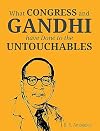
You, the reader, can regard this book to be a tale of perfidy, cynicism and manipulation. It starts in the early part of the 20th century, when India’s Nationalist Movement was underway.
Intellectuals, far removed from India’s public, founded the Indian National Congress. Not only were they too intellectual, they lacked contact, empathy, and understanding of the social problems in India. As a result, they believed social issues should be divorced from political ones.
Around this time, the show more wise men discussed the future of India’s governance. Those days, the British ruled us, and we fought for the right to self-rule.
People discussed the representation of the untouchables and Muslims. It is critical to note here that Dr. Ambedkar refers to Hindus and Dalits as two separate classes of people. Evidently, there is a huge divide that many of us, even today, do not acknowledge.
When Gandhi arrived on the scene, he took over the Congress, and molded it to his vision. First, he started the system of gathering subscriptions from the public. Then, he communicated his vision of the Congress to the public. When he took over, he changed the fundamental nature of the Party.
Dr. Ambedkar did not believe that Gandhi was a pious man. In fact, in the book, he has pointedly stated that Gandhi was a crafty politician, nothing more. Additionally, he stated Gandhi disliked the untouchables.
I must confess to being surprised to read this, because I have always had a different image of Gandhi. Gandhi referred to the untouchables as ‘Harijans’, or ‘People of God’. In contrast, Ambedkar called them ‘Dalits’, or ‘Broken People’.
Through the book, Ambedkar has exposed the unfair treatment that was meted out to the Dalits. Furthermore, we should keep in mind that nothing has changed in India.
His portrayal of the events of the time is blunt, hard-hitting, and shatters many preconceived notions. Additionally, none of the politicians he has mentioned comes out looking pretty. Yet, we cling to our perceptions of them as almost God-like people.
The Brahmins, he wrote, always sought to dominate the affairs of Indians. In ancient times, they aligned with the Kshatriya caste—the warriors. As times changed, they changed their allegiance to the ‘baniya’ (trader) class. In today’s world, he who has money, has power. Therefore, the Brahmins followed the money trail, to ensure they are always well funded.
I was surprised to learn that Gandhi’s ashram was largely funded by business people. Evidently, crony capitalism was not born today.
The rise of India’s Nationalist Movement was filled with deeds of perfidy, cynicism and manipulation. One group rose, and the rest of India continued to be subjugated.
This is a hard-hitting book. Be prepared to have some illusions shattered. show less
Intellectuals, far removed from India’s public, founded the Indian National Congress. Not only were they too intellectual, they lacked contact, empathy, and understanding of the social problems in India. As a result, they believed social issues should be divorced from political ones.
Around this time, the show more wise men discussed the future of India’s governance. Those days, the British ruled us, and we fought for the right to self-rule.
People discussed the representation of the untouchables and Muslims. It is critical to note here that Dr. Ambedkar refers to Hindus and Dalits as two separate classes of people. Evidently, there is a huge divide that many of us, even today, do not acknowledge.
When Gandhi arrived on the scene, he took over the Congress, and molded it to his vision. First, he started the system of gathering subscriptions from the public. Then, he communicated his vision of the Congress to the public. When he took over, he changed the fundamental nature of the Party.
Dr. Ambedkar did not believe that Gandhi was a pious man. In fact, in the book, he has pointedly stated that Gandhi was a crafty politician, nothing more. Additionally, he stated Gandhi disliked the untouchables.
I must confess to being surprised to read this, because I have always had a different image of Gandhi. Gandhi referred to the untouchables as ‘Harijans’, or ‘People of God’. In contrast, Ambedkar called them ‘Dalits’, or ‘Broken People’.
Through the book, Ambedkar has exposed the unfair treatment that was meted out to the Dalits. Furthermore, we should keep in mind that nothing has changed in India.
His portrayal of the events of the time is blunt, hard-hitting, and shatters many preconceived notions. Additionally, none of the politicians he has mentioned comes out looking pretty. Yet, we cling to our perceptions of them as almost God-like people.
The Brahmins, he wrote, always sought to dominate the affairs of Indians. In ancient times, they aligned with the Kshatriya caste—the warriors. As times changed, they changed their allegiance to the ‘baniya’ (trader) class. In today’s world, he who has money, has power. Therefore, the Brahmins followed the money trail, to ensure they are always well funded.
I was surprised to learn that Gandhi’s ashram was largely funded by business people. Evidently, crony capitalism was not born today.
The rise of India’s Nationalist Movement was filled with deeds of perfidy, cynicism and manipulation. One group rose, and the rest of India continued to be subjugated.
This is a hard-hitting book. Be prepared to have some illusions shattered. show less

I was born a Hindu, but I shall not die a Hindu.
People know that Ambedkar 'bowed before Gandhi's superior popularity' and had to 'surrender' and sign the Poona Pact in 1932, which effectively ended the concept of Reserved Electorates, as envisioned by him - meaning that the system of dual representation for the Depressed Classes (or the Scheduled Castes, as they are now called), that Ambedkar had envisioned as a means of upliftment, effectively died a premature death. Arundhati Roy, S. show more Anand, and Ambedkar demolish this argument to smithereens, and express in no unclear terms that Gandhiji's fast unto death was a method of blackmail, and that Gandhiji was not so 'radical' as the nation was made to believe. That, alone, is worth the read.
In this manifesto against caste (yes, the Marx comparison that most people assign to this is very apt), Ambedkar speaks with the logic of a pragmatist, who believes that the caste system was founded as a method of segregation, not so different from the racial segregation practiced in the West (and in some ways, he argues, even worse). He believes that the caste system pollutes even religious conversions - in some ways, Ambedkar says, the Muslim and the Sikh religions grew caste systems because of mass conversions of the downtrodden Hindu populace looking to escape their chains. He believes that the methods adopted by 'moderate' reformers such as the Arya Samaj (and even its more radical offshoots, such as the Jat Pat Todak Mandal), such as inter-dining and inter-marriages between castes, were always doomed to fail. Above all, he believes that the system of pandits should be made on the basis of merit, not on birth - and the number of pandits 'passing out' each year should have a fixed quota.
Writing this masterpiece now would be ahead of its time. Writing it in 1936? No wonder it remained as just a speech manuscript, which Ambedkar had to print with his own money. Gandhiji also started an argument from his own magazine, Harijan, which started an intellectual clash that is responsible for much of Ambedkar's maligned image. Because, who, after all, would dare to argue with the Mahatma?
The Outlook, a magazine of some renown, carried out a poll in June-August 2012, which asked readers and scholars - who, according to you, is the greatest Indian, after Mahatma Gandhi? Ambedkar won by an overwhelming margin. If you read Annihilation Of Caste, you'll understand why. One of the most important Indian pieces of literature ever written. show less
People know that Ambedkar 'bowed before Gandhi's superior popularity' and had to 'surrender' and sign the Poona Pact in 1932, which effectively ended the concept of Reserved Electorates, as envisioned by him - meaning that the system of dual representation for the Depressed Classes (or the Scheduled Castes, as they are now called), that Ambedkar had envisioned as a means of upliftment, effectively died a premature death. Arundhati Roy, S. show more Anand, and Ambedkar demolish this argument to smithereens, and express in no unclear terms that Gandhiji's fast unto death was a method of blackmail, and that Gandhiji was not so 'radical' as the nation was made to believe. That, alone, is worth the read.
In this manifesto against caste (yes, the Marx comparison that most people assign to this is very apt), Ambedkar speaks with the logic of a pragmatist, who believes that the caste system was founded as a method of segregation, not so different from the racial segregation practiced in the West (and in some ways, he argues, even worse). He believes that the caste system pollutes even religious conversions - in some ways, Ambedkar says, the Muslim and the Sikh religions grew caste systems because of mass conversions of the downtrodden Hindu populace looking to escape their chains. He believes that the methods adopted by 'moderate' reformers such as the Arya Samaj (and even its more radical offshoots, such as the Jat Pat Todak Mandal), such as inter-dining and inter-marriages between castes, were always doomed to fail. Above all, he believes that the system of pandits should be made on the basis of merit, not on birth - and the number of pandits 'passing out' each year should have a fixed quota.
Writing this masterpiece now would be ahead of its time. Writing it in 1936? No wonder it remained as just a speech manuscript, which Ambedkar had to print with his own money. Gandhiji also started an argument from his own magazine, Harijan, which started an intellectual clash that is responsible for much of Ambedkar's maligned image. Because, who, after all, would dare to argue with the Mahatma?
The Outlook, a magazine of some renown, carried out a poll in June-August 2012, which asked readers and scholars - who, according to you, is the greatest Indian, after Mahatma Gandhi? Ambedkar won by an overwhelming margin. If you read Annihilation Of Caste, you'll understand why. One of the most important Indian pieces of literature ever written. show less
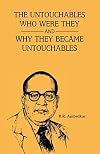
Impure people, or untouchables. The subject of whether we regard people as impure or untouchable is deep. Moreover, the act of regarding some people as impure seems to be endemic. We all claim to worship God. Hence, we should regard everyone as the same. Yet, we don’t.
This book by B. R. Ambedkar is a follow up of his previous book, “Who Were The Shudras?” In that book, he postulated how the Shudras came to be regarded as the fourth caste. Additionally, he traced their fall, from being show more kings, to lowly people.
In this book, he tackles the subject of untouchability. He started his book by analyzing primitive societies. As he mentions, we started as hunter-gatherers. Then came settled societies, and people began living in villages. However, some remained on the outside. Initially, they gave protection to the villagers. Subsequently, people regarded them as strange, hence impure. Dr. Ambedkar refers to these outsiders as ‘Broken People’.
Yet, this perception of impurity was not irreversible. For instance, you could wash off the impurity (of the touch) by bathing, or performing certain rituals.
Dr. Ambedkar argues that, in most societies, the concept of impurity gradually receded and vanished. However, when you consider the theories of Aryan or white supremacy, you realize that this is not true.
In fact, I would say that our tendency to discriminate on grounds of race, religion, color, appearance etc., runs deep in our nature.
The concept of untouchability did not exist in India for many centuries. In fact, there was no mention of this in our earlier texts, like “The Laws of Manu”.
Indeed, many Indians ate beef. When did this change, and when did beef eating become associated with ritual impurity?
Dr. Ambedkar postulated that this came about as a reaction to the rise of Buddhism. When you go back to the days of Ashoka, you realize Buddhism became popular, and this threatened the livelihood of the Brahmin priests.
As a result, it appears, they retaliated by claiming the moral high ground. They did this by becoming vegetarians and giving up beef. As a result, they now deemed those who continued to eat beef to be impure, eventually becoming impure people, or untouchables.
There is very little light that anyone can shed on those early days. If so, we can regard Dr. Ambedkar’s hypothesis as a valid one. As always, his research work is meticulous.
His style is direct, with no fluff. He does not entertain ‘prisoners’. If this offends you, then it is your loss. For me, I find his approach, and the alternative theories he proposed, to be absolutely refreshing. show less
This book by B. R. Ambedkar is a follow up of his previous book, “Who Were The Shudras?” In that book, he postulated how the Shudras came to be regarded as the fourth caste. Additionally, he traced their fall, from being show more kings, to lowly people.
In this book, he tackles the subject of untouchability. He started his book by analyzing primitive societies. As he mentions, we started as hunter-gatherers. Then came settled societies, and people began living in villages. However, some remained on the outside. Initially, they gave protection to the villagers. Subsequently, people regarded them as strange, hence impure. Dr. Ambedkar refers to these outsiders as ‘Broken People’.
Yet, this perception of impurity was not irreversible. For instance, you could wash off the impurity (of the touch) by bathing, or performing certain rituals.
Dr. Ambedkar argues that, in most societies, the concept of impurity gradually receded and vanished. However, when you consider the theories of Aryan or white supremacy, you realize that this is not true.
In fact, I would say that our tendency to discriminate on grounds of race, religion, color, appearance etc., runs deep in our nature.
The concept of untouchability did not exist in India for many centuries. In fact, there was no mention of this in our earlier texts, like “The Laws of Manu”.
Indeed, many Indians ate beef. When did this change, and when did beef eating become associated with ritual impurity?
Dr. Ambedkar postulated that this came about as a reaction to the rise of Buddhism. When you go back to the days of Ashoka, you realize Buddhism became popular, and this threatened the livelihood of the Brahmin priests.
As a result, it appears, they retaliated by claiming the moral high ground. They did this by becoming vegetarians and giving up beef. As a result, they now deemed those who continued to eat beef to be impure, eventually becoming impure people, or untouchables.
There is very little light that anyone can shed on those early days. If so, we can regard Dr. Ambedkar’s hypothesis as a valid one. As always, his research work is meticulous.
His style is direct, with no fluff. He does not entertain ‘prisoners’. If this offends you, then it is your loss. For me, I find his approach, and the alternative theories he proposed, to be absolutely refreshing. show less

This book, by Dr. B.R. Ambedkar, is a short one. Some people may not be familiar with him. He was born a Dalit, an Untouchable; and rose to a very senior and influential position. He was one of the lead authors and designers of India’s Constitution.
Towards the end of his life, he converted to Buddhism. Today, nationalist politicians seek to arrogate his legacy for electoral gains.
B.R. Ambedkar rejected Hinduism, and in this short book, he explains the reasons why. Hindus derive a large show more part of their philosophy and societal rules from a book called “The Laws of Manu”, or the “Manu Smriti”.
A very large section of the Manu Smriti has been devoted to caste, and how to deal with people belonging to different castes. Not surprisingly, the uppermost caste – the Brahmins – have arrogated most privileges for themselves. The Shudras have become the servants, and below the Shudras are the Untouchables.
Hindu society. States Dr Ambedkar, is unequal, and he further states that Hindu philosophy promotes inequality. It promotes and creates divisions within itself. This is further reflected in issues like education, employment, national security etc.
It is easy to dismiss the book as mere diatribe. At one level, it is indeed diatribe, as there is much in Hindu philosophy that is admirable.
But, he has chosen to portray the dark side of Hinduism. He has quoted at length from the Manu Smriti, and the texts he has quoted are blood curdling.
Friedrich Nietzsche was influenced by the Manu Smriti, and his philosophy contributed to the rise of Nazi philosophy. Germany turned away from the idea of a mythic, Aryan superman. Indians have not.
B.R. Ambedkar’s prose is powerful, direct and passionate. He does not mince words. He is lucid and his arguments are well reasoned. At no point in the book does he descend into a blind attack on Hindu philosophy and society.
He has illustrated his arguments with quotations and logic.
It is a short, and explosive book. show less
Towards the end of his life, he converted to Buddhism. Today, nationalist politicians seek to arrogate his legacy for electoral gains.
B.R. Ambedkar rejected Hinduism, and in this short book, he explains the reasons why. Hindus derive a large show more part of their philosophy and societal rules from a book called “The Laws of Manu”, or the “Manu Smriti”.
A very large section of the Manu Smriti has been devoted to caste, and how to deal with people belonging to different castes. Not surprisingly, the uppermost caste – the Brahmins – have arrogated most privileges for themselves. The Shudras have become the servants, and below the Shudras are the Untouchables.
Hindu society. States Dr Ambedkar, is unequal, and he further states that Hindu philosophy promotes inequality. It promotes and creates divisions within itself. This is further reflected in issues like education, employment, national security etc.
It is easy to dismiss the book as mere diatribe. At one level, it is indeed diatribe, as there is much in Hindu philosophy that is admirable.
But, he has chosen to portray the dark side of Hinduism. He has quoted at length from the Manu Smriti, and the texts he has quoted are blood curdling.
Friedrich Nietzsche was influenced by the Manu Smriti, and his philosophy contributed to the rise of Nazi philosophy. Germany turned away from the idea of a mythic, Aryan superman. Indians have not.
B.R. Ambedkar’s prose is powerful, direct and passionate. He does not mince words. He is lucid and his arguments are well reasoned. At no point in the book does he descend into a blind attack on Hindu philosophy and society.
He has illustrated his arguments with quotations and logic.
It is a short, and explosive book. show less
Lists
Awards

You May Also Like


Associated Authors
Statistics
- Works
- 114
- Members
- 866
- Popularity
- #29,560
- Rating
- 4.4
- Reviews
- 14
- ISBNs
- 107
- Languages
- 3
- Favorited
- 3