
Rahul Pandita
Author of Our Moon Has Blood Clots: The Exodus of the Kashmiri Pandits
About the Author
Rahul Pandita is the author of the bestselling Hello, Bastar: The Untold Story of India¿s Maoist Movement, and the coauthor
of the critically acclaimed The Absent State. He has extensively reported from war zones, including Iraq and Sri
Lanka, and Kashmir and Bastar in India. In 2010, he received show more the International Red Cross Award for conflict reporting.
Rahul was born in the Kashmir valley. At the age of fourteen, in 1990, his family was forced into exile, like thousands of
others, by Islamic extremists. He lives in a Delhi suburb, and works as associate editor with Open magazine. show less
Works by Rahul Pandita
Tagged
Common Knowledge
There is no Common Knowledge data for this author yet. You can help.
Members
Reviews
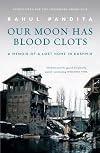
Excerpt from the book:
Girja, had been abducted and immediately blindfolded. Four men had taken turns to rape her in a moving taxi. As they were conversing with each other, Girja recognized the voice of one of the men who went by the name Aziz. ‘Aziza, chhetey chukha? Aziz, are you here as well?’ she asked in Kashmiri. Aziz got worried. He knew that Girja had recognized him. So, in a final act of barbarism, they took her to a wood-processing unit and cut her alive on a mechanical saw. show more This is what the seekers of freedom were doing to the religious minority.
My Thoughts:
Gut-wrenching and eye opening at the same time, Rahul Pandita's book throws light on how the blood drenched politics of the fundamentalist Muslim world played a major role in massacre of Pandits in Kashmir. It also explains without literally explaining, how much unfair it would be for Indians if Pakistan is successful in taking over Kashmir. The author takes us on an historical tour right from the beginning of civilization in the valley to the present day Kashmir while revisiting all the glory as well as the barbaric invasions that Kashmiris have experienced. While covering such a vast ground, for its major part, the book stays focused on the exodus of Kashmiri Pandits and how it has been overlooked by Indian media and government. Most importantly without being preachy, it portrays how in midst of insanity some victims retained their sanity by not generalizing their hatred towards all Muslims.
Unfortunately in the madness of communal riots, the casualty is usually innocence. While reading books like 'Our Moon has Blood Clots' by Rahul Pandita, 'Lajja' by Taslima Nasreen, 'Communal Rage in Secular India' by Rafiq Zakaria, my belief in Bhagat Singh's ideology of 'Peace can be maintained in free India only when all religions are abolished' keeps growing stronger. India did get free but unfortunately not from the chains of its religions.
Our Moon has Blood Clots is a must read for every Indian who wants to learn more about the Kashmir issue. show less
Girja, had been abducted and immediately blindfolded. Four men had taken turns to rape her in a moving taxi. As they were conversing with each other, Girja recognized the voice of one of the men who went by the name Aziz. ‘Aziza, chhetey chukha? Aziz, are you here as well?’ she asked in Kashmiri. Aziz got worried. He knew that Girja had recognized him. So, in a final act of barbarism, they took her to a wood-processing unit and cut her alive on a mechanical saw. show more This is what the seekers of freedom were doing to the religious minority.
My Thoughts:
Gut-wrenching and eye opening at the same time, Rahul Pandita's book throws light on how the blood drenched politics of the fundamentalist Muslim world played a major role in massacre of Pandits in Kashmir. It also explains without literally explaining, how much unfair it would be for Indians if Pakistan is successful in taking over Kashmir. The author takes us on an historical tour right from the beginning of civilization in the valley to the present day Kashmir while revisiting all the glory as well as the barbaric invasions that Kashmiris have experienced. While covering such a vast ground, for its major part, the book stays focused on the exodus of Kashmiri Pandits and how it has been overlooked by Indian media and government. Most importantly without being preachy, it portrays how in midst of insanity some victims retained their sanity by not generalizing their hatred towards all Muslims.
Unfortunately in the madness of communal riots, the casualty is usually innocence. While reading books like 'Our Moon has Blood Clots' by Rahul Pandita, 'Lajja' by Taslima Nasreen, 'Communal Rage in Secular India' by Rafiq Zakaria, my belief in Bhagat Singh's ideology of 'Peace can be maintained in free India only when all religions are abolished' keeps growing stronger. India did get free but unfortunately not from the chains of its religions.
Our Moon has Blood Clots is a must read for every Indian who wants to learn more about the Kashmir issue. show less
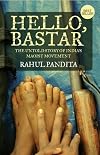
A lot has been reported, said and debated about the Maoists and the threat they represent to the Republic of India in its present form. While most of what has been seen/read is the violence in the gun fights between security forces and the Maoists, the underlying causes are seldom given the same amount of attention.
In that light, this book is a very good read of the conditions prevalent in areas that birthed the Maoist movement. The social and political conditions that have led to Maoist show more movements being the number 1 security threat to India need to be eliminated.
However, I am not sure if the movement itself will succeed. The social, economic and political conditions in China in the first half of the 19th century were very different from what exists now. The communists in India at the time of independence also tried to foment violent revolution and failed miserably. A revolution through the ballot has been far more fruitful.
What I found strange was the Maoists insistence on looking up to and emulating Mao's policies for guerilla warfare and governance. Has the fact that they have been thoroughly discredited in China which has done a 180 u-turn on those policies escaped the Maoists attention?
In any case, this is a very lucid account of the history and future direction of the Maoist movement in India. Kudos to the author. show less
In that light, this book is a very good read of the conditions prevalent in areas that birthed the Maoist movement. The social and political conditions that have led to Maoist show more movements being the number 1 security threat to India need to be eliminated.
However, I am not sure if the movement itself will succeed. The social, economic and political conditions in China in the first half of the 19th century were very different from what exists now. The communists in India at the time of independence also tried to foment violent revolution and failed miserably. A revolution through the ballot has been far more fruitful.
What I found strange was the Maoists insistence on looking up to and emulating Mao's policies for guerilla warfare and governance. Has the fact that they have been thoroughly discredited in China which has done a 180 u-turn on those policies escaped the Maoists attention?
In any case, this is a very lucid account of the history and future direction of the Maoist movement in India. Kudos to the author. show less
A concise, historical and romanticised account of the Maoist movement in India. I loved the sections on Anuradha Ghandy. She's a truly inspirational figure. Kobad Ghandy's afterword provides an excellent summary of the "development" in India.
The author here touches a very important point. For the Adivasi's, Naxalism is not just politics but is the only way of casting off their animal status for a human one. The party and the uniform gives them dignity and a sense of purpose.
The author here touches a very important point. For the Adivasi's, Naxalism is not just politics but is the only way of casting off their animal status for a human one. The party and the uniform gives them dignity and a sense of purpose.
The heartbreaking story of Kashmir has so far been told through the prism of the brutality of the Indian state, and the pro-independence demands of separatists. But there is another part of the story that has remained unrecorded and buried. Our Moon Has Blood Clots is the unspoken chapter in the story of Kashmir, in which it was purged of the Kashmiri Pandit community in a violent ethnic cleansing backed by Islamist militants. Hundreds of people were tortured and killed, and about 3,50,000 show more Kashmiri Pandits were forced to leave their homes and spend the rest of their lives in exile in their own country. The characters there story, love, emotion, the view in there eyes about kashmir they lived in and what they faced at last and that's break the heart the an event from 1932 can become such an horrible situation after 6 decades and death of many and the death of not only one minority but others too, who try to to stop the violence. show less
You May Also Like


Statistics
- Works
- 7
- Members
- 221
- Popularity
- #101,334
- Rating
- 4.0
- Reviews
- 8
- ISBNs
- 10
- Languages
- 1