
n+1
Author of What Was The Hipster?: A Sociological Investigation
About the Author
Series
Works by n+1
Number Twenty-Nine: Bottoms Up 2 copies
Number Twenty-Seven: Deep End 2 copies
n 1 Issue 28: Half-Life 1 copy
n 1 Issue 24: New Age 1 copy
n 1 Issue 25: Slow Burn 1 copy
n 1 Issue 17: The Evil Issue 1 copy
n+1 #42 Spring 2022 1 copy
n+1, Number One: Happiness 1 copy
Inside The Virus 1 copy
n+1 #44 Winter 2023 1 copy
n+1 #43 Summer 2022 1 copy
n+1 #41 Fall 2021 1 copy
n+1 Issue 39: Take Care 1 copy
Tagged
Common Knowledge
Members
Reviews
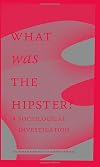
This is funny and interesting for a number of reasons, and if n+1 hadn’t given in to the understandable (because both egalitarian and lazy) impulse to print the whole proceedings of their symposium on the matter, along with all the monomaniacal, oversensitive, boring, boring questions from the crowd all thinking that they, there, themselves were the ones who were gonna “solve” the hipster with their theory, it woulda been possibly the best thing this mag ever produed. (Notable show more exception my crowd-hate: Moe Tkacik, formerly of Jezebel: “I used to work at American Apparel and Žižek was the only philosopher any of them had ever heard of.)
Um, okay, so there are some preliminary matters that seem at first to just be thing you need to get through to get on to the good stuff, but then end up illuminating the thing in new ways like Why do we call them after a bunch of forties jazzniks, now, in 2010? (The discussion of race and appropriation that follows is very interesting, but from a lexicology perspective I am most convinced by Greif’s almost offhand observation that when these knots of people started emerging that seemed to want to avoid the trappings of traditional rebel subcultures—e.g. punk, hippies—but still not be regular boring, it was during that weird “neo-lounge” moment in say 1995, and when you see that guy with his fedora or leather vest, “hipster” is obvious, and then you just keep using the same term when he’s changing into his “wifebeater” and trucker hat or whatever in 1999.)
Another one: How do these things look different from different parts of the world? I remember first laying eyes on Vice in ’98 or so and thinking it was basically a skater zine out of Montreal that had obviously found some moneyed backers who thought they could place it in Chapters or so. It seemed like a real thing, in other words, not an epiphenomenon. Ditto Pitchfork, more or less. But when they became consumer bibles—I keep thinking David Marxy’s distinction, in the Japanese context, between “rebel subcultures” and “consumer lifestyles” is so, so clear here. This is something that was missed by the book. Hipsters aren’t expressing anything, or if they are it is orthogonal to their hip signifiers. The point is self-presentation, embodying an aesthetic, full stop. In Japan their aesthetic tradition is so magnificent and I think that’s why it erupted there first—here I think it’s interesting that it’s only emerged as a phenomenon since the internet, the panopticon. Suddenly, once again, as always, our every gesture is evaluated for how heartbreakingly it bleeds self-transcendence.
I don’t know if I’m yammering, but I am kind of throwing thoughts out there in pretty unpolished, nontranscendental form that only maybe a few people will be able to think their way into (not that I expect them to try!). I should say that that is one of the other cheaper pleasures of this book—no matter how much they try, everyone in the discussion is forced at some point to put down the air quotes and say something that betrays that they think “hipster” might refer to a real phenomenon with definable characteristics and not just something you roll your eyes when other people say. And then you can roll your eyes at them, like the poor French kid who is sure hipster is intrinsically postcolonial in its innerest essence because souk-themed bars in Paris.
The way place is treated in this is so interesting. It gets so much more attention than capital, or race, or even class, but in this by-the-by way: “When I was DJing in Graz, Austria”; “Well let me tell you that for the Limeño hipsters they can only love cumbia music now because they’ve gotten permission to do so from hipsters in America”; “I GREW UP ON THE LOWER EAST SIDE.” I’ve thought this for years: fewer and fewer places matter more and more, and if you step outside of those places you’re a gentrifying virus or volatile substance—a rich fuck, or an arriviste, or an eccentric who goes somewhere nobody else will go (until suddenly that makes you an arriviste too). That’s just a function of late capitalism, I know—no matter where you are, real estate costs are higher than cool value, unless it’s in a ger on the Mongolian steppe and what’s more hipster than that. I’ve had a few people roll their eyes about my stuff in Uganda last summer because they seem to think on some level I’m trying to beat them.
So I guess what I’m trying to say is it seems like whatever the “hipster” is, it ruined fashion as a site of resistance (with the help of the large-scale loss of good jobs you had to dress up for) and it ruined travel as a site of resistance (with the help of the global real estate market) and it ruined music as a site of resistance (with the help of downloading) and it ruined politics as a site of resistance (with the help of the “new social movements,” not because fighting for gay marriage isn’t so so important, but because for so many people it made fighting for the right to housing, or unionizing, white and rustbelty and uncool—that moment of trucker-hat white-working-class appropriation being long over).
Time to end this embarrassing screed, which really only touched half on what’s in this book (read it! You’ll find out what New York critics and publishing types think a hipster is. At least they’re young. I do think I should save an honourable mention for Greif’s observation that “hipster” is just the epithet fashionable young people use to conduct class war and authenticity wars amongst themselves—we trust fund kids are normal cool kids, the striving middle class interns are strivers and the poor people working in the restaurants and boutiques are just poors, grotesques; we interns are the norms and the rich kids are fakes and the poors are really not leading edge; we regular people made a sweet culture against the odds and resisted the redneck space that the rich-person mainstream cut out for us and now all these richie riches of various types are parasiting it) and the other half on my own discouragement that nothing cultural feels like a source of interest or power anymore. What do I do with my life now? Manufacture excessive excitement about Bard on the Beach? Work out lots? show less
Um, okay, so there are some preliminary matters that seem at first to just be thing you need to get through to get on to the good stuff, but then end up illuminating the thing in new ways like Why do we call them after a bunch of forties jazzniks, now, in 2010? (The discussion of race and appropriation that follows is very interesting, but from a lexicology perspective I am most convinced by Greif’s almost offhand observation that when these knots of people started emerging that seemed to want to avoid the trappings of traditional rebel subcultures—e.g. punk, hippies—but still not be regular boring, it was during that weird “neo-lounge” moment in say 1995, and when you see that guy with his fedora or leather vest, “hipster” is obvious, and then you just keep using the same term when he’s changing into his “wifebeater” and trucker hat or whatever in 1999.)
Another one: How do these things look different from different parts of the world? I remember first laying eyes on Vice in ’98 or so and thinking it was basically a skater zine out of Montreal that had obviously found some moneyed backers who thought they could place it in Chapters or so. It seemed like a real thing, in other words, not an epiphenomenon. Ditto Pitchfork, more or less. But when they became consumer bibles—I keep thinking David Marxy’s distinction, in the Japanese context, between “rebel subcultures” and “consumer lifestyles” is so, so clear here. This is something that was missed by the book. Hipsters aren’t expressing anything, or if they are it is orthogonal to their hip signifiers. The point is self-presentation, embodying an aesthetic, full stop. In Japan their aesthetic tradition is so magnificent and I think that’s why it erupted there first—here I think it’s interesting that it’s only emerged as a phenomenon since the internet, the panopticon. Suddenly, once again, as always, our every gesture is evaluated for how heartbreakingly it bleeds self-transcendence.
I don’t know if I’m yammering, but I am kind of throwing thoughts out there in pretty unpolished, nontranscendental form that only maybe a few people will be able to think their way into (not that I expect them to try!). I should say that that is one of the other cheaper pleasures of this book—no matter how much they try, everyone in the discussion is forced at some point to put down the air quotes and say something that betrays that they think “hipster” might refer to a real phenomenon with definable characteristics and not just something you roll your eyes when other people say. And then you can roll your eyes at them, like the poor French kid who is sure hipster is intrinsically postcolonial in its innerest essence because souk-themed bars in Paris.
The way place is treated in this is so interesting. It gets so much more attention than capital, or race, or even class, but in this by-the-by way: “When I was DJing in Graz, Austria”; “Well let me tell you that for the Limeño hipsters they can only love cumbia music now because they’ve gotten permission to do so from hipsters in America”; “I GREW UP ON THE LOWER EAST SIDE.” I’ve thought this for years: fewer and fewer places matter more and more, and if you step outside of those places you’re a gentrifying virus or volatile substance—a rich fuck, or an arriviste, or an eccentric who goes somewhere nobody else will go (until suddenly that makes you an arriviste too). That’s just a function of late capitalism, I know—no matter where you are, real estate costs are higher than cool value, unless it’s in a ger on the Mongolian steppe and what’s more hipster than that. I’ve had a few people roll their eyes about my stuff in Uganda last summer because they seem to think on some level I’m trying to beat them.
So I guess what I’m trying to say is it seems like whatever the “hipster” is, it ruined fashion as a site of resistance (with the help of the large-scale loss of good jobs you had to dress up for) and it ruined travel as a site of resistance (with the help of the global real estate market) and it ruined music as a site of resistance (with the help of downloading) and it ruined politics as a site of resistance (with the help of the “new social movements,” not because fighting for gay marriage isn’t so so important, but because for so many people it made fighting for the right to housing, or unionizing, white and rustbelty and uncool—that moment of trucker-hat white-working-class appropriation being long over).
Time to end this embarrassing screed, which really only touched half on what’s in this book (read it! You’ll find out what New York critics and publishing types think a hipster is. At least they’re young. I do think I should save an honourable mention for Greif’s observation that “hipster” is just the epithet fashionable young people use to conduct class war and authenticity wars amongst themselves—we trust fund kids are normal cool kids, the striving middle class interns are strivers and the poor people working in the restaurants and boutiques are just poors, grotesques; we interns are the norms and the rich kids are fakes and the poors are really not leading edge; we regular people made a sweet culture against the odds and resisted the redneck space that the rich-person mainstream cut out for us and now all these richie riches of various types are parasiting it) and the other half on my own discouragement that nothing cultural feels like a source of interest or power anymore. What do I do with my life now? Manufacture excessive excitement about Bard on the Beach? Work out lots? show less
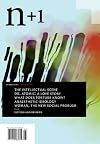
Finally n+1 picks up some magisterial force! Guess I like a good group polemic against our dispiriting society. This contains an excellent “Intellectual Situation” in which our harried narrator rushes from one brutalizing technological experience to another—email, cellphones, blogs, porn. It got worse before it got better, but I think, just maybe, we are starting to cope—at least, I have basically the whole internet except what I need for work blocked now, and it’s improved my life show more though made me feel a bit isolated. (And now I have to batch-add books to LibraryThing when the block expires once a week, perhaps a quixotic endeavour in this light.) Then also there is a cute story by Benjamin Kunkel about a guilty spider, another cute story by Imraan Coovadia about Abdul Qadeer Khan in North Korea, a very informative and evocative piece by Basharat Peer on growing up in Kashmir amid its Troubles, a piece by Mark Greif called “Anesthetic Ideology” in which he elaborates the editors’ sort of anti-brutalist ethic they pushed in the early days—to the aestheticism and perfectionism they suggested as coping mechanisms in a previous issue, they now add the Hellenistic philosophies, with the notable exception (why???) of Skepticism. I can read about Epicurus and the Stoics all day and it makes me feel calm and strong.
Strong enough to handle a short, cruel story by Rebecca Curtis called “The Near-Son,” a piece by Joshua Glenn on the delights and vagaries of fashioning ourselves (I want to say “oneselves”—you know? There’s some kind of pronominal gap there) as intellectual superheroes—the Argonauts tore themselves apart, and nobody came to Nietzsche’s meetings about an oligarchy of the spirit, and Marvel Comics built an empire out of their heroes’ volatile personalities and dysfunctional team dynamics, and yet what else do we have but separation and acquiescence and houses made of ticky-tacky? Glenn ends with a cute, self-aware but heartfelt plea to contact him if you wanna hang out and be intellectual. They do try really hard to imagine something different and beautiful, these guys, and I can’t but relate to how easy it is for “different and beautiful” to go straight back to how we felt on the cusp of adulthood—like the future was a new country, and we were going to make our own lives for sure and maybe all of us a better collective life too. I still have ambitions to achieve “living well,” though they’ve taken a beating—and perhaps it’s not even too late for living well together? show less
Strong enough to handle a short, cruel story by Rebecca Curtis called “The Near-Son,” a piece by Joshua Glenn on the delights and vagaries of fashioning ourselves (I want to say “oneselves”—you know? There’s some kind of pronominal gap there) as intellectual superheroes—the Argonauts tore themselves apart, and nobody came to Nietzsche’s meetings about an oligarchy of the spirit, and Marvel Comics built an empire out of their heroes’ volatile personalities and dysfunctional team dynamics, and yet what else do we have but separation and acquiescence and houses made of ticky-tacky? Glenn ends with a cute, self-aware but heartfelt plea to contact him if you wanna hang out and be intellectual. They do try really hard to imagine something different and beautiful, these guys, and I can’t but relate to how easy it is for “different and beautiful” to go straight back to how we felt on the cusp of adulthood—like the future was a new country, and we were going to make our own lives for sure and maybe all of us a better collective life too. I still have ambitions to achieve “living well,” though they’ve taken a beating—and perhaps it’s not even too late for living well together? show less

I put this down in disgust when they mentioned Derrida on page four.
Sure, it could have been Foucault or Baudrillard or ... ok, enough. n 1 is not moving forward. They've been circling the same territory since the Obama administration.
This is not a journal of independent thought; this is a journal for people who miss grad school. You know the ones: the sort of person who says pedagogy when they mean teaching, and dialectic when they mean conflict (UPDATE: and hegemony when they mean show more dominance -thanks sis!). show less
Sure, it could have been Foucault or Baudrillard or ... ok, enough. n 1 is not moving forward. They've been circling the same territory since the Obama administration.
This is not a journal of independent thought; this is a journal for people who miss grad school. You know the ones: the sort of person who says pedagogy when they mean teaching, and dialectic when they mean conflict (UPDATE: and hegemony when they mean show more dominance -thanks sis!). show less

This begins with a great triple punch: an article about what it means that intellectuals—if we are reasonable about what an intellectual is—are now mostly the precariat, that is—if we are reasonable about what the working class is—the working class, and what opportunities it brings up for us (yeah, “us.” Wanna fight about it? Wanna debate?) to not be beholden in the old way of the tenure days; a tearjerker about the kids who got killed at Sandy Hook; and Emily Witt’s “What Do show more You Desire,” ostensibly about intense live porn shows of the kind they would have once called “gonzo” but more worth reading for the grace notes: the description of the silver fox with the graphite glasses frames and lush fleece vest and mark-of-cainly incongruous cheap google bag, the mulling about how hard it is anymore to distinguish your feelings about your friends you don’t want to sleep with from your friends you do from people you want to sleep with but don’t like particularly, and figure out how any of those relate to our muddled memories of what it felt like to believe in love. These things are interesting things, but the rest of the mag is not up to them really. show less
Lists
culture (1)
You May Also Like


Associated Authors
Statistics
- Works
- 47
- Members
- 453
- Popularity
- #54,168
- Rating
- 3.5
- Reviews
- 32
- ISBNs
- 25