
Keith Gessen
Author of All the Sad Young Literary Men
About the Author
Image credit: Keith Gessen
Works by Keith Gessen
Associated Works
Voices from Chernobyl: The Oral History of a Nuclear Disaster (1997) — Translator, some editions — 2,897 copies, 98 reviews
There Once Lived a Woman Who Tried to Kill Her Neighbor's Baby: Scary Fairy Tales (2009) — Translator, some editions — 861 copies, 29 reviews
Diary of a Very Bad Year: Confessions of an Anonymous Hedge Fund Manager (2010) 122 copies, 2 reviews
The Wall in My Head: Words and Images from the Fall of the Iron Curtain (2009) — Introduction — 57 copies, 4 reviews
Tagged
Common Knowledge
- Legal name
- Gessen, Konstantin (birth name)
- Other names
- Kostya Gessen
- Birthdate
- 1975-01-09
- Gender
- male
- Education
- Harvard University (BA ∙ History and Literature)
Syracuse University (MFA) - Occupations
- writer
literary critic
novelist
journalist
editor
translator (show all 7)
teacher - Organizations
- n+1
Columbia Journalism School - Awards and honors
- National Book Foundation "5 Under 35" (2008)
- Relationships
- Gould, Emily (spouse)
Gessen, Masha (sister) - Nationality
- Russia (birth)
USA - Birthplace
- Moscow, Russia
- Places of residence
- Boston, Massachusetts, USA
Clinton, New York, USA - Associated Place (for map)
- USA
Members
Reviews
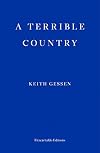
One of the most enjoyable books I've read in a long time, highly recommended. Andrei left Russia for America when he was 6. Now, a seemingly unemployable scholar of Russian literature, he moves to Russa for a year to look after his ailing grandmother. His grandmother is old but stubborn, but her world is getting smaller; almost all her friends are dead, her family emigrated and she is sometimes unclear who Andrei is.
For Andrei, although he speaks good, if not perfect Russian, and is an show more expert in its literature, landing in Moscow is like landing in Ancient Rome. He understands the language, but not the culture or the way of life, nor how to survive, nor how to integrate. As Andrei struggles with the basics - how to get wifi, how to find food and drink he can afford (this peak oil boom Russia of the late aughts), how to get around, how to navigate the medical system (its a good idea to give money to people), how to make friends and girlfriends, how to play some ice hockey, he reveals a Russia of stark contrasts, between wealth (perhaps fleeting) and poverty not much different to Soviet times, from security to barely hanging on, from authoritarianism to lawlessness.
And yet he builds a life and comes to understand, a little, and feel love for, a lot, the country of his birth. And then, as things start to go wrong, he realises he's understood nothing and that he can never really belong.
A terrific book, readable, funny, populated by larger than life characters. So clearly drawn are they, that its easy to imagine how each would respond to the Russia of now, 15 years later. show less
For Andrei, although he speaks good, if not perfect Russian, and is an show more expert in its literature, landing in Moscow is like landing in Ancient Rome. He understands the language, but not the culture or the way of life, nor how to survive, nor how to integrate. As Andrei struggles with the basics - how to get wifi, how to find food and drink he can afford (this peak oil boom Russia of the late aughts), how to get around, how to navigate the medical system (its a good idea to give money to people), how to make friends and girlfriends, how to play some ice hockey, he reveals a Russia of stark contrasts, between wealth (perhaps fleeting) and poverty not much different to Soviet times, from security to barely hanging on, from authoritarianism to lawlessness.
And yet he builds a life and comes to understand, a little, and feel love for, a lot, the country of his birth. And then, as things start to go wrong, he realises he's understood nothing and that he can never really belong.
A terrific book, readable, funny, populated by larger than life characters. So clearly drawn are they, that its easy to imagine how each would respond to the Russia of now, 15 years later. show less

This is a novel about three men who just can't seem to get it together. Over-educated and flung out into a world that was not designed to make them successful, they flounder through meandering careers and withering relationships. Incapable of commitment or genuine emotion, they are obsessed with their public image while their private life gets more and more depressing.
This is the sort of glum book that reminds me very much of my high school and college years. I feel like I know these titular show more "men". This book had that nostalgic, familiar quality for me that simultaneously makes me smile and feel a bit sad. You can't help but commiserate with Mark, Sam, and Keith, but you also kind of hate them. show less
This is the sort of glum book that reminds me very much of my high school and college years. I feel like I know these titular show more "men". This book had that nostalgic, familiar quality for me that simultaneously makes me smile and feel a bit sad. You can't help but commiserate with Mark, Sam, and Keith, but you also kind of hate them. show less
That country is Russia, and the story points out that even so, there are a few good things about it -- like being able to get a car ride across Moscow for only three dollars and being able to find a cappuccino for less than ten, if you know where to look. The person narrating the story is a Russian-born American who goes back to Moscow to take care of his elderly grandmother. Things happen. Shit happens. Our hero is a schmuck. Not a son-of-a-bitch schmuck, just a regular, poor schmuck. And show more unlike the country, it's a good book. show less
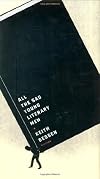
I can understand why Keith Gessen's peculiar novel, "All the Sad Young Literary Men," has drawn such divergent reviews, ranging from Jonathan Yardley naming it as one of the best novels of 2008 to various Amazon readers dismissing it as a disjointed series of whiny elitist sketches peppered with esoteric information about Russian history. This is a different sort of novel than many readers will have encountered previously, demanding a degree of patience before the three narrative threads and show more 1917 Revolution references coalesce into a meaningful whole.
Organized in three parts, each consisting of three chapters told from the point of view of Sam, Mark or Keith, it takes a while for Gessen's voice to establish itself and for any semblance of plot or theme to emerge. That each of the protagonists is a Russian immigrant who's struggling to distill a career from a liberal arts, Ivy education, while failing miserably to forge a satisfying romantic relationship, makes it especially challenging to keep their personas and story lines from blurring into one another. Indeed you get the strong impression not only that first person narrator, Keith, is the author's alter ego, but that Sam and Mark also present little more than splintered parts of Gessen himself.
These criticisms aside, there are some undeniably funny and moving passages in this most literary offering. Mark's digs on life in Syracuse, NY (which I can appreciate having grown up there) are spot on. And his musings about our young literary men's ill-preparedness for important life decisions will resonate with all of us who have made critical decisions without appreciating their import until later: "The trouble is that when you're young you don't know enough; you are constantly being lied to, in a hundred ways, so your ideas of what the world is like are jumbled; when you imagine the life you want for yourself, you imagine things that don't exist. If I could have gone back and explained to my younger self what the real options were, what the real consequences of certain decisions were going to be, my younger self would have known what to choose."
So my advice is to give Gessen the benefit of the doubt and read this one all the way through, applying the proper amount of attention and trust. By part three of the novel, when Gessen shows how the protagonists are connected through their love interests and connects the dots illustrating the parallels between the Russian Revolution and the recent return to power of the Democratic party in the United States, you can really appreciate what this unique novel is all about. show less
Organized in three parts, each consisting of three chapters told from the point of view of Sam, Mark or Keith, it takes a while for Gessen's voice to establish itself and for any semblance of plot or theme to emerge. That each of the protagonists is a Russian immigrant who's struggling to distill a career from a liberal arts, Ivy education, while failing miserably to forge a satisfying romantic relationship, makes it especially challenging to keep their personas and story lines from blurring into one another. Indeed you get the strong impression not only that first person narrator, Keith, is the author's alter ego, but that Sam and Mark also present little more than splintered parts of Gessen himself.
These criticisms aside, there are some undeniably funny and moving passages in this most literary offering. Mark's digs on life in Syracuse, NY (which I can appreciate having grown up there) are spot on. And his musings about our young literary men's ill-preparedness for important life decisions will resonate with all of us who have made critical decisions without appreciating their import until later: "The trouble is that when you're young you don't know enough; you are constantly being lied to, in a hundred ways, so your ideas of what the world is like are jumbled; when you imagine the life you want for yourself, you imagine things that don't exist. If I could have gone back and explained to my younger self what the real options were, what the real consequences of certain decisions were going to be, my younger self would have known what to choose."
So my advice is to give Gessen the benefit of the doubt and read this one all the way through, applying the proper amount of attention and trust. By part three of the novel, when Gessen shows how the protagonists are connected through their love interests and connects the dots illustrating the parallels between the Russian Revolution and the recent return to power of the Democratic party in the United States, you can really appreciate what this unique novel is all about. show less
Lists
Awards


You May Also Like


Associated Authors
Statistics
- Works
- 16
- Also by
- 8
- Members
- 1,097
- Popularity
- #23,415
- Rating
- 4.0
- Reviews
- 28
- ISBNs
- 54
- Languages
- 7