
Margarita Karapanou (1946–2008)
Author of Kassandra and the Wolf
About the Author
Works by Margarita Karapanou
Μήπως; 1 copy
Associated Works
Fiction, Volume 2, Number 3 — Contributor — 1 copy
Tagged
Common Knowledge
- Birthdate
- 1946
- Date of death
- 2008
- Gender
- female
- Occupations
- novelist
- Relationships
- Liberaki, Margarita (mother)
- Nationality
- Greece
- Birthplace
- Athens, Greece
- Places of residence
- Paris, France
London, England, UK - Associated Place (for map)
- Greece
Members
Reviews
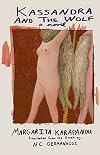
One of the most distinctive books I've read. Perhaps the one that comes closest to it is Unica Zürn's Dark Spring. Surreal, poetic, fable-like short chapters told from the voice of a child narrator. Nightmarish fairytales that are, to borrow from one of the blurbs, lovely and sinister. Some of the images here will haunt me for a long time. Absolutely cannot recommend to anyone because I feel it's a book you will have to page through and decide for yourself, since it touches upon sexual show more abuse, parental neglect, death, suicide, mental illness without quite naming these things for what they are. It's a book that I'm glad I read and will probably always remember in terms of its brutal, whimsical images, but it's hard to rate in terms of stars because "like" and "love" or even "enjoy" are not quite the words to capture the experience of reading this book. show less
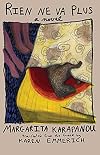
An artful book, this novel tells the story of a relationship - the marriage of Alkiviadis ("Alkis") a veterinarian, and our narrator, a would-be writer, whose name, Louisa, we learn near the end of the book. The story is told twice; in the first version the relationship is destructive and emotionally cruel and Alkis reveals himself, on their wedding night, to be gay. In the second version there is a power shift, it is Louisa who taints the relationship with her flagrant infidelities and show more outright lies.
The book is strangely, or perhaps surprisingly, compelling, considering neither relationship is particularly endearing. But, as the back of the book notes, "Karapanou's devastating exploration of just what makes us want to read each {version}, just what makes each so tempting to write." There's a revelation towards the end of the book that brings the two versions together followed by a short final section where the story switches to third person. I think one of the epigrams says it best:
"People interpret an action, and each interpretation is different. Because in the telling and the retelling, people reveal not the action, but themselves" —Akira Kurosawa's Rashomom
Recommended for readers who like artful fiction; where the form of the fiction plays a certain part in the telling. show less
The book is strangely, or perhaps surprisingly, compelling, considering neither relationship is particularly endearing. But, as the back of the book notes, "Karapanou's devastating exploration of just what makes us want to read each {version}, just what makes each so tempting to write." There's a revelation towards the end of the book that brings the two versions together followed by a short final section where the story switches to third person. I think one of the epigrams says it best:
"People interpret an action, and each interpretation is different. Because in the telling and the retelling, people reveal not the action, but themselves" —Akira Kurosawa's Rashomom
Recommended for readers who like artful fiction; where the form of the fiction plays a certain part in the telling. show less
Terrible things happen. It's hard to get upset about it though because the protagonist, possibly a child throughout although even this isn't clear to me, has the perceptions and the amorality of an animal. She goes to a slaughterhouse for example because of she loves the smell and feel of the carcasses on hooks; while there she may or may not be violated by one of the butchers. She bites people for the hell of it. What is this novel about, anyway? Child abuse? I'm not sure the protagonist is show more a child per se, though. Or is the novel an indictment of the morals of the wealthy classes? Maybe. The protagonist has governesses and servants and there seem to be the trappings of wealth in her descriptions of depravity. When it comes to what this novel means, in other words, pretty much anything is possible. There are frequent references to Greek mythology and though I know who these mythic characters are my knowledge didn't help me comprehend their use in the story. The "Kassandra" of this novel doesn't relate, in any way I can figure out, to the Kassandra of Greek lore. Although, come to think of it, whatever this Kassandra is pronouncing is incomprehensible to me as her audience, so I guess her name is exactly right.
Let me say I have great appreciation for the author, though, and that my confusion did not get in the way of my enjoyment of this novel. I think, maybe, that I loved it. Although I''m not sure why. And those who enjoy knowing precisely what's going on in a story may want to choose another novel. show less
Let me say I have great appreciation for the author, though, and that my confusion did not get in the way of my enjoyment of this novel. I think, maybe, that I loved it. Although I''m not sure why. And those who enjoy knowing precisely what's going on in a story may want to choose another novel. show less
Not even a little bit for the faint of heart. That may include me. This book is weird and disturbing... but an addictive, compulsive read.
Awards


You May Also Like


Associated Authors
Statistics
- Works
- 11
- Also by
- 2
- Members
- 274
- Popularity
- #84,602
- Rating
- 3.8
- Reviews
- 6
- ISBNs
- 29
- Languages
- 8
- Favorited
- 1