
Amánda Michalopoulou
Author of Why I Killed My Best Friend
About the Author
Works by Amánda Michalopoulou
Associated Works
Tagged
Common Knowledge
- Canonical name
- Michalopoulou, Amánda
- Other names
- Μιχαλοπούλου, Αμάντα
- Birthdate
- 1966
- Gender
- female
- Occupations
- columnist
fiction writer - Nationality
- Greece
- Birthplace
- Athens, Greece
- Places of residence
- Athens, Greece
Paris, France - Map Location
- Greece
Members
Reviews
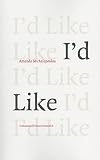
I'd Like is a collection of short stories, largely concerned with the difficulties of family life and relationships. It is, in some ways, reminiscent, in terms of themes at least, of the sort of middle class angst of someone like John Updike or Angus Wilson. I realise that authors like these tend to polarise readers, so I'll nail my colours to the mast straight away and say that this was one of the best pieces of writing I've read this year. The writing beautifully captures the mundanity, show more drama and ennui of domestic upheavals, and as stand alone pieces Michalopoulou's stories take a sledgehammer to the veneer of family life.
Where I'd Like really excels, however, is in the interweaving of its individual pieces. Sometimes they are only connected by motifs or the slightest apparent coincidences, but as the book progresses it becomes clear that we are looking at a composite view of a single family. Michalopoulou interlaces her narratives using a variety of connections, and blurs the lines by using devices such as metafiction to unsettle the reader's certainty concerning the 'reality' being uncovered. Characters have dialogues with future selves, or even, in one case, a dialogue with the book (I'd Like) itself. Although these devices are clever, Michalopoulou doesn't lose sight of their purpose, and in doing so creates a novel of sorts from her fragments. It is wonderfully written and even more wonderfully put together, and deserves to be much better known than it currently is. show less
Where I'd Like really excels, however, is in the interweaving of its individual pieces. Sometimes they are only connected by motifs or the slightest apparent coincidences, but as the book progresses it becomes clear that we are looking at a composite view of a single family. Michalopoulou interlaces her narratives using a variety of connections, and blurs the lines by using devices such as metafiction to unsettle the reader's certainty concerning the 'reality' being uncovered. Characters have dialogues with future selves, or even, in one case, a dialogue with the book (I'd Like) itself. Although these devices are clever, Michalopoulou doesn't lose sight of their purpose, and in doing so creates a novel of sorts from her fragments. It is wonderfully written and even more wonderfully put together, and deserves to be much better known than it currently is. show less
Yesterday I finished [I'd Like], by Amanda Michalopoulou, a book of interconnected stories that was reviewed in the first issue of Belletrista. The stories feature common characters and objects, but in an intriguing way. They go back and forth in time. The reader is sometimes able to guess a character's identity based only on a phrase or concern that appears in a previous story. Objects recur. Events are referred to in different ways by different people. About halfway through the book, I show more found myself starting to take notes to aid in untangling what was happening. The writing is deceptively clear and straightforward; though easy to read, the book demands attention as it draws you in, as you try to figure out the puzzle.
In a note at the end Michalopoulou mentions that the stories, taken together, operate like fragments of an unwritten novel. And indeed, that is the impression I am left with. It seems as though I've read a longer work, and what I've retained are the kinds of things one remembers after reading a novel: bits of dialogue, objects that seem to have some significance, an understanding of who belongs to what family, the interpersonal relationships that develop throughout the narrative, a basic sense of chronology.
It's a curious sensation, feeling as though I've been witness to a lengthy family saga, although I've read only a book of short stories. What does [I'd Like] have to say about the process of reading? Of the way a reader processes events and details, and of the rewards and frustrations of being personally involved with a text? show less
In a note at the end Michalopoulou mentions that the stories, taken together, operate like fragments of an unwritten novel. And indeed, that is the impression I am left with. It seems as though I've read a longer work, and what I've retained are the kinds of things one remembers after reading a novel: bits of dialogue, objects that seem to have some significance, an understanding of who belongs to what family, the interpersonal relationships that develop throughout the narrative, a basic sense of chronology.
It's a curious sensation, feeling as though I've been witness to a lengthy family saga, although I've read only a book of short stories. What does [I'd Like] have to say about the process of reading? Of the way a reader processes events and details, and of the rewards and frustrations of being personally involved with a text? show less
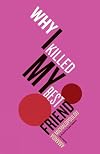
I was really drawn in by the central relationship of this novel. Two friends and rivals who love and despise each other in equal measure, locked in a constant cycle of fighting and making up. I love stories of complicated friendships, barely-concealed hatred, dependency that keeps two broken people together. It's ugly and frustrating, but damn is it delicious and fascinating reading.
Anna herself—the titular best friend—was a great, complex character: stubborn, manipulative, charismatic, show more labile, needy, impassioned. The kind of person you hate to be around but love to read about.
Everything surrounding these two characters was less successful. The political elements felt navel-gazey. The secondary characters didn't add much substance. And Maria's own journey of memory and art was underdeveloped. I like Michalopoulou's prose and I think she has a wonderful talent for crafting genuine human relationships among flawed characters. I just wish those characters had more to do here than simply travel from city to city, read books, fight, and fuck each other's boyfriends.
____________________
Global Challenge: Greece show less
Anna herself—the titular best friend—was a great, complex character: stubborn, manipulative, charismatic, show more labile, needy, impassioned. The kind of person you hate to be around but love to read about.
Everything surrounding these two characters was less successful. The political elements felt navel-gazey. The secondary characters didn't add much substance. And Maria's own journey of memory and art was underdeveloped. I like Michalopoulou's prose and I think she has a wonderful talent for crafting genuine human relationships among flawed characters. I just wish those characters had more to do here than simply travel from city to city, read books, fight, and fuck each other's boyfriends.
____________________
Global Challenge: Greece show less

I came to this text expecting a collection of short stories from the author of How I Killed My Best Friend. The blurb on the back, however, suggested that there was rather more on offer. I read the first piece and thought, “Wow, she can really do the short story form well.” I read the second and sensed that the blurb that I had mentally put to one side as hype was close to the truth. The second had been a completely different type of "short story” but it had a tangential, mysterious show more link to the first. I ploughed into the third and found yet another cast of characters and mundane events all of which were clearly "in touch” in some way with the first two. At this point I stopped and decided that I had to devise a strategy for reading all 13 texts. Pondering my exposure so far it occurred to me that I had enjoyed all of them so much that I had hardly noticed how beautifully executed they all were: the constructions, the peopling of them, the tensions and the delicacy were amazingly well done. And behind or beyond or alongside all of that there was the growing sense of connectedness that Michalopoulou was weaving. A network effect that nagged at my rational mind as my aesthetic mind raced through each story, or fragment as I had decided to refer to them.
The plan was devastatingly simple. I’d like to ration myself. There were only 10 fragments left for me. I would take my time. No more than 1 fragment a day and each fragment read closely and considered carefully before moving on.
Despite this cunning plan, as I started the last of the 13 fragments I was disappointed that there were no more beyond it. Fragment 13 cemented some of my assumptions about the possible relationships between all of the parts - but only some. They, the fragments, individually and collectively evoked another text. A text other than themselves? A text of which they might be part? An "other” text. A luminous text, not numinous but luminous. A text of extraordinary ordinariness.
And then I did something that I have not done for a very long time: I started to write a review and stopped almost as soon as I had started; I had not, I recognised, grasped the full import and art of what I had just read. This was more than a good book. This was an important text. This deserved more from me. And so I went back and started all over again but this time I was properly primed and ready to work.
Imagine that Amanda Michalopoulou had written a large, detailed, traditional novel of the everyday life and the ordinary lives of modern Greece. Imagine a finely crafted, fully detailed, beautifully developed novel of the highest order possible. Now imagine that that text had been delicately engraved onto a glitter ball and the manuscript destroyed. The glitter ball falls from the ceiling and shatters. A cleaner sweeps up the pieces but misses 13 that have scattered across the ballroom. You have found those 13 delicate, possibly chipped, pieces. Your job as the reader of I’d like is to reconstruct the possibility of that great Greek novel from fragments you have in your hands.
Imagine you have been handed 13 snowflakes: each very different, each exquisite, each fragile in its isolation. What did they come from? An avalanche? A snow man? A late spring snow shower?
This is an important text inasmuch that it shows how the novel could develop in the hands of great writers. Amanda Michalopoulou is a great writer. This is a great book.
To leave this review there, however, would be a travesty. As I thought about this review over the past few days, and put off starting it again and again, I wondered how Karen Emmerich had managed to convey such an important and fragile concept, such an intelligent and creative artefact from modern Greek into modern English. Karen Emmerich is a great translator who has done modern literature an enormous service.
Thank you Amanda and thank you Karen and in case I didn’t make it clear I quite enjoyed this book show less
The plan was devastatingly simple. I’d like to ration myself. There were only 10 fragments left for me. I would take my time. No more than 1 fragment a day and each fragment read closely and considered carefully before moving on.
Despite this cunning plan, as I started the last of the 13 fragments I was disappointed that there were no more beyond it. Fragment 13 cemented some of my assumptions about the possible relationships between all of the parts - but only some. They, the fragments, individually and collectively evoked another text. A text other than themselves? A text of which they might be part? An "other” text. A luminous text, not numinous but luminous. A text of extraordinary ordinariness.
And then I did something that I have not done for a very long time: I started to write a review and stopped almost as soon as I had started; I had not, I recognised, grasped the full import and art of what I had just read. This was more than a good book. This was an important text. This deserved more from me. And so I went back and started all over again but this time I was properly primed and ready to work.
Imagine that Amanda Michalopoulou had written a large, detailed, traditional novel of the everyday life and the ordinary lives of modern Greece. Imagine a finely crafted, fully detailed, beautifully developed novel of the highest order possible. Now imagine that that text had been delicately engraved onto a glitter ball and the manuscript destroyed. The glitter ball falls from the ceiling and shatters. A cleaner sweeps up the pieces but misses 13 that have scattered across the ballroom. You have found those 13 delicate, possibly chipped, pieces. Your job as the reader of I’d like is to reconstruct the possibility of that great Greek novel from fragments you have in your hands.
Imagine you have been handed 13 snowflakes: each very different, each exquisite, each fragile in its isolation. What did they come from? An avalanche? A snow man? A late spring snow shower?
This is an important text inasmuch that it shows how the novel could develop in the hands of great writers. Amanda Michalopoulou is a great writer. This is a great book.
To leave this review there, however, would be a travesty. As I thought about this review over the past few days, and put off starting it again and again, I wondered how Karen Emmerich had managed to convey such an important and fragile concept, such an intelligent and creative artefact from modern Greek into modern English. Karen Emmerich is a great translator who has done modern literature an enormous service.
Thank you Amanda and thank you Karen and in case I didn’t make it clear I quite enjoyed this book show less
Lists
Awards


You May Also Like


Associated Authors
Statistics
- Works
- 26
- Also by
- 2
- Members
- 199
- Popularity
- #110,456
- Rating
- 3.6
- Reviews
- 13
- ISBNs
- 32
- Languages
- 5