
Vladimir Majakovskij (1893–1930)
Author of The Bedbug and Selected Poetry
About the Author
Mayakovsky was one of Russia's most important avant-garde poets. A member of the Futurist group of painters and poets in the century's second decade, he became noted for his flamboyant public appearances, aesthetic iconoclasm, and very real verbal brilliance. Early involvement with the Bolsheviks show more in 1908 was followed years later by endorsement of the new Soviet government. Mayakovsky placed his talents at the service of the Soviet state, although his dreams for radical cultural changes were rebuffed by the new rulers, most of whom had relatively conservative tastes in literature. During the civil war and the 1920's, Mayakovsky wrote a great deal of agitational verse of varying quality; he also wrote film scenarios and two plays. A notable figure in the Soviet Union, with a considerable international reputation, he was allowed to travel abroad. However, he also drew harsh criticism for his deviation from the increasingly rigid cultural norms. This, combined with problems in his personal life, ultimately led to his suicide at age 36---an event that resounded greatly in Soviet culture. Mayakovsky was a great innovator in versification, striking in his use of extravagant metaphor and hyperbole. His experiments with rhythm, rhyme, and language affected many poets, and this originality went hand in hand with great lyric talent, often refracted through comic and tragic personas. Among his most important achievements are his long narrative poems, such as "A Cloud in Trousers" (1915), "War and the World" (1916), and "About That" (1923). Also excellent are his plays, "The Bedbug" (1928) and "The Bathhouse" (1929)---brilliant satires of Soviet philistinism and bureaucracy. (Bowker Author Biography) show less
Image credit: Vladimir Vladimirovitch Maïakovski en 1924
Works by Vladimir Majakovskij
Backbone Flute: Selected Poetry Of Vladimir Mayakovsky (English and Russian Edition) (2008) 31 copies, 1 review
The Fire Horse: Children's Poems by Vladimir Mayakovsky, Osip Mandelstam and Daniil Kharms (2003) 13 copies, 1 review
Opere scelte: poesie, poemi, teatro 8 copies
Antologia poética 6 copies
För full hals och andra dikter 6 copies
8: Teatro e altri scritti 4 copies
Il cavallino di fuoco 4 copies
33 Poesias 3 copies
Поэмы; Пьесы; Проза Т. 2 3 copies
Trinaesti apostol 3 copies
Bone! Poemoj de l' Oktobro 2 copies
Gedichte (Ausgewählte Werke, I) 2 copies
Marcia di sinistra 2 copies
Izbrannye proizvedeniia 2 copies
Люблю 2 copies
(Opere) 4: Opere : Poesie 1928-1930 2 copies
Poética: como fazer versos 2 copies
Vladimir Mai︠a︡kovskiĭ : kniga dli︠a︡ chtenii︠a︡ s kommentariem na angliĭskom i︠a︡zyke : Russian reader with explanatory notes (1989) 2 copies, 1 review
ein oktoberpoem 2 copies
3: Poesie 1926-1928 2 copies
Marcia di sinistra 2 copies
Pesme 2 copies
Владимир Маяковский: Поэмы и Пьесы 2 copies
Я сам 2 copies
Autobiografia e poemas 2 copies
Eilėraščiai. Poemos. Pjesės 2 copies
Стихотворения 2 copies
MAIAKOVSKI: POEMAS. (Translated by) Boris Schnaiderman / Augusto e Haroldo de Campos. (1982) 2 copies, 1 review
Raamat-loomaaed 2 copies
Флейта-позвоночник 2 copies
Poesie 2 copies
Een wolk in broek 2 copies
Poesia y Como se Hacen los Versos 2 copies
Sochinenii v dvukh tomakh 2 copies
Selected Verses 2 copies
Stikhotvoreniia 1 copy
Поэмы. Стихотворения 1 copy
Хорошо! Октябрьская поэма 1 copy
Vers et prose 1 copy
Eilėraščiai. Poemos. Pjesės 1 copy
Стихотворения. Поэмы. Пьесы 1 copy
Т. 1 1 copy
Сочинения в трех томах 1 copy
Misterio bufo 1 copy
Человек 1 copy
Облако в штанах Тетраптих 1 copy
The Bathhouse (A Play) 1 copy
Стихотворения. Поэмы. Пьесы 1 copy
Избранные сочинения 1 copy
Собрание сочинений в 2 томах 1 copy
Stikhotvoreniia 1 copy
これについて (マヤコフスキー叢書) 1 copy
とてもいい! (マヤコフスキー叢書) 1 copy
私自身(自伝) (マヤコフスキー叢書) 1 copy
風呂 (マヤコフスキー叢書) 1 copy
Париж 1 copy
О Дряни 1 copy
Сергею Есенину 1 copy
Письмо Татьяне Яковлевой 1 copy
Пощёчина Общественному Вкусу 1 copy
ガガ版 南京虫―奇想喜劇 1 copy
Poèmes Maiakovski 1913-17 1 copy
Стихотворения 1 copy
Проза. Драматургия 1 copy
7й Том из 13 1 copy
Vladimir Maiakovskiy 1 copy
Vladimir Ilich Lenin : poema 1 copy
Поэмы; Пьесы; Проза 1 copy
lo bueno y lo malo 1 copy
La Chinche, El Baño 1 copy
Θεατρικά 1 copy
Poemas esenciales 1 copy
Yo mismo, como hacer versos 1 copy
Poemas 1917-30 1 copy
Vladimir Ilich Lenin 1 copy
Μαγιακόβσκη: ποιήματα 1 copy
Antologia poética 1 copy
Poema a Lenin 1 copy
Obras deMaiakovski 1 copy
Trame urbane 1 copy
Lirika 1 copy
I corrispondenti operai 1 copy
Trei poeme de dragoste 1 copy
Gedichte 1 copy
150 Millionen 1 copy
Majakovskij 1 copy
Jubilee 1 copy
Il bagno 1 copy
Væggelusen 1 copy
Antología poética 1 copy
Werke 1 copy
MAF 3, 1922 1 copy
Lastele : [luuletused] 1 copy
Stjenica 1 copy
Flauta 1 copy
Valdimir Mayakovsky: Poems 1 copy
Lutikas ; Saun : [näidendid] 1 copy
Moje otkrivanje Amerike 1 copy
33 Poesias 1 copy
VLADIMIR ILICH LENIN POEMA 1 copy
Πως ανακάλυψα την Αμερική 1 copy
Frühe Gedichte 1 copy
Стихи и поэмы 1 copy
Werke Gedichte Band I.2 1 copy
Majakowski Werkausgabe Edition Suhrkamp: Band IV 1 – Prosa. Autobiographie, Reiseskizzen, Briefe 1 copy
Majakowski Werkausgabe Edition Suhrkamp: Band IV 2 – Prosa. Autobiographie, Reiseskizzen, Briefe 1 copy
Dlya Golosa 1 copy
Gut und schön 1 copy
Acerca de esto 1 copy
Kem byt' 1 copy
Hren Sie zu! 1 copy
Hören Sie zu! 1 copy
Linker Marsch 1 copy
De wandluis 1 copy
Publizistik 1 copy
Schwitzbad 1 copy
O láske 1 copy
Ausgewählte Werke 1 copy
(Opere) 5: Poemi 1 copy
Opere 1922-1925 1 copy
Proletario volante 1 copy
Opere 1912-1921 1 copy
Opere 1926-1927 1 copy
1: Poesie 1912-1923 1 copy
La cimice 1 copy
Opere 1928-1930 1 copy
Ode alla rivoluzione 1 copy
Ein Tropfen Teer : Reden u. Aufsätze / Wladimir Majakowski. [Aus d. Russ. übertr. von Hugo Huppert] 1 copy
Il poema di Lenin 1 copy
Opere - 5-poemi 1 copy
Associated Works
Against Forgetting: Twentieth-Century Poetry of Witness (1993) — Contributor — 377 copies, 2 reviews
Anthology of Russian Literature in the Soviet Period from Gorki to Pasternak (1960) — Contributor — 69 copies
On the Art and Craft of Writing — Contributor — 1 copy
Firefly in a Box: An Anthology of Soviet Kid Lit (Cultures of Childhood) (2025) — Contributor — 1 copy
近代ロシア詩集 — Contributor — 1 copy
Tagged
Common Knowledge
- Canonical name
- Mayakovsky, Vladimir
- Legal name
- Mayakovsky, Vladimir Vladimirovich
- Birthdate
- 1893-07-19
- Date of death
- 1930-04-14
- Gender
- male
- Education
- Moscow Art School
- Occupations
- poet
dramatist
artist
actor - Relationships
- Brik, Lili (Compagne)
- Short biography
- Ten days after Mayakovsky's death, the investigating officer was himself killed, fuelling speculation about the nature of Mayakovsky's death.
- Cause of death
- possible suicide
- Nationality
- Russia
- Birthplace
- Bagdadi, Georgia, Russian Empire
- Places of residence
- Moscow, Russia
- Place of death
- Moscow, Russia
- Burial location
- Novodevichy Cemetery, Moscow, Russian Federation
- Associated Place (for map)
- Russia
Members
Reviews

Eighty years later, it is astonishing and terrifying how much of what he saw still holds. If it's somewhat disconcerting (but interesting) to meet this poetic genius in the guise of a Communist haranguer, the three poems at the end alone are already worth the price of this beguiling, electric, neon-highlighted, righteous-minded, at times screamingly funny travelogue.
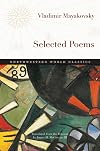
Mayakovsky has many of the elements that I find interesting in a writer: anguished as a man, challenging and controversial as a poet, and having lived in an era of turmoil. His short career spanned the Russian revolution, of which he was a staunch supporter, before he committed suicide at the age of 37.
Like Whitman, Mayakovsky wrote grandiosely, magnifying himself, e.g. “I am everywhere there is pain”, and comes across as messianic at times. As Whitman felt a connection to the common show more man and to the American ideal, Mayakovsky champions the proletarian and the Bolshevik revolution. Both men also challenged existing poetical forms and developed new ones.
Unfortunately for Mayakovsky, he was adored neither by the working man, who found his “futurism” odd and his braggadocio rude, nor Soviet leaders, at least until after his death. However, when Stalin decreed “Mayakovsky was and remains the best and most talented poet of our Soviet epoch. Indifference to his memory and his works is a crime“, public places were named after him (including one of the most beautiful subway stations in the world in Moscow), and schoolchildren were forced to memorize some of his more nationalistic poems, also earning a degree of hatred for him in the future. When perestroika arrived, he was quickly denounced.
And there are certainly things to dislike. In the aftermath of the revolution, Mayakovsky’s poetry often reads like propaganda; though that itself is of interest to me, it’s unfortunate he ended up on the wrong side of history. Worse yet, in promoting the future, he felt a need to tear down all aspects of the past, including other artists, and his scorn and derision extended to those around him. It seems fitting to me that Whitman died content in old age, revered by Americans, while the tortured Mayakovsky committed suicide after arguing with a lover.
However, with all that said, Mayakovsky held my interest. He was a revolutionary from an early age, and got sent to prison at the age of 14 for seditious activities. He was in unhappy love affairs, most notably with Lily Brik, a married woman, who returned his love briefly but then retreated, reducing Mayakovsky to a ‘family friend’, a relationship reminiscent of Turgenv and the Viardots that similarly raised eyebrows. He was a so-called ‘Futurist’ who sought to advance the world in all ways. He was truly idealistic, and in a naïve way, imagining a time when life would be much easier because of technology (his long poem The Flying Proletarian reminds one of the cartoon The Jetsons), and because wealth would be shared, the communist dream. While he glorified Russia and the Revolution, he traveled to America and was impressed with the technological achievements he found there, and he had fantastical and creative visions in his works, of riding comets, walking skyscrapers, and talking violins among other things.
Lastly, this edition is very well put together, both in the selection of material and in the 52 pages of very helpful notes on the poems and their references in the back. McGavran does an excellent job of helping the English reader understand portions of Mayakovsky’s inventive word play which are impossible to translate, including at times the original Russian to show unique rhyming patterns, palindromic soundplay, his inclusion of challenging proper names and English words and then finding rhymes in Russian, and in one case a staccato pattern that emphasized agitation and a martial drumbeat.
My favorites:
Lilichka! In Place of a Letter (1916)
The Brooklyn Bridge (1925)
The Cloud in Pants (1914-15)
The Backbone Flute (1915)
I Love (1922)
As for quotes, just this excerpt from The Backbone Flute, on love:
“you and I will be all
that remains,
and I
will chase you from city to city.
You’ll be given away in marriage across the sea,
trying to hide in night’s burrow –
I’ll kiss into you through the London fog
with the fiery lips of streetlamps.
In the heat of the desert you’ll stretch out your caravans,
with lions standing guard –
beneath you
under the windblown sand,
I’ll place my burning Sahara cheek.
You’ll deposit a smile in your lips
as you watch –
the toreador is so handsome!
And suddenly I’ll
fling my jealousy into the stands
through the dying eye of the bull.
If you should point your absentminded steps to a bridge
and think
how nice it would be to jump down –
It is I,
the Seine poured out underneath,
who will call to you,
baring my rotten teeth.
If, with another, you light up with horse-hoof fire
the Strelka or the Sokolniki,
then I, clambering way up above,
patient and naked, will torment you with moonlight.
I’m strong,
and soon they’ll need me –
they’ll command:
kill yourself in the war!
My last word will be
your name,
clotted on my shrapnel-shredded lips.
Will they give me a crown?
Or send me to Saint Helena?
I who have saddled the cloudbanks of life’s storm
am an equal candidate
for tsar of the universe
and
the shackles.
If it’s determined that I should be tsar,
then your dear little face
on the sunny gold of my coins
I’ll order my people
to stamp!
But if I wind up
where the world fades into tundra,
where the river trades with the north wind,
then I’ll scratch the name Lily onto my chains
and kiss them blind in the dark of my prison camp.” show less
Like Whitman, Mayakovsky wrote grandiosely, magnifying himself, e.g. “I am everywhere there is pain”, and comes across as messianic at times. As Whitman felt a connection to the common show more man and to the American ideal, Mayakovsky champions the proletarian and the Bolshevik revolution. Both men also challenged existing poetical forms and developed new ones.
Unfortunately for Mayakovsky, he was adored neither by the working man, who found his “futurism” odd and his braggadocio rude, nor Soviet leaders, at least until after his death. However, when Stalin decreed “Mayakovsky was and remains the best and most talented poet of our Soviet epoch. Indifference to his memory and his works is a crime“, public places were named after him (including one of the most beautiful subway stations in the world in Moscow), and schoolchildren were forced to memorize some of his more nationalistic poems, also earning a degree of hatred for him in the future. When perestroika arrived, he was quickly denounced.
And there are certainly things to dislike. In the aftermath of the revolution, Mayakovsky’s poetry often reads like propaganda; though that itself is of interest to me, it’s unfortunate he ended up on the wrong side of history. Worse yet, in promoting the future, he felt a need to tear down all aspects of the past, including other artists, and his scorn and derision extended to those around him. It seems fitting to me that Whitman died content in old age, revered by Americans, while the tortured Mayakovsky committed suicide after arguing with a lover.
However, with all that said, Mayakovsky held my interest. He was a revolutionary from an early age, and got sent to prison at the age of 14 for seditious activities. He was in unhappy love affairs, most notably with Lily Brik, a married woman, who returned his love briefly but then retreated, reducing Mayakovsky to a ‘family friend’, a relationship reminiscent of Turgenv and the Viardots that similarly raised eyebrows. He was a so-called ‘Futurist’ who sought to advance the world in all ways. He was truly idealistic, and in a naïve way, imagining a time when life would be much easier because of technology (his long poem The Flying Proletarian reminds one of the cartoon The Jetsons), and because wealth would be shared, the communist dream. While he glorified Russia and the Revolution, he traveled to America and was impressed with the technological achievements he found there, and he had fantastical and creative visions in his works, of riding comets, walking skyscrapers, and talking violins among other things.
Lastly, this edition is very well put together, both in the selection of material and in the 52 pages of very helpful notes on the poems and their references in the back. McGavran does an excellent job of helping the English reader understand portions of Mayakovsky’s inventive word play which are impossible to translate, including at times the original Russian to show unique rhyming patterns, palindromic soundplay, his inclusion of challenging proper names and English words and then finding rhymes in Russian, and in one case a staccato pattern that emphasized agitation and a martial drumbeat.
My favorites:
Lilichka! In Place of a Letter (1916)
The Brooklyn Bridge (1925)
The Cloud in Pants (1914-15)
The Backbone Flute (1915)
I Love (1922)
As for quotes, just this excerpt from The Backbone Flute, on love:
“you and I will be all
that remains,
and I
will chase you from city to city.
You’ll be given away in marriage across the sea,
trying to hide in night’s burrow –
I’ll kiss into you through the London fog
with the fiery lips of streetlamps.
In the heat of the desert you’ll stretch out your caravans,
with lions standing guard –
beneath you
under the windblown sand,
I’ll place my burning Sahara cheek.
You’ll deposit a smile in your lips
as you watch –
the toreador is so handsome!
And suddenly I’ll
fling my jealousy into the stands
through the dying eye of the bull.
If you should point your absentminded steps to a bridge
and think
how nice it would be to jump down –
It is I,
the Seine poured out underneath,
who will call to you,
baring my rotten teeth.
If, with another, you light up with horse-hoof fire
the Strelka or the Sokolniki,
then I, clambering way up above,
patient and naked, will torment you with moonlight.
I’m strong,
and soon they’ll need me –
they’ll command:
kill yourself in the war!
My last word will be
your name,
clotted on my shrapnel-shredded lips.
Will they give me a crown?
Or send me to Saint Helena?
I who have saddled the cloudbanks of life’s storm
am an equal candidate
for tsar of the universe
and
the shackles.
If it’s determined that I should be tsar,
then your dear little face
on the sunny gold of my coins
I’ll order my people
to stamp!
But if I wind up
where the world fades into tundra,
where the river trades with the north wind,
then I’ll scratch the name Lily onto my chains
and kiss them blind in the dark of my prison camp.” show less
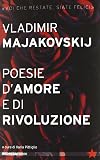
L’edizione di questo libro l’ho trovata stupenda, a cominciare dalla copertina, dal formato delle pagine, dei caratteri e delle immagini. Il fuoco rivoluzionario di Majakovskij traspare chiaro e si avverte in maniera forte in ogni poesia, e talvolta esso diventa un tutt’uno con l’amore. E’ stato davvero interessante leggere le parole di uomo che ha dedicato la sua vita ad una causa, e il suo spirito rivoluzionario nei confronti di schemi già stabiliti è qualcosa da cui si può show more prendere esempio, anche in un contesto diverso e più ampio rispetto al pensiero comunista, non fosse altro per l’intensità con cui ha vissuto la sua vita e le sue convinzioni. show less
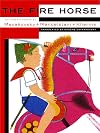
This delightful little book of three children's poems as collaborations with illustrators is a perfectly preserved snapshot of art & culture in early Soviet Russia. The poets' voices are as distinct and wonderful as the illustrators' inventions with which they are paired. Ostashevsky's translation is not to be discounted, as each poem reads aloud with liveliness and preserves the unique characteristics of the poet's style. This is a treasure to share with my children and NYRB has done an show more exemplary job in preserving this gorgeous slice of history. show less
Lists
Awards


You May Also Like


Associated Authors
Statistics
- Works
- 411
- Also by
- 18
- Members
- 2,436
- Popularity
- #10,538
- Rating
- 4.0
- Reviews
- 29
- ISBNs
- 291
- Languages
- 22
- Favorited
- 21
