
Jon Amiel
Author of Entrapment [1999 film]
About the Author
Image credit: credit: ryancoleman/wikimedia.org
Works by Jon Amiel
4 Film Favorites: Love Stories Collection (Forever Young, The Lake House, Message in a Bottle, Sommersby) (2011) — Director — 4 copies
The Luck Child [1988 The StoryTeller TV episode] — Director — 2 copies
4 Film Favorites: Richard Gere (An Officer and a Gentleman / Sommersby /American Gigolo / Nights in Rodanthe) (2013) — Director — 2 copies
The Core 4K UHD 1 copy
Double Feature: Entrapment [and] The League of Extraordinary Gentlemen [DVD set] — Director — 1 copy
Don't Say a Word / Entrapment / High Crimes — Director — 1 copy
Associated Works
Tagged
Common Knowledge
- Birthdate
- 1948-05-20
- Gender
- male
- Education
- University of Cambridge
- Occupations
- director
producer - Nationality
- UK
- Birthplace
- London, England, UK
- Map Location
- England, UK
Members
Reviews

An old man tells folktales to his dog.
At its best it's fun, and at its worst it's at least interesting. It's one of the only faithful screen adaptations of fairy tales. They just don't make shows like this - and understandably. Henson and Minghella apparently just said "fuck it" to every conventional idea of what audiences like and made the weird-ass show they felt like making.
Concept: A
Story: B
Characters: C
Dialog: B
Pacing: C
Cinematography: C
Special effects/design: A
Acting: B
Music: show more B
Enjoyment: A
GPA: 3.0/4 show less
At its best it's fun, and at its worst it's at least interesting. It's one of the only faithful screen adaptations of fairy tales. They just don't make shows like this - and understandably. Henson and Minghella apparently just said "fuck it" to every conventional idea of what audiences like and made the weird-ass show they felt like making.
Concept: A
Story: B
Characters: C
Dialog: B
Pacing: C
Cinematography: C
Special effects/design: A
Acting: B
Music: show more B
Enjoyment: A
GPA: 3.0/4 show less

Substance: Scriptwriter Nicholas Meyer parlays what could have been an interesting story of romance and redemption into a melodramatic costume-bodice-ripper. (see Wikipedia for plot details).
Jack Sommersby returns from a Union POW camp after many years to resume his life as a Tennessee landowner, displacing the steadfast and chaste suitor of his wife, Laurel. However, the man claiming to be Jack may be an imposter, and the movie makes it clear from the beginning that he is.
The clues are show more fairly planted, and the ending tries to be heroic, but the story is marred by numerous plot and character holes (undoubtedly tropes but I don't have time to look them up.)
Basically, we are given two choices: the protagonist
really is Jack Sommersby, known to the whole community as a wife-beating wastrel, or else he is a teacher from a nearby county who has an even worse reputation as a thief, cad, and coward.
In either case, we are supposed to believe that whoever-he-is has metamorphosed into a kinder, gentler soul, solicitous of his wife's feelings, compassionate to the newly-freed slaves, and worthy of the community's trust. He demonstrates all this, but there is no back-story to motivate the changes, thus they are not believable IN THIS CONTEXT.
(If the man pretending to be Jack really was such a good person, it would ruin the ending Meyer wants to push for dramatic effect).
Even more egregious, his wife goes back to his bed within hours of his "resurrection" and does not make him prove he has changed his ways for the better before coming to love him "more than she loved her husband".
Major nitpicking: a good lawyer would have shredded the murder case against Jack that leads to his decision that he prefers to be a dead reformed Jack than a live reformed Horace.
Minor nitpicking: the townspeople let "Sommersby" go off alone with their treasures (to sell for tobacco seed). Even if they all believed he had reformed (not likely!), no one would travel the post-war South without several armed companions.
Style: Beautifully filmed, well-structured portrayal of war-torn Tennessee (a little bit too clean), good minor characters. The passionate love scenes are not outrageously randy and supposedly involve a married couple. Well acted, given the pedestrian script (yes, I know who Nicholas Meyer is). show less
Jack Sommersby returns from a Union POW camp after many years to resume his life as a Tennessee landowner, displacing the steadfast and chaste suitor of his wife, Laurel. However, the man claiming to be Jack may be an imposter, and the movie makes it clear from the beginning that he is.
The clues are show more fairly planted, and the ending tries to be heroic, but the story is marred by numerous plot and character holes (undoubtedly tropes but I don't have time to look them up.)
Basically, we are given two choices: the protagonist
really is Jack Sommersby, known to the whole community as a wife-beating wastrel, or else he is a teacher from a nearby county who has an even worse reputation as a thief, cad, and coward.
In either case, we are supposed to believe that whoever-he-is has metamorphosed into a kinder, gentler soul, solicitous of his wife's feelings, compassionate to the newly-freed slaves, and worthy of the community's trust. He demonstrates all this, but there is no back-story to motivate the changes, thus they are not believable IN THIS CONTEXT.
(If the man pretending to be Jack really was such a good person, it would ruin the ending Meyer wants to push for dramatic effect).
Even more egregious, his wife goes back to his bed within hours of his "resurrection" and does not make him prove he has changed his ways for the better before coming to love him "more than she loved her husband".
Major nitpicking: a good lawyer would have shredded the murder case against Jack that leads to his decision that he prefers to be a dead reformed Jack than a live reformed Horace.
Minor nitpicking: the townspeople let "Sommersby" go off alone with their treasures (to sell for tobacco seed). Even if they all believed he had reformed (not likely!), no one would travel the post-war South without several armed companions.
Style: Beautifully filmed, well-structured portrayal of war-torn Tennessee (a little bit too clean), good minor characters. The passionate love scenes are not outrageously randy and supposedly involve a married couple. Well acted, given the pedestrian script (yes, I know who Nicholas Meyer is). show less

This was a very weak season. Pope Alexander VI was relegated very much to the background, while Cesare was the main character. They really ought to have called this "The Cesare Borgia Show." Luckily Francois Arnaud is talented and charismatic enough that he could carry the whole season by himself. I also *really* did not like how they decided to go the incest route with Cesare and Lucrezia - it was considered a salacious rumor by people at the time, and I'm really disappointed that the show more writers chose to run with it just to shock us. Also, there were WAY too many convenient coincidences, characters running into eachother to facilitate plot developments, people getting there/doing something at just the right time. Honestly just a letdown. show less
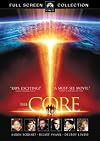
A science fiction disaster movie. The core of the earth stops spinning, which causes the worlds EM field to start to have issues. The plan is to go to the center of the earth, set of some nukes and restart the molten core. Virgil, a vehicle designed to go into the earths core is rushed into service and a space shuttle crew along with scientist head down to set of the nukes. Things, as they usually do, go wrong. People are killed and they have to change their plans. But of course they show more succeed, the earth is saved.
If you discount the faulty science, it's not a bad movie. Not a great one either. I enjoyed though. show less
If you discount the faulty science, it's not a bad movie. Not a great one either. I enjoyed though. show less
You May Also Like


Associated Authors
Statistics
- Works
- 19
- Also by
- 1
- Members
- 993
- Popularity
- #25,941
- Rating
- 3.6
- Reviews
- 12
- ISBNs
- 63
- Languages
- 1