
Caroline Leavitt
Author of Pictures of You
About the Author
Caroline Leavitt has written several books including Girls in Trouble, Coming Back to Me, Living Other Lives, Family, Jealousies, Lifelines and Pictures of You. She won First Prize in Redbook Magazine's Young Writers Contest for her short story, Meeting Rozzy Halfway, which grew into the novel and show more the 1990 New York Foundation of the Arts Award for Fiction for Into Thin Air. Her essays, stories, and articles have appeared in numerous publications including New York magazine, Psychology Today, Parenting, The San Francisco Chronicle, The Chicago Tribune, and The Washington Post. She is a book critic for The Boston Globe and People and a writing instructor at UCLA online. Leavitt is the author of the bestseller, It this Tomorrow. (Bowker Author Biography) show less
Works by Caroline Leavitt
Associated Works
My Bookstore: Writers Celebrate Their Favorite Places to Browse, Read, and Shop (2012) — Contributor — 620 copies, 16 reviews
What My Mother Gave Me: Thirty-one Women on the Gifts That Mattered Most (2013) — Contributor — 106 copies, 19 reviews
Alone Together: Love, Grief, and Comfort in the Time of COVID-19 (2020) — Contributor — 68 copies, 7 reviews
On Being Jewish Now: Reflections from Authors and Advocates (2024) — Contributor — 41 copies, 2 reviews
For Keeps: Women Tell the Truth About Their Bodies, Growing Older, and Acceptance (2007) — Contributor — 30 copies, 2 reviews
Private Investigations: Mystery Writers on the Secrets, Riddles, and Wonders in Their Lives (2020) — Contributor — 29 copies, 4 reviews
Tagged
Common Knowledge
- Birthdate
- 1952-01-09
- Gender
- female
- Nationality
- USA
- Places of residence
- Hoboken, New Jersey, USA
- Associated Place (for map)
- New Jersey, USA
Members
Reviews
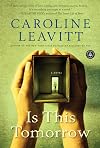
I read Caroline Leavitt's best selling and critically acclaimed novel Pictures of You a few years ago and became so invested in her characters and story, I couldn't wait to see what she would write next. It was worth the wait because Is This Tomorrow is a knockout of a novel.
Ava Lark is a divorcee with a twelve-year-old son Lewis. They move to a small suburb near Boston in 1956, where a divorced woman, not to mention a Jewish divorced woman, is looked upon with suspicion.
The only friend she show more has is a widow, Dot, who has two children Jimmy and Rose. Jimmy, Rose and Lewis are best friends, and Jimmy has a little crush on Ava. Ava is kind to Jimmy and Rose, but when Jimmy goes missing, people (including the police) focus their attention on Ava and the many men (six) she has dated over the past three years.
While the framework of the missing boy propels the storyline, it is the characters of Ava and Lewis who are the heart of this story. Rather than a typical mystery novel, this beautiful book is about what it feels like to be an outsider.
Ava is lonely; the women she works with leave her out of their social activities and the neighborhood women fear that the beautiful Ava will steal their husbands. She dates a musician, and planned to introduce him to Lewis on the day that Jimmy disappeared.
The boyfriend asks Ava to move away with him, but she cannot do that to Lewis. He is devastated by the disappearance of his best friend, and he and Rose spend all their time trying to find out what happened to Jimmy.
Leavitt clearly did a lot of research of the time period. I felt totally immersed in the atmosphere of that time- the fear of Communism, the food they ate, the clucking about Ava being a working woman, the way the neighborhood kids played outside without adult supervision.
The second half of the book moves forward in time, and we see Lewis working as a nurse aide. I just fell in love with Lewis, and my heart ached so much for him. He struggles to find his place in this world, to find someone to love and share his life, but is difficult to get beyond his past.
The mystery of what happens to Jimmy is solved, and how it is solved comes as a shock to many people, myself included.
Leavitt writes beautifully and her turn of phrase really caught my eye. As Lewis gets older, he no longer gives Ava a kiss goodnight.
"I forgot," he'd tell her in the morning, but he forgot to kiss her more and more, and she found herself collecting those losses like debts that might never be paid."
When Lewis begins to meet his coworkers at a weekly bowling game, he thinks about how little he really knows his friends.
"It made him wonder how well he really knew John or Mick, or when you thought about it, how well they knew him. When he talked, he shot the breeze about the hospital or Madison. It was all casual, loose as pocket change that never adds up to anything."
I think most people at one time or another have felt like an outsider, and so can relate to Ava and Lewis. Leavitt taps into those feelings of loneliness, and brings these characters to vivid life. We feel for Lewis and are grateful that we don't face the uncertainty that Dot and Rose feel when Jimmy is missing.
It is said that good fiction makes the reader empathetic; if that is true, then Is This Tomorrow is great fiction, for my heart ached for all of the people in this terrific novel, an Indie Next Pick for May. show less
Ava Lark is a divorcee with a twelve-year-old son Lewis. They move to a small suburb near Boston in 1956, where a divorced woman, not to mention a Jewish divorced woman, is looked upon with suspicion.
The only friend she show more has is a widow, Dot, who has two children Jimmy and Rose. Jimmy, Rose and Lewis are best friends, and Jimmy has a little crush on Ava. Ava is kind to Jimmy and Rose, but when Jimmy goes missing, people (including the police) focus their attention on Ava and the many men (six) she has dated over the past three years.
While the framework of the missing boy propels the storyline, it is the characters of Ava and Lewis who are the heart of this story. Rather than a typical mystery novel, this beautiful book is about what it feels like to be an outsider.
Ava is lonely; the women she works with leave her out of their social activities and the neighborhood women fear that the beautiful Ava will steal their husbands. She dates a musician, and planned to introduce him to Lewis on the day that Jimmy disappeared.
The boyfriend asks Ava to move away with him, but she cannot do that to Lewis. He is devastated by the disappearance of his best friend, and he and Rose spend all their time trying to find out what happened to Jimmy.
Leavitt clearly did a lot of research of the time period. I felt totally immersed in the atmosphere of that time- the fear of Communism, the food they ate, the clucking about Ava being a working woman, the way the neighborhood kids played outside without adult supervision.
The second half of the book moves forward in time, and we see Lewis working as a nurse aide. I just fell in love with Lewis, and my heart ached so much for him. He struggles to find his place in this world, to find someone to love and share his life, but is difficult to get beyond his past.
The mystery of what happens to Jimmy is solved, and how it is solved comes as a shock to many people, myself included.
Leavitt writes beautifully and her turn of phrase really caught my eye. As Lewis gets older, he no longer gives Ava a kiss goodnight.
"I forgot," he'd tell her in the morning, but he forgot to kiss her more and more, and she found herself collecting those losses like debts that might never be paid."
When Lewis begins to meet his coworkers at a weekly bowling game, he thinks about how little he really knows his friends.
"It made him wonder how well he really knew John or Mick, or when you thought about it, how well they knew him. When he talked, he shot the breeze about the hospital or Madison. It was all casual, loose as pocket change that never adds up to anything."
I think most people at one time or another have felt like an outsider, and so can relate to Ava and Lewis. Leavitt taps into those feelings of loneliness, and brings these characters to vivid life. We feel for Lewis and are grateful that we don't face the uncertainty that Dot and Rose feel when Jimmy is missing.
It is said that good fiction makes the reader empathetic; if that is true, then Is This Tomorrow is great fiction, for my heart ached for all of the people in this terrific novel, an Indie Next Pick for May. show less
How Leavitt captured the 50's--nuclear paronoia, attitudes toward women and work, suspicion of divorced women! The buzz words of the era are unspooled so gracefully that it feels as if we're really there. Leavitt not only masters plot, but has a rare sensitivity to gesture and language. Listen to this metaphor on P. 39, a tender scene between pre-adolescents Rose and Lewis. He's feverish, lying on his sleeping bag, and she tends to him. "When she leaned over, one of her braids dusted against show more his chest, rising and falling as if it were alive and breathing along with him." Now that's writing! You'll never forget these characters! show less

Near perfection (~90%).
(Full disclosure: I received a free ARC for review through Edelweiss/Library Thing. Trigger warning for rape and domestic violence.)
Once again, Iris thought, here she was, undone by love and mad with grief because of it. She had seen that poster in Lucy’s room, that ridiculous sentiment that you don’t belong to me, and I don’t belong to you, but if we find each other, it’s beautiful. What a stupid thing to say! Of course people belonged to each other. Love show more owned you. It kept you captive.
At sixty-seven, Iris Gold had long since given up on having children. She and her late husband Doug were never quite able; and, when she broached the idea of adopting, he insisted that he didn't want to raise children who weren't his own, biologically speaking.
But after a long and loving - if unconventional - marriage, Doug passed away in his sixties, felled in his beloved garden by a heart attack. Initially grief-stricken, Iris finally decided to carry on, as she always had done. Iris is nothing if not a survivor - a "tough old bird" - and this would hardly be the first time she'd had to fend for herself (the scandal!). So she decided to use the money Doug left her to travel to all the places she'd dreamed of, but had never been able to go: Paris. Spain. Istanbul.: "The whole world was opening for her."
Days before she was to depart for her new life, an unexpected phone call threw Iris Gold one more curve ball - and not the last. A man from Iris's long-buried past had died suddenly; he and his wife perished in a club fire, leaving their two little girls orphaned. Five-year-old Lucy and six-year-old Charlotte had no other relatives. Reluctantly, Iris canceled her plans and took the girls in. In her golden years, Iris finally got the life she'd always wanted; or almost, anyway. She fell in love quickly and deeply, as did Lucy; Charlotte was a little slower to come around, but come around she did.
Now it's eleven years later; Lucy is a sophomore in high school, and Charlotte will be headed off to college in a few short months. But Iris's life is upended again, when Lucy disappears on the last day of school. Though Iris doesn't know it yet - won't, for many months - Lucy ran off to the Pennsylvania wilderness to be with her thirty-year-old English teacher, William Lallo. In her wake, Lucy leaves behind a cryptic note assuring Iris and Charlotte of her safety - and a family that's tattered and struggling, but surviving as best it can.
Cruel Beautiful World is one damn cruel and beautiful book. The story is told from a multitude of perspectives: Iris, Lucy, and Charlotte, of course; but also Patrick, a small farmer/would-be-botanist/widower to whom Lucy reaches out for help; Patrick's ex-in-laws, who blame Patrick for their daughter's death; William's mother Diana, who insists on her son's innocence; and the rapist himself, William Lallo (more on that later). The story very quickly branches out and becomes much bigger than Lucy and William. While their story plays out in 1969 - against the backdrop of the Tate-Labianca murders and the Manson Family trial; the Vietnam War and Kent State - its roots lie in 1917, in World War I and a whirlwind romance between a twenty-seven-year-old, red-headed "spinster" and a soldier home on leave.
What initially drew me to this book was the mention of the Manson girls in the synopsis. I have a thing for cults in general, and the Manson Family in particular (childhood true crime buff with a college minor in sociology here). Yet the connection is much smaller and more tenuous than I expected - and I'm okay with that. The Manson murders are just one of several then-current events that set the backdrop for the story. As her "relationship" (if you can call it that) with William sours, Lucy draws parallels between him and Charlie. Yet there's also a murder much closer to home that strikes fear into Lucy's heart, causing William to bring a gun home - which only intensifies her fear. Likewise, in reaction to the Kent State massacre, campus protests against the Vietnam War heat up, which heightens Lucy's homesickness - with Charlotte now at Brandeis, certainly the sisters could bond over marches and sit-ins?
Going back even further, Iris's situation - and that of so many other women who found meaningful, paying work, only to have it taken away at the end of the war - mirrors Lucy's too. When marriage and the end of WWI forces her to leave her job as a welder at a shipyard - which she's come to love, along with the independence it and Doug's absence provides her - she's overcome with anxiety. What will she do with her days? Iris is captive, not to a rapist pedophile teacher like Lucy, but to the suffocating roles society assigns to men and (especially) women.
Leavitt's writing is simply lovely: lyrical and insightful, almost as likely to bring a smile to your lips as a tear (or a whole river of 'em) to your eye. Leavitt creates compelling characters, and truly moving relationships. I especially loved Iris and Doug (and, later, Iris and Joe - kudos to Leavitt for acknowledging the sex lives of seniors!). Their relationship is just as beautiful as it is heartbreaking. Though neither could be what the other wanted, they did the best they could, given the circumstances - and they built a deep and true friendship that lasted a lifetime. I also adored Iris and the girls, and Patrick and Vera.
Lucy and Charlotte are engaging, interesting protagonists, even if I couldn't always relate to them. Maybe it's the difference in era, or upbringing? Weirdly, as someone who woke up one day to find herself nearing middle age, Iris's experiences in aging hit much closer to home. Though she'd probably laugh or scoff, seeing as I'm young enough yet to be her daughter.
Leavitt's depiction of William and Lucy is masterful. Well, mostly. While William would protest that he's not a pedophile or rapist - he loves Lucy and only Lucy because she's a special snowflake/old soul - Leavitt unmasks him for the monster he is.
After absconding with Lucy to the Pennsylvania wilderness, he keeps her in near-total isolation - allegedly for his/her/their protection, so they won't get caught and he won't go to jail. He prohibits her from leaving the property, and will not let her get a job, her GED, or even a license. When she happens upon a bicycle, she hides it in the forest behind their house so he won't confiscate it. He forces his beliefs on her: she cannot have a television, because it rots her brain, and when she picks up a package of hamburger in the store, he informs her that they're now vegetarians. (I'm a vegan, but using diet as a form of control isn't something I can get behind.) When she gets a job, in secret, Lucy fantasizes about spending her money on cookies, deli meat, and soda - "the things William wouldn’t keep in the house" - and binge-eating it on the side of the road.
In other words, William is controlling AF; while this behavior is at first couched in a sort of Romeo & Juliet romance, Lucy quickly realizes that this isn't so. He becomes paranoid and violent: Lucy could swear she's being watched during the day, and William gives her "love taps" that hurt. In what comes as no surprise to anyone who knows anything about domestic violence and escalation, William punches Lucy in the face when he catches her hitching a ride home with some guy. He buys a gun and makes her learn how to use it. About the only thing he doesn't do is threaten to hurt the chickens, one of whom Lucy's bonded with.
(Abusers often threaten to hurt animals as a means of further terrorizing their victims. And, since abusers often begin by isolating their victims, the family pet may be the only friend or social connection they have left ... as is the case with Lucy, for a short time, anyhow. As an aside: domestic violence shelters are finally getting hip to this fact! If you want to help, see if your DV shelter accepts nonhuman animals; if so, volunteer as a foster home! I do and it's super-awesome. And no, I never miss an opportunity to talk this up, because so few people know about it.)
And as to Lucy being an anomaly, a one-time "indiscretion": she isn't the first student William took a liking to. Make no mistake, he is a rapist and a serial predator and more, but spoilers.
This is why I was so disappointed by the ending. While I loved 90% of the book, there are a few parts that dulled the shine for me, just a bit. For one, and as I already mentioned, Leavitt gives William the opportunity to speak for himself, to tell his side of the story. Though this is partly out of necessity - he's the only one who can shine a light on said events - and the narrative (mostly) contradicts his version of events, it's still kind of gross. On the one hand, it's certainly a lesson in how rapists see themselves - they're the victims, no one understands them, they were seduced and powerless to stop themselves, and on and on. Hopefully you're hip enough to rape culture to see this for the self-serving BS it is. But Charlotte - William's audience - lacks the tools to fully dismantle his rape apologism, and the story suffers for it.
Additionally, after she finds and reads Lucy's diary, Charlotte comes to envy her sister. Sibling rivalry is one of many themes central to the story, and it's fascinating to see the different ways that Lucy and Charlotte view each other, their relationship, and the one they share with Iris. Charlotte feels frumpy, shy, and unpopular, especially when compared to the beautiful and outgoing Lucy. Meanwhile, Lucy fears she might be stupid, and envies Charlotte's intelligence and beauty.
Anyway, Lucy's diary reveals that she was good at something: writing. In it Charlotte sees a girl who is wild and free, who is true to herself and follows her dreams. And she vows to be a little more like her younger sister: to make friends, worry less about her grades, put herself out there and go after what she wants in life, consequences be damned.
But here's the thing. Lucy wasn't a free agent, or not wholly so. She was William's victim. He spent months grooming her, identifying her weaknesses and then exploiting them. Where Lucy felt inadequate and destined for a life of drudgery, William complimented her writing and offered to work with her, improving it. Both Iris and Charlotte realized that Lucy craved the attention of boys - older ones in particular - thanks in no small part to her childhood. Dad was a womanizer who kept trading in his wives for progressively younger models. Attention was a reward to be doled out to the daughter who acted a certain way: outgoing, flirty, the belle of the ball. No doubt William saw this need to please as well. Poor Lucy never stood a chance.
Read it with: Emma Cline's The Girls; Asking for It: The Alarming Rise of Rape Culture–and What We Can Do about It by Kate Harding.
http://www.easyvegan.info/2016/10/21/cruel-beautiful-world-by-caroline-leavitt/ show less
(Full disclosure: I received a free ARC for review through Edelweiss/Library Thing. Trigger warning for rape and domestic violence.)
Once again, Iris thought, here she was, undone by love and mad with grief because of it. She had seen that poster in Lucy’s room, that ridiculous sentiment that you don’t belong to me, and I don’t belong to you, but if we find each other, it’s beautiful. What a stupid thing to say! Of course people belonged to each other. Love show more owned you. It kept you captive.
At sixty-seven, Iris Gold had long since given up on having children. She and her late husband Doug were never quite able; and, when she broached the idea of adopting, he insisted that he didn't want to raise children who weren't his own, biologically speaking.
But after a long and loving - if unconventional - marriage, Doug passed away in his sixties, felled in his beloved garden by a heart attack. Initially grief-stricken, Iris finally decided to carry on, as she always had done. Iris is nothing if not a survivor - a "tough old bird" - and this would hardly be the first time she'd had to fend for herself (the scandal!). So she decided to use the money Doug left her to travel to all the places she'd dreamed of, but had never been able to go: Paris. Spain. Istanbul.: "The whole world was opening for her."
Days before she was to depart for her new life, an unexpected phone call threw Iris Gold one more curve ball - and not the last. A man from Iris's long-buried past had died suddenly; he and his wife perished in a club fire, leaving their two little girls orphaned. Five-year-old Lucy and six-year-old Charlotte had no other relatives. Reluctantly, Iris canceled her plans and took the girls in. In her golden years, Iris finally got the life she'd always wanted; or almost, anyway. She fell in love quickly and deeply, as did Lucy; Charlotte was a little slower to come around, but come around she did.
Now it's eleven years later; Lucy is a sophomore in high school, and Charlotte will be headed off to college in a few short months. But Iris's life is upended again, when Lucy disappears on the last day of school. Though Iris doesn't know it yet - won't, for many months - Lucy ran off to the Pennsylvania wilderness to be with her thirty-year-old English teacher, William Lallo. In her wake, Lucy leaves behind a cryptic note assuring Iris and Charlotte of her safety - and a family that's tattered and struggling, but surviving as best it can.
Cruel Beautiful World is one damn cruel and beautiful book. The story is told from a multitude of perspectives: Iris, Lucy, and Charlotte, of course; but also Patrick, a small farmer/would-be-botanist/widower to whom Lucy reaches out for help; Patrick's ex-in-laws, who blame Patrick for their daughter's death; William's mother Diana, who insists on her son's innocence; and the rapist himself, William Lallo (more on that later). The story very quickly branches out and becomes much bigger than Lucy and William. While their story plays out in 1969 - against the backdrop of the Tate-Labianca murders and the Manson Family trial; the Vietnam War and Kent State - its roots lie in 1917, in World War I and a whirlwind romance between a twenty-seven-year-old, red-headed "spinster" and a soldier home on leave.
What initially drew me to this book was the mention of the Manson girls in the synopsis. I have a thing for cults in general, and the Manson Family in particular (childhood true crime buff with a college minor in sociology here). Yet the connection is much smaller and more tenuous than I expected - and I'm okay with that. The Manson murders are just one of several then-current events that set the backdrop for the story. As her "relationship" (if you can call it that) with William sours, Lucy draws parallels between him and Charlie. Yet there's also a murder much closer to home that strikes fear into Lucy's heart, causing William to bring a gun home - which only intensifies her fear. Likewise, in reaction to the Kent State massacre, campus protests against the Vietnam War heat up, which heightens Lucy's homesickness - with Charlotte now at Brandeis, certainly the sisters could bond over marches and sit-ins?
Going back even further, Iris's situation - and that of so many other women who found meaningful, paying work, only to have it taken away at the end of the war - mirrors Lucy's too. When marriage and the end of WWI forces her to leave her job as a welder at a shipyard - which she's come to love, along with the independence it and Doug's absence provides her - she's overcome with anxiety. What will she do with her days? Iris is captive, not to a rapist pedophile teacher like Lucy, but to the suffocating roles society assigns to men and (especially) women.
Leavitt's writing is simply lovely: lyrical and insightful, almost as likely to bring a smile to your lips as a tear (or a whole river of 'em) to your eye. Leavitt creates compelling characters, and truly moving relationships. I especially loved Iris and Doug (and, later, Iris and Joe - kudos to Leavitt for acknowledging the sex lives of seniors!). Their relationship is just as beautiful as it is heartbreaking. Though neither could be what the other wanted, they did the best they could, given the circumstances - and they built a deep and true friendship that lasted a lifetime. I also adored Iris and the girls, and Patrick and Vera.
Lucy and Charlotte are engaging, interesting protagonists, even if I couldn't always relate to them. Maybe it's the difference in era, or upbringing? Weirdly, as someone who woke up one day to find herself nearing middle age, Iris's experiences in aging hit much closer to home. Though she'd probably laugh or scoff, seeing as I'm young enough yet to be her daughter.
Leavitt's depiction of William and Lucy is masterful. Well, mostly. While William would protest that he's not a pedophile or rapist - he loves Lucy and only Lucy because she's a special snowflake/old soul - Leavitt unmasks him for the monster he is.
After absconding with Lucy to the Pennsylvania wilderness, he keeps her in near-total isolation - allegedly for his/her/their protection, so they won't get caught and he won't go to jail. He prohibits her from leaving the property, and will not let her get a job, her GED, or even a license. When she happens upon a bicycle, she hides it in the forest behind their house so he won't confiscate it. He forces his beliefs on her: she cannot have a television, because it rots her brain, and when she picks up a package of hamburger in the store, he informs her that they're now vegetarians. (I'm a vegan, but using diet as a form of control isn't something I can get behind.) When she gets a job, in secret, Lucy fantasizes about spending her money on cookies, deli meat, and soda - "the things William wouldn’t keep in the house" - and binge-eating it on the side of the road.
In other words, William is controlling AF; while this behavior is at first couched in a sort of Romeo & Juliet romance, Lucy quickly realizes that this isn't so. He becomes paranoid and violent: Lucy could swear she's being watched during the day, and William gives her "love taps" that hurt. In what comes as no surprise to anyone who knows anything about domestic violence and escalation, William punches Lucy in the face when he catches her hitching a ride home with some guy. He buys a gun and makes her learn how to use it. About the only thing he doesn't do is threaten to hurt the chickens, one of whom Lucy's bonded with.
(Abusers often threaten to hurt animals as a means of further terrorizing their victims. And, since abusers often begin by isolating their victims, the family pet may be the only friend or social connection they have left ... as is the case with Lucy, for a short time, anyhow. As an aside: domestic violence shelters are finally getting hip to this fact! If you want to help, see if your DV shelter accepts nonhuman animals; if so, volunteer as a foster home! I do and it's super-awesome. And no, I never miss an opportunity to talk this up, because so few people know about it.)
And as to Lucy being an anomaly, a one-time "indiscretion": she isn't the first student William took a liking to. Make no mistake, he is a rapist and a serial predator and more, but spoilers.
This is why I was so disappointed by the ending. While I loved 90% of the book, there are a few parts that dulled the shine for me, just a bit. For one, and as I already mentioned, Leavitt gives William the opportunity to speak for himself, to tell his side of the story. Though this is partly out of necessity - he's the only one who can shine a light on said events - and the narrative (mostly) contradicts his version of events, it's still kind of gross. On the one hand, it's certainly a lesson in how rapists see themselves - they're the victims, no one understands them, they were seduced and powerless to stop themselves, and on and on. Hopefully you're hip enough to rape culture to see this for the self-serving BS it is. But Charlotte - William's audience - lacks the tools to fully dismantle his rape apologism, and the story suffers for it.
Additionally, after she finds and reads Lucy's diary, Charlotte comes to envy her sister. Sibling rivalry is one of many themes central to the story, and it's fascinating to see the different ways that Lucy and Charlotte view each other, their relationship, and the one they share with Iris. Charlotte feels frumpy, shy, and unpopular, especially when compared to the beautiful and outgoing Lucy. Meanwhile, Lucy fears she might be stupid, and envies Charlotte's intelligence and beauty.
Anyway, Lucy's diary reveals that she was good at something: writing. In it Charlotte sees a girl who is wild and free, who is true to herself and follows her dreams. And she vows to be a little more like her younger sister: to make friends, worry less about her grades, put herself out there and go after what she wants in life, consequences be damned.
But here's the thing. Lucy wasn't a free agent, or not wholly so. She was William's victim. He spent months grooming her, identifying her weaknesses and then exploiting them. Where Lucy felt inadequate and destined for a life of drudgery, William complimented her writing and offered to work with her, improving it. Both Iris and Charlotte realized that Lucy craved the attention of boys - older ones in particular - thanks in no small part to her childhood. Dad was a womanizer who kept trading in his wives for progressively younger models. Attention was a reward to be doled out to the daughter who acted a certain way: outgoing, flirty, the belle of the ball. No doubt William saw this need to please as well. Poor Lucy never stood a chance.
Read it with: Emma Cline's The Girls; Asking for It: The Alarming Rise of Rape Culture–and What We Can Do about It by Kate Harding.
http://www.easyvegan.info/2016/10/21/cruel-beautiful-world-by-caroline-leavitt/ show less
 This review was written for LibraryThing Early Reviewers.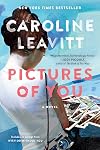
Sometimes tragedies happen that change and reshape a life, or several lives. The big lesson in those types of catastrophic events is to learn how to grow from them and not let them destroy you. This story is about one such event: Isabelle, who has just learned her husband, the man she's been with for 20 years, is cheating on her, and she flees. But fate is not so easy to escape that day. On the foggy road, she is in a automobile collision that kills the other driver, April, a woman also show more apparently fleeing her own marriage. As Isabelle tries to piece back her life, she finds herself obsessed with the dead woman's husband and son, whose lives were also shattered by the accident.
To be honest, I wasn't sure at first how I'd like this book, but it ended up being one of those books that I kept thinking about when I wasn't listening to it. I listen to audio books in the car, usually "lighter" reading, because I don't want to have to go back and savor a phrase, and never thrillers because I got a warning one time for speeding during the exciting parts. This book flunked my audio book criteria, because there were several times I found myself scrambling in the car for something to write a phrase down. Not good driving habits. Unfortunately, the only one of those phrases I remember, I don't even remember exactly. It was an "a-ha" moment Isabelle had when friends were telling her to "get over it" because it had been months since the accident. The author likened that to Peter Pan being separated from his shadow, and coming back for it -- and how even when it had been resewn on, it was there, but different. Essential, but changed. (Or that's how I remember the passage, and that's how it resonated, truthfully, with me. You live with the aftermath of tragedy and loss every day of your life. That, too, becomes a part of you. But it is the healing that allows you to move forward, and incorporate that loss into a healthy life, rather than remain fixed on what was or what you no longer have. ) This idea, which I believe and I have experienced, was beautifully played out in the characters of Isabelle, Charlie and Sam. All three lives were forever changed by the accident; each dealt with it in a different way.
Two other things I liked in the book -- as someone with adult onset asthma, I appreciated the author's descriptions of life as and with an asthmatic child. I also adored Isabelle's pet tortoise, Nelson. He might not be cuddly, but he had panache. And I loved the setting of the novel on Cape Cod, though from a different point of view than the usual summer or seasonal crowd.
I received this through the Early Reviewer program at Library Thing. Many thanks to LibraryThng, the publishers and all who made it possible. show less
To be honest, I wasn't sure at first how I'd like this book, but it ended up being one of those books that I kept thinking about when I wasn't listening to it. I listen to audio books in the car, usually "lighter" reading, because I don't want to have to go back and savor a phrase, and never thrillers because I got a warning one time for speeding during the exciting parts. This book flunked my audio book criteria, because there were several times I found myself scrambling in the car for something to write a phrase down. Not good driving habits. Unfortunately, the only one of those phrases I remember, I don't even remember exactly. It was an "a-ha" moment Isabelle had when friends were telling her to "get over it" because it had been months since the accident. The author likened that to Peter Pan being separated from his shadow, and coming back for it -- and how even when it had been resewn on, it was there, but different. Essential, but changed. (Or that's how I remember the passage, and that's how it resonated, truthfully, with me. You live with the aftermath of tragedy and loss every day of your life. That, too, becomes a part of you. But it is the healing that allows you to move forward, and incorporate that loss into a healthy life, rather than remain fixed on what was or what you no longer have. ) This idea, which I believe and I have experienced, was beautifully played out in the characters of Isabelle, Charlie and Sam. All three lives were forever changed by the accident; each dealt with it in a different way.
Two other things I liked in the book -- as someone with adult onset asthma, I appreciated the author's descriptions of life as and with an asthmatic child. I also adored Isabelle's pet tortoise, Nelson. He might not be cuddly, but he had panache. And I loved the setting of the novel on Cape Cod, though from a different point of view than the usual summer or seasonal crowd.
I received this through the Early Reviewer program at Library Thing. Many thanks to LibraryThng, the publishers and all who made it possible. show less
This review was written for LibraryThing Early Reviewers.Lists
Awards


You May Also Like


Associated Authors
Statistics
- Works
- 24
- Also by
- 11
- Members
- 3,022
- Popularity
- #8,452
- Rating
- 3.8
- Reviews
- 226
- ISBNs
- 95
- Languages
- 4
- Favorited
- 4
