
Candace Savage
Author of Bird Brains: The Intelligence of Crows, Ravens, Magpies, and Jays
About the Author
Candace Savage is the author of more than two dozen books, including Strangers in the House and A Geography of Blood, which won the Hilary Weston Writers' Trust Prize for Nonfiction. She divides her time between homes in Eastend and Saskatoon, Saskatchewan. Visit her at candacesavage.ca.
Works by Candace Savage
Tagged
Common Knowledge
- Canonical name
- Savage, Candace
- Birthdate
- 1949
- Gender
- female
- Education
- University of Alberta
- Organizations
- Saskatoon Fiddle Orchestra
Wild About Saskatoon
Northeast Swale Watchers
Writers Union of Canada - Awards and honors
- Matt Cohen Prize (2022)
- Nationality
- Canada
- Birthplace
- Alberta, Canada
- Places of residence
- Saskatoon, Saskatchewan, Canada
East End, Saskatchewan, Canada - Associated Place (for map)
- Saskatchewan, Canada
Members
Reviews
Crows: Encounters with the Wise Guys of the Avian World {10th anniversary edition} (David Suzuki Institute) by Candace Savage
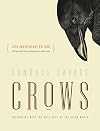
Trying to find a book from a genre that you don’t normally read is a pain in the butt when you’re as picky as I am about what I read. I don’t read certain genres because I don’t like them, so don’t try to make me read things I don’t like, library summer reading club bingo. But… when was the last time I read a non-fiction book about crows? SOLD; it counts; so there! My dear crow girl bestie Michelle gave me this book for my birthday, which being almost 6 months ago, makes me a show more pretty terrible friend at keeping up with my TBR. Well, that’s not exactly news to anyone in the real world. Like the nest of a crow itself, this book was full of fun little stories about our corvid friends, fun facts to teach us more about one of the world’s most intelligent avians, and lovely illustrations and photographs to liven up the text - a true treasure trove to inspire the crow in all of us! At times, I found the text a bit hard to follow because the page design jumped around a little bit too much and I kept getting distracted by all the pictures and sidebars, but I’ll forgive the random visual hops because what corvid chooses to move in a straight line anyways. They may say “as the crow flies” to mean a straight line, but you’re far more likely to see their dark shapes hopping about from one branch to another or turning graceful wheels in the sky above than methodically going from place to place. Let the crow spirit rise within all of us; I, for one, after reading this book have had my interest in our corvid friends re-inspired, so don’t be surprised if you see me occasionally chattering right back at one of my feathery neighbours! show less
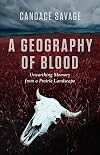
"The 'geography' in question is the Cypress Hills, a broken rise of land that straddles the Alberta/Saskatchewan border, just north of Havre, Montana," the author explains.*
"The country is a complete knockout for anyone who enjoys the romance of the Earth’s history or who is susceptible to the wild, windblown beauty of natural prairie. I was head over heels in an instant and knew I’d have a story to tell."*
And this geography, this story, is a bloody one.
It is not the version of the wild show more west that is taught to schoolchildren and celebrated by tourists.
The story which Candace Savage unearths has much deeper roots.
(The portion quoted above is from a conversation about the process of writing the work, and these extracts are starred; quotes from the work itself are unmarked. Details below.)
As a storyteller, she does not take hold of the root and give a sharp tug.
She considers her surroundings, loosens the surrounding soil, and studies the extremities.
She acknowledges the reach, the inconnections and complexities, and explores the possibilities by wriggling a little.
"What if the hills weren’t really an uncharted wilderness before the Europeans showed up?"
This is a question for which we have an answer, for of course it was not an uncharted wilderness but a homeland. But that answer does not fit with the mythologizing of the frontier.
"What if there was more to indigenous prairie cultures than whooping and war clubs?"
This, too, is a question with an answer which directly challenges the myth of the Wild West.
"What if it wasn’t the Metis (as Stegner claims) who stripped these hills of wildlife, bringing their own way of life to an end?"
Stegner? That's Wallace Stegner, the American writer, whose boyhood home was in Eastend, on the southeastern edge of the hills. The Stegners' home is still there and operates as an artists' residence, which is what initially drew Candace Savage and her partner, Keith Bell, to the town.
"At the time, I certainly didn’t anticipate that Wallace Stegner would be a companion through the early stages of my explorations or that I would end up daring to spar with him."*
And spar she does, though perhaps it's not a fair fight; Stegner only battles with words he has linked in the past.
But if the sparring isn't fair, Stegner's accounting is unfair as well.
"What I found in his writings was a classic--you could even say canonical--account of western settlement. Nobody from Stegner’s generation recounted that history with more passion or grace than he did in Wolf Willow, his reflection on his own Eastend years. I’m the descendant of generations of prairie “pioneers” myself, so I have a very personal stake in that history. In the end, the standard framing of the settlement story, as presented by Stegner and others, left me feeling troubled. Actually, make that mad."*
But not only angry. A barrage of emotions awaited Candace Savage as she began to unearth the other versions of this old story. "These memories make us ashamed, angry, bewildered, regretful, curious, eager to understand. I know I felt all those things."*
Ultimately, Candace Savage does not pull up this tale by the roots. She gets her hands dirty, and you can feel the grit beneath the nail, and the acknowledgement of deeper recesses and gashes beyond. But this is an open-ended exploration.
"If the incomer and Aboriginal communities ever do begin to talk sincerely about how the West was won, we are going to have a lot of painful ground to cover."
A Geography of Blood is the beginning of a conversation.
Not a one-sided one either. Or, at least, it shouldn't be. No longer.
"Home Truth by Dudley Patterson, Apache elder, 1996
Wisdom sits in places.
It’s like water that never dries up.
You need to drink water to stay alive, don’t you?
Well, you also need to drink from place.
You must remember everything about them.
You must learn their names.
You must remember what happened at them long ago.
You must think about it and keep on thinking about it.
Then your mind will become smoother and smoother.
Then you will see danger before it happens."
* These excerpts come from a conversation which appears on Candace Savage's website , following the publication of The Geography of Blood. show less
"The country is a complete knockout for anyone who enjoys the romance of the Earth’s history or who is susceptible to the wild, windblown beauty of natural prairie. I was head over heels in an instant and knew I’d have a story to tell."*
And this geography, this story, is a bloody one.
It is not the version of the wild show more west that is taught to schoolchildren and celebrated by tourists.
The story which Candace Savage unearths has much deeper roots.
(The portion quoted above is from a conversation about the process of writing the work, and these extracts are starred; quotes from the work itself are unmarked. Details below.)
As a storyteller, she does not take hold of the root and give a sharp tug.
She considers her surroundings, loosens the surrounding soil, and studies the extremities.
She acknowledges the reach, the inconnections and complexities, and explores the possibilities by wriggling a little.
"What if the hills weren’t really an uncharted wilderness before the Europeans showed up?"
This is a question for which we have an answer, for of course it was not an uncharted wilderness but a homeland. But that answer does not fit with the mythologizing of the frontier.
"What if there was more to indigenous prairie cultures than whooping and war clubs?"
This, too, is a question with an answer which directly challenges the myth of the Wild West.
"What if it wasn’t the Metis (as Stegner claims) who stripped these hills of wildlife, bringing their own way of life to an end?"
Stegner? That's Wallace Stegner, the American writer, whose boyhood home was in Eastend, on the southeastern edge of the hills. The Stegners' home is still there and operates as an artists' residence, which is what initially drew Candace Savage and her partner, Keith Bell, to the town.
"At the time, I certainly didn’t anticipate that Wallace Stegner would be a companion through the early stages of my explorations or that I would end up daring to spar with him."*
And spar she does, though perhaps it's not a fair fight; Stegner only battles with words he has linked in the past.
But if the sparring isn't fair, Stegner's accounting is unfair as well.
"What I found in his writings was a classic--you could even say canonical--account of western settlement. Nobody from Stegner’s generation recounted that history with more passion or grace than he did in Wolf Willow, his reflection on his own Eastend years. I’m the descendant of generations of prairie “pioneers” myself, so I have a very personal stake in that history. In the end, the standard framing of the settlement story, as presented by Stegner and others, left me feeling troubled. Actually, make that mad."*
But not only angry. A barrage of emotions awaited Candace Savage as she began to unearth the other versions of this old story. "These memories make us ashamed, angry, bewildered, regretful, curious, eager to understand. I know I felt all those things."*
Ultimately, Candace Savage does not pull up this tale by the roots. She gets her hands dirty, and you can feel the grit beneath the nail, and the acknowledgement of deeper recesses and gashes beyond. But this is an open-ended exploration.
"If the incomer and Aboriginal communities ever do begin to talk sincerely about how the West was won, we are going to have a lot of painful ground to cover."
A Geography of Blood is the beginning of a conversation.
Not a one-sided one either. Or, at least, it shouldn't be. No longer.
"Home Truth by Dudley Patterson, Apache elder, 1996
Wisdom sits in places.
It’s like water that never dries up.
You need to drink water to stay alive, don’t you?
Well, you also need to drink from place.
You must remember everything about them.
You must learn their names.
You must remember what happened at them long ago.
You must think about it and keep on thinking about it.
Then your mind will become smoother and smoother.
Then you will see danger before it happens."
* These excerpts come from a conversation which appears on Candace Savage's website , following the publication of The Geography of Blood. show less
Crows: Encounters with the Wise Guys of the Avian World {10th anniversary edition} by Candace Savage
For their size (which is how you measure this: the ratio of grey matter to body size overall) the brain of a raven is as large as that of a chimpanzee; and in fact, many people who have studied and lived alongside wild ravens for decades reckon they are more intelligent than chimpanzees. As for relationships, crows in particular are turning out to be intensely social animals, their extended families and networks resembling to a surprising degree those of elephants and, dare I say it, show more humans.
Worldwide there are forty-five species of the genus Corvus, which includes crows, ravens, jackdaws and rooks (not magpies or jays, who are their close cousins) and this book is a celebration of everything corvid. It’s a combination of nature observation and science, interspersed throughout with artwork, anecdotes and stories from all around the globe. The illustrations include mediaeval illuminated manuscripts and woodcuts, nineteenth-century engravings, Japanese prints, Arthur Rackham watercolours, some wonderful photographs and even a map of the constellations (there’s a Corvus in the night sky).
One science-related quibble (page 40): “Evolution is a ruthless master; innovations that don’t pay off are left behind in the fossil beds…” is a complete misunderstanding of the history of life; but that’s a single flaw in what is an otherwise exquisitely produced book—from the quality of the pictures to the fonts used for headings, it’s a work of art in its own right. It brings these birds to life too, so well they almost flap up off the pages at you. Up close they’re stunning—sleek and glossy, faintly iridescent—but it’s those beady eyes, of course, in particular. You see it immediately: these birds aren’t just bright, there’s clearly someone in there weighing you up.
And my three favourite facts? One: that crows, rusty-hinge caws and all, are technically-speaking songbirds. Two: that a pair of ravens, roosting lovingly together side by side, often sit holding one another’s feet just the way humans hold hands. And number Three I knew already, my own grandmother having told me this when I was little: that one old English collective noun for rooks is a storytelling of rooks. show less
Worldwide there are forty-five species of the genus Corvus, which includes crows, ravens, jackdaws and rooks (not magpies or jays, who are their close cousins) and this book is a celebration of everything corvid. It’s a combination of nature observation and science, interspersed throughout with artwork, anecdotes and stories from all around the globe. The illustrations include mediaeval illuminated manuscripts and woodcuts, nineteenth-century engravings, Japanese prints, Arthur Rackham watercolours, some wonderful photographs and even a map of the constellations (there’s a Corvus in the night sky).
One science-related quibble (page 40): “Evolution is a ruthless master; innovations that don’t pay off are left behind in the fossil beds…” is a complete misunderstanding of the history of life; but that’s a single flaw in what is an otherwise exquisitely produced book—from the quality of the pictures to the fonts used for headings, it’s a work of art in its own right. It brings these birds to life too, so well they almost flap up off the pages at you. Up close they’re stunning—sleek and glossy, faintly iridescent—but it’s those beady eyes, of course, in particular. You see it immediately: these birds aren’t just bright, there’s clearly someone in there weighing you up.
And my three favourite facts? One: that crows, rusty-hinge caws and all, are technically-speaking songbirds. Two: that a pair of ravens, roosting lovingly together side by side, often sit holding one another’s feet just the way humans hold hands. And number Three I knew already, my own grandmother having told me this when I was little: that one old English collective noun for rooks is a storytelling of rooks. show less

A few decades ago this book would not have been possible; prevailing attitudes would not have permitted an objective analysis. Even now we have not completely forsaken our attitudes to the fictitious, half-demonic beast of myth.
In Candace Savage’s fourth wildlife book she explores the relationships between wolves and humankind by considering examples of art, legend and shaman ritual. No speculations cloud the legends and stories but clear-headed facts are presented allowing the reader to show more make logical and practical assessments.
Savage does not dwell on legend however; this is a concise analysis of wolves covering physical characteristics, behaviour, social structure and even language. The clear presentation of practical information is of value to the serious wildlife enthusiast as well as a chance reader attracted by the outstanding photography and superb quality of the book. Ninety-seven photographs by some of North America’s eminent wildlife photographers dramatically capture the relationships and social atmosphere of the pack without forfeiting the portrayal of wildness and magnificence.
By describing the complexities and uncertainties of wolf control, which is engulfed in conflicting and often emotional information, the rationale behind the decisions of wildlife management is examined. No ironclad prescription for wolf control is presented, pointing instead to past errors and to the crucial need for research. Savage admits the weakness in the recent enthusiasm for wolves is to be caught in a new era of myth-making where roles are reversed - wolves are perfect and humans who kill are demonic.
As well as a foreword by distinguished author and wildlife research biologist, L. David Mech, there are maps and a bibliography including recommended Canadian films and where they can be obtained.
This is an intelligent and optimistic look at wolves and the difficulty of expecting all living creatures to co-exist with humankind in a natural ecosystem. show less
In Candace Savage’s fourth wildlife book she explores the relationships between wolves and humankind by considering examples of art, legend and shaman ritual. No speculations cloud the legends and stories but clear-headed facts are presented allowing the reader to show more make logical and practical assessments.
Savage does not dwell on legend however; this is a concise analysis of wolves covering physical characteristics, behaviour, social structure and even language. The clear presentation of practical information is of value to the serious wildlife enthusiast as well as a chance reader attracted by the outstanding photography and superb quality of the book. Ninety-seven photographs by some of North America’s eminent wildlife photographers dramatically capture the relationships and social atmosphere of the pack without forfeiting the portrayal of wildness and magnificence.
By describing the complexities and uncertainties of wolf control, which is engulfed in conflicting and often emotional information, the rationale behind the decisions of wildlife management is examined. No ironclad prescription for wolf control is presented, pointing instead to past errors and to the crucial need for research. Savage admits the weakness in the recent enthusiasm for wolves is to be caught in a new era of myth-making where roles are reversed - wolves are perfect and humans who kill are demonic.
As well as a foreword by distinguished author and wildlife research biologist, L. David Mech, there are maps and a bibliography including recommended Canadian films and where they can be obtained.
This is an intelligent and optimistic look at wolves and the difficulty of expecting all living creatures to co-exist with humankind in a natural ecosystem. show less
Lists
Awards


You May Also Like


Associated Authors
Statistics
- Works
- 43
- Members
- 1,970
- Popularity
- #13,052
- Rating
- 4.1
- Reviews
- 37
- ISBNs
- 125
- Languages
- 2