
Emily Devenport
Author of Medusa Uploaded
About the Author
Disambiguation Notice:
Emily Devenport also writes under the pseudonyms Lee Hogan and Maggy Thomas.
Series
Works by Emily Devenport
Urania 1482 - TEMPO SPEZZATO 1 copy
Associated Works
Tagged
Common Knowledge
- Legal name
- Hogan, Emily P. Devenport
- Other names
- Hogan, Lee
Thomas, Maggie - Birthdate
- 1958
- Gender
- female
- Relationships
- Hogan, Ernest (wife)
- Nationality
- USA
- Places of residence
- Phoenix, Arizona, USA
- Disambiguation notice
- Emily Devenport also writes under the pseudonyms Lee Hogan and Maggy Thomas.
- Associated Place (for map)
- Arizona, USA
Members
Reviews
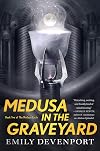
Oichi Angelis started a revolution against the Executive ruling class aboard the Generation Ship Olympia, with the help of an AI unit called Medusa. The real work comes now that they’ve “won”.
The first book had a somewhat familiar premise: a “chosen one” rebels against a dystopian oppressive regime. However, the seeds were planted for more expansive worldbuilding that bears fruit in this sequel. The story opens with the ship Merlin requesting permission to dock on Olympia and show more parlay with the new leaders, including Oichi. The crew have been hired to bring a message from the mysterious Weapons Clan, the foundation of the Executives’ power. When Medusa overrules Oichi’s determination to kill them, it sets in motion a dangerous game of politics. As Olympia enters the Charon system on route to the planet Graveyard, new players enter the field. Who is Timmy and what is the origin of her deadly technology? Is Fire on their side, or playing her own game? Oichi discovers that she and her people are much more than they seem. Their ability to bond with Medusas and interface with biotechnology has its origins on Graveyard – where The Three await her arrival. Medusa fears waking these immense sentient ships, and Oichis unconcern about doing so begins to drive a wedge between them.
In addition to greatly expanding on the worldbuilding (the sentient ships of Graveyard is a very cool concept), and continuing the underlying musical theme, this sequel also further develops other characters, albeit through Oichi’s first person POV. Ashur, in particular, takes on a critical role in the plot and the crew of the Merlin bring a welcome outside perspective. The only noticeably underdeveloped bit is the Weapons clan, but since their leader isn’t the true “villain” of the story that wasn’t a big issue.
Medusa in the Graveyard has one of those rare, perfect conclusions: if there is no more to come, it’s incredibly satisfying. But there is potential for future stories that I really hope to come to be. I love the world Devenport has created here; Oishi and Medusa are a unique set of protagonists. This duology reminds me a little of McCaffrey’s Sassinak series. The universe is full of societies that have their own agendas, and it can be minefield for a rebel assassin to adapt to be a diplomat and negotiator. Overall, this was an engrossing read and I look forward to further adventures in this universe. Perhaps with Ashur as the narrator. Highly recommended. show less
The first book had a somewhat familiar premise: a “chosen one” rebels against a dystopian oppressive regime. However, the seeds were planted for more expansive worldbuilding that bears fruit in this sequel. The story opens with the ship Merlin requesting permission to dock on Olympia and show more parlay with the new leaders, including Oichi. The crew have been hired to bring a message from the mysterious Weapons Clan, the foundation of the Executives’ power. When Medusa overrules Oichi’s determination to kill them, it sets in motion a dangerous game of politics. As Olympia enters the Charon system on route to the planet Graveyard, new players enter the field. Who is Timmy and what is the origin of her deadly technology? Is Fire on their side, or playing her own game? Oichi discovers that she and her people are much more than they seem. Their ability to bond with Medusas and interface with biotechnology has its origins on Graveyard – where The Three await her arrival. Medusa fears waking these immense sentient ships, and Oichis unconcern about doing so begins to drive a wedge between them.
In addition to greatly expanding on the worldbuilding (the sentient ships of Graveyard is a very cool concept), and continuing the underlying musical theme, this sequel also further develops other characters, albeit through Oichi’s first person POV. Ashur, in particular, takes on a critical role in the plot and the crew of the Merlin bring a welcome outside perspective. The only noticeably underdeveloped bit is the Weapons clan, but since their leader isn’t the true “villain” of the story that wasn’t a big issue.
Medusa in the Graveyard has one of those rare, perfect conclusions: if there is no more to come, it’s incredibly satisfying. But there is potential for future stories that I really hope to come to be. I love the world Devenport has created here; Oishi and Medusa are a unique set of protagonists. This duology reminds me a little of McCaffrey’s Sassinak series. The universe is full of societies that have their own agendas, and it can be minefield for a rebel assassin to adapt to be a diplomat and negotiator. Overall, this was an engrossing read and I look forward to further adventures in this universe. Perhaps with Ashur as the narrator. Highly recommended. show less

I read all of Devenport’s previous books when I was in high school/college. Sadly, all are out of print. When I happened across this new novel I immediately ordered it and it reminded me how much I love Science Fiction.
Oichi is one of nearly 300,000 people aboard the Generation Ship Olympia, on the way to a new planet after some forgotten catastrophe struck their homeworld. The population is strictly divided between “worms” (worker class) and the “Executives” (ruling class). The show more basic story reminded me a lot of Snowpiercer, but the space opera element allowed the story to go well beyond that simple conceit. Oichi has an exceptional and highly illegal database implanted in her brain; designed by her father. It contains music, but between those files is hidden so much more – secret pathways and the ability to interface with an AI. When an Executive throws her out of an airlock, Medusa saves her, and the revolution begins.
This thriller is multilayered, with a lot of surprises. Oichi becomes an assassin, trying to undermine the Executives and find a way to distribute the music implants to the children, and eventually everyone, on board. But there is much more to Medusa than meets the eye. Who created her? Why does their homeworld have no name? How did the destruction of the other Generation Ship occur? In addition to these mysteries, there is a lot of political machinations among the Executives that is very entertaining. Oichi is a fully realized character, but since she is basically on her own; other characters are no so well developed. I hope the sequel expands on some of them.
No book is perfect and my main problem with this one was the flashback structure. Or rather, flashforward. Devenport begins each major section with Oichi about to do something, and then the story jumps back in time to tell readers how she got to that point. This wasn’t ideal since by the time we got back to that starting point, I had forgotten what the story was supposed to be building to. However, this was a minor annoyance. Overall, I loved the book and have already preordered the sequel. I hope Tor publishes more of her work. show less
Oichi is one of nearly 300,000 people aboard the Generation Ship Olympia, on the way to a new planet after some forgotten catastrophe struck their homeworld. The population is strictly divided between “worms” (worker class) and the “Executives” (ruling class). The show more basic story reminded me a lot of Snowpiercer, but the space opera element allowed the story to go well beyond that simple conceit. Oichi has an exceptional and highly illegal database implanted in her brain; designed by her father. It contains music, but between those files is hidden so much more – secret pathways and the ability to interface with an AI. When an Executive throws her out of an airlock, Medusa saves her, and the revolution begins.
This thriller is multilayered, with a lot of surprises. Oichi becomes an assassin, trying to undermine the Executives and find a way to distribute the music implants to the children, and eventually everyone, on board. But there is much more to Medusa than meets the eye. Who created her? Why does their homeworld have no name? How did the destruction of the other Generation Ship occur? In addition to these mysteries, there is a lot of political machinations among the Executives that is very entertaining. Oichi is a fully realized character, but since she is basically on her own; other characters are no so well developed. I hope the sequel expands on some of them.
No book is perfect and my main problem with this one was the flashback structure. Or rather, flashforward. Devenport begins each major section with Oichi about to do something, and then the story jumps back in time to tell readers how she got to that point. This wasn’t ideal since by the time we got back to that starting point, I had forgotten what the story was supposed to be building to. However, this was a minor annoyance. Overall, I loved the book and have already preordered the sequel. I hope Tor publishes more of her work. show less
(I wanted to give this 5 stars, but I'm not quite sure what stopped me.)
Devenport does a great job fleshing out generation ships and how human culture would have evolved in such large-but-cramped, regimented and hierarchical society - "worms"/servants, mid-levels, and those on top; the way that people of different levels have different ways of socializing and vocabularies, etc. The ship itself feels expansive and limited at the same time, especially as certain citizens don't have the access show more that others do.
Oichi is a fascinating character, wholly devoted to her goal no matter the cost and removed from the human emotions that her "collaborators" experience (even though she joins them in marveling at the beauty of music and film, two cultural aspects of society that have long been lost).
I very much appreciated her ability and willingness to disguise herself in order to traverse the varying social levels - we saw life and politics as a worm, a mid-level security person, and a mid-level executive, which widely varied and were well-described. The political machinations were well done as well; not too boring or detailed to slow down the plot, but crucial nonetheless.
Apparently the sequel is more of a companion novel - set in the same universe but following a different plot? If so, hopefully is answers the questions that linger from this installment. While it doesn't necessarily end on a cliffhanger, there's still so much more to know! show less
Devenport does a great job fleshing out generation ships and how human culture would have evolved in such large-but-cramped, regimented and hierarchical society - "worms"/servants, mid-levels, and those on top; the way that people of different levels have different ways of socializing and vocabularies, etc. The ship itself feels expansive and limited at the same time, especially as certain citizens don't have the access show more that others do.
Oichi is a fascinating character, wholly devoted to her goal no matter the cost and removed from the human emotions that her "collaborators" experience (even though she joins them in marveling at the beauty of music and film, two cultural aspects of society that have long been lost).
Apparently the sequel is more of a companion novel - set in the same universe but following a different plot? If so, hopefully is answers the questions that linger from this installment. While it doesn't necessarily end on a cliffhanger, there's still so much more to know! show less
Pros: fascinating characters, excellent world building, layered mysteries
Cons:
Oichi Angelis is a murderess and conspirator upon the generation spaceship Olympia. Using a Medusa unit, she’s been taking out key members of the Executive class. But the Executives aren’t the only threats to her mission to overturn the ship’s rigid class system.
The back cover synopsis for this book calls Oichi a ‘worm’, which I’d misinterpreted as meaning she was either a computer program or A.I. of show more some sort. So I was surprised to discover she was a human, and that ‘worm’ was a slur for low level people on the ship. Oichi is a fascinating character, who’s completely unapologetic about the live’s she’s taken (who are mostly horrible people), that you can’t help but like her. In many ways it’s her connection with Medusa, a partly biological machine, that allows her to be such a good assassin.
The world-building is great. The author manages to explain the ship’s history in ways that felt organic but not intrusive. For example, there’s a scene where Oishi is pretending to study for school while she’s actually doing something else. So the narrative is interrupted by occasional digressions of the video that’s playing on her screen. At other times we learn about the ship as she does, especially with regards to the executives and their dealings.
There are several overlapping mysteries, all introduced in layers. One mystery is a snippet of conversation Oishi overhears as a child. As she grows up she tries to understand what the Executives were saying, but her interpretation changes as she learns more and more.
Chapters are written in a circuitous way, starting with foreshadowing of what’s going to happen, then a linear narrative leading back to what was hinted at or stated earlier. I was impressed at how well the author managed to guide you through the narrative. There was only one spot where I was confused about when an event happened, and that was cleared up quickly. As Oichi learns more about one mystery, others - so many others - come to light. The book keeps you guessing about everyone’s motivations.
I really enjoyed this and can’t wait for the next book. show less
Cons:
Oichi Angelis is a murderess and conspirator upon the generation spaceship Olympia. Using a Medusa unit, she’s been taking out key members of the Executive class. But the Executives aren’t the only threats to her mission to overturn the ship’s rigid class system.
The back cover synopsis for this book calls Oichi a ‘worm’, which I’d misinterpreted as meaning she was either a computer program or A.I. of show more some sort. So I was surprised to discover she was a human, and that ‘worm’ was a slur for low level people on the ship. Oichi is a fascinating character, who’s completely unapologetic about the live’s she’s taken (who are mostly horrible people), that you can’t help but like her. In many ways it’s her connection with Medusa, a partly biological machine, that allows her to be such a good assassin.
The world-building is great. The author manages to explain the ship’s history in ways that felt organic but not intrusive. For example, there’s a scene where Oishi is pretending to study for school while she’s actually doing something else. So the narrative is interrupted by occasional digressions of the video that’s playing on her screen. At other times we learn about the ship as she does, especially with regards to the executives and their dealings.
There are several overlapping mysteries, all introduced in layers. One mystery is a snippet of conversation Oishi overhears as a child. As she grows up she tries to understand what the Executives were saying, but her interpretation changes as she learns more and more.
Chapters are written in a circuitous way, starting with foreshadowing of what’s going to happen, then a linear narrative leading back to what was hinted at or stated earlier. I was impressed at how well the author managed to guide you through the narrative. There was only one spot where I was confused about when an event happened, and that was cleared up quickly. As Oichi learns more about one mystery, others - so many others - come to light. The book keeps you guessing about everyone’s motivations.
I really enjoyed this and can’t wait for the next book. show less
Lists
Awards


You May Also Like


Associated Authors
Statistics
- Works
- 17
- Also by
- 7
- Members
- 1,151
- Popularity
- #22,319
- Rating
- 3.7
- Reviews
- 35
- ISBNs
- 16
- Favorited
- 3