
Jo Clayton (1939–1998)
Author of Diadem from the Stars
About the Author
Image credit: photo from official website
Series
Works by Jo Clayton
Quester Endgame 1 copy
Dancers Rise 1 copy
The snares of Ibex 1 copy
Maggot's Feast [SS] 1 copy
Hallah's Choice 1 copy
The Prism of Memory [SS] 1 copy
Change [SS] 1 copy
Borrowed Light [SS] 1 copy
Southwind My Mother [SS] 1 copy
Eight Keys to Eden 1 copy
Associated Works
The Best of Marion Zimmer Bradley's Fantasy Magazine Vol. 2 (1995) — Contributor — 151 copies, 1 review
Isaac Asimov's Science Fiction Magazine: Vol. 4, No. 12 [December 1980] (1980) — Contributor — 21 copies
Tagged
Common Knowledge
- Canonical name
- Clayton, Jo
- Legal name
- Clayton, Patricia Jo
- Birthdate
- 1939-02-15
- Date of death
- 1998-02-13
- Gender
- female
- Education
- University of Southern California (BA Summa Cum Laude | 1963)
- Occupations
- teacher
author - Organizations
- Sisters of Mt. Carmel (for three years)
- Cause of death
- multiple myeloma
- Nationality
- USA
- Birthplace
- Modesto, California, USA
- Places of residence
- Bell, California, USA
New Orleans, Louisiana, USA - Place of death
- Portland, Oregon, USA
- Associated Place (for map)
- USA
Members
Reviews

As is the case with most of my reviews of series, this is going to lean more toward a review of the author and her oeuvre rather than the details of these individual books. Anyway, Jo Clayton is a science fiction and fantasy author with a very distinctive voice, and I appreciate many aspects of her work that keep me coming back over and over.
First, she doesn't rely on some sort of generic northern European cultural and geographical model for her fantasies. Instead, she draws upon many, many show more different cultures and landscapes for inspiration. Concomitantly, both her protagonists and especially other characters are ethnically very diverse--it's not a white universe with a few people of color thrown in as sparse leavening. No, entire swathes in every world she builds, whether SF or fantasy, feature people of all different colors and beyond the human spectrum, once the various humanoid species she creates are thrown in. We get to see her spectacular, diverse, and original world-building because her stories generally involve the characters traversing the landscape and negotiating many different cultures in the course of their quest.
Second, her characters are more than racially and ethnically diverse. She also has characters reflecting a wide range of ages, physical and mental abilities, sexualities, social classes and so on. In fact, many of her key players come squarely from marginalized populations. So her books are some of the most inclusive and representative of any I've ever read. Moreover, her plots invariably involve a resistance movement to a newly repressive regime, so she explicitly explores the kyriarchy and the nature of oppression, at scales ranging from the individual to entire societies. Rather than ignoring social inequalities in favor of some airy fantasy wish fulfillment, she uses these social tensions to motivate the plot. However, I confess that after reading 20+ of her books, this theme begins to get old, no matter how creatively she explores it.
Third, her stories abound with strong characters, particularly women. No need to consult the Bechdel test, because her protagonist is always a powerful woman working with many other women as well as men in an epic tale involving dozens of characters, and usually shifting viewpoints. Even fairly minor characters have names and personalities that make them individuals--once again, far exceeding the standard treatment in this genre. However, that is not to say that she doesn't succumb to a formula. Nowhere is this more apparent than her protagonists: always a powerful woman with exceptional abilities, usually seriously psychologically damaged by her past, fond of hot tea, long baths, and often sailing men. Brann, the Drinker of Souls, is no exception, though she's traumatized in thebeginning of the trilogy rather than her past, which is unusually wholesome and happy for this author.
Fourth, she clearly has a great love for artisans and others whose livelihoods derive from their labors. Every book I've read features important secondary characters and compelling descriptions of their labors (before the plot sends everything to hell, of course): weavers, potters, dancers, musicians, sailors, goldsmiths (jewelry), herbalists, and on and on. This narrative of daily life and tightly woven society gives her stories a reality and depth that are almost unique in action-driven novels.
Fifth, Jo Clayton is another author who invents an ecology to go along with her invented culture. We meet new animals, crops, trees, and many other organisms, and they aren't always mammals and angiosperms, which greatly please the biology geek in me, who is very unimpressed with the lackluster imaginations of most authors who at best might dream up new names for the same old things.
Sixth, her writing style can also be experimental. In the same way that Stand on Zanzibar introduced new narrative techniques to science fiction, Jo Clayton plays around with text, moving beyond linear prose in some passages, particularly opening material and especially in second and third installments of a trilogy. Often, it is very graphically oriented, reading more like staging directions in a screenplay. Mind you, this isn't necessarily easy to process, but once again, distinguishes her writing from the bulk of the genre.
So that's the general overview of Jo Clayton's works. Drinker of Souls introduces us to Brann, the young daughter of a potter in a remote, mountainous artisan community. She is out in the field one day, along the flanks of their (mostly) dormant volcano, sketching various creatures, when disaster strikes, and life as she knows it is over, and she can never go back home. Soldiers from the oh-so-distant king have appeared to enslave her people, and she is transformed by twin children (Yaril and Jaril) trapped from another reality to be a conduit of energy (souls!) to sustain their lives in this strange world. Adventure ensues as she copes with this trauma and tries to save her people. show less
First, she doesn't rely on some sort of generic northern European cultural and geographical model for her fantasies. Instead, she draws upon many, many show more different cultures and landscapes for inspiration. Concomitantly, both her protagonists and especially other characters are ethnically very diverse--it's not a white universe with a few people of color thrown in as sparse leavening. No, entire swathes in every world she builds, whether SF or fantasy, feature people of all different colors and beyond the human spectrum, once the various humanoid species she creates are thrown in. We get to see her spectacular, diverse, and original world-building because her stories generally involve the characters traversing the landscape and negotiating many different cultures in the course of their quest.
Second, her characters are more than racially and ethnically diverse. She also has characters reflecting a wide range of ages, physical and mental abilities, sexualities, social classes and so on. In fact, many of her key players come squarely from marginalized populations. So her books are some of the most inclusive and representative of any I've ever read. Moreover, her plots invariably involve a resistance movement to a newly repressive regime, so she explicitly explores the kyriarchy and the nature of oppression, at scales ranging from the individual to entire societies. Rather than ignoring social inequalities in favor of some airy fantasy wish fulfillment, she uses these social tensions to motivate the plot. However, I confess that after reading 20+ of her books, this theme begins to get old, no matter how creatively she explores it.
Third, her stories abound with strong characters, particularly women. No need to consult the Bechdel test, because her protagonist is always a powerful woman working with many other women as well as men in an epic tale involving dozens of characters, and usually shifting viewpoints. Even fairly minor characters have names and personalities that make them individuals--once again, far exceeding the standard treatment in this genre. However, that is not to say that she doesn't succumb to a formula. Nowhere is this more apparent than her protagonists: always a powerful woman with exceptional abilities, usually seriously psychologically damaged by her past, fond of hot tea, long baths, and often sailing men. Brann, the Drinker of Souls, is no exception, though she's traumatized in thebeginning of the trilogy rather than her past, which is unusually wholesome and happy for this author.
Fourth, she clearly has a great love for artisans and others whose livelihoods derive from their labors. Every book I've read features important secondary characters and compelling descriptions of their labors (before the plot sends everything to hell, of course): weavers, potters, dancers, musicians, sailors, goldsmiths (jewelry), herbalists, and on and on. This narrative of daily life and tightly woven society gives her stories a reality and depth that are almost unique in action-driven novels.
Fifth, Jo Clayton is another author who invents an ecology to go along with her invented culture. We meet new animals, crops, trees, and many other organisms, and they aren't always mammals and angiosperms, which greatly please the biology geek in me, who is very unimpressed with the lackluster imaginations of most authors who at best might dream up new names for the same old things.
Sixth, her writing style can also be experimental. In the same way that Stand on Zanzibar introduced new narrative techniques to science fiction, Jo Clayton plays around with text, moving beyond linear prose in some passages, particularly opening material and especially in second and third installments of a trilogy. Often, it is very graphically oriented, reading more like staging directions in a screenplay. Mind you, this isn't necessarily easy to process, but once again, distinguishes her writing from the bulk of the genre.
So that's the general overview of Jo Clayton's works. Drinker of Souls introduces us to Brann, the young daughter of a potter in a remote, mountainous artisan community. She is out in the field one day, along the flanks of their (mostly) dormant volcano, sketching various creatures, when disaster strikes, and life as she knows it is over, and she can never go back home. Soldiers from the oh-so-distant king have appeared to enslave her people, and she is transformed by twin children (Yaril and Jaril) trapped from another reality to be a conduit of energy (souls!) to sustain their lives in this strange world. Adventure ensues as she copes with this trauma and tries to save her people. show less

The second in the Diadem series has some of the same flaws as the first, but is a step up. The set up so far closely mimics E C Tubb's Dumarest series: each novel is an adventure on a different planet, but part of a longer (perhaps endless) quest to find a hidden planet, while being chased by mysterious bad guys. The annoying parts continued from the first novel are (1) Aleytys is almost always nude (2) she sleeps at least once with every male (3) numerous paragraphs that read like William show more Shatner's acting...with a brief...phrase..lingering... changing...boring. A new element of implausibility is that in this novel she travels everywhere with her infant son, who conveniently can be stored away in a drawer for many chapters at a time, pulled out to be changed and breastfed when convenient. What makes the book better than the first on is more interesting -- if sometimes repellent -- world-building, more agency and independence by Aleytys, and a bit more depth to the other characters. Even the villains have a bit of life to them.
Overall, OK adventure SF. show less
Overall, OK adventure SF. show less
Irsud by Jo Clayton

If Lamarchos, the second in the Diadem series, was a step up from the first novel, Irsud suggests this rise was a trip up the ramp to jumping the shark. What a mess. The annoying bits of the first two book are repeated in even more silly ways. Our heroine being nude most of the time. Yes, now on a cold metal table. Sex with the first male she meets? Yes, now with an insectoid, who becomes her lover for the rest of the story. Paragraphs that are nothing but random phrases strung together with show more ellipses? Repeatedly, and now not just when the diadem's powers come into play. Adding the mix, no longer is there the voiceless presence in her mind that she negotiated with in Lamarchos. Now we have three chattering voices -- prior wearers of the Diadem -- with their own special skills, described and presented like cards from a role-playing game. Despite being 100s or 1000s of years old, at least one appears to know how to pilot Ffynch brand skimmers and spacecraft. Technology apparently stopped evolving.
All this bodes ill for the next book, but even worse is the plot structure of this novel. The premise is simple:Aleytys has been impregnated with the seed of the dying insectoid queen, has one year of watchful tending, to end with death when the new queen is born. The next 3/4s of the story is slow but readable, as she gradually builds alliances with a race enslaved by the insectoids while playing cat and mouse with the old queen's regent. Then it all falls apart in a rush to wrap things up so that she can move on to the next planet and lover. In the end, Irsud is the same plot as Lamarchos:Aleytys ends the lifecycle of the evil being with much violence and death. But this time the killing is mechanical and bother her little . In a different author's hands, e.g., John Christopher, this might be story of the growth of a new evil. I will be very surprised to see that here. show less
All this bodes ill for the next book, but even worse is the plot structure of this novel. The premise is simple:Aleytys has been impregnated with the seed of the dying insectoid queen, has one year of watchful tending, to end with death when the new queen is born. The next 3/4s of the story is slow but readable, as she gradually builds alliances with a race enslaved by the insectoids while playing cat and mouse with the old queen's regent. Then it all falls apart in a rush to wrap things up so that she can move on to the next planet and lover. In the end, Irsud is the same plot as Lamarchos:
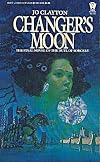
After writing the very belated 2010 reviews for Jo Clayton's Drinker of Souls trilogy, I was inspired to revisit her Duel of Sorcery trilogy. This is one of my childhood favorites. Moongather was published in 1982, followed quickly by Moonscatter in 1983 and three years later closed with Changer's Moon. The Dancer trilogy revisits the central protagonist and this phenomenal world a couple centuries later.
I consider this to be a seminal work of feminist fantasy, though I was not conscious of show more this as a child. It is very much an exploration of gender roles, how girls and women survive patriarchal societies, and to a lesser degree love and sexuality. It is the first instance I can recall reading of a lesbian (or at least bisexual) relationship, though as I indicated, sex is a relatively minor part of the story. And the bisexual characters aren't bad guys, unlike in the romance genre--sexual perversity clearly indicating their villainous nature.
The premise is an archetypical struggle between the (masculine) impulse to command and control and concomitant desire for efficiency and order, represented by Ser Noris, who has near-immortality and mastery of elemental powers that allow him to control anything inanimate yet is emotionally stunted, and the wasteful, extravagant, endlessly creative diversity of life, embodied in the goddess representing the feminine mysteries, fertility, love, and nature.
On a clifftop overlooking the valley that is the heart of her power, in the prelude of Moongather, Ser Noris challenges the goddess (embodied in her avatar Reiki Janja, a shamaness of a nomadic desert tribe) to a game for mastery of the world, or maybe just this continent. They draw cards to determine their "pieces," which is to say, the key characters and plot elements. In Moonscatter the face-off between Ser Noris and Reiki Janja on the cliff looks more like an abstract strategy game(say, for example, go): a gridlike game surface with stone playing pieces; in Changer's Moon it's more like a role-playing game, with dice and miniatures.
And so opens the wild adventure, following the epic quest format of most fantasy books. Our band of heroes emerges over the course of three books to resist the political and religious coup and subsequent oppression arising from the duel of sorcery as Ser Noris attempts to dominate the world through his pawns: a fundamentalist patriarchal sect (Sons of the Flame) seeking to overthrow worship of the Maiden aspect of the triple goddess (Maiden, Matron, and Crone--it's a common enough trope), the lesser sorcerors (as a whole, known as the Nearga Nor) and all of the magics at their fingertips, and the power-hungry members of court plotting against the hereditary ruler (Domnor) Heslin Hern--wives and military leaders.
Moongather concentrates almost entirely on Serroi, the main protagonist and pivot point for events in the ongoing duel. She's small, she's green, and she has some special abilities in addition to being a kick-ass fighter. Like many Jo Clayton novels, Moongather follows a nonlinear format--jumping back and forth between Serroi's childhood training with Ser Noris ("The Child" chapters) and the present as Serroi flees for her life in the first chapter and then desperately tries to get out word of the plot against the Domnor ("The Woman" chapters). She's the solitary star of the first book.
Along the way, we meet minor characters, many of whom appear in the later books, either as key players or in brief cameos. These include Domnor Hern himself; Dinafar, the unwanted legacy of a fisherwoman's rape by a hill raider who is approaching puberty and desperate to escape the hatred and destitution of her life in the fishing village; Tarom Tesc Gradin and his family, particularly the twins Tuli and Teras, a wealthy plantation family on pilgrimage; Coperic, the shifty barkeep and spy in the capitol city of Oras. I won't bother listing the bad guys, since they have a tendency to not survive their encounters with Serroi.
The precipitating crisis is only hinted at in the beginning of Moongather. As the story progresses, Serroi keeps revisiting it in flashbacks and nightmares and dialogue with other characters, all of which slowly fleshes out the sequence of events that led to her mental breakdown in the midst of a thunderstorm. The concomitant backstory developed in parallel help us understand her actions and motivations in the opening chapter.
Both Ser Noris and Reiki Janja are important characters in the childhood half of the plot. In the later two books, they play only peripheral roles confined to the metastory interludes and the final climactic confrontations in Moonscatter and Changer's Moon. These subsequent books are far more linear in narrative, simply jumping around POVs as more characters become central to the increasingly interwoven and complicated plot.
Moonscatter takes place about a year after Moongather. Serroi and Hern trek to another continent, seeking a mysterious figure named Coyote who may be able to assist the beleaguered forces of the goddess by giving Hern a go at his (magical) Mirror ("The Quest" chapters). Meanwhile, Tuli's POV (one of the twins introduced in Moongather) gives us perspective on how the new regime is affecting people on the ground, in addition to being something of a coming-of-age tale ("The Mijloc" chapters). Once again, minor characters introduced in this book have more central roles in the third installment. The star has become a constellation of points that build the outlines of a larger pattern.
Finally, Changer's Moon gives us a whole slew of new characters for the endgame. The stellar view now encompasses multiple constellations as the POVs multiply and converge, named according to metaphysical gamepiece for key characters. For example, Hern is the Kingfisher and Tuli is the Magic Child. Moreover, a science fiction infusion gives this installment a very different feel from the earlier books.
Coyote's Mirror allows access to other realities, and so the story alternates between the ongoing struggle between Ser Noris and the goddess and an alternate dystopian United States where a fascist fundamentalist group has taken power (sound familiar?) . Using the same narrative style as in Moongather, this particular storyline alternates between the backstory of Julia ("Poet-Warrior") and current events as the new regime prepares to crack down on the last rebel camps in the mountains and Hern and Serroi magically appear with their offer of escape and a winnable battle.
As I mentioned in my review of the Drinker of Souls trilogy, I love Jo Clayton's originality, inclusiveness, world-building, gritty realism, strong characters, plots, and dialogue, and alternative writing styles in at least some sequences (much like Stand on Zanzibar in some respects). The Duel of Sorcery epitomizes these strengths. Serroi also resonated a great deal with me.
Serroi describes herself as a tribe of one, since she's a misborn of the windrunners, destined to be burned but for the intervention of Ser Noris, which means that there is no one else like her in the world: green and with her magical connection to animals, which the master sorceror uses to create animal-like demons. As a child, I felt more connections to animals than to people who were too often inexplicably cruel or simply incomprehensible, and I also felt alone, since no one in my family resembles me. She's small and female, so constantly underestimated and not taken seriously as a warrior. I get that too, though I grew up to be slightly above average in height. And as a child I desperately longed for the skills that Serroi displayed as an adult: master archer, competent fighter, self-sufficient, able to survive in the wild. So I strongly identified with this protagonist, which wasn't surprising given a genre overwhelmingly dominated by male protagonists.
Plus I was fascinated with the description of the Biserica. This is the valley that Ser Noris covets--the center of the goddess faith and symbol of the limitations of his power. It is a refuge for women escaping the traditional gender roles of their societies. The Biserica trains the priestesses who staff the temples around the country, the healerwomen who provide the medical care, and the meien, the warrior women pairs who serve as guards for women-run caravans, royal women's quarters, ruling queens, etc. (anyplace where male fighters might prove problematic). The meien provide essential cash income to the Biserica, along with the female artisans in the valley who specialize in such esoteric arts as glass-blowing. The entire community consists of women who provide all of the skills and labor needed to maintain an independent enclave.
Marian Zimmer Bradley suggests something similar in Thendara House, published the same time as Moonscatter: a community of women warriors that provide shelter and training to women fleeing abusive relationships or simply the confines of traditional gender roles. Jane Yolen explored similar female-only communities with warrior women in her books Sister Light, Sister Dark (published in 1989) and White Jenna. I can't think of any other books off-hand that develop this idea.
All in all, a great read that has stood the test of time and many rereadings. show less
I consider this to be a seminal work of feminist fantasy, though I was not conscious of show more this as a child. It is very much an exploration of gender roles, how girls and women survive patriarchal societies, and to a lesser degree love and sexuality. It is the first instance I can recall reading of a lesbian (or at least bisexual) relationship, though as I indicated, sex is a relatively minor part of the story. And the bisexual characters aren't bad guys, unlike in the romance genre--sexual perversity clearly indicating their villainous nature.
The premise is an archetypical struggle between the (masculine) impulse to command and control and concomitant desire for efficiency and order, represented by Ser Noris, who has near-immortality and mastery of elemental powers that allow him to control anything inanimate yet is emotionally stunted, and the wasteful, extravagant, endlessly creative diversity of life, embodied in the goddess representing the feminine mysteries, fertility, love, and nature.
On a clifftop overlooking the valley that is the heart of her power, in the prelude of Moongather, Ser Noris challenges the goddess (embodied in her avatar Reiki Janja, a shamaness of a nomadic desert tribe) to a game for mastery of the world, or maybe just this continent. They draw cards to determine their "pieces," which is to say, the key characters and plot elements. In Moonscatter the face-off between Ser Noris and Reiki Janja on the cliff looks more like an abstract strategy game(say, for example, go): a gridlike game surface with stone playing pieces; in Changer's Moon it's more like a role-playing game, with dice and miniatures.
And so opens the wild adventure, following the epic quest format of most fantasy books. Our band of heroes emerges over the course of three books to resist the political and religious coup and subsequent oppression arising from the duel of sorcery as Ser Noris attempts to dominate the world through his pawns: a fundamentalist patriarchal sect (Sons of the Flame) seeking to overthrow worship of the Maiden aspect of the triple goddess (Maiden, Matron, and Crone--it's a common enough trope), the lesser sorcerors (as a whole, known as the Nearga Nor) and all of the magics at their fingertips, and the power-hungry members of court plotting against the hereditary ruler (Domnor) Heslin Hern--wives and military leaders.
Moongather concentrates almost entirely on Serroi, the main protagonist and pivot point for events in the ongoing duel. She's small, she's green, and she has some special abilities in addition to being a kick-ass fighter. Like many Jo Clayton novels, Moongather follows a nonlinear format--jumping back and forth between Serroi's childhood training with Ser Noris ("The Child" chapters) and the present as Serroi flees for her life in the first chapter and then desperately tries to get out word of the plot against the Domnor ("The Woman" chapters). She's the solitary star of the first book.
Along the way, we meet minor characters, many of whom appear in the later books, either as key players or in brief cameos. These include Domnor Hern himself; Dinafar, the unwanted legacy of a fisherwoman's rape by a hill raider who is approaching puberty and desperate to escape the hatred and destitution of her life in the fishing village; Tarom Tesc Gradin and his family, particularly the twins Tuli and Teras, a wealthy plantation family on pilgrimage; Coperic, the shifty barkeep and spy in the capitol city of Oras. I won't bother listing the bad guys, since they have a tendency to not survive their encounters with Serroi.
The precipitating crisis is only hinted at in the beginning of Moongather. As the story progresses, Serroi keeps revisiting it in flashbacks and nightmares and dialogue with other characters, all of which slowly fleshes out the sequence of events that led to her mental breakdown in the midst of a thunderstorm. The concomitant backstory developed in parallel help us understand her actions and motivations in the opening chapter.
Both Ser Noris and Reiki Janja are important characters in the childhood half of the plot. In the later two books, they play only peripheral roles confined to the metastory interludes and the final climactic confrontations in Moonscatter and Changer's Moon. These subsequent books are far more linear in narrative, simply jumping around POVs as more characters become central to the increasingly interwoven and complicated plot.
Moonscatter takes place about a year after Moongather. Serroi and Hern trek to another continent, seeking a mysterious figure named Coyote who may be able to assist the beleaguered forces of the goddess by giving Hern a go at his (magical) Mirror ("The Quest" chapters). Meanwhile, Tuli's POV (one of the twins introduced in Moongather) gives us perspective on how the new regime is affecting people on the ground, in addition to being something of a coming-of-age tale ("The Mijloc" chapters). Once again, minor characters introduced in this book have more central roles in the third installment. The star has become a constellation of points that build the outlines of a larger pattern.
Finally, Changer's Moon gives us a whole slew of new characters for the endgame. The stellar view now encompasses multiple constellations as the POVs multiply and converge, named according to metaphysical gamepiece for key characters. For example, Hern is the Kingfisher and Tuli is the Magic Child. Moreover, a science fiction infusion gives this installment a very different feel from the earlier books.
Coyote's Mirror allows access to other realities, and so the story alternates between the ongoing struggle between Ser Noris and the goddess and an alternate dystopian United States where a fascist fundamentalist group has taken power (sound familiar?) . Using the same narrative style as in Moongather, this particular storyline alternates between the backstory of Julia ("Poet-Warrior") and current events as the new regime prepares to crack down on the last rebel camps in the mountains and Hern and Serroi magically appear with their offer of escape and a winnable battle.
As I mentioned in my review of the Drinker of Souls trilogy, I love Jo Clayton's originality, inclusiveness, world-building, gritty realism, strong characters, plots, and dialogue, and alternative writing styles in at least some sequences (much like Stand on Zanzibar in some respects). The Duel of Sorcery epitomizes these strengths. Serroi also resonated a great deal with me.
Serroi describes herself as a tribe of one, since she's a misborn of the windrunners, destined to be burned but for the intervention of Ser Noris, which means that there is no one else like her in the world: green and with her magical connection to animals, which the master sorceror uses to create animal-like demons. As a child, I felt more connections to animals than to people who were too often inexplicably cruel or simply incomprehensible, and I also felt alone, since no one in my family resembles me. She's small and female, so constantly underestimated and not taken seriously as a warrior. I get that too, though I grew up to be slightly above average in height. And as a child I desperately longed for the skills that Serroi displayed as an adult: master archer, competent fighter, self-sufficient, able to survive in the wild. So I strongly identified with this protagonist, which wasn't surprising given a genre overwhelmingly dominated by male protagonists.
Plus I was fascinated with the description of the Biserica. This is the valley that Ser Noris covets--the center of the goddess faith and symbol of the limitations of his power. It is a refuge for women escaping the traditional gender roles of their societies. The Biserica trains the priestesses who staff the temples around the country, the healerwomen who provide the medical care, and the meien, the warrior women pairs who serve as guards for women-run caravans, royal women's quarters, ruling queens, etc. (anyplace where male fighters might prove problematic). The meien provide essential cash income to the Biserica, along with the female artisans in the valley who specialize in such esoteric arts as glass-blowing. The entire community consists of women who provide all of the skills and labor needed to maintain an independent enclave.
Marian Zimmer Bradley suggests something similar in Thendara House, published the same time as Moonscatter: a community of women warriors that provide shelter and training to women fleeing abusive relationships or simply the confines of traditional gender roles. Jane Yolen explored similar female-only communities with warrior women in her books Sister Light, Sister Dark (published in 1989) and White Jenna. I can't think of any other books off-hand that develop this idea.
All in all, a great read that has stood the test of time and many rereadings. show less
Lists
Awards

You May Also Like


Associated Authors
Statistics
- Works
- 49
- Also by
- 21
- Members
- 7,122
- Popularity
- #3,448
- Rating
- 3.5
- Reviews
- 57
- ISBNs
- 110
- Languages
- 2
- Favorited
- 10