
Vikram Paralkar
Author of Night Theater
Works by Vikram Paralkar
Tagged
Common Knowledge
- Birthdate
- alive
- Gender
- male
- Occupations
- physician
medical researcher - Nationality
- India
- Birthplace
- Mumbai, India
- Places of residence
- Pennsylvania, USA
- Associated Place (for map)
- India
Members
Reviews
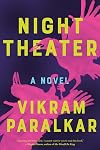
"The day the dead visited the surgeon, the air in his clinic was laced with formaldehyde."
A doctor works in an isolated and decrepit village clinic in India, assisted by a young woman known as the Pharmacist. One evening, a man, his very pregnant wife, and their young son arrive at the clinic. The doctor sees that they have been brutally wounded, the wife beneath the scarf around her neck has been nearly decapitated, yet there is no blood. The tell the doctor a strange tale of their having show more been murdered, and miraculously in the afterlife having been given a second chance. They have been returned to the world, and if the doctor can repair their wounds before dawn they will be allowed to live again. As the doctor works through the night, we learn the stories of the doctor and of the family he is trying to save.
Despite its somewhat mystical premise, this is a realistic and powerful novel. Told in a simple, straight-forward, even scientific manner, it nevertheless raises philosophical and moral issues, and moves us to an ambiguous ending. I loved it.
4 stars show less
A doctor works in an isolated and decrepit village clinic in India, assisted by a young woman known as the Pharmacist. One evening, a man, his very pregnant wife, and their young son arrive at the clinic. The doctor sees that they have been brutally wounded, the wife beneath the scarf around her neck has been nearly decapitated, yet there is no blood. The tell the doctor a strange tale of their having show more been murdered, and miraculously in the afterlife having been given a second chance. They have been returned to the world, and if the doctor can repair their wounds before dawn they will be allowed to live again. As the doctor works through the night, we learn the stories of the doctor and of the family he is trying to save.
Despite its somewhat mystical premise, this is a realistic and powerful novel. Told in a simple, straight-forward, even scientific manner, it nevertheless raises philosophical and moral issues, and moves us to an ambiguous ending. I loved it.
4 stars show less
Night Theater exposes everything we humans tell ourselves, about what it means to lead a good life, as meaningless.
And after that, the novel takes every article of faith that we humans like to believe, about the dignity of humanity, and the possibility of redemption, and smashes it to bits.
And then, miraculously, after every virtue is exposed as meaningless, and every hope is smashed to bits, the novel rises up from the ashes, phoenix-like, and becomes a story that's mythic, and true, and show more powerful. It is honestly one of the most uplifting and life-affirming books I've ever read. show less
And after that, the novel takes every article of faith that we humans like to believe, about the dignity of humanity, and the possibility of redemption, and smashes it to bits.
And then, miraculously, after every virtue is exposed as meaningless, and every hope is smashed to bits, the novel rises up from the ashes, phoenix-like, and becomes a story that's mythic, and true, and show more powerful. It is honestly one of the most uplifting and life-affirming books I've ever read. show less
In a run-down clinic at the outskirts of a rural Indian village, a once-successful surgeon is bringing what remains of his career to an unassuming end. Saheb, as the villagers respectfully call him, tries to do his job decently, despite lack of facilities, a sorely limited budget, stifling bureaucracy and institutionalised corruption. As for assistance, he must make do with an untrained pharmacist and her handyman husband. But he is soon to face his biggest challenge yet. One night, a young show more family – father, pregnant mother and infant son – present themselves at the clinic, suffering from horrific injuries inflicted by a band of bandits. It was a savage attack and no one could possibly survive the wounds they show the doctor. In fact, the would-be patients are dead, allowed to return to Earth by a friendly official of the afterlife. There’s one problem though – at dawn, blood will once again course through their veins. In the course of one long night, the doctor must successfully complete three complex surgeries, not to save the living, but to resurrect the dead.
The dead tend to haunt ghost stories and horror fiction. Vikram Paralkar’s Night Theatre (originally published in India as The Wounds of the Dead) is neither of the two. Its horrors, if any, lie in the detailed surgical descriptions (Paralkar is a hematologist-oncologist and, presumably, speaks from experience) and in the quasi-existential sense of futility instilled by the evident moral failure of society. If pressed to classify the novel, I would describe it as a work of magical realism. Indeed, despite its fantastical premise, it feels strangely plausible, its plot driven forward by an inherent logic. By a happy irony, Paralkar manages to use a surreal tale as a vehicle for social critique. At the same time, the otherworldly elements provide a springboard for ruminations about death and the meaning of life.
I must say that the book’s blurb intrigued me, but little did I expect to discover a little literary gem. By turns tragic, darkly comic and ultimately moving, I thoroughly enjoyed this novel and can’t recommend it enough. show less
The dead tend to haunt ghost stories and horror fiction. Vikram Paralkar’s Night Theatre (originally published in India as The Wounds of the Dead) is neither of the two. Its horrors, if any, lie in the detailed surgical descriptions (Paralkar is a hematologist-oncologist and, presumably, speaks from experience) and in the quasi-existential sense of futility instilled by the evident moral failure of society. If pressed to classify the novel, I would describe it as a work of magical realism. Indeed, despite its fantastical premise, it feels strangely plausible, its plot driven forward by an inherent logic. By a happy irony, Paralkar manages to use a surreal tale as a vehicle for social critique. At the same time, the otherworldly elements provide a springboard for ruminations about death and the meaning of life.
I must say that the book’s blurb intrigued me, but little did I expect to discover a little literary gem. By turns tragic, darkly comic and ultimately moving, I thoroughly enjoyed this novel and can’t recommend it enough. show less
In a run-down clinic at the outskirts of a rural Indian village, a once-successful surgeon is bringing what remains of his career to an unassuming end. Saheb, as the villagers respectfully call him, tries to do his job decently, despite lack of facilities, a sorely limited budget, stifling bureaucracy and institutionalised corruption. As for assistance, he must make do with an untrained pharmacist and her handyman husband. But he is soon to face his biggest challenge yet. One night, a young show more family – father, pregnant mother and infant son – present themselves at the clinic, suffering from horrific injuries inflicted by a band of bandits. It was a savage attack and no one could possibly survive the wounds they show the doctor. In fact, the would-be patients are dead, allowed to return to Earth by a friendly official of the afterlife. There’s one problem though – at dawn, blood will once again course through their veins. In the course of one long night, the doctor must successfully complete three complex surgeries, not to save the living, but to resurrect the dead.
The dead tend to haunt ghost stories and horror fiction. Vikram Paralkar’s Night Theatre (originally published in India as The Wounds of the Dead) is neither of the two. Its horrors, if any, lie in the detailed surgical descriptions (Paralkar is a hematologist-oncologist and, presumably, speaks from experience) and in the quasi-existential sense of futility instilled by the evident moral failure of society. If pressed to classify the novel, I would describe it as a work of magical realism. Indeed, despite its fantastical premise, it feels strangely plausible, its plot driven forward by an inherent logic. By a happy irony, Paralkar manages to use a surreal tale as a vehicle for social critique. At the same time, the otherworldly elements provide a springboard for ruminations about death and the meaning of life.
I must say that the book’s blurb intrigued me, but little did I expect to discover a little literary gem. By turns tragic, darkly comic and ultimately moving, I thoroughly enjoyed this novel and can’t recommend it enough. show less
The dead tend to haunt ghost stories and horror fiction. Vikram Paralkar’s Night Theatre (originally published in India as The Wounds of the Dead) is neither of the two. Its horrors, if any, lie in the detailed surgical descriptions (Paralkar is a hematologist-oncologist and, presumably, speaks from experience) and in the quasi-existential sense of futility instilled by the evident moral failure of society. If pressed to classify the novel, I would describe it as a work of magical realism. Indeed, despite its fantastical premise, it feels strangely plausible, its plot driven forward by an inherent logic. By a happy irony, Paralkar manages to use a surreal tale as a vehicle for social critique. At the same time, the otherworldly elements provide a springboard for ruminations about death and the meaning of life.
I must say that the book’s blurb intrigued me, but little did I expect to discover a little literary gem. By turns tragic, darkly comic and ultimately moving, I thoroughly enjoyed this novel and can’t recommend it enough. show less
Lists
You May Also Like


Statistics
- Works
- 3
- Members
- 244
- Popularity
- #93,238
- Rating
- 3.7
- Reviews
- 16
- ISBNs
- 19