
Devi S. Laskar
Author of The Atlas of Reds and Blues: A Novel
About the Author
Works by Devi S. Laskar
Midnight, at the War 1 copy
Associated Works
Alone Together: Love, Grief, and Comfort in the Time of COVID-19 (2020) — Contributor — 67 copies, 7 reviews
Tagged
Common Knowledge
- Gender
- female
- Education
- Columbia University (MFA)
- Places of residence
- Chapel Hill, North Carolina, USA
- Associated Place (for map)
- North Carolina, USA
Members
Reviews
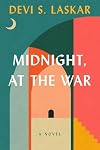
“Midnight, At the War” is a novel that quietly resists the expectations its title suggests. What sounds like a tense, immersive account of frontline reporting instead unfolds as something far more interior and fragmented. It is a portrait of a life in motion, rather than a story anchored in war. Initially, that mismatch frustrated me, but as the story developed, Laskar’s intention became clear. She is not interested in conflict as spectacle, but the personal cost of living adjacent to show more it.
The narrator, Rita Das, is an international journalist whose career promises access to history-in-the-making, yet the novel deliberately shifts focus away from the battlefield. War exists, but as a distant hum rather than a central force. Instead, the accumulating pressures of her personal life capture Rita’s attention. Workplace misogyny, an unplanned pregnancy, the slow devastation of her mother’s cancer, a grieving father, and the emotional wreckage of infidelity on multiple fronts take center stage. Add to those tensions the instability of constant travel, the casual racism all minorities face, and the disorientation of living out of a suitcase, and the novel becomes less about reporting the world and more about surviving it.
Laskar’s choice is both her book’s strength and its limitation. On one hand, Rita emerges as a convincing and often compelling figure. Her voice carries the exhaustion, cynicism, and resilience one might expect from someone navigating both a demanding profession and a deeply unsettled personal life. Moreover, the novel’s episodic structure effectively mirrors the lived experience of journalists. The dropping into and out of stories as they arise, often without closure, feels quite authentic. Life, in this sense, is not a clean narrative but a series of unfinished moments, and Laskar captures that well.
On the other hand, the novel’s diffuse focus comes at a cost. The setting never fully coheres. Locations blur together, and the absence of a vividly realized physical environment makes it difficult for the reader to feel grounded. This is especially noticeable in the treatment of war itself, which never becomes tangible or immediate. For a novel that invokes war so prominently in its title, its emotional and sensory distance from actual conflict is striking. With that said, the appearance of “war” in Laskar’s title seems obscure. Does it suggest a moment of darkness or reckoning in Rita’s life as opposed to a literal reference to war? It is noteworthy that it is never called just “war” in the text, but always “the war.” This suggests more of an internal struggle involving Rita’s identity, responsibilities, and losses than the actual conflict occurring around her. The result is a sense of narrative imbalance: the personal overwhelms the political, but without fully replacing it with something equally structured.
One area where the novel does resonate strongly is in its depiction of post-9/11 travel. The heightened scrutiny, logistical frustrations, and underlying tension of moving across borders during that period are rendered with specificity and credibility, adding texture to an otherwise loosely defined backdrop.
Ultimately this is less a novel about war journalism than it is about the fragmentation of a life lived in transit—emotionally, geographically, and professionally. Readers expecting a tightly plotted, war-centered narrative may find it lacking, but those open to a character-driven exploration of dislocation and personal upheaval will find it satisfying. It’s an uneven but sincere work, anchored by a believable protagonist even when the world around her remains frustratingly indistinct. show less
The narrator, Rita Das, is an international journalist whose career promises access to history-in-the-making, yet the novel deliberately shifts focus away from the battlefield. War exists, but as a distant hum rather than a central force. Instead, the accumulating pressures of her personal life capture Rita’s attention. Workplace misogyny, an unplanned pregnancy, the slow devastation of her mother’s cancer, a grieving father, and the emotional wreckage of infidelity on multiple fronts take center stage. Add to those tensions the instability of constant travel, the casual racism all minorities face, and the disorientation of living out of a suitcase, and the novel becomes less about reporting the world and more about surviving it.
Laskar’s choice is both her book’s strength and its limitation. On one hand, Rita emerges as a convincing and often compelling figure. Her voice carries the exhaustion, cynicism, and resilience one might expect from someone navigating both a demanding profession and a deeply unsettled personal life. Moreover, the novel’s episodic structure effectively mirrors the lived experience of journalists. The dropping into and out of stories as they arise, often without closure, feels quite authentic. Life, in this sense, is not a clean narrative but a series of unfinished moments, and Laskar captures that well.
On the other hand, the novel’s diffuse focus comes at a cost. The setting never fully coheres. Locations blur together, and the absence of a vividly realized physical environment makes it difficult for the reader to feel grounded. This is especially noticeable in the treatment of war itself, which never becomes tangible or immediate. For a novel that invokes war so prominently in its title, its emotional and sensory distance from actual conflict is striking. With that said, the appearance of “war” in Laskar’s title seems obscure. Does it suggest a moment of darkness or reckoning in Rita’s life as opposed to a literal reference to war? It is noteworthy that it is never called just “war” in the text, but always “the war.” This suggests more of an internal struggle involving Rita’s identity, responsibilities, and losses than the actual conflict occurring around her. The result is a sense of narrative imbalance: the personal overwhelms the political, but without fully replacing it with something equally structured.
One area where the novel does resonate strongly is in its depiction of post-9/11 travel. The heightened scrutiny, logistical frustrations, and underlying tension of moving across borders during that period are rendered with specificity and credibility, adding texture to an otherwise loosely defined backdrop.
Ultimately this is less a novel about war journalism than it is about the fragmentation of a life lived in transit—emotionally, geographically, and professionally. Readers expecting a tightly plotted, war-centered narrative may find it lacking, but those open to a character-driven exploration of dislocation and personal upheaval will find it satisfying. It’s an uneven but sincere work, anchored by a believable protagonist even when the world around her remains frustratingly indistinct. show less
"Your story does not begin with you; It inevitably begins with your parents. And their story does not begin with them..."
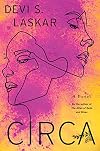
Happy paperback release day to this absolute gem of a book Circa by Devi S. Laskar! Thanks to @marinerbooks for the gifted copy.
I don't know what made me pick up this book knowing it was going to be a sad book. After reading this one and seeing Marco (Crash) and Heera's emotional journey through grief, I know that it was just what I needed to be reading while still show more navigating my own grief about losing one of my best friends recently. He was like a brother to me and I totally related to how Heera was so stuck in her grief when Marie died. Reading this one gave me permission and validation and grieve in my own way and to move forward at my own pace.
Grief shows up in so many ways. Laskar's multiple POV's helps the reader see grief in several forms: leaving your home country, losing a loved one, losing a child, losing your health, and unaccomplished goals. The author's writing was so gorgeous & poetic that it managed to convey so much beauty despite the pain. I loved that she showed how grief can manifest as disobedience, risk taking, disassociate and juvenile delinquency. Grief can also sometimes cause survivors to stay stuck in that moment when their loved one died. Moving through grief can be messy and from the outside looking in can appear more dangerous than painful. Sometimes decisions made while going through grief aren't always the best but patience and understanding go a long way in helping someone grieving come out on the other side ready to continue life. That's one of the biggest takeaways I got from this one.
I loved Heera's character because I could relate to her struggles of being raised in between two worlds, two nations and two lifestyles. Her parent's trauma about having to leave their country played out in their hypervigilance and worry about her losing her traditions. I also really enjoyed how they showed the healing power of art & how instrumental art is for identity & self expression.
If you love emotional, coming of age stories that tackle the complexities of being a child of Asian immigrants, read this one. show less
Happy paperback release day to this absolute gem of a book Circa by Devi S. Laskar! Thanks to @marinerbooks for the gifted copy.
I don't know what made me pick up this book knowing it was going to be a sad book. After reading this one and seeing Marco (Crash) and Heera's emotional journey through grief, I know that it was just what I needed to be reading while still show more navigating my own grief about losing one of my best friends recently. He was like a brother to me and I totally related to how Heera was so stuck in her grief when Marie died. Reading this one gave me permission and validation and grieve in my own way and to move forward at my own pace.
Grief shows up in so many ways. Laskar's multiple POV's helps the reader see grief in several forms: leaving your home country, losing a loved one, losing a child, losing your health, and unaccomplished goals. The author's writing was so gorgeous & poetic that it managed to convey so much beauty despite the pain. I loved that she showed how grief can manifest as disobedience, risk taking, disassociate and juvenile delinquency. Grief can also sometimes cause survivors to stay stuck in that moment when their loved one died. Moving through grief can be messy and from the outside looking in can appear more dangerous than painful. Sometimes decisions made while going through grief aren't always the best but patience and understanding go a long way in helping someone grieving come out on the other side ready to continue life. That's one of the biggest takeaways I got from this one.
I loved Heera's character because I could relate to her struggles of being raised in between two worlds, two nations and two lifestyles. Her parent's trauma about having to leave their country played out in their hypervigilance and worry about her losing her traditions. I also really enjoyed how they showed the healing power of art & how instrumental art is for identity & self expression.
If you love emotional, coming of age stories that tackle the complexities of being a child of Asian immigrants, read this one. show less
Emotionally compelling. A complex look at the effects of grief and the way loss can alter one's life as well as the struggle as a child of immigrants to compromise between the expectations of parents and their culture and one's own desires and the influence of the culture they are immersed in.
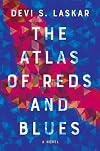
I really wanted to like this book but I didn't. I keep trying to figure out what I am missing.
The writing style of the book is very different, the characters did not have names, i.e. Mother, Middle Daughter, etc, the flashbacks to a variety of times and places; that all took getting used to but I didn't hate it. Admittedly, I did hate the references to the husband as being the "Hero".
The book opens with Mother lying in the driveway after being shot by police with assault style weapons. Why show more were the police even there? I understand the racial profiling throughout the book but I feel like at no point do we know why this shooting incident took place. I was waiting for something, anything to help and nothing came. show less
The writing style of the book is very different, the characters did not have names, i.e. Mother, Middle Daughter, etc, the flashbacks to a variety of times and places; that all took getting used to but I didn't hate it. Admittedly, I did hate the references to the husband as being the "Hero".
The book opens with Mother lying in the driveway after being shot by police with assault style weapons. Why show more were the police even there? I understand the racial profiling throughout the book but I feel like at no point do we know why this shooting incident took place. I was waiting for something, anything to help and nothing came. show less
Awards


You May Also Like


Associated Authors
Statistics
- Works
- 5
- Also by
- 1
- Members
- 191
- Popularity
- #114,254
- Rating
- 3.9
- Reviews
- 5
- ISBNs
- 15