
Paul Yoon
Author of Snow Hunters
Works by Paul Yoon
Once the Shore [short story] 1 copy
Etna 1 copy
Associated Works
Tagged
Common Knowledge
- Birthdate
- 1980
- Gender
- male
- Education
- Wesleyan University (BA)
- Awards and honors
- National Book Foundation "5 Under 35" (2010)
- Agent
- Bill Clegg
- Relationships
- van den Berg, Laura (spouse)
- Nationality
- USA
- Birthplace
- New York, New York, USA
- Places of residence
- Baltimore, Maryland, USA
Cambridge, Massachusetts, USA - Associated Place (for map)
- USA
Members
Reviews
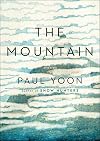
These six stories are about different individuals, set in different time periods and on different continents, and yet they read almost as a continuous narrative…almost. The characters are all people who have had trauma but find some moment, some measure of healing. The voice in which these stories are told, is both quiet and compassionate; it casts a spell on the reader and it makes the book very difficult to put down.
So often short story collections are uneven, a mix of the great, the show more good and the not-so-good, but this is such an even collection, all of the stories seemed equally good (which doesn’t mean you still can’t have favorites). I think the only other collection I have read which has been so similarly even is Alice Munro’s Open Secrets. This is a lovely read and would also be a nice gift for a reading friend. show less
So often short story collections are uneven, a mix of the great, the show more good and the not-so-good, but this is such an even collection, all of the stories seemed equally good (which doesn’t mean you still can’t have favorites). I think the only other collection I have read which has been so similarly even is Alice Munro’s Open Secrets. This is a lovely read and would also be a nice gift for a reading friend. show less
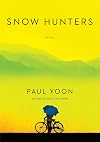
I am in awe of Paul Yoon's ability in this, his first novel, to write a nearly 200-page book in mostly stream of consciousness and not bore me to tears.
That's a back ass-wards way of saying that Snow Hunters and Yoon's talent as a writer are not to be missed.
While reading Yoon, I ask myself how is it that he can take prose and make it sing like poetry? How is it he can take a scene and bring out the colours an artist uses in a fine, dappled landscape? How is it with little or no dialogue he show more can tell a reader so much? How is it the writer knows what I've thought from time to time..."that people aged, second by second, leaving themselves behind."
In this novel, the main character Yohan, is so dislocated, so isolated that the people he thinks of as friends he doesn't often see and, [XBR] when he does, few words pass between them. It's not until the final few pages that Yohan has finally found enough words to make a connection.
"Stay this time," he says. And "...he watched the shape of her there, rising. She lifted her arms for balance. Then she made her way toward him, across the length of the canoe, as lights appeared and the evening started." show less
That's a back ass-wards way of saying that Snow Hunters and Yoon's talent as a writer are not to be missed.
While reading Yoon, I ask myself how is it that he can take prose and make it sing like poetry? How is it he can take a scene and bring out the colours an artist uses in a fine, dappled landscape? How is it with little or no dialogue he show more can tell a reader so much? How is it the writer knows what I've thought from time to time..."that people aged, second by second, leaving themselves behind."
In this novel, the main character Yohan, is so dislocated, so isolated that the people he thinks of as friends he doesn't often see and, [XBR] when he does, few words pass between them. It's not until the final few pages that Yohan has finally found enough words to make a connection.
"Stay this time," he says. And "...he watched the shape of her there, rising. She lifted her arms for balance. Then she made her way toward him, across the length of the canoe, as lights appeared and the evening started." show less
As a teenager I heard an interview with filmmaker Abbas Kiarostami about what he likes in films that resonated so intensely with me, I later transcribed it from a home VHS tape. Ever since I have thought to myself on occasion, "this is a film Kiarostami would like." So: this is a book I think Kiarostami would like. It is subtle and poetic, equally simple and complex, and somehow manages to convey quiet through language, in a beautifully active, present, and haunting way. I don't know that show more it's for everyone, but it's very much for some of us. show less
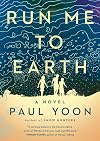
In Paul Yoon's "Run Me to Earth," he considers the ghosts that haunt all of us as we age: childhood friends, the kindnesses of strangers, the horrors that resurface when our memories are nudged by a single bird calling to its mate.
The particular ghosts in this small, graceful, and very literary novel may be too familiar to some readers as they rise like the morning mist out of the humidity of Laos. Laos, like Cambodia, was a pawn in the brutal chess game waged in Vietnam by the French and show more then the Americans.
Some of you remember, I'm sure, the devastation wrought by both countries in Southeast Asia. The excuse of multiple administrations and governments? Making the world safe for democracy.
Ask Noi, Prany, and Alisak how safe their young lives really were. Ask them about the Plain of Jars and the buried incendiary bombs they navigated to bring medical supplies back to the doctors and nurses at a makeshift civilian hospital. Ask them about the fragile comfort they gave at the hospital to mangled, bedridden blast survivors pumped full of the last morphine. Ask them about the moments of near nighttime quiet when, laying entwined together for warmth, they'd share their hopes about where they might be taken as refugees. Thailand? France?
This novel is a must-read for any who lived through that era of misguided interference fueled by the privileged arrogance of first-world governments. And, for those somewhat younger, this novel and its ghosts will speak to the very same endless chess game being played out now in the Middle East and South America. show less
The particular ghosts in this small, graceful, and very literary novel may be too familiar to some readers as they rise like the morning mist out of the humidity of Laos. Laos, like Cambodia, was a pawn in the brutal chess game waged in Vietnam by the French and show more then the Americans.
Some of you remember, I'm sure, the devastation wrought by both countries in Southeast Asia. The excuse of multiple administrations and governments? Making the world safe for democracy.
Ask Noi, Prany, and Alisak how safe their young lives really were. Ask them about the Plain of Jars and the buried incendiary bombs they navigated to bring medical supplies back to the doctors and nurses at a makeshift civilian hospital. Ask them about the fragile comfort they gave at the hospital to mangled, bedridden blast survivors pumped full of the last morphine. Ask them about the moments of near nighttime quiet when, laying entwined together for warmth, they'd share their hopes about where they might be taken as refugees. Thailand? France?
This novel is a must-read for any who lived through that era of misguided interference fueled by the privileged arrogance of first-world governments. And, for those somewhat younger, this novel and its ghosts will speak to the very same endless chess game being played out now in the Middle East and South America. show less
Lists
Awards


You May Also Like


Associated Authors
Statistics
- Works
- 10
- Also by
- 3
- Members
- 906
- Popularity
- #28,310
- Rating
- 3.8
- Reviews
- 64
- ISBNs
- 43
- Languages
- 2
- Favorited
- 3
