
Edward Humes
Author of Garbology: Our Dirty Love Affair with Trash
About the Author
Edward Humes is the author of ten critically acclaimed nonfiction books, including Eco Barons, Monkey Girl, Over Here, School of Dreams, Baby E.R., Mean Justice, No Matter How Loud I Shout, and the bestseller Mississippi Mud. He has received a Pulitzer Prize for his journalism and numerous awards show more for his books. He has written for the New York Times, Los Angeles Times, Los Angeles Magazine, and Sierra. He lives in California. show less
Works by Edward Humes
Monkey Girl: Evolution, Education, Religion, and the Battle for America's Soul (2007) 308 copies, 11 reviews
Door to Door: The Magnificent, Maddening, Mysterious World of Transportation (2016) 152 copies, 3 reviews
The Forever Witness: How DNA and Genealogy Solved a Cold Case Double Murder (2022) 149 copies, 11 reviews
Eco Barons: The Dreamers, Schemers, and Millionaires Who Are Saving Our Planet (2009) 81 copies, 2 reviews
Associated Works
Tagged
Common Knowledge
- Birthdate
- 1957
- Gender
- male
- Education
- Hampshire College
- Occupations
- journalist
- Awards and honors
- Pulitzer Prize (Specialized Reporting, 1989)
- Nationality
- USA
- Birthplace
- Philadelphia, Pennsylvania, USA
- Places of residence
- Southern California, USA
- Associated Place (for map)
- USA
Members
Reviews
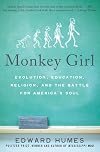
An interesting, readable account of the Dover, Pennsylvania "intelligent design" trial that led to ID being barred from America's science classrooms. Since I'm not particularly science-literate, I felt pretty well-served by this book. Humes walks the reader though the basics of evolutionary theory and evolution-related jurisprudence, as well as the often-strange origins of the intelligent design "movement" itself. Humes's style is pretty straightforward, sometimes verging on newspaperly, but show more he also knows how to build tension. The pages of "Monkey Girl" fly by as we approach Judge Jones's final ruling. As might be expected, Humes is not a "teach the controversy" kind of guy: he's not afraid to call ID ridiculous and to describe its proponents in terms that are less than kind. Still, to his credit, he takes care to humanize one of the main proponents of the Dover school board's intelligent design policy, William Buckingham, who suffered from a string of personal troubles that is likely to seem sadly familiar to many residents of rural Pennsylvania. His portraits of the teachers, parents, and lawyers on the anti-ID side of the aisle are much kinder, but they also suggest that the author is particularly adept at making people come alive on the page.
It's not a knock on "Monkey Girl" to say that it's more interested in the people and ideas surrounding Darwin's theory than it is in the nuts and bolts of evolutionary theory. It probably shouldn't be the only book you read about evolution or the difficulties facing science educators. Still, it's well-constructed and concise, and I couldn't help thinking that Humes was largely right about what most of the protagonists in this story felt was at stake in the case. He convincingly places the Kitzmiller case in a larger cultural and political context that hasn't changed all that much since the events described here took place fifteen years ago. show less
It's not a knock on "Monkey Girl" to say that it's more interested in the people and ideas surrounding Darwin's theory than it is in the nuts and bolts of evolutionary theory. It probably shouldn't be the only book you read about evolution or the difficulties facing science educators. Still, it's well-constructed and concise, and I couldn't help thinking that Humes was largely right about what most of the protagonists in this story felt was at stake in the case. He convincingly places the Kitzmiller case in a larger cultural and political context that hasn't changed all that much since the events described here took place fifteen years ago. show less
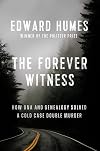
A totally absorbing read about the 1987 murder of two Canadians in Washington state, and the solving of that crime 31 years later using DNA. Well written and researched, rich in details that really set the atmosphere of the crime and the subsequent police work. The description of how DNA was used was fascinating and raises so many issues around privacy and consent.
Fascinating true crime.
"Genetic genealogy...was the source that never lied, never faded with time, never forgot. It was the forever witness."
The murdered bodies of Tanya Van Cuylenborg and her boyfriend, Jay Cook, were found separately in isolated parts of Washington State in November, 1987. The lack of clues hampered the investigation and eventually the case went dormant without new leads. Decades later, in 2018, Detective Jim Scharf working the cold case in Snohomish County, Washington, show more would team up with genetic genealogist, CeCe Moore, to identify the killer. The man, William Talbott II, was subsequently tried and convicted using this new and powerful forensic tool -- but it has been widely misunderstood.
Along with details about the Cuylenborg/Cook case, the book also focuses on the controversial use of genetic genealogy as a method of fighting crime and identifying criminals. The argument centers on privacy and the rights of those who submit their DNA to both public or private labs. Many of us have willingly put our saliva in a tube and mailed it to one of the ancestry sites looking for information. The question then is whether or not that voluntary surrender implies consent for police or other organizations to search those data bases for their own purposes -- mostly to secure and identify a suspect in a murder or other violent crime. Keep in mind that when you send off your DNA, you are also revealing that of your relatives and mostly without their knowledge or consent. It's definitely an interesting debate, and I know on which side I fall. Several US States have already begun the process of regulating and establishing clearcut laws about using genetic material.
I found the entire book absorbing and extremely interesting. I was not aware of the cold case and was astonished to hear the outcome of the trial and subsequent appeal. I liked the way the author wrote the story of Tanya and Jay and the way the narrative included so much detail that created in me a desire for the couple to get some sort of resolution and ultimately, justice. Sometimes I forget how much I enjoy reading well-written true crime. I recommend it.
Thank you to NetGalley and Penguin Group Dutton for this e-book ARC to read and review. show less
"Genetic genealogy...was the source that never lied, never faded with time, never forgot. It was the forever witness."
The murdered bodies of Tanya Van Cuylenborg and her boyfriend, Jay Cook, were found separately in isolated parts of Washington State in November, 1987. The lack of clues hampered the investigation and eventually the case went dormant without new leads. Decades later, in 2018, Detective Jim Scharf working the cold case in Snohomish County, Washington, show more would team up with genetic genealogist, CeCe Moore, to identify the killer. The man, William Talbott II, was subsequently tried and convicted using this new and powerful forensic tool -- but it has been widely misunderstood.
Along with details about the Cuylenborg/Cook case, the book also focuses on the controversial use of genetic genealogy as a method of fighting crime and identifying criminals. The argument centers on privacy and the rights of those who submit their DNA to both public or private labs. Many of us have willingly put our saliva in a tube and mailed it to one of the ancestry sites looking for information. The question then is whether or not that voluntary surrender implies consent for police or other organizations to search those data bases for their own purposes -- mostly to secure and identify a suspect in a murder or other violent crime. Keep in mind that when you send off your DNA, you are also revealing that of your relatives and mostly without their knowledge or consent. It's definitely an interesting debate, and I know on which side I fall. Several US States have already begun the process of regulating and establishing clearcut laws about using genetic material.
I found the entire book absorbing and extremely interesting. I was not aware of the cold case and was astonished to hear the outcome of the trial and subsequent appeal. I liked the way the author wrote the story of Tanya and Jay and the way the narrative included so much detail that created in me a desire for the couple to get some sort of resolution and ultimately, justice. Sometimes I forget how much I enjoy reading well-written true crime. I recommend it.
Thank you to NetGalley and Penguin Group Dutton for this e-book ARC to read and review. show less
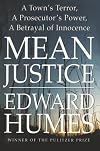
I've read and enjoyed a later work by Edward Humes, The Forever Witness, and decided to find another by him. I was not disappointed.
This is the true story of Patrick Dunn who was charged with the murder of his wife and wrongfully convicted, sentenced to life without parole. The verdict came as a shock to his legal team and became even more shocking as they discovered, post-trial, evidence that was not shared with them, as the law required. Very well written and researched. There is a lot of show more detail here, but the book never gets bogged down and continues to read like a procedural thriller.
At the end of the book, Mr. Dunn is still in prison, having exhausted avenues of appeal. However, a subsequent Google search showed me that his sentence was commuted to make him eligible for parole, which is obtained after 31 years in jail, thanks in large part to his grandson's continued efforts on his behalf.
A great read. show less
This is the true story of Patrick Dunn who was charged with the murder of his wife and wrongfully convicted, sentenced to life without parole. The verdict came as a shock to his legal team and became even more shocking as they discovered, post-trial, evidence that was not shared with them, as the law required. Very well written and researched. There is a lot of show more detail here, but the book never gets bogged down and continues to read like a procedural thriller.
At the end of the book, Mr. Dunn is still in prison, having exhausted avenues of appeal. However, a subsequent Google search showed me that his sentence was commuted to make him eligible for parole, which is obtained after 31 years in jail, thanks in large part to his grandson's continued efforts on his behalf.
A great read. show less
Lists
Awards


You May Also Like


Associated Authors
Statistics
- Works
- 18
- Also by
- 1
- Members
- 2,049
- Popularity
- #12,556
- Rating
- 3.9
- Reviews
- 58
- ISBNs
- 82
- Languages
- 1