
Laura Restrepo
Author of Delirium
About the Author
Image credit: Photo © Carlos Duque
Works by Laura Restrepo
Associated Works
Daughters of Latin America: An International Anthology of Writing by Latine Women (2023) — Contributor — 38 copies, 1 review
Tagged
Common Knowledge
- Canonical name
- Restrepo, Laura
- Birthdate
- 1950
- Gender
- female
- Education
- University of the Andes (Philosophy, Literature)
- Occupations
- professor (Colombia's National University)
director (Institute of Culture and Tourism in Bogotá)
journalist - Awards and honors
- Premio Nacional de Literatura de Colombia (2007)
- Agent
- Thomas Colchie (The Colchie Agency)
- Nationality
- Colombia
- Birthplace
- Bogota, Colombia
- Places of residence
- Bogota, Colombia (birth)
Spain
Mexico
Bogota, Colombia
Mexico City, Mexico - Map Location
- Colombia
Members
Reviews

Sayonara es un personaje de esos que dejan huella no sólo en la historia, sino en el lector. Cada vez que piense en una luz morada pensaré en ella y en como su historia fue entretejiéndose con ese magnético resplandor mientras fue la más bella y cotizada prostituta de La Catunga.
Escrito como una investigación realizada por una reportera,el magnetismo de Sayonara queda demostrado desde la primera vez que escuchamos de ella, cuando era sólo La Niña, hasta cuando su figura trasciende show more historia y fronteras llegando al punto en que se duda sí ella se encontraba o no en el pueblo de Tora.
No es libro perfecto, pero cada parte de la historia te va guiando al crecimiento de los personajes y al merecido final para ellos ¿Porqué digo merecido aun cuando algunos mueren o sufren o se enferman gravemente? Porque es como la vida, tus acciones no te compran un final alegre ni desolador, simplemente es el cierre de tu historia.
Debo decir que al leer la última página no pude dejar de sentir tristeza y alegría, tal como supongo que Todos los Santos sintió, pero al igual ella, me quedo con la esperanza de que sus última palabras se vuelvan realidad. show less
Escrito como una investigación realizada por una reportera,el magnetismo de Sayonara queda demostrado desde la primera vez que escuchamos de ella, cuando era sólo La Niña, hasta cuando su figura trasciende show more historia y fronteras llegando al punto en que se duda sí ella se encontraba o no en el pueblo de Tora.
No es libro perfecto, pero cada parte de la historia te va guiando al crecimiento de los personajes y al merecido final para ellos ¿Porqué digo merecido aun cuando algunos mueren o sufren o se enferman gravemente? Porque es como la vida, tus acciones no te compran un final alegre ni desolador, simplemente es el cierre de tu historia.
Debo decir que al leer la última página no pude dejar de sentir tristeza y alegría, tal como supongo que Todos los Santos sintió, pero al igual ella, me quedo con la esperanza de que sus última palabras se vuelvan realidad. show less
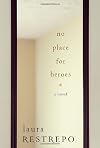
It's taken me a very long time to finally sit down and review No Place for Heroes, which is appropriate because it took me a very long time to finish it once I started. It bothered me because this was a book I felt like I should like, a story with history and characters and dueling narratives and a certain amount of mystery and intrigue. But it just never comes together, and the result is a messy muddle of what-could-have-been.
The aforementioned "dueling narratives" both involve the female show more protagonist, a mother named Lorenza. In the present, she and her son Mateo are traveling to Argentina in search of Ramon, Mateo's father, whom we learn kidnapped Mateo long ago, only to return him to Lorenza and disappear forever. The circumstances of that mystery are deeply tied in with the narrative of Lorenza's involvement in the Argentinian "Dirty War" of the 1970s and 1980s, which Lorenza tells to Mateo as their search progresses.
So what's the problem? It's two-fold, really: character and narrative structure. First things first, Lorenza and Mateo occupy the vast majority of the space on the page, except when Lorenza dips into her narratives of the 1970s, but neither act like fully formed, realistic characters. Mateo is the more egregious problem, vacillating wildly between being a precocious and ambitious young man and a bratty kid with the maturity level of a toddler. We never get a very strong understanding of why Mateo can't seem to settle on whether or not he will call the number he has found for Ramon, or why he decides in certain instances to go out and search or to stay in his hotel room and play video games.
This wouldn't be such a glaring problem if Lorenza herself were a more stationary character, but sadly she too wavers wildly between a stern, by-the-books disciplinarian and the more loosey-goosey woman who's prone to losing herself in the wistful nostalgia of her younger days during the Dirty War. She essentially enables all of Mateo's immature behavior and, while that may be part of Restrepo's point, it detracts greatly from the reader being able to empathize with either, or at least to relate to the mother-son relationship they have.
As a result, the narrative loses a great deal of its steam. All of the Dirty War narrative, for instance, takes place in Lorenza's storytelling, a necessary but unfortunate device. For one thing, any suspense that develops in any of the specific situations is tempered entirely by the fact that we know our protagonist gets out okay. This wouldn't be so bad if we felt connected in some way to her, but since she feels too nostalgic about this period of time for even Mateo to consistently care, it's difficult for the reader to care either.
By the time the novel enters its third act—in which we finally learn the circumstances of Mateo's kidnapping and return, and we ultimately experience the most explicit depiction of Lorenza's and Ramon's shady relationship—not much has happened in either narrative. Interestingly, Restrepo does do an admirable job of building some suspense into this final section but, in a most unfortunate move, she rushes the ending, condensing into a few short pages what we've waited an entire novel to learn. It feels cheap and the reader feels cheated.
With so little else to redeem it, the novel ends up feeling less profound than a profound waste of time. It may seem a bit harsh to say it so bluntly, but Restrepo simply did not do enough with the premise she had. Without a solid central relationship or a more objective, developed secondary plot, the novel plods along until its way-too-neat, way-too-quick conclusion. There are plenty of places in No Place for Heroes to create something engaging and compelling, but those places, like the novel itself, are ultimately empty. show less
The aforementioned "dueling narratives" both involve the female show more protagonist, a mother named Lorenza. In the present, she and her son Mateo are traveling to Argentina in search of Ramon, Mateo's father, whom we learn kidnapped Mateo long ago, only to return him to Lorenza and disappear forever. The circumstances of that mystery are deeply tied in with the narrative of Lorenza's involvement in the Argentinian "Dirty War" of the 1970s and 1980s, which Lorenza tells to Mateo as their search progresses.
So what's the problem? It's two-fold, really: character and narrative structure. First things first, Lorenza and Mateo occupy the vast majority of the space on the page, except when Lorenza dips into her narratives of the 1970s, but neither act like fully formed, realistic characters. Mateo is the more egregious problem, vacillating wildly between being a precocious and ambitious young man and a bratty kid with the maturity level of a toddler. We never get a very strong understanding of why Mateo can't seem to settle on whether or not he will call the number he has found for Ramon, or why he decides in certain instances to go out and search or to stay in his hotel room and play video games.
This wouldn't be such a glaring problem if Lorenza herself were a more stationary character, but sadly she too wavers wildly between a stern, by-the-books disciplinarian and the more loosey-goosey woman who's prone to losing herself in the wistful nostalgia of her younger days during the Dirty War. She essentially enables all of Mateo's immature behavior and, while that may be part of Restrepo's point, it detracts greatly from the reader being able to empathize with either, or at least to relate to the mother-son relationship they have.
As a result, the narrative loses a great deal of its steam. All of the Dirty War narrative, for instance, takes place in Lorenza's storytelling, a necessary but unfortunate device. For one thing, any suspense that develops in any of the specific situations is tempered entirely by the fact that we know our protagonist gets out okay. This wouldn't be so bad if we felt connected in some way to her, but since she feels too nostalgic about this period of time for even Mateo to consistently care, it's difficult for the reader to care either.
By the time the novel enters its third act—in which we finally learn the circumstances of Mateo's kidnapping and return, and we ultimately experience the most explicit depiction of Lorenza's and Ramon's shady relationship—not much has happened in either narrative. Interestingly, Restrepo does do an admirable job of building some suspense into this final section but, in a most unfortunate move, she rushes the ending, condensing into a few short pages what we've waited an entire novel to learn. It feels cheap and the reader feels cheated.
With so little else to redeem it, the novel ends up feeling less profound than a profound waste of time. It may seem a bit harsh to say it so bluntly, but Restrepo simply did not do enough with the premise she had. Without a solid central relationship or a more objective, developed secondary plot, the novel plods along until its way-too-neat, way-too-quick conclusion. There are plenty of places in No Place for Heroes to create something engaging and compelling, but those places, like the novel itself, are ultimately empty. show less
 This review was written for LibraryThing Early Reviewers.
No Place for Heroes tells the story of Lorenza and Mateo, a mother and her adolescent son, who have embarked on a journey from Bogotá to Buenos Aires to find Ramón, Mateo’s long-absent father. Years before, Ramón and Lorenza were comrades in the resistance to Argentina’s Dirty War and they shared a love affair that lasted for awhile. Now, mother and son have returned to that country for a common purpose, but with very different agendas. For Lorenza, the trip becomes a quest to relive show more and bring closure to important events in her past. Mateo, on the other hand, has a more specific and practical goal: he wants to know his father.
Unfortunately, very little in this novel resonated with me. Although not lengthy by any means, the story nonetheless dragged for considerable stretches. The author moves the tale between the present and the past in an awkward manner, relying often on the fairly clumsy mechanism of having Lorenza retell to Mateo the tale of her history with Ramón, for what must be the hundredth time. However, with the exception of one overblown “dark episode,” nothing of consequence really happens at any point in the narrative. Indeed, the reader is never engaged in the gut-wrenching stories of the legions of “disappeared” persons that mark this sad and bloody period in Argentina’s past, despite the fact that fighting against that oppression was the ostensible purpose bringing Lorenza and Ramón together in the first place.
A second problem I had is that the relationship between mother and son came off as shallow and contrived to the point of being unbelievable. In particular, the way they spoke to one another was, at times, quite unrealistic. For instance, Mateo refers to Lorenza in three ways—her given name, her nickname (Lolé), or just plain Mother “when he is irate with her”—on an almost rotational basis, as if he has some unspoken quota to fill. I suspect that this bit of superficiality was the result of the author’s decision to use the dialogue between the two as a device to recount past events, which rendered the authenticity of their relationship of secondary importance.
This was my first exposure to Laura Restrepo and, judging from the effusive praise for her earlier work, it is either an atypical novel or I am not typical of her readership. In the end, I think that the real issue is that No Place for Heroes suffers from a lack of clear vision; it is as if the author could not make up her mind whether she wanted to tell a bittersweet love story, a comic tale of parent and child bonding, or a poignant memory of a troubled time. Sadly, while any one of these approaches might have worked quite well, mixing all three at once did not. show less
Unfortunately, very little in this novel resonated with me. Although not lengthy by any means, the story nonetheless dragged for considerable stretches. The author moves the tale between the present and the past in an awkward manner, relying often on the fairly clumsy mechanism of having Lorenza retell to Mateo the tale of her history with Ramón, for what must be the hundredth time. However, with the exception of one overblown “dark episode,” nothing of consequence really happens at any point in the narrative. Indeed, the reader is never engaged in the gut-wrenching stories of the legions of “disappeared” persons that mark this sad and bloody period in Argentina’s past, despite the fact that fighting against that oppression was the ostensible purpose bringing Lorenza and Ramón together in the first place.
A second problem I had is that the relationship between mother and son came off as shallow and contrived to the point of being unbelievable. In particular, the way they spoke to one another was, at times, quite unrealistic. For instance, Mateo refers to Lorenza in three ways—her given name, her nickname (Lolé), or just plain Mother “when he is irate with her”—on an almost rotational basis, as if he has some unspoken quota to fill. I suspect that this bit of superficiality was the result of the author’s decision to use the dialogue between the two as a device to recount past events, which rendered the authenticity of their relationship of secondary importance.
This was my first exposure to Laura Restrepo and, judging from the effusive praise for her earlier work, it is either an atypical novel or I am not typical of her readership. In the end, I think that the real issue is that No Place for Heroes suffers from a lack of clear vision; it is as if the author could not make up her mind whether she wanted to tell a bittersweet love story, a comic tale of parent and child bonding, or a poignant memory of a troubled time. Sadly, while any one of these approaches might have worked quite well, mixing all three at once did not. show less
This review was written for LibraryThing Early Reviewers.
Restrepo swings through perspectives, without giving much clue of chronology and it wasn’t until I’d settled into the different voices that I began to get into it. The first half of the book I must have read in small chunks as it left me confused; the last third I read in two sittings and that was only because I was disturbed. It’s a book that’s worth the time it takes to get into – uncomfortable but, apart from one scene, not excessively unpleasant. What trips you up is your own show more imagination which is trying to solve the mystery of what happened to poor Augustina And no wonder your imagination is panicking as the novel is set in late 1980s Colombia during the Pablo Escobar era and you’ve got drugs, money laundering and terrorism casually filling the pages. show less
Lists
Awards


You May Also Like


Associated Authors
Statistics
- Works
- 19
- Also by
- 1
- Members
- 1,780
- Popularity
- #14,465
- Rating
- 3.7
- Reviews
- 83
- ISBNs
- 230
- Languages
- 13
- Favorited
- 2
