
Susan Straight
Author of I Been in Sorrow's Kitchen and Licked Out All the Pots
About the Author
Novelist and short story writer Susan Straight graduated from Amherst College in 1984. She teaches Creative Writing at the University of California in Riverside. Aquaboogie, her first collection of short stories, won the Milkweed National Fiction Prize and was one of Publishers Weekly's best show more paperbacks (1990). I Been in Sorrow's Kitchen and Licked Out All the Pots was named one of 1992's best novels by both Publishers Weekly and USA Today. It was also a New York Times Notable Book. (Bowker Author Biography) show less
Works by Susan Straight
Associated Works
McSweeney's 14: McSweeney's at War for the Foreseeable Future and He's Never Been So Scared (2004) — Contributor — 412 copies, 5 reviews
When Race Becomes Real: Black and White Writers Confront Their Personal Histories (2002) — Contributor — 49 copies
Inlandia: A Literary Journey Through California's Inland Empire (2006) — Introduction — 33 copies, 1 review
Black Clock 8 — Contributor — 1 copy
Tagged
Common Knowledge
- Birthdate
- 1960-10-19
- Gender
- female
- Education
- Riverside Community College
University of Southern California
University of Massachusetts, Amherst (MFA) - Organizations
- University of California, Riverside
- Awards and honors
- Lannan Literary Award (Fiction, 2007)
Robert Kirsch Award (2013) - Nationality
- USA
- Birthplace
- Riverside, California, USA
- Places of residence
- Riverside, California, USA
Amherst, Massachusetts, USA - Associated Place (for map)
- USA
Members
Reviews

This is a novel about people living in the parts of Southern California tourists don't see, far inland from the beaches. The novel begins with Johnny Frias, who grew up on a cattle ranch outside of Mecca, California and who now rides the freeways with the CHP. His father still works the ranch, with two other aging cowboys and Frias helps out when he can, keeping a watch on the possibility of forest fires. He also hides a secret in those dry hills, that when he was a rookie officer, he killed show more a man and hid his body there.
Frias is one character in this richly populated novel about people living their lives in the hills to the east of Los Angeles. Straight effortlessly juggles a dozen characters and a large number of events from the pandemic and a wildfire to a missing baby and a teenage boy shot dead in the drive-thru lane of a fast food restaurant. And despite the fact that there is a lot going on, the focus always remains on the characters living in this dry, sun-soaked part of California. This was the perfect novel for summer reading -- I came up for air at the end of it a little disoriented and sad it was over. Straight has such compassion for her characters and understands them so well, that I had no trouble keeping track of who had done what and why they did the things they did. This is a solid book that is deeply rooted in a specific time and place. show less
Frias is one character in this richly populated novel about people living their lives in the hills to the east of Los Angeles. Straight effortlessly juggles a dozen characters and a large number of events from the pandemic and a wildfire to a missing baby and a teenage boy shot dead in the drive-thru lane of a fast food restaurant. And despite the fact that there is a lot going on, the focus always remains on the characters living in this dry, sun-soaked part of California. This was the perfect novel for summer reading -- I came up for air at the end of it a little disoriented and sad it was over. Straight has such compassion for her characters and understands them so well, that I had no trouble keeping track of who had done what and why they did the things they did. This is a solid book that is deeply rooted in a specific time and place. show less
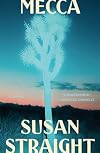
This is a truly ambitious book. It attracted my attention because it takes place in parts of Southern California I explored in detail as a young man (nearly 50 years ago now), going to college and beginning my career in the area known as the Inland Empire. Corona, Claremont, Ontario. So I know the territory.
The author brings this rarely written-about territory to a global audience and does so with high fidelity and gusto. So many details, so vividly described: the terrain, the businesses, show more the cultural conflicts, the styles, the roads and -- offramp by offramp -- the freeways. Most of all, though, the author paints the usually overlooked mix of people and their looks, their preoccupations, their polyglotic lingo, their dreams, their harsh realities.
I say the book is ambitious because it attempts to give voice to more than a dozen different people, women and men, boys and girls, workers and bosses, natives, immigrants, drunks, druggies, strivers, the grounded and the free-floating spirits, the decent, the profane. No easy task. In the first chapters, the voices didn't ring particularly true, especially the men's. Also, the plot is slow to develop, with many of the early pages a bit overburdened by establishing decades-old facts. These facts do become important later on. A finer edit, however, might have laid this groundwork more expeditiously.
Just the same, if you begin this book and feel bogged down at first, persist. Page by page, the plot gathers momentum until its final scene strikes a tremendous punch. It accomplishes this not by an odd twist or some other gimmick, but instead by the slow, steady accretion of feeling as a reader hears the characters speak, understands their experience in the world, and senses a deep sympathy.
Somewhere in the middle of the book I began silently objecting to cardboard portrayals of a few, less savory characters. But one also could find similar fault with many of the world's great novels. "Les Misérables" comes to mind. If no one is going to call Susan Straight a contemporary Victor Hugo, I'll give "Mecca" four stars for its ambition, execution, and huge heart. show less
The author brings this rarely written-about territory to a global audience and does so with high fidelity and gusto. So many details, so vividly described: the terrain, the businesses, show more the cultural conflicts, the styles, the roads and -- offramp by offramp -- the freeways. Most of all, though, the author paints the usually overlooked mix of people and their looks, their preoccupations, their polyglotic lingo, their dreams, their harsh realities.
I say the book is ambitious because it attempts to give voice to more than a dozen different people, women and men, boys and girls, workers and bosses, natives, immigrants, drunks, druggies, strivers, the grounded and the free-floating spirits, the decent, the profane. No easy task. In the first chapters, the voices didn't ring particularly true, especially the men's. Also, the plot is slow to develop, with many of the early pages a bit overburdened by establishing decades-old facts. These facts do become important later on. A finer edit, however, might have laid this groundwork more expeditiously.
Just the same, if you begin this book and feel bogged down at first, persist. Page by page, the plot gathers momentum until its final scene strikes a tremendous punch. It accomplishes this not by an odd twist or some other gimmick, but instead by the slow, steady accretion of feeling as a reader hears the characters speak, understands their experience in the world, and senses a deep sympathy.
Somewhere in the middle of the book I began silently objecting to cardboard portrayals of a few, less savory characters. But one also could find similar fault with many of the world's great novels. "Les Misérables" comes to mind. If no one is going to call Susan Straight a contemporary Victor Hugo, I'll give "Mecca" four stars for its ambition, execution, and huge heart. show less
In this novel Straight looks at greater LA through a cast of characters--and all of these characters are linked somehow. These links aren't necessary to follow the story itself--but they are necessary to understand greater LA. We are all linked somehow, even if we don't know it or don't understand that this is true. This is not glitzy glamorous LA. This is the regular LA, where most of us here live.
Straight's characters include a Latino north OC native who grew up on a ranch and is now a CHP show more officer (and his family, longtime friends, fellow officers, and a mentor); Matelasse, a black and native woman whose family came from Louisiana (and her friends, children, ex-husband, co-workers); Ximena, a recently arrived undocumented immigrant (and her friends, family, co-workers, bosses); Bunny Goldman and her mother who married a wealthy older man and now lives as a semi-reclusive alcoholic and lonely widow.
Mecca is the town in the Coachella Valley--a place Ximena wants to get back to after being chased out by ICE. Matelasse also has family out here, on the Torres-Martinez Reservation. The diverse landscapes of SoCal--the hot dry desert, the difficult terrain in the fire-prone OC mountains, the urban bungalow court, the wealthy and lush hillside homes near Mulholland, the beach in Venice--are key to the various storylines. Food, crime, weather, traffic/travel distance, blood family and found family--come up again and again, and affect all of the diverse set of characters.
Straight knows Southern California, and as I listened I kept having to remind myself that this is fiction. I could see these places, having been to so places that felt like her descriptions (Fuego Canyon sounded like Carbon Canyon, Santiago Canton, Limestone Canyon). The Goldman house could fit into any hillside neighborhood in the Santa Monica Mountains between Brentwood and Los Feliz. The Seven Palms could be anywhere east of Whitewater, other than Palm Springs proper.
The only thing I did not like was the ending. After this nice long book with so many connected stories, I do not want to have to choose my own ending. show less
Straight's characters include a Latino north OC native who grew up on a ranch and is now a CHP show more officer (and his family, longtime friends, fellow officers, and a mentor); Matelasse, a black and native woman whose family came from Louisiana (and her friends, children, ex-husband, co-workers); Ximena, a recently arrived undocumented immigrant (and her friends, family, co-workers, bosses); Bunny Goldman and her mother who married a wealthy older man and now lives as a semi-reclusive alcoholic and lonely widow.
Mecca is the town in the Coachella Valley--a place Ximena wants to get back to after being chased out by ICE. Matelasse also has family out here, on the Torres-Martinez Reservation. The diverse landscapes of SoCal--the hot dry desert, the difficult terrain in the fire-prone OC mountains, the urban bungalow court, the wealthy and lush hillside homes near Mulholland, the beach in Venice--are key to the various storylines. Food, crime, weather, traffic/travel distance, blood family and found family--come up again and again, and affect all of the diverse set of characters.
Straight knows Southern California, and as I listened I kept having to remind myself that this is fiction. I could see these places, having been to so places that felt like her descriptions (Fuego Canyon sounded like Carbon Canyon, Santiago Canton, Limestone Canyon). The Goldman house could fit into any hillside neighborhood in the Santa Monica Mountains between Brentwood and Los Feliz. The Seven Palms could be anywhere east of Whitewater, other than Palm Springs proper.
The only thing I did not like was the ending. After this nice long book with so many connected stories, I do not want to have to choose my own ending. show less
I love this novel. Straight gives us a Southern California we can feel, the heat of the desert, the dryness of the canyons, and the congestion of the traffic. She also gives us the people, the black, brown, indigenous. No matter the citizenship status, her characters' legitimacy is constantly questioned.
When ICE officers ask about citizenship, "RC folded his arms and said, 'He speak French cause he born in Louisiana, man. He telling you his five great-grandma got here 1760, so they citizen show more before your people was chopping down cherry tree. Here. Take my damn license. My first people was Mustafa and he from Mali. Come to New Orleans in 1799. I did my AncestryDNA, man. You should do yours."
The story starts with Johnny Frias, a CHP officer who rides 200 miles a day on his motorcycle. The circle of characters widens to his friends and people he meets. These characters, besides the everyday racism, have to navigate the lockdowns of COVID, continuing in their jobs as butchers, nurses, maids, and police. They are the essential workers who become invisible, until, of course, immigration questions their status. And most of these characters are citizens.
There are a lot of characters, and Straight switches points of view. I sometimes had to refer back to keep characters straight. Still, it does all come together. That is only a small complaint, though, of this wonderful novel. Straight has given us a slice of America that we don't often see, and has done it beautifully. show less
When ICE officers ask about citizenship, "RC folded his arms and said, 'He speak French cause he born in Louisiana, man. He telling you his five great-grandma got here 1760, so they citizen show more before your people was chopping down cherry tree. Here. Take my damn license. My first people was Mustafa and he from Mali. Come to New Orleans in 1799. I did my AncestryDNA, man. You should do yours."
The story starts with Johnny Frias, a CHP officer who rides 200 miles a day on his motorcycle. The circle of characters widens to his friends and people he meets. These characters, besides the everyday racism, have to navigate the lockdowns of COVID, continuing in their jobs as butchers, nurses, maids, and police. They are the essential workers who become invisible, until, of course, immigration questions their status. And most of these characters are citizens.
There are a lot of characters, and Straight switches points of view. I sometimes had to refer back to keep characters straight. Still, it does all come together. That is only a small complaint, though, of this wonderful novel. Straight has given us a slice of America that we don't often see, and has done it beautifully. show less
Lists
Awards


You May Also Like


Associated Authors
Statistics
- Works
- 20
- Also by
- 25
- Members
- 1,491
- Popularity
- #17,229
- Rating
- 4.0
- Reviews
- 43
- ISBNs
- 73
- Languages
- 3
- Favorited
- 2