
Denise Chong
Author of The Concubine's Children: The Story of a Chinese Family Living On Two Sides Of The Globe
About the Author
Denise Chong was raised in Prince George, British Columbia, Canada. Chong was an economist with the Department of Finance in Ottawa and an economic advisor to Prime Minister Pierre Trudeau. After a trip to see her relatives in China, Chong wrote the story of her grandmother's horrific life as an show more adolescent concubine sold to an immigrant in Vancouver. The story first appeared in Saturday Night Magazine and was later expanded into its book form, The Concubine's Children. Chong is also the editor of The Penguin Anthology of Stories by Canadian Women. (Bowker Author Biography) show less
Works by Denise Chong
The Concubine's Children: The Story of a Chinese Family Living On Two Sides Of The Globe (1994) 525 copies, 18 reviews
Egg on Mao: The Story of an Ordinary Man Who Defaced an Icon and Unmasked a Dictatorship (2009) 30 copies, 3 reviews
Stories by Canadian women 1 copy
Tagged
Common Knowledge
- Canonical name
- Chong, Denise
- Birthdate
- 1953-06-09
- Gender
- female
- Education
- University of British Colombia (BA|Economics|1975)
University of Totonto (MA|Economics and Public Policy|1978) - Occupations
- economist
political adviser - Organizations
- Task Force on the Participation of Visible Minorities in the Federal Public Service
McGill Institute for the Study of Canada
National Advisory Board on Culture Online - Awards and honors
- honorary doctorate, University of Northern British Columbia
- Relationships
- Smith, Roger (CTV correspondent) (husband)
- Short biography
- Born in Vancouver, British Columbia in 1953, Chong was raised in Prince George.[1] She worked as an economist with the Department of Finance. From 1980 to 1984, she served in the Prime Minister's Office as an economics advisor to late Pierre Trudeau.
Her career in writing began with the discovery of her family's roots in China, which led to her memoir, The Concubine's Children: Portrait of a Family Divided, which won the City of Vancouver Book Award in 1994,[2] the Edna Staebler Award,[3] and the VanCity Book Prize, and was for 93 weeks on the bestseller list of The Globe and Mail. Her adaptation of her memoir for the stage premiered at Nanaimo's Port Theatre in 2004. Her second book is The Girl in the Picture: The Story of Kim Phuc, the Photograph, and the Vietnam War. Both books were finalists for the Governor-General's Literary Non-Fiction Award, have been translated into several languages.
Denise Chong has continued her involvement in public life. She has served on many public boards, task forces, and committees, including the Task Force on the Participation of Visible Minorities in the Federal Public Service, the National Advisory Board on Culture Online, and the McGill Institute for the Study of Canada. Chong has an honorary doctorate from the University of Northern British Columbia.
Chong lives in Ottawa, Ontario, with her husband, CTV reporter Roger Smith, and her two children, Jade and Kai. - Nationality
- Canada
- Birthplace
- Vancouver, British Columbia, Canada
- Places of residence
- Vancouver, British Columbia, Canada
Prince George, British Columbia, Canada
Ottawa, Ontario, Canada
Beijing, China - Associated Place (for map)
- Canada
Members
Reviews
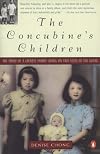
This is a family biography, the story of a family split by an ocean and by different ways of life. It’s a sad tale of prejudice, war, and brutality, as well as of love.
Chan Sam had a wife and land in southern China in the 1920s, but word was that one could make enough money at ‘Gold Mountain’- Canada or the USA- for a person to set themselves up for life. So Chan Sam went to Canada to make his fortune. He didn’t like being alone- there were very, very few women in the Chinatowns at show more the time. He acquired a concubine from China: a 17 year old May-ying, who was basically sold. Chan didn’t have the money to pay for her, so he made a deal with a tea house owner: the girl would be Chan’s concubine, but during the days and evenings she would work at the tea house to pay off her own purchase price. That’s not an auspicious start for a relationship.
As time went on, May-ying had two baby girls. Chan wanted them educated in China, and between the two of them they had made enough money to go home for a while. When Chan Sam and May-ying returned to Canada, her daughters remained in China with Chan’s wife. They returned just in time for May-ying’s third child to be born on Canadian soil. It wasn’t the hoped for son that would have given her some prestige in the family, but another daughter- worthless in her eyes. In time, Chan Sam returned to China without May-ying to try and sire a son on his wife. This left the young May-ying in the unenviable position of financially supporting not just herself and her daughter, but Chan Sam, his wife in China, and her two daughters over there. Not to mention the costs of the mansion (by rural Chinese village standards) that Chan Sam was building in his village. That’s a lot to expect of a young woman. Even after Chan Sam returned to Canada, but had separated from May-ying, he showed up every week to collect the money she had earned. Not that he was lazy; he did back breaking work in the shingle mills and at any other job he could find. Employment was severely limited for the Chinese in North America.
May-ying was a badly damaged person. She sought solace in alcohol and gambling, and abused her daughter both physically and emotionally. I was horrified by the way she treated her, but the circumstances of May-ying’s life might have broken anyone. Thankfully, the daughter, who took the English name Winnie, had the inner reserves to survive, concentrating on school and getting away from home. She succeeded in doing so, through hard work and marriage, and brought up a great family. The author is Winnie’s second daughter.
After 50 years, the Canadian sister and the Chinese sister finally managed to meet in a 4 day visit that brought tears to my eyes. But what really hit an emotional chord was the way the Chinese family viewed May-ying: basically ignoring the money she’d sent for years, they saw her only as a very bad wife who brought only misery to Chan Sam. They were only given half the story.
It’s a very sad story of the miserable lives the Chinese in North America lived during the first half of the 20th century thanks to prejudice, and an even sadder one that as bad as those lives were, they were considered worth while because monetarily it was even worse in China. I’ve read a number of books about the Chinese in North America, and this one is the grimmest. But it’s a story I couldn’t put down and stayed up half the night reading. show less
Chan Sam had a wife and land in southern China in the 1920s, but word was that one could make enough money at ‘Gold Mountain’- Canada or the USA- for a person to set themselves up for life. So Chan Sam went to Canada to make his fortune. He didn’t like being alone- there were very, very few women in the Chinatowns at show more the time. He acquired a concubine from China: a 17 year old May-ying, who was basically sold. Chan didn’t have the money to pay for her, so he made a deal with a tea house owner: the girl would be Chan’s concubine, but during the days and evenings she would work at the tea house to pay off her own purchase price. That’s not an auspicious start for a relationship.
As time went on, May-ying had two baby girls. Chan wanted them educated in China, and between the two of them they had made enough money to go home for a while. When Chan Sam and May-ying returned to Canada, her daughters remained in China with Chan’s wife. They returned just in time for May-ying’s third child to be born on Canadian soil. It wasn’t the hoped for son that would have given her some prestige in the family, but another daughter- worthless in her eyes. In time, Chan Sam returned to China without May-ying to try and sire a son on his wife. This left the young May-ying in the unenviable position of financially supporting not just herself and her daughter, but Chan Sam, his wife in China, and her two daughters over there. Not to mention the costs of the mansion (by rural Chinese village standards) that Chan Sam was building in his village. That’s a lot to expect of a young woman. Even after Chan Sam returned to Canada, but had separated from May-ying, he showed up every week to collect the money she had earned. Not that he was lazy; he did back breaking work in the shingle mills and at any other job he could find. Employment was severely limited for the Chinese in North America.
May-ying was a badly damaged person. She sought solace in alcohol and gambling, and abused her daughter both physically and emotionally. I was horrified by the way she treated her, but the circumstances of May-ying’s life might have broken anyone. Thankfully, the daughter, who took the English name Winnie, had the inner reserves to survive, concentrating on school and getting away from home. She succeeded in doing so, through hard work and marriage, and brought up a great family. The author is Winnie’s second daughter.
After 50 years, the Canadian sister and the Chinese sister finally managed to meet in a 4 day visit that brought tears to my eyes. But what really hit an emotional chord was the way the Chinese family viewed May-ying: basically ignoring the money she’d sent for years, they saw her only as a very bad wife who brought only misery to Chan Sam. They were only given half the story.
It’s a very sad story of the miserable lives the Chinese in North America lived during the first half of the 20th century thanks to prejudice, and an even sadder one that as bad as those lives were, they were considered worth while because monetarily it was even worse in China. I’ve read a number of books about the Chinese in North America, and this one is the grimmest. But it’s a story I couldn’t put down and stayed up half the night reading. show less
The Concubine's Children: The Story of a Chinese Family Living On Two Sides Of The Globe (MM) by Denise Chong

One of my favourite topics is 20th-century Chinese social history. The author tells the life stories of her maternal grandmother (the concubine), her mother, and herself. From the 1920s to the 1990s it's a story of poverty, the Chinese in Canadian history, and the plight of Chinese women. I'm quite familiar with this time in Chinese history but was sometimes shocked at how the Canadian government treated Chinese immigrants. We often hear of the Japanese treatment in internment camps during show more WWII but the Chinese discrimination during the first 60 years of the century was truly brutal. A fascinating comparison of life for the Chinese in Canada versus life in China. The treatment of women in China up to the Communist regime is startling. A fine read of both Chinese and Canadian history through the eyes of one Chinese family. show less
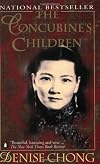
The Concubine's Children is a wonderfully crafted non-fiction book written by the granddaughter of the main characters. Chan Sam, a peasant, leaves his wife behind in China in order to go to the fabled "Golden Mountain" as Western Canada was refered to at the time (1913). He brings with him his Concubine, a beautiful but no-nonsense girl, to British Columbia, living in Vancouver's Chinatown. Expectations are high that Canada was a land of riches. All spare money was sent back to Chan Sam's show more wife in China, and the Concubine and her children did without. The wife, Huangbo, raised their son & two daughters by the concubine in China; May-ying, the concubine worked hard as a tea-room waitress to earn money to support both the family in China and her husband and their own two children. Life was harsh, there were moves from Vancouver to Victoria's Chinatown. Gambling became a problem particularly with May-ying. This is a historical account of a time in the Lower Mainland of B.C. that every Canadian and American should read, there is so much history both of early B.C. and China, with China occupied by Japan, then the rule of Mao Tse Tung. A few years ago, the narrator Denise and her mother made the trip to China to visit what relatives they had there, and so the two families finally came together. I thoroughly enjoyed the book and read it when it first came out (about 1989; it has now been reprinted) and still keep my precious first copy paperback; I've loaned it or bought one for some friends through, that is how much I care about it. I have now read it a few times. Highly Recommended. A quote from Denise Chong: "I didn't realize the extent of it, until I did my history, that my grandparents lived in Canada at a time when they could not participate in White society." show less
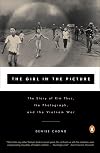
A satisfying and often gripping account of the life of Phan Thi Kim Phuc, whom you would recognize in Nick Ut's famous AP photo as the naked Vietnamese girl running down the road screaming after a misplaced napalm attack on her village. What is most striking about her life story is the set of coincidences, random conjunctions, and slight shifts in policy or practice that took her from the obscurity of the unknown victim of war to a UNESCO spokesperson. In many ways, the book is a testament show more to the power of photojournalism. Chong successfully conveys the tension, urgency, and careful emotional balancing required to navigate war and totalitarianism.
It seems appropriate that the copy I read was a pirated Southeast Asian version, purchased for $6 though I could have had it for $3 if I'd haggled. A signature is missing, so two sets of 12 pages each are not reproduced. As a sign of the changing times in Vietnam, it is easily purchased and openly displayed. show less
It seems appropriate that the copy I read was a pirated Southeast Asian version, purchased for $6 though I could have had it for $3 if I'd haggled. A signature is missing, so two sets of 12 pages each are not reproduced. As a sign of the changing times in Vietnam, it is easily purchased and openly displayed. show less
Lists
Awards


You May Also Like


Associated Authors
Statistics
- Works
- 9
- Members
- 1,106
- Popularity
- #23,234
- Rating
- 3.8
- Reviews
- 32
- ISBNs
- 53
- Languages
- 7
- Favorited
- 1

