
Christine Harris (1) (1955–)
Author of Oliver All Alone
For other authors named Christine Harris, see the disambiguation page.
Series
Works by Christine Harris
Slimetime 1 copy
Party animals 1 copy
Tagged
Common Knowledge
- Birthdate
- 1955-08-05
- Gender
- female
Members
Reviews
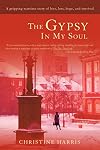
(Reprinted from the Chicago Center for Literature and Photography [cclapcenter.com]. I am the original author of this essay, as well as the owner of CCLaP; it is not being reprinted here illegally.)
I've posed the following question before here at CCLaP, but it's worth posing again -- of whether a person can eventually reach the point where they really "get" the Holocaust, or at least to the extent that it would be a waste of their time to read any more books on the subject. Because let's show more face it, the events that make up the Holocaust constitute a truly black time in human history, and is what many consider the absolutely most important period of the last hundred years to really and truly understand; but no matter what the historical event, no matter how horrific it was, there are only a certain amount of times one can study the details before one can say, "Okay, I now understand the details. And it would be pointless for me to read yet another book explaining the details, because I already understand all the details that book was going to explain to me." Such a thing, then, shifts the burden to the authors themselves, with it suddenly now their job to tell the well-known story in a new and unique way, or the truly remarkable feat of actually finding something legitimately new to say; and some authors are good at this, like this year's highly controversial novel The Kindly Ones by Jonathan Littell (which I will be reviewing later this year, you can count on that), and some authors simply aren't that good at this, delivering stories at the end that contain not a single bit of information that you couldn't otherwise learn by picking up Art Spiegelman's Maus and renting Steven Spielberg's Schindler's List.
And unfortunately it's the latter case today when it comes to Christine Harris' self-published The Gypsy In My Soul, the last title from the big box of books I received earlier this year from print-on-demand outfit iUniverse, a volume that gets an 'A' for effort and earnestness but sadly a much lower score when it comes to both originality and literary quality. Because make no mistake, Harris has an extremely noble aim here -- namely, to remind people that it wasn't just Jews who were exterminated during the Holocaust in mass quantities but also Gypsies as well (known these days by the more politically-correct term "Romanies") -- and she does this in an interesting fashion too, by framing the story through the modern tale of one victim's granddaughter, as she slowly uncovers her "secret shameful Gypsy past" and learns why her family's ethnicity was so thoroughly buried after the war in the first place. And for this I legitimately applaud Harris, for bringing to light an aspect of the Holocaust being rapidly forgotten with each passing year; that it wasn't just six million Jews who were killed in the process, but also hundreds upon thousands of gays, Mormons, intellectuals, ethnic tribes from eastern Europe, and a lot more.
But unfortunately, mere earnestness does not automatically translate into a good book, and here Harris doesn't seem to have much of true originality to actually say about it all, using every other chapter here to turn in a theoretical look at what this woman's life in the concentration camps was probably like, but which reads like a bad television movie by the end, hitting every pre-guessed beat you would possibly imagine a Holocaust tale having, and not a single bit more. And then the modern chapters making up the other half of the story are even worse from a pure literary standpoint, essentially a series of exposition-heavy and slightly insulting lectures on how none of us pay enough attention to the plight of the Gypsies during World War Two, and how it's high time that we do. And that's...well, that's boring and slightly insulting, like I said, more of a patronizing sermon than the gripping tale such a "fictionalized memoir" should be.
Now, I don't want to give this book an ultimately bad review, because it's ultimately not a bad book; and if you know absolutely nothing about the Holocaust, this volume would be a fine place to start. But the fact is that the entire point of literature is supposed to be to teach us something about the world, about life, that we didn't understand before; and if a book can't do that, it simply does not deserve a good score, no matter how noble its aims or sensitive the subject. Despite how badly I feel about giving a low rating to a Holocaust book, in this case I'm simply compelled to, and to face as a critic whatever wrath might come my way as a result. Although I don't recommend actively avoiding it, I also cannot in good conscience recommend The Gypsy In My Soul to a general audience.
Out of 10: 6.1 show less
I've posed the following question before here at CCLaP, but it's worth posing again -- of whether a person can eventually reach the point where they really "get" the Holocaust, or at least to the extent that it would be a waste of their time to read any more books on the subject. Because let's show more face it, the events that make up the Holocaust constitute a truly black time in human history, and is what many consider the absolutely most important period of the last hundred years to really and truly understand; but no matter what the historical event, no matter how horrific it was, there are only a certain amount of times one can study the details before one can say, "Okay, I now understand the details. And it would be pointless for me to read yet another book explaining the details, because I already understand all the details that book was going to explain to me." Such a thing, then, shifts the burden to the authors themselves, with it suddenly now their job to tell the well-known story in a new and unique way, or the truly remarkable feat of actually finding something legitimately new to say; and some authors are good at this, like this year's highly controversial novel The Kindly Ones by Jonathan Littell (which I will be reviewing later this year, you can count on that), and some authors simply aren't that good at this, delivering stories at the end that contain not a single bit of information that you couldn't otherwise learn by picking up Art Spiegelman's Maus and renting Steven Spielberg's Schindler's List.
And unfortunately it's the latter case today when it comes to Christine Harris' self-published The Gypsy In My Soul, the last title from the big box of books I received earlier this year from print-on-demand outfit iUniverse, a volume that gets an 'A' for effort and earnestness but sadly a much lower score when it comes to both originality and literary quality. Because make no mistake, Harris has an extremely noble aim here -- namely, to remind people that it wasn't just Jews who were exterminated during the Holocaust in mass quantities but also Gypsies as well (known these days by the more politically-correct term "Romanies") -- and she does this in an interesting fashion too, by framing the story through the modern tale of one victim's granddaughter, as she slowly uncovers her "secret shameful Gypsy past" and learns why her family's ethnicity was so thoroughly buried after the war in the first place. And for this I legitimately applaud Harris, for bringing to light an aspect of the Holocaust being rapidly forgotten with each passing year; that it wasn't just six million Jews who were killed in the process, but also hundreds upon thousands of gays, Mormons, intellectuals, ethnic tribes from eastern Europe, and a lot more.
But unfortunately, mere earnestness does not automatically translate into a good book, and here Harris doesn't seem to have much of true originality to actually say about it all, using every other chapter here to turn in a theoretical look at what this woman's life in the concentration camps was probably like, but which reads like a bad television movie by the end, hitting every pre-guessed beat you would possibly imagine a Holocaust tale having, and not a single bit more. And then the modern chapters making up the other half of the story are even worse from a pure literary standpoint, essentially a series of exposition-heavy and slightly insulting lectures on how none of us pay enough attention to the plight of the Gypsies during World War Two, and how it's high time that we do. And that's...well, that's boring and slightly insulting, like I said, more of a patronizing sermon than the gripping tale such a "fictionalized memoir" should be.
Now, I don't want to give this book an ultimately bad review, because it's ultimately not a bad book; and if you know absolutely nothing about the Holocaust, this volume would be a fine place to start. But the fact is that the entire point of literature is supposed to be to teach us something about the world, about life, that we didn't understand before; and if a book can't do that, it simply does not deserve a good score, no matter how noble its aims or sensitive the subject. Despite how badly I feel about giving a low rating to a Holocaust book, in this case I'm simply compelled to, and to face as a critic whatever wrath might come my way as a result. Although I don't recommend actively avoiding it, I also cannot in good conscience recommend The Gypsy In My Soul to a general audience.
Out of 10: 6.1 show less
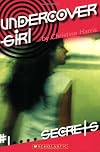
I really liked the idea of the book- An orphan raised by a secret agency, not knowing if she can trust anyone, even her 'friends'. It did remind me a bit of an old T.V. show called 'The Pretender' and seemed to be a cross between that and Spy Kids. Ultimately, this book did not win me over.
My low rating of it is due to the rushed feeling I had while reading it. What was possibly intended to convey urgency and suspense had a different effect on me. I found that I wanted more information on show more the characters themselves and some background. I understand that the lack of facts about the characters is part of the story, but without a bit more foundation for the story I never became invested in who they were or what they were doing. Instead I felt like I was thrown into the action too quickly, with not enough time to look around and understand/appreciate what was happening before I was pushed into the next scene.
I may at some point try the next volume but for now I won't be looking for book #2. show less
My low rating of it is due to the rushed feeling I had while reading it. What was possibly intended to convey urgency and suspense had a different effect on me. I found that I wanted more information on show more the characters themselves and some background. I understand that the lack of facts about the characters is part of the story, but without a bit more foundation for the story I never became invested in who they were or what they were doing. Instead I felt like I was thrown into the action too quickly, with not enough time to look around and understand/appreciate what was happening before I was pushed into the next scene.
I may at some point try the next volume but for now I won't be looking for book #2. show less

Fascinating story about outback Australia in 1927. I must admit that I thought there would be very little interesting in this book but I was hooked after the first few pages. Harris has managed to include a wonderful collection of bush yarns and also link together various desert based incidents - dingo fence, flying doctor service, afghan camel drivers, the desolation felt by pioneer women, death from isolation, snake bite or starvation, rabbit plague and attack by aborigines. You name it, show more it is all there in this wonderful story.
Jimmy is sent to live with his aunt in the remote South Australian outback. His Aunt lives in a rough hut with 3 children ( 2 died young) and her husband Chip, who rides camels and is absent for long periods of time checking the dingo fence. Meanwhile there is the vegetable patch to be kept free of rabbits, water to be carted, firewood to be chopped, and a thousand other chores but Jimmy finds time to scribble a few lines in his diary every so often. The reason why Jimmy has been sent to the Barlows haunts him and eventually he tells Price the truth about his father being in gaol for a crime he didn't commit.
Then there is a terrible accident and Jimmy, Price Audrey and the baby Douglas must walk for three days to get help for Mrs B when a water tower falls on her.p.79-82 Jimmy runs away. show less
Jimmy is sent to live with his aunt in the remote South Australian outback. His Aunt lives in a rough hut with 3 children ( 2 died young) and her husband Chip, who rides camels and is absent for long periods of time checking the dingo fence. Meanwhile there is the vegetable patch to be kept free of rabbits, water to be carted, firewood to be chopped, and a thousand other chores but Jimmy finds time to scribble a few lines in his diary every so often. The reason why Jimmy has been sent to the Barlows haunts him and eventually he tells Price the truth about his father being in gaol for a crime he didn't commit.
Then there is a terrible accident and Jimmy, Price Audrey and the baby Douglas must walk for three days to get help for Mrs B when a water tower falls on her.p.79-82 Jimmy runs away. show less
I thought it did a fair job with the suspense and action, but it could have been better with the storyline. I like when stories get to the point, but this one was a little too hasty with the first three chapters. First, they would talk about the agency and the main characters' connections to it, then they would dive directly into the mission. I know the book was meant to let readers guess what was happening in the book, but I wasn't able to follow it all. I could understand what was going on show more after chapter five, but I couldn't understand the entire mystery. show less
Lists
Awards


You May Also Like


Associated Authors
Statistics
- Works
- 44
- Members
- 1,219
- Popularity
- #21,067
- Rating
- 3.7
- Reviews
- 12
- ISBNs
- 124
- Languages
- 2
- Favorited
- 1