
Barry Letts (1925–2009)
Author of Doctor Who and the Dæmons
About the Author
Image credit: Barry Letts
Series
Works by Barry Letts
Blake's 7, the Radio Adventures: WITH The Sevenfold Crown AND The Syndeton (Radio Collection) (2004) 5 copies
The Logic of Empire 1 copy
Gulliver in Lilliput 1 copy
Doctor who and deamons 1 copy
Associated Works
Doctor Who : A Celebration—Two Decades Through Time and Space (1983) — "Back With Who" — 283 copies, 2 reviews
The Doctor Who Programme Guide - Volume 1: The Programmes (1981) — Foreword, some editions — 265 copies, 1 review
The Doctor Who Programme Guide - Volume 2: What's What and Who's Who (1981) — Foreword — 192 copies, 1 review
Doctor Who: Dalek War: Frontier in Space / Planet of the Daleks [DVD] (2010) — Producer — 31 copies, 1 review
Roger Delgado ~ A Tribute (1987) — "Nobody could have been more gentle and thoughtful for others" — 1 copy
Doctor Who — An Adventure in Space & Time: Planet of the Spiders (1987) — Contributor "Behind the Scenes" — 1 copy
Doctor Who — An Adventure in Space & Time: The Green Death (1987) — Contributor "Production Office" — 1 copy
Doctor Who — An Adventure in Space & Time: The Dæmons (1986) — Contributor "Production Office" — 1 copy
Tagged
Common Knowledge
- Legal name
- Letts, Barry Leopold
- Birthdate
- 1925-03-26
- Date of death
- 2009-10-09
- Gender
- male
- Occupations
- producer
director
actor
scriptwriter - Nationality
- England
UK - Birthplace
- Leicester, Leicestershire, England, UK
- Place of death
- London, England, UK
- Associated Place (for map)
- England, UK
Members
Reviews

I have never watched 'Doctor Who [:] The Mind of Evil,' because it is one of the Third Doctor storylines, but listening to it was quite entertaining. Richard Franklin, who played Captain Michael Yates on the show, handles the narration for when the episodes were just showing visual action. We get a bonus interview with Mr. Franklin that I enjoyed, particularly the bit about the dashing scene where Captain Yates had to ride a motorcycle after the missile thieves.
The Mind of Evil is only the show more main plot. We also get an old nerve gas missile that's supposed to be safely dealt with AND a World Peace Conference. If you're a fan of the Master, he has a very evil finger in every plot pie.
The main scene of the action is an old fortress that has become Stangmoor Prison where some particularly nasty prisoners are held. The Doctor and Jo Grant go there to see a Professor Kettering demonstrate the Keller Machine, invention of Emil Keller. The machine removes the evil/negative impulses from its subjects, which have been hardened criminals. Barnham is the evil prisoner selected for the demonstration. He survives, but his mind has become that of a good child. The Doctor is not impressed. He wants the use of that dangerous machine stopped. Some non-criminal individuals might still be among the living had the Doctor had his way.
UNIT (United Nations Intelligence Taskforce) is providing security for a World Peace Conference being held in London. The conference is not going as well as the Brigadier could desire. He's getting complaints from a young woman of the Chinese delegation, Captain Chin Lee. Then things start getting weird in ways that the viewer gets to see, but not the Brigadier.
Of course it's fun when the Master shows up. He has a use for the Doctor, but almost gets him killed in the process.
There's plenty of action and betrayal and tide turning to keep fans listening. show less
The Mind of Evil is only the show more main plot. We also get an old nerve gas missile that's supposed to be safely dealt with AND a World Peace Conference. If you're a fan of the Master, he has a very evil finger in every plot pie.
The main scene of the action is an old fortress that has become Stangmoor Prison where some particularly nasty prisoners are held. The Doctor and Jo Grant go there to see a Professor Kettering demonstrate the Keller Machine, invention of Emil Keller. The machine removes the evil/negative impulses from its subjects, which have been hardened criminals. Barnham is the evil prisoner selected for the demonstration. He survives, but his mind has become that of a good child. The Doctor is not impressed. He wants the use of that dangerous machine stopped. Some non-criminal individuals might still be among the living had the Doctor had his way.
UNIT (United Nations Intelligence Taskforce) is providing security for a World Peace Conference being held in London. The conference is not going as well as the Brigadier could desire. He's getting complaints from a young woman of the Chinese delegation, Captain Chin Lee. Then things start getting weird in ways that the viewer gets to see, but not the Brigadier.
Of course it's fun when the Master shows up. He has a use for the Doctor, but almost gets him killed in the process.
There's plenty of action and betrayal and tide turning to keep fans listening. show less

http://nhw.livejournal.com/1033342.html?#cutid5
This was one of those books which, on rereading, very much lived up to my fond childhood memories. It is funny, witty, adds bags of backstory to both minor and major characters (the account of the Doctor and the Master growing up together on Gallifrey ought to be canon for all interested fanfic writers), substitutes far better special effects on the page for the end-of-budget ones we got on-screen, and is generally a good read. My favourite show more Third Doctor book so far.
https://fromtheheartofeurope.eu/the-daemons-by-matt-barber-and-barry-letts/
Again, I still think this is the best Third Doctor novelisation, with Doctor Who and the Green Death by Malcolm Hulke being its only serious rival; it’s the only classic series novelisation by Barry Letts, the producer throughout the Pertwee years. One aspect that I feel deserves a bit more attention: the dramatic internal illustrations by Alan Willow, this being the first of seven novelisations that he illustrated between 1974 and 1975. (Though his take on Jo isn’t brilliant, and “creature” is misspelt in the second caption – not his fault, I guess.) show less
This was one of those books which, on rereading, very much lived up to my fond childhood memories. It is funny, witty, adds bags of backstory to both minor and major characters (the account of the Doctor and the Master growing up together on Gallifrey ought to be canon for all interested fanfic writers), substitutes far better special effects on the page for the end-of-budget ones we got on-screen, and is generally a good read. My favourite show more Third Doctor book so far.
https://fromtheheartofeurope.eu/the-daemons-by-matt-barber-and-barry-letts/
Again, I still think this is the best Third Doctor novelisation, with Doctor Who and the Green Death by Malcolm Hulke being its only serious rival; it’s the only classic series novelisation by Barry Letts, the producer throughout the Pertwee years. One aspect that I feel deserves a bit more attention: the dramatic internal illustrations by Alan Willow, this being the first of seven novelisations that he illustrated between 1974 and 1975. (Though his take on Jo isn’t brilliant, and “creature” is misspelt in the second caption – not his fault, I guess.) show less
http://nwhyte.livejournal.com/2175900.html
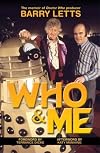
Letts needs no introduction to Who fans; he was producer of the show for the entire Pertwee era, plus a story or two either side. Apart from the usual set of anecdotes of personalities (including quite a shrewd dissection of Jon Pertwee), He includes detailed accounts of how making a TV programme at the BBC in the 1960s and 1970s actually worked, linked with his own career progressions from actor to director to producer. His heart was clearly in show more directing, and it's there that we get the most vivid descriptions of what he was doing; in particular, it's surprising to read his low opinion of The Enemy of the World, the first Who story that he worked on - I have always found it interesting enough, and Philip Sandifer calls it "an absolute triumph". (I'll note that another story Letts feels particularly unhappy about was The Ambassadors of Death, also a David Whitaker script.) He also writes about his attachment to Zen Buddhism, managing to convey his deep personal commitment to it though not quite so much what it is all about.
Very sadly, this book is only half the story, taking us up to the end of Letts' second of five seasons as producer of Doctor Who. It looks rather as if there were no notes, and Letts reconstructed it from memories cross-referenced with other sources, so presumably there is little or no primary material for the second half of the story to be told. But it's good that he got the first half done. show less
Letts needs no introduction to Who fans; he was producer of the show for the entire Pertwee era, plus a story or two either side. Apart from the usual set of anecdotes of personalities (including quite a shrewd dissection of Jon Pertwee), He includes detailed accounts of how making a TV programme at the BBC in the 1960s and 1970s actually worked, linked with his own career progressions from actor to director to producer. His heart was clearly in show more directing, and it's there that we get the most vivid descriptions of what he was doing; in particular, it's surprising to read his low opinion of The Enemy of the World, the first Who story that he worked on - I have always found it interesting enough, and Philip Sandifer calls it "an absolute triumph". (I'll note that another story Letts feels particularly unhappy about was The Ambassadors of Death, also a David Whitaker script.) He also writes about his attachment to Zen Buddhism, managing to convey his deep personal commitment to it though not quite so much what it is all about.
Very sadly, this book is only half the story, taking us up to the end of Letts' second of five seasons as producer of Doctor Who. It looks rather as if there were no notes, and Letts reconstructed it from memories cross-referenced with other sources, so presumably there is little or no primary material for the second half of the story to be told. But it's good that he got the first half done. show less
http://nwhyte.livejournal.com/2263969.html
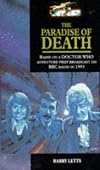
I thought the original story was pretty poor; the novelisation brings out its strengths and reduces some of its weaknesses. It still feels like a lot of half-thought-out scenarios jumbled together, but there is a better consistency of tone. Letts did a lot for Who, but writing plots that actually made much sense was not really one of his strong points.
I thought the original story was pretty poor; the novelisation brings out its strengths and reduces some of its weaknesses. It still feels like a lot of half-thought-out scenarios jumbled together, but there is a better consistency of tone. Letts did a lot for Who, but writing plots that actually made much sense was not really one of his strong points.
Lists
Awards
You May Also Like


Associated Authors
Statistics
- Works
- 49
- Also by
- 22
- Members
- 1,934
- Popularity
- #13,313
- Rating
- 4.1
- Reviews
- 47
- ISBNs
- 77
- Languages
- 1
- Favorited
- 1