
Troy Soos
Author of Murder at Fenway Park
About the Author
Series
Works by Troy Soos
Associated Works
Crime Through Time: Original Tales of Historical Mystery (1997) — Contributor — 137 copies, 2 reviews
Tagged
Common Knowledge
- Birthdate
- 1957
- Gender
- male
- Education
- Rutgers University (BS| Physics)
Massachusetts Institute of Technology (MS|Physics) - Occupations
- Research Physicist (MIT’s Laboratory for Nuclear Science, Los Alamos National Laboratory in New Mexico)
- Nationality
- USA
- Places of residence
- Winter Park, Florida, USA
- Associated Place (for map)
- Florida, USA
Members
Reviews
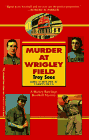
Whenever I begin to think that the world has reached new levels of hatred and intolerance, I read something that reminds me that “there is nothing new under the sun.”
Mickey Rawlings is a struggling baseball player, one of the old boys of the early twentieth century. Having finally secured a daily playing spot at second base for the Chicago Cubs, he’s hitting a career high and reveling in all of the perks of being in the show. But his success is largely based on the weaker pool of show more talent in the majors due to the war that is on, the War to End All Wars. Players are enlisting out of patriotism or fear, while others are awaiting the Secretary of War’s decision on whether to shut the game down for the season. In Chicago, anyone suspected of German heritage is in danger; speaking German is forbidden by law, as is playing Beethoven or Bach. Ballgames begin with parade drills, ball players marching in formation and using their bats as a substitute for rifles. Then, on the Fourth of July, Mickey’s road roommate and double play partner, Willie Kaiser, is gunned down on the field by a sniper. Some suspect the murder was motivated by hate, because of the young shortstop’s German name and ancestry. Some suspect sabotage, as the Cubs owners are all angling for a larger share of the team. Whatever the motive, Mickey is dedicated to finding the killer, even if it means losing his spot on the team.
Soos penned a solid murder mystery, noirish without the edge of constant gunplay. But the real strength of [Murder at Wrigley Field] is the historical picture of World War I America and baseball in the early twentieth century. The detail in describing the tone and feeling of Chicago and the rest of the country as the United States slowly entered the war is remarkable, second only to Soos’ care in detailing the ins and outs of the game of baseball, its contraction and expansion with new leagues and teams. Anyone with even a slight interest in the history of baseball will be amazed. For example, Wrigley Field was originally Weeghman Park, a field for the Federal League Whales, until Wrigley bought up a controlling interest and renamed the park. How many of you have even heard of the Federal League? Another example is that one of the Baltimore Orioles franchises, and there have been several, eventually became the New York Yankees. Some of the criticism of the book finds all of the detail, especially as it is woven into the mystery, convoluting. But I found the baseball and historical knowledge Soos uses to tell his story lends a credibility that often escapes mystery fiction.
Post-9/11 America often lapses into intolerance and hate. The recent Congressional hearings are a prime example of how good intention can often be twisted for political gain in the name of patriotism. But while reading [Murder at Wrigley Field], I found it somewhat comforting to remember that this country has worked through such misunderstanding and xenophobia before; perhaps not to perfection but still worked through. The book is just a murder mystery, but the history is real.
Bottom Line: A solid noir-lite murder mystery with extremely strong roots in the historical context of the early twentieth century and early baseball.
4 bones!!!! show less
Mickey Rawlings is a struggling baseball player, one of the old boys of the early twentieth century. Having finally secured a daily playing spot at second base for the Chicago Cubs, he’s hitting a career high and reveling in all of the perks of being in the show. But his success is largely based on the weaker pool of show more talent in the majors due to the war that is on, the War to End All Wars. Players are enlisting out of patriotism or fear, while others are awaiting the Secretary of War’s decision on whether to shut the game down for the season. In Chicago, anyone suspected of German heritage is in danger; speaking German is forbidden by law, as is playing Beethoven or Bach. Ballgames begin with parade drills, ball players marching in formation and using their bats as a substitute for rifles. Then, on the Fourth of July, Mickey’s road roommate and double play partner, Willie Kaiser, is gunned down on the field by a sniper. Some suspect the murder was motivated by hate, because of the young shortstop’s German name and ancestry. Some suspect sabotage, as the Cubs owners are all angling for a larger share of the team. Whatever the motive, Mickey is dedicated to finding the killer, even if it means losing his spot on the team.
Soos penned a solid murder mystery, noirish without the edge of constant gunplay. But the real strength of [Murder at Wrigley Field] is the historical picture of World War I America and baseball in the early twentieth century. The detail in describing the tone and feeling of Chicago and the rest of the country as the United States slowly entered the war is remarkable, second only to Soos’ care in detailing the ins and outs of the game of baseball, its contraction and expansion with new leagues and teams. Anyone with even a slight interest in the history of baseball will be amazed. For example, Wrigley Field was originally Weeghman Park, a field for the Federal League Whales, until Wrigley bought up a controlling interest and renamed the park. How many of you have even heard of the Federal League? Another example is that one of the Baltimore Orioles franchises, and there have been several, eventually became the New York Yankees. Some of the criticism of the book finds all of the detail, especially as it is woven into the mystery, convoluting. But I found the baseball and historical knowledge Soos uses to tell his story lends a credibility that often escapes mystery fiction.
Post-9/11 America often lapses into intolerance and hate. The recent Congressional hearings are a prime example of how good intention can often be twisted for political gain in the name of patriotism. But while reading [Murder at Wrigley Field], I found it somewhat comforting to remember that this country has worked through such misunderstanding and xenophobia before; perhaps not to perfection but still worked through. The book is just a murder mystery, but the history is real.
Bottom Line: A solid noir-lite murder mystery with extremely strong roots in the historical context of the early twentieth century and early baseball.
4 bones!!!! show less
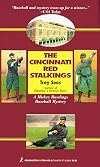
As a utility player, Mickey Rawlings has played for several teams during his career. During the 1921 season he's playing for the Cincinnati Reds. He volunteers to help with an exhibition celebrating the championship team of 1869, as well as the 1919 team that won the World Series. When the exhibit's organizer is murdered, Rawlings doesn't intend to get involved. It seems to have been a burglary gone wrong. A break-in in Rawlings' home changes his mind. It seems that the murderer didn't find show more what he was looking for at the murder scene. It may be among the surplus memorabilia that the organizer had given to Rawlings shortly before his death. Is the murder connected to the unexplained disappearance of a substitute player from the 1869 team? Or is the cause more recent, linked somehow to the Black Sox Scandal, the gambling scandal that tainted the 1919 World Series? With his baseball career at stake, Rawlings searches both the distant and recent past for the roots of murder.
I thoroughly enjoyed this historical mystery with baseball at its heart. The baseball history doesn't feel like an information dump. Soos makes it an integral part of the plot. I'm familiar enough with Cincinnati to recognize many of the locations mentioned in the book, so I enjoyed that aspect, too. Rawlings is a very likeable protagonist. The mystery plot became convoluted and I'm not sure that I could explain it if I tried. The setting and characters more than make up for any deficiencies in the mystery. I recently discovered that this series is available as downloadable audiobooks from my public library, and I'm looking forward to listening to the rest of the books in the series. show less
I thoroughly enjoyed this historical mystery with baseball at its heart. The baseball history doesn't feel like an information dump. Soos makes it an integral part of the plot. I'm familiar enough with Cincinnati to recognize many of the locations mentioned in the book, so I enjoyed that aspect, too. Rawlings is a very likeable protagonist. The mystery plot became convoluted and I'm not sure that I could explain it if I tried. The setting and characters more than make up for any deficiencies in the mystery. I recently discovered that this series is available as downloadable audiobooks from my public library, and I'm looking forward to listening to the rest of the books in the series. show less
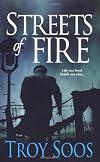
I read and loved the first three books in this series, and when I discovered that there was a fourth, I just had to get my hands on it. Soos is extremely adept at creating historical mysteries, although he's better known for his baseball mysteries (which my husband enjoyed). Webb and Davies make a strong pair of sleuths. Webb is an investigative journalist whose contact in the Brooklyn police, Buck Morehouse, has helped him on more than one case. Webb knows how to root around and get the show more facts. Buck has his own ways of meting out justice. In our modern eyes, Buck is a bit of a crooked cop, but in 1895 he's one of the most honest ones you'll find in the New York City area. If anything, readers get the impression that Buck has been beaten down by all the on-the-job corruption he has to face.
Into the mix of Webb and Morehouse add Rebecca Davies, a young woman of wealth and privilege who is in charge of the family's shelter for young homeless women. Rebecca's background means that she has entry into the finest homes in New York City. Her experience working with the underprivileged means that she's an idealist with street smarts. Put Webb and Davies together, and there are sparks. Add Morehouse, and there are murderers being brought to justice.
In Streets of Fire, Soos once again paints an indelible, three-dimensional portrait of the mean streets of New York during a time when graft and corruption were King. It's taken for granted that the rich and powerful will abuse their positions-- and the employees who work for them-- with alacrity. In setting this book during the trolley workers strike, Soos shows us people who are sick of the status quo and are willing to fight for better lives for themselves and their children. We get a further look at the plight of the poor as Rebecca shows Vivian how to choose the right building in the right area for a women's shelter as well as how to run it properly.
If only the mystery in this book lived up to its setting and its characters! As one chapter followed another, I couldn't help comparing Streets of Fire to its predecessors. Here the mystery is weak and extremely slow to start. The identity of the killer was not hard to deduce. I could even say that the investigation felt half-hearted-- almost as if the author had been told that his contract for the series wasn't going to be renewed before he even began writing. (This is pure speculation, by the way.) I love the first three books in this series, and I recommend them highly, and while this one is good, it just doesn't stand shoulder to shoulder with the others. show less
Into the mix of Webb and Morehouse add Rebecca Davies, a young woman of wealth and privilege who is in charge of the family's shelter for young homeless women. Rebecca's background means that she has entry into the finest homes in New York City. Her experience working with the underprivileged means that she's an idealist with street smarts. Put Webb and Davies together, and there are sparks. Add Morehouse, and there are murderers being brought to justice.
In Streets of Fire, Soos once again paints an indelible, three-dimensional portrait of the mean streets of New York during a time when graft and corruption were King. It's taken for granted that the rich and powerful will abuse their positions-- and the employees who work for them-- with alacrity. In setting this book during the trolley workers strike, Soos shows us people who are sick of the status quo and are willing to fight for better lives for themselves and their children. We get a further look at the plight of the poor as Rebecca shows Vivian how to choose the right building in the right area for a women's shelter as well as how to run it properly.
If only the mystery in this book lived up to its setting and its characters! As one chapter followed another, I couldn't help comparing Streets of Fire to its predecessors. Here the mystery is weak and extremely slow to start. The identity of the killer was not hard to deduce. I could even say that the investigation felt half-hearted-- almost as if the author had been told that his contract for the series wasn't going to be renewed before he even began writing. (This is pure speculation, by the way.) I love the first three books in this series, and I recommend them highly, and while this one is good, it just doesn't stand shoulder to shoulder with the others. show less
Seemed like the right book to read on the flight to Chicago, seeing as I was going to a Cubs game the next day. It turned out to be all the more timely, taking place during WWI at the height of anti-German hysteria. You know, lots of ignorant people reacting ignorantly to real problems and making things worse. Very familiar...
Lists
Chicago Books (1)
You May Also Like


Associated Authors
Statistics
- Works
- 14
- Also by
- 2
- Members
- 929
- Popularity
- #27,632
- Rating
- 3.7
- Reviews
- 15
- ISBNs
- 61
- Favorited
- 7