
Lars Eighner (1948–2021)
Author of Travels with Lizbeth: Three Years on the Road and on the Streets
About the Author
Works by Lars Eighner
The Desert Inn {short story} 1 copy
In the Dark 1 copy
Associated Works
Tagged
Common Knowledge
- Legal name
- Hexamer, Laurence Eighner
- Other names
- Eighner, Laurence Vail (birth)
- Birthdate
- 1948-11-25
- Date of death
- 2021-12-23
- Gender
- male
- Education
- Lamar High School, Houston, Texas, USA
Corpus Christi Fine Arts Colony
University of Texas, Austin - Organizations
- Texas Institute of Letters
- Nationality
- USA
- Birthplace
- Corpus Christi, Texas, USA
- Places of residence
- Corpus Christi, Texas, USA (birth)
Houston, Texas, USA
Austin, Texas, USA
Los Angeles, California, USA - Place of death
- Austin, Texas, USA
- Associated Place (for map)
- Texas, USA
Members
Reviews
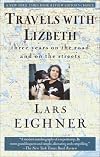
Hemingway said in a letter that when prose is magical, as it can be in Travels With Lizbeth, that the reader is never sure how it's done. You can reread it all you want and you will never quite know how that particular sequence of words was able to transcend the sum of its parts. The work thus becomes inimitable. That's the case here.
So engaging are the travels of Lars Eighner and his dog, Lisbeth, that I developed an anxiety-ridden hyperawareness of the dangers they constantly ran, such as show more good suspense writing will give you. Author Eighner is aware of it, too, but if anything he understates the risks. I was reminded of certain scenes in Cormac McCarthy's The Road, that post-apocalyptic dystopia. Yet the shopworn devices of suspense fiction are nowhere in evidence. What Eighner and pup went through was real. Then he will come up with some funny observation. For instance, about hitchhiking through Tucson, where he was harrassed by howling, gun-brandishing, drive-by rednecks, he writes:
It is this interplay of pathos and humor, that and the beautifully spare prose--also, come to think of it, reminiscent of McCarthy, though without the biblical overtones--that enlivens the narrative. The prose is unadorned yet every page or two the reader is zinged by some bit of archaic vocabulary: eleemosynary, just one example, got a rise out of me. The story is alternately harrowing and tragic, heartrending and hilarious. The chapter "Dumpster Diving" has the thoroughness of an ethnographic study. The chapter describing Eighner's hospitalization for phlebitis reminded me of certain absurdist scenes from the film The Hospital written by Paddy Chayefsky. The crazies he runs into boggle the mind. Fortunately, before this period of homelessness Eighner had a long-time job in a mental health facility. So he is often able to recognize the symptoms and thus the diseases of his unfortunate fellows.The tales of these crazies he give us unadorned, letting the bonker's irrationalism stand for itself. One psychotic chap, Tim, off his medication, stalks Eighner from Austin to LA and back again. Casually Eighner begins to consider how he might kill the man and efficiently dispose of his body. Keep in mind that the author went through this ordeal of homelessness mostly in Austin, Texas, where the river of compassion seems little more than a dry stream bed. His indictment of that state's social service system is absolutely damning. To wit:
One of the best things about the story is Lisbeth. An ordinary dog by most measures, she is a love, a protector and companion, a warm bed fellow. When she is seized by a dogcatcher for allegedly biting someone--she didn't--and is put on death row at the Austin pound, well, that was quite the heart-wrenching sequence for this reader. What a tale. It's very emotionally involving. Extraordinarily well written. Insightful and very human. Please read it. show less
So engaging are the travels of Lars Eighner and his dog, Lisbeth, that I developed an anxiety-ridden hyperawareness of the dangers they constantly ran, such as show more good suspense writing will give you. Author Eighner is aware of it, too, but if anything he understates the risks. I was reminded of certain scenes in Cormac McCarthy's The Road, that post-apocalyptic dystopia. Yet the shopworn devices of suspense fiction are nowhere in evidence. What Eighner and pup went through was real. Then he will come up with some funny observation. For instance, about hitchhiking through Tucson, where he was harrassed by howling, gun-brandishing, drive-by rednecks, he writes:
"I reflected on what our last ride had told me; Tucson--or so he said--was one of the few cities in America that was off limits to Soviet citizens. I supposed for that reason the Soviets had a number of missles aimed at Tucson. I took that as a reassuring thought. Arizona is a desolate wasteland, but it might be considerably improved by detonating a few H-bombs in and around Tucson."
It is this interplay of pathos and humor, that and the beautifully spare prose--also, come to think of it, reminiscent of McCarthy, though without the biblical overtones--that enlivens the narrative. The prose is unadorned yet every page or two the reader is zinged by some bit of archaic vocabulary: eleemosynary, just one example, got a rise out of me. The story is alternately harrowing and tragic, heartrending and hilarious. The chapter "Dumpster Diving" has the thoroughness of an ethnographic study. The chapter describing Eighner's hospitalization for phlebitis reminded me of certain absurdist scenes from the film The Hospital written by Paddy Chayefsky. The crazies he runs into boggle the mind. Fortunately, before this period of homelessness Eighner had a long-time job in a mental health facility. So he is often able to recognize the symptoms and thus the diseases of his unfortunate fellows.The tales of these crazies he give us unadorned, letting the bonker's irrationalism stand for itself. One psychotic chap, Tim, off his medication, stalks Eighner from Austin to LA and back again. Casually Eighner begins to consider how he might kill the man and efficiently dispose of his body. Keep in mind that the author went through this ordeal of homelessness mostly in Austin, Texas, where the river of compassion seems little more than a dry stream bed. His indictment of that state's social service system is absolutely damning. To wit:
"It would have been greatly to my advantage if I could have admitted to being an alcoholic or a drug addict. The social workers have no way of assisting someone who is sane and sober. My interview with the social worker made it clear that only three explanations of homelessness could be considered: drug addiction, alcoholism, and psychiatric disorder. [Eighner was none of these.] The more successful I was in ruling out one of these explanations,, the more certain the others would become. Professional people like to believe this. They like to believe that no misfortune could cause them to lose their own privileged places. They like to believe that homelessness is the fault of the homeless--that homeless people have special flaws not common to the human condition, or at least that the homeless have flaws that professional people are immune to."
One of the best things about the story is Lisbeth. An ordinary dog by most measures, she is a love, a protector and companion, a warm bed fellow. When she is seized by a dogcatcher for allegedly biting someone--she didn't--and is put on death row at the Austin pound, well, that was quite the heart-wrenching sequence for this reader. What a tale. It's very emotionally involving. Extraordinarily well written. Insightful and very human. Please read it. show less

If you had to pick one book that would inform you about the life of the homeless this would be it. It has to be said that Eighner can only speak of, and not from, the lowest rungs of the homeless situation, the space occupied by the drug addicts, drunks and thieves. But he observed them at much closer quarters than many, and shared many of their discomforts - and it has to be said - small joys in life. Eighner overcomes his disadvantages of intelligence, honesty and sobriety and lives in the show more world of despair without ever quite despairing and comes back with a tale to tell the rest of us. And the story of Lizzy, his faithful dog, who as much as the author makes this book worth reading and treasuring. Be warned though, there's some graphic sex which might render this book unsuitable for younger readers. All up, Eigner's writing is extraordinarily fine, and the message is as powerful as Orwell's 'Down and Out in Paris and London', just updated for our times. Highly recommended. show less
Very easy read and an engrossing tale of a man and his dog who become homeless and hitchhike back and forth across the Southwest a couple of times. I respect him for his commitment to his dog Lizbeth, refusing to ever give her up in return for offers of temporary housing, and his campaign to pay her pound fees when she is accused, inaccurately, of biting someone. Lizbeth kept him safe many times that he had to sleep in unsafe situations. Looking on Wikipedia, I see he kept Lizbeth into her show more old age. show less

Boy do I miss Badboy Press. If you like inventive, hard, sweaty men-on-men sex, any Badboy Press book you find in a used book story should satisfy. This is an anthology of short stories and excerpts from novels. The Lars Eighner excerpts from BMOC were hilarious.
Lists
Awards


You May Also Like


Associated Authors
Statistics
- Works
- 16
- Also by
- 9
- Members
- 719
- Popularity
- #35,294
- Rating
- 3.5
- Reviews
- 10
- ISBNs
- 23
- Languages
- 3
- Favorited
- 1