
Eva Rice
Author of The Lost Art of Keeping Secrets
About the Author
Works by Eva Rice
Tagged
Common Knowledge
- Birthdate
- 1975-02-09
- Gender
- female
- Education
- St. Mary's Calne
University of Bristol (Theology) - Occupations
- singer-songwriter
musician
novelist - Relationships
- Rice, Tim (1) (father)
Rice, Joan (1) (grandmother) - Nationality
- England
UK - Places of residence
- London, England, UK
- Associated Place (for map)
- England, UK
Members
Reviews
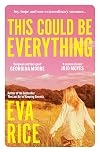
It's 1990 and February Kingdom (what a fabulous name!) is 19, just a few years older than I was at the same time, and the scene is set perfectly, taking me back to the days of the Sony Walkman and trying desperately to record the Top 40 countdown onto a cassette tape.
February's short life has been beset by tragedy at every turn, losing her parents and later her twin sister in terrible circumstances. Understandably, everyday life is difficult to cope with now and she hasn't been out for show more months. Could a little yellow bird and a boy named Theo be enough to help her carry on?
This is very much a character-driven plot and the characters are well-written, fascinating and larger-than-life creations that I really enjoyed reading about. There's a subplot featuring February's aunt and uncle and I think Ann, the aunt having something of an awakening of her own, was possibly my favourite character of all, along with the rather special Theo. I also loved Plato, a would-be pop star, and a cameo appearance by Michael Hutchence was such a thrill. The music storylines transported me right back to the 90s and the days of excitedly flicking through the new issue of Smash Hits for my latest heartthrob. It's such an evocative read in so many ways.
This is not my first Eva Rice, in fact I've been reading her since her first book, Standing Room Only. I've always enjoyed her quite wistful and whimsical style of writing, combined with the way she completely transports me to another time or place, or way of living. This Could be Everything is a sad read in many ways, but it left me feeling ultimately full of hope for February's future. Some very clever plot developments that I never saw coming but which made perfect sense once they were revealed, coupled with the dynamics between the characters, make this a charming read. show less
February's short life has been beset by tragedy at every turn, losing her parents and later her twin sister in terrible circumstances. Understandably, everyday life is difficult to cope with now and she hasn't been out for show more months. Could a little yellow bird and a boy named Theo be enough to help her carry on?
This is very much a character-driven plot and the characters are well-written, fascinating and larger-than-life creations that I really enjoyed reading about. There's a subplot featuring February's aunt and uncle and I think Ann, the aunt having something of an awakening of her own, was possibly my favourite character of all, along with the rather special Theo. I also loved Plato, a would-be pop star, and a cameo appearance by Michael Hutchence was such a thrill. The music storylines transported me right back to the 90s and the days of excitedly flicking through the new issue of Smash Hits for my latest heartthrob. It's such an evocative read in so many ways.
This is not my first Eva Rice, in fact I've been reading her since her first book, Standing Room Only. I've always enjoyed her quite wistful and whimsical style of writing, combined with the way she completely transports me to another time or place, or way of living. This Could be Everything is a sad read in many ways, but it left me feeling ultimately full of hope for February's future. Some very clever plot developments that I never saw coming but which made perfect sense once they were revealed, coupled with the dynamics between the characters, make this a charming read. show less

I first heard of The Lost Art of Keeping Secrets during my quest for books like I Capture the Castle. It's not I Capture the Castle, of course, and I wouldn't want it to be, but it deals with a similar territory: coming of age against a background of an eccentric family, not enough money and an impressive, literally-cold, crumbling home.
It's 1954 and Penelope Wallace is eighteen years old, poised between adolescence and adulthood. Her father died during the war and there isn't the money to show more restore Milton Magna Hall, where she lives with her difficult beautiful young mother and her music-obsessed brother Inigo (who sneaks home from boarding school on weekends).
The book opens when Penelope, waiting at a London busstop, meets Charlotte and Charlotte talks her into coming to tea with Charlotte's aunt.
And thus begins a friendship between two tall girls, both in love with the singer Johnnie Ray and both waiting for their adult lives to begin. Charlotte and her enigmatic cousin, Harry (who is training to be a magician) drag Penelope to London parties and bring Magna to life with their visits.
The Lost Art of Keeping Secrets is charming, lively and poignant - full of vibrant characters, and details about London, being a teenager in 1950s and the gap between those who were adults and those who were children during the war. I like that it's a coming-of-age story more about friendship than romance. Penelope's insights about people and London and growing up are everything I wanted from this sort of story.
I stayed up late reading because I just couldn't put this down... and I don't know that I can adequately describe how it left me feeling. Bittersweet, and very reluctant to return it to the library. I love this book! And I love how the title fits it perfectly, even if it takes time to see why.
"It's supposed to be quite the most magnificent building in the west country," said Aunt Clare, recovering her voice.
"It was, perhaps," I said. "It's in rather a state at the moment. I mean, it hasn't quite recovered from the war. There was a lot of mess made when it was requisitioned. The soldiers treated it pretty appalling - " I stopped there, my heart beating furiously. I hadn't talked about the problems Magna faced to anyone, not even to my mother. The subject made me more nervous than anything in the world.
"To watch a great house dying is a terrible tragedy," murmured Aunt Clare. "One of the great tragedies known to man [...]" show less
It's 1954 and Penelope Wallace is eighteen years old, poised between adolescence and adulthood. Her father died during the war and there isn't the money to show more restore Milton Magna Hall, where she lives with her difficult beautiful young mother and her music-obsessed brother Inigo (who sneaks home from boarding school on weekends).
The book opens when Penelope, waiting at a London busstop, meets Charlotte and Charlotte talks her into coming to tea with Charlotte's aunt.
And thus begins a friendship between two tall girls, both in love with the singer Johnnie Ray and both waiting for their adult lives to begin. Charlotte and her enigmatic cousin, Harry (who is training to be a magician) drag Penelope to London parties and bring Magna to life with their visits.
The Lost Art of Keeping Secrets is charming, lively and poignant - full of vibrant characters, and details about London, being a teenager in 1950s and the gap between those who were adults and those who were children during the war. I like that it's a coming-of-age story more about friendship than romance. Penelope's insights about people and London and growing up are everything I wanted from this sort of story.
I stayed up late reading because I just couldn't put this down... and I don't know that I can adequately describe how it left me feeling. Bittersweet, and very reluctant to return it to the library. I love this book! And I love how the title fits it perfectly, even if it takes time to see why.
"It's supposed to be quite the most magnificent building in the west country," said Aunt Clare, recovering her voice.
"It was, perhaps," I said. "It's in rather a state at the moment. I mean, it hasn't quite recovered from the war. There was a lot of mess made when it was requisitioned. The soldiers treated it pretty appalling - " I stopped there, my heart beating furiously. I hadn't talked about the problems Magna faced to anyone, not even to my mother. The subject made me more nervous than anything in the world.
"To watch a great house dying is a terrible tragedy," murmured Aunt Clare. "One of the great tragedies known to man [...]" show less
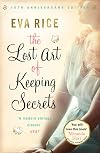
I'm not normally a fan of 'hooray henry' style books, but this is absolutely charming. Eva Rice has written a lovely story with some really great, strong characters.
The book itself is beautiful, with pink edged pages and drawings every now and again to fit in with the story.
I've read Eva Rice's work before, and it was quite different to this, showing that she is an accomplished and versatile author. The Lost Art of Keeping Secrets follows Penelope, an 18 year old who lives with her mother show more and brother at the huge, problematic stately pile, Milton Magna. She is mad about pop star, Johnnie Ray, and when she meets a girl called Charlotte, who feels exactly the same, she finds a new best friend. She also meets Charlotte's somewhat flighty cousin, Harry, who elicits Penelope's help in trying to win back his former love.
What follows is a light-hearted and warm story in which Penelope really seems to come of age. I loved the 1950s history, and the descriptions of parties, soirees at the Ritz, ginger scones at Aunt Clare's house, beautiful party dresses etc - all very evocative of the era.
I found this to be a very engaging read and only wish I had read it sooner. show less
The book itself is beautiful, with pink edged pages and drawings every now and again to fit in with the story.
I've read Eva Rice's work before, and it was quite different to this, showing that she is an accomplished and versatile author. The Lost Art of Keeping Secrets follows Penelope, an 18 year old who lives with her mother show more and brother at the huge, problematic stately pile, Milton Magna. She is mad about pop star, Johnnie Ray, and when she meets a girl called Charlotte, who feels exactly the same, she finds a new best friend. She also meets Charlotte's somewhat flighty cousin, Harry, who elicits Penelope's help in trying to win back his former love.
What follows is a light-hearted and warm story in which Penelope really seems to come of age. I loved the 1950s history, and the descriptions of parties, soirees at the Ritz, ginger scones at Aunt Clare's house, beautiful party dresses etc - all very evocative of the era.
I found this to be a very engaging read and only wish I had read it sooner. show less
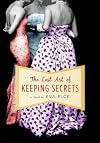
I picked up this book expecting a bit of fluff...and found myself wonderfully surprised. Not fluff at all but rather a poignant story of 18 year old Penelope of an impoverished wealthy family in 1950's England, teetering on the edge of womanhood. The book is replete with marvelous characters, Penelope's beautiful, young widowed mother; her younger musically-inclined brother named after Inigo Jones; her friends, Charlotte and Harry; and Aunt Clare. Full of literary and musical references, show more this is the best book I've read in a long time. Five GIANT stars! show less
Lists
You May Also Like


Associated Authors
Statistics
- Works
- 8
- Members
- 1,278
- Popularity
- #20,059
- Rating
- 3.8
- Reviews
- 67
- ISBNs
- 62
- Languages
- 5
- Favorited
- 3