
Series
Works by Lisa Yaszek
The Future Is Female! 25 Classic Science Fiction Stories by Women, from Pulp Pioneers to Ursula K. Le Guin: A Library of America Special Publication (2018) — Editor — 279 copies, 5 reviews
The Future Is Female! Volume Two, The 1970s: More Classic Science Fiction Storie s By Women: A Library of America Special Publication (2022) — Editor — 109 copies, 3 reviews
Practicing Science Fiction: Critical Essays on Writing, Reading and Teaching the Genre (2010) — Editor — 16 copies
Literary Afrofuturism in the Twenty-First Century (New Suns: Race, Gender, and Sexuality) (2020) — Editor — 11 copies
The Self Wired: Technology and Subjectivity in Contemporary Narrative (Literary Criticism and Cultural Theory) (2002) 5 copies
Mundos alternos. Selección de cuentos escritos por las pioneras de la ciencia ficción del siglo XX a partir de ¡El futuro es mujer! (1900) 4 copies
Retrofuturismos 1 copy
Associated Works
Daughters of Earth: Feminist Science Fiction in the Twentieth Century (2006) — Contributor — 188 copies, 6 reviews
Black and Brown Planets: The Politics of Race in Science Fiction (2014) — Contributor — 23 copies, 1 review
Tagged
Common Knowledge
- Gender
- female
- Education
- University of Wisconsin-Madison (PhD|English)
University of Wisconsin-Madison (MA|English)
University of Michigan-Ann Arbor (BA|English) - Organizations
- Georgia Tech (Professor of Science Fiction Studies in the School of Literature, Media, and Communication)
- Places of residence
- Atlanta, Georgia, USA
Madison, Wisconsin, USA - Associated Place (for map)
- USA
Members
Reviews
The Future Is Female! Volume Two, The 1970s: More Classic Science Fiction Storie s By Women by Lisa Yaszek
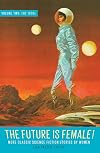
The first volume of Library of America’s The Future Is Female was a great example of the impact women had on early science fiction – and what it took to be accepted. Good stories, some of which were breaking boundaries that writers of all kinds were breaking at the same time. However, you just knew that the next volume – The 1970s – would have some more powerful, impactful, and even disturbing stories. After all, the late 60s and 70s were when science fiction really took a turn show more toward the possible – not just in science, but in writing.
And so, I entered this volume with expectations of stories that stood out even more, that caught me by surprise, and, if all was right and proper, that disturbed and sometimes shocked me.
Let me warn all readers. The first story in this volume does just that. I had not read “Bitching It” (trust me, I would remember if I had) and, jumping into this story I was gobsmacked by the concepts and the rawness. (It would have been a worthy addition to any of the Ellison Dangerous Visions editions. Not sure how it missed out.) Enter this story with caution. It is incredible, but it will disturb you.
And that, exactly, is what I was looking for in this collection. I was looking for stories that stretched the genre, that were sometimes shocking, but, most of all, were just plain good.
I was not disappointed. Some stories I read before came back to me with joy, e.g., Joanna Russ’s “When It Changed,” James Tiptree Jr.’s “The Girl Who Plugged In,” Ursula K. Le Guin’s “The Day Before the Revolution” to name just three.
And many more familiar or new stories. In general, an excellent collection.
I will note that, toward the end, the stories seemed of a lesser quality. Now, this is a tough crowd to look great in. But some of these felt they were added simply because they were women who were addressing women’s issues. Yes, that is part of the concept of the collection. But aren’t there better representatives in this time period? I mean, how is Tiptree’s “Houston, Houston, Do You Read?” not included? (I guess already having a Tiptree, as well as a Raccoona Sheldon story – both excellent choices –does lean a little too heavily on one author)
It's not that the few toward the end are bad stories, but they do not shine to the level of so much of the other volume.
Nonetheless, an excellent collection. If you know the writing that occurred during this time, then you will enjoy revisiting. And if you don’t, then you need to catch up…and this is a good place to start. show less
And so, I entered this volume with expectations of stories that stood out even more, that caught me by surprise, and, if all was right and proper, that disturbed and sometimes shocked me.
Let me warn all readers. The first story in this volume does just that. I had not read “Bitching It” (trust me, I would remember if I had) and, jumping into this story I was gobsmacked by the concepts and the rawness. (It would have been a worthy addition to any of the Ellison Dangerous Visions editions. Not sure how it missed out.) Enter this story with caution. It is incredible, but it will disturb you.
And that, exactly, is what I was looking for in this collection. I was looking for stories that stretched the genre, that were sometimes shocking, but, most of all, were just plain good.
I was not disappointed. Some stories I read before came back to me with joy, e.g., Joanna Russ’s “When It Changed,” James Tiptree Jr.’s “The Girl Who Plugged In,” Ursula K. Le Guin’s “The Day Before the Revolution” to name just three.
And many more familiar or new stories. In general, an excellent collection.
I will note that, toward the end, the stories seemed of a lesser quality. Now, this is a tough crowd to look great in. But some of these felt they were added simply because they were women who were addressing women’s issues. Yes, that is part of the concept of the collection. But aren’t there better representatives in this time period? I mean, how is Tiptree’s “Houston, Houston, Do You Read?” not included? (I guess already having a Tiptree, as well as a Raccoona Sheldon story – both excellent choices –does lean a little too heavily on one author)
It's not that the few toward the end are bad stories, but they do not shine to the level of so much of the other volume.
Nonetheless, an excellent collection. If you know the writing that occurred during this time, then you will enjoy revisiting. And if you don’t, then you need to catch up…and this is a good place to start. show less
The future is female! : 25 classic science fiction stories by women, from pulp pioneers to Ursula K. Le Guin by Lisa Yaszek
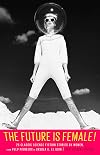
Well, this is a pretty awesome collection. I found a lot to like about it, with stories spanning forty years and visiting a variety of worlds. The stories were chosen and even put together in a good order. Of particular note was placing a shorter story (“Space Episode”) immediately after a longer one (“The Black God’s Kiss”), and placing two with similar themes beside each other so that the reader could compare the approaches taken (“That Only a Mother” and “In Hiding”).
I show more liked most of the stories in this collection or could at least appreciate what was being done. My favourites were ones that had realistic details about space travel (“Space Episode”), were told compactly (“All Cats are Gray”), and ones that showed that the real monsters are right here on Earth (“All the Colors of the Rainbow”; this one is right up there with the Doctor Who episode “Rosa” for showcasing that). I also liked the stories that switched traditional gender roles (“Another Rib” and “The Conquest of Gola”).
The introduction to the collection is very good, and there are biographical notes about each author at the end of the book. This is a great collection and I would definitely recommend it if you like SFF and stories written by women. show less
I show more liked most of the stories in this collection or could at least appreciate what was being done. My favourites were ones that had realistic details about space travel (“Space Episode”), were told compactly (“All Cats are Gray”), and ones that showed that the real monsters are right here on Earth (“All the Colors of the Rainbow”; this one is right up there with the Doctor Who episode “Rosa” for showcasing that). I also liked the stories that switched traditional gender roles (“Another Rib” and “The Conquest of Gola”).
The introduction to the collection is very good, and there are biographical notes about each author at the end of the book. This is a great collection and I would definitely recommend it if you like SFF and stories written by women. show less
The Future Is Female! Volume Two, The 1970s: More Classic Science Fiction Stories by Women by Lisa Yaszek
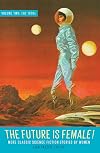
Overall, this was a very solid anthology. I've definitely found some authors whose entries here I liked enough to seek out more of their work. I also greatly appreciated that the anthology as a whole—even though it does focus on women at the heart of SF short stories—doesn't feel like it was intended as a "girls only" club. It feels like the focus was on writing quality; these were all nicely crafted, even the ones I didn't care for much.
CONTENTS:
Sonya Dorman, “Bitching It”
This story show more starts the anthology off with a reminder that "science fiction" has evolved. There's very little science in this piece, but it's set in a future where women can live on their own and be the ones in charge of sex. Weird to look back at this piece 50+ years later.
Chelsea Quinn Yarbro, "Frog Pond"
This was a bit of an odd dystopian. It felt like the big apocalypse event happened before our narrator was born, and so for older people it may feel like the world is a dystopia but for our MC this is just life as usual. I enjoyed it, and though I have a sense of where it takes place I have little sense of time. It could be any point in the near future, honestly, and I think I like it better for that. It felt like it could have been a story written last year, not over 50 years ago.
Kate Wilhelm, “The Funeral”
I was not a fan of this story, but that's because of the subject matter. I haven't read Atwood's THE HANDMAID'S TALE, but this felt like a version of that universe, where children have their lives planned for them by Teachers and other adults instead of getting to chose a life for themselves. Well written, just not my thing.
Joanna Russ, “When It Changed” ~ NEBULA AWARD WINNER
I haven't read many stories of this nature, wherethe men are all gone and society is women only but in this case it worked for me. The history of how that happened isn't explored (this is a short story after all) but you can still get a good enough sense of everything. While I don't think the plot will stick with me long, this is a masterclass in how to write a short and fully-contained story.
Kathleen Sky, “Lament of the Keeku Bird”
I fear that this story was beyond my comprehension. I saw the themes of motherhood and conformity and obedience, but generally I was so confused by this story.
Miriam Allen deFord, “A Way Out”
This was perhaps the most whimsical story of the collection so far: it tells the story from an alien's POV as he tries to get out of his position as an ambassador to humanity. While I didn't particularly enjoy the story, I appreciated the inclusion of something lighter.
Vonda N. McIntyre, “Of Mist, and Grass, and Sand” ~ NEBULA AWARD WINNER
I adored this story. It's beautiful and sad and wonderful. It is both heartbreaking and hopeful. It might be my favorite short story that I've read this year. ~ CW:cancer, child illness, snakes, animal death (but all of those things are handled very well)
James Tiptree, Jr., “The Girl Who Was Plugged In” ~ HUGO AWARD WINNER
Of all the stories so far in this anthology, this one has felt the most like other classic SF short stories that I have read—in both the good ways and the bad ways. The good: the concept is intriguing, the vision of the future was fantastical and yet still felt realistic, and the science was plausible. The bad: there is no real emotion conveyed (even during some sad scenes), some points were repeated too frequently, and the characters seemed relatively one-dimensional. It was well crafted (except maybe for the repetition) but not one I particularly cared about one way or the other.
Pamela Sargent, “If Ever I Should Leave You”
This was a lovely piece! It doesn't get too dark, but it does look at grief and methods of healing from it. It also addresses the way our society holds up youth as a thing to be sought after and age as shameful. But overall, it was very touching and sweet.
Doris Piserchia, "Pale Hands"
This is an odd story. The narrator's job is to clean public masturbation stalls, and she (and the reader) is confused for most of the story why they get quite as much use as they do. It gets loosely explained by the end of the story, but I still don't know how society got to where it was in the story. (Side note, this one is set in 2021. That amused me.)
Ursula K. Le Guin, “The Day Before the Revolution” ~ NEBULA & LOCUS AWARD WINNER
In this story, a 72-year-old woman looks back at her life as one of the founders of a revolution. It is a very quotable story, but thin on plot. I was frequently bored.
Eleanor Arnason, “The Warlord of Saturn’s Moons”
In many respects, this story felt more like a contemporary story than a science fiction one. Even though it was set in a nebulous future, I got the impression that the only thing I would normally point to as "sci-fi" took place within the book that this story's MC was writing. I didn't get much out of this story.
Marta Randall, “A Scarab in the City of Time”
This was amusing, and felt a bit more like an adventure caper than a science fiction story. Still, the message the story told still hit home today.
Kathleen M. Sidney, “The Anthropologist”
This is a very neat look at what early human-alien interactions might be like. I liked the use of the alien as the POV character, and the way that the alien race *felt* alien.
Gayle N. Netzer, "Hey, Lilith!"
I found this to be one of the most "fun" stories so far. It's both silly and pointed all at the same time.
Raccoona Sheldon, “The Screwfly Solution” ~ NEBULA AWARD WINNER
While I see what this story was doing, I didn't particularly like it. (In part because it's a depressing story that felt all too real.) The ending wasn't hard to see coming; I knew where the story was going about halfway in, I think? It was still interesting to see the process of getting our MC to that point, though.
Elinor Busby, “Time to Kill”
Short and fun! I love the approach to time travel in this one.
M. Lucie Chin, “The Best Is Yet to Be”
This is a neat look at the concept of extending your lifespan using brain transplants. While the science aspect wasn't described in much detail, I found the story fascinating. However, I also thought it stopped just as it was getting started.
Joan D. Vinge, “View from a Height”
I really liked this story. It really only has one character, and the story is told through dictated diary entries (though there is a talking parrot in the background). Our MC is the sole occupant of a manned space probe, with a one way ticket out of the solar system. It's more introspection than action, but I really enjoyed the direction it went.
Cynthia Felice, "No One Said Forever"
This story didn't really feel futuristic to me (though it might have in the 70's). When it really comes down to it, this is a story about commitment and relationships, and the genre of the piece is irrelevant.
C.J. Cherryh, "Cassandra" ~ HUGO AWARD WINNER
Cassandra's story in Greek mythology is one that has always both intrigued and horrified me. To know the future but have no one believe you... would that be better or worse than being as much in the dark as everyone else? This story is a masterful retelling of that situation, and I really enjoyed the journey of trying to figure out what I was seeing through the protagonist's eyes.
Lisa Tuttle, “Wives”
This is an odd story, yet one that I could see happening. The portrayal of how an alien species manages to fit into human society is all too believable. It dumps the reader down in the middle of the action (not uncommon for short stories) and the story of how we got to this point is partially explained but largely left implied. It works for this piece, though. Nicely crafted.
Connie Willis, "Daisy, In the Sun"
Of the many stories in this anthology, Willis' piece is the only one I had read before. However, it has been long enough that I didn't remember it... and honestly, it's hard enough to wrap my head around it that I don't think I'll remember it long this time, either. I think I have a decent idea of what the story is telling, but it's convoluted enough that it's hard to say I "liked" it. I do think it's well crafted, but Willis has other short stories that I enjoyed a lot more than this one. show less
CONTENTS:
Sonya Dorman, “Bitching It”
This story show more starts the anthology off with a reminder that "science fiction" has evolved. There's very little science in this piece, but it's set in a future where women can live on their own and be the ones in charge of sex. Weird to look back at this piece 50+ years later.
Chelsea Quinn Yarbro, "Frog Pond"
This was a bit of an odd dystopian. It felt like the big apocalypse event happened before our narrator was born, and so for older people it may feel like the world is a dystopia but for our MC this is just life as usual. I enjoyed it, and though I have a sense of where it takes place I have little sense of time. It could be any point in the near future, honestly, and I think I like it better for that. It felt like it could have been a story written last year, not over 50 years ago.
Kate Wilhelm, “The Funeral”
I was not a fan of this story, but that's because of the subject matter. I haven't read Atwood's THE HANDMAID'S TALE, but this felt like a version of that universe, where children have their lives planned for them by Teachers and other adults instead of getting to chose a life for themselves. Well written, just not my thing.
Joanna Russ, “When It Changed” ~ NEBULA AWARD WINNER
I haven't read many stories of this nature, where
Kathleen Sky, “Lament of the Keeku Bird”
I fear that this story was beyond my comprehension. I saw the themes of motherhood and conformity and obedience, but generally I was so confused by this story.
Miriam Allen deFord, “A Way Out”
This was perhaps the most whimsical story of the collection so far: it tells the story from an alien's POV as he tries to get out of his position as an ambassador to humanity. While I didn't particularly enjoy the story, I appreciated the inclusion of something lighter.
Vonda N. McIntyre, “Of Mist, and Grass, and Sand” ~ NEBULA AWARD WINNER
I adored this story. It's beautiful and sad and wonderful. It is both heartbreaking and hopeful. It might be my favorite short story that I've read this year. ~ CW:
James Tiptree, Jr., “The Girl Who Was Plugged In” ~ HUGO AWARD WINNER
Of all the stories so far in this anthology, this one has felt the most like other classic SF short stories that I have read—in both the good ways and the bad ways. The good: the concept is intriguing, the vision of the future was fantastical and yet still felt realistic, and the science was plausible. The bad: there is no real emotion conveyed (even during some sad scenes), some points were repeated too frequently, and the characters seemed relatively one-dimensional. It was well crafted (except maybe for the repetition) but not one I particularly cared about one way or the other.
Pamela Sargent, “If Ever I Should Leave You”
This was a lovely piece! It doesn't get too dark, but it does look at grief and methods of healing from it. It also addresses the way our society holds up youth as a thing to be sought after and age as shameful. But overall, it was very touching and sweet.
Doris Piserchia, "Pale Hands"
This is an odd story. The narrator's job is to clean public masturbation stalls, and she (and the reader) is confused for most of the story why they get quite as much use as they do. It gets loosely explained by the end of the story, but I still don't know how society got to where it was in the story. (Side note, this one is set in 2021. That amused me.)
Ursula K. Le Guin, “The Day Before the Revolution” ~ NEBULA & LOCUS AWARD WINNER
In this story, a 72-year-old woman looks back at her life as one of the founders of a revolution. It is a very quotable story, but thin on plot. I was frequently bored.
Eleanor Arnason, “The Warlord of Saturn’s Moons”
In many respects, this story felt more like a contemporary story than a science fiction one. Even though it was set in a nebulous future, I got the impression that the only thing I would normally point to as "sci-fi" took place within the book that this story's MC was writing. I didn't get much out of this story.
Marta Randall, “A Scarab in the City of Time”
This was amusing, and felt a bit more like an adventure caper than a science fiction story. Still, the message the story told still hit home today.
Kathleen M. Sidney, “The Anthropologist”
This is a very neat look at what early human-alien interactions might be like. I liked the use of the alien as the POV character, and the way that the alien race *felt* alien.
Gayle N. Netzer, "Hey, Lilith!"
I found this to be one of the most "fun" stories so far. It's both silly and pointed all at the same time.
Raccoona Sheldon, “The Screwfly Solution” ~ NEBULA AWARD WINNER
While I see what this story was doing, I didn't particularly like it. (In part because it's a depressing story that felt all too real.) The ending wasn't hard to see coming; I knew where the story was going about halfway in, I think? It was still interesting to see the process of getting our MC to that point, though.
Elinor Busby, “Time to Kill”
Short and fun! I love the approach to time travel in this one.
M. Lucie Chin, “The Best Is Yet to Be”
This is a neat look at the concept of extending your lifespan using brain transplants. While the science aspect wasn't described in much detail, I found the story fascinating. However, I also thought it stopped just as it was getting started.
Joan D. Vinge, “View from a Height”
I really liked this story. It really only has one character, and the story is told through dictated diary entries (though there is a talking parrot in the background). Our MC is the sole occupant of a manned space probe, with a one way ticket out of the solar system. It's more introspection than action, but I really enjoyed the direction it went.
Cynthia Felice, "No One Said Forever"
This story didn't really feel futuristic to me (though it might have in the 70's). When it really comes down to it, this is a story about commitment and relationships, and the genre of the piece is irrelevant.
C.J. Cherryh, "Cassandra" ~ HUGO AWARD WINNER
Cassandra's story in Greek mythology is one that has always both intrigued and horrified me. To know the future but have no one believe you... would that be better or worse than being as much in the dark as everyone else? This story is a masterful retelling of that situation, and I really enjoyed the journey of trying to figure out what I was seeing through the protagonist's eyes.
Lisa Tuttle, “Wives”
This is an odd story, yet one that I could see happening. The portrayal of how an alien species manages to fit into human society is all too believable. It dumps the reader down in the middle of the action (not uncommon for short stories) and the story of how we got to this point is partially explained but largely left implied. It works for this piece, though. Nicely crafted.
Connie Willis, "Daisy, In the Sun"
Of the many stories in this anthology, Willis' piece is the only one I had read before. However, it has been long enough that I didn't remember it... and honestly, it's hard enough to wrap my head around it that I don't think I'll remember it long this time, either. I think I have a decent idea of what the story is telling, but it's convoluted enough that it's hard to say I "liked" it. I do think it's well crafted, but Willis has other short stories that I enjoyed a lot more than this one. show less
The Future Is Female! 25 Classic Science Fiction Stories by Women, from Pulp Pioneers to Ursula K. Le Guin by Lisa Yaszek
Many, many, many (add some more manys to this) years ago I read a collection by Isaac Asimov titled Before the Golden Age. It was a collection of stories from the 30s that Asimov fondly remembered from his youth – his first experiences in the world of science fiction. Even at the tender age at which I read this collection (I’m guessing during high school) I recognized that, while nice, these stories weren’t particularly strong or even good. They creaked a bit, as do so many from the show more early days.
I was reminded of that collection when I started reading this collection. What reminded me were two things. First, the first few stories were from that golden age. Second, the stories did not creak like the stories Asimov remembered. Even the early ones shown with ideas and writing that, while maybe not perfectly fresh, still stood the test of time.
And then the stories move though the 50s and 60s. And what is fascinating is how original the ideas are. Some would be daring to write even today. (There is a possible comment here about how our ideas of daring have regressed, but I’m not doing that now.)
There are classics: Judith Merrill’s “That Only a Mother”, Leigh Brackett’s “All the Colors of the Rainbow”, and Kate Wilhelm’s “Baby You Were Great”, for example. But others more obscure – ones I never heard of – that absolutely floored me. Leslie Perri’s “Space Episode”, Alice Eleanor Jones “Created He Them”, James Tiptree Jr.’s “The Last Flight of Dr. Ain”, Alice Glaser’s “The Tunnel Ahead”. (For all I know they are classics and I just missed them) and many, many, many…Well, you get the idea.
There is nary a bad story herein. Yes, there are a couple that don’t shine quite like the others. But the overall shine is more than most of us can hope for in a short story collection.
All to say, I can’t wait to read Part 2 show less
I was reminded of that collection when I started reading this collection. What reminded me were two things. First, the first few stories were from that golden age. Second, the stories did not creak like the stories Asimov remembered. Even the early ones shown with ideas and writing that, while maybe not perfectly fresh, still stood the test of time.
And then the stories move though the 50s and 60s. And what is fascinating is how original the ideas are. Some would be daring to write even today. (There is a possible comment here about how our ideas of daring have regressed, but I’m not doing that now.)
There are classics: Judith Merrill’s “That Only a Mother”, Leigh Brackett’s “All the Colors of the Rainbow”, and Kate Wilhelm’s “Baby You Were Great”, for example. But others more obscure – ones I never heard of – that absolutely floored me. Leslie Perri’s “Space Episode”, Alice Eleanor Jones “Created He Them”, James Tiptree Jr.’s “The Last Flight of Dr. Ain”, Alice Glaser’s “The Tunnel Ahead”. (For all I know they are classics and I just missed them) and many, many, many…Well, you get the idea.
There is nary a bad story herein. Yes, there are a couple that don’t shine quite like the others. But the overall shine is more than most of us can hope for in a short story collection.
All to say, I can’t wait to read Part 2 show less
Lists
Awards


You May Also Like


Associated Authors
Statistics
- Works
- 11
- Also by
- 8
- Members
- 515
- Popularity
- #48,204
- Rating
- 4.0
- Reviews
- 12
- ISBNs
- 25