
Elyse Fitzpatrick
Author of Give Them Grace: Dazzling Your Kids with the Love of Jesus
About the Author
Elyse M. Fitzpatrick (Certificate in Biblical Counseling, CCEF; MA, Biblical Counseling, Trinity theological Seminary) is a frequent conference speaker and the author of more than twenty books, as well as numerous journal articles and blogs.
Works by Elyse Fitzpatrick
Counsel from the Cross: Connecting Broken People to the Love of Christ (2009) 506 copies, 12 reviews
Love to Eat, Hate to Eat: Breaking the Bondage of Destructive Eating Habits (1999) 445 copies, 6 reviews
Overcoming Fear, Worry, and Anxiety: Becoming a Woman of Faith and Confidence (2001) 377 copies, 1 review
You Never Stop Being a Parent: Thriving in Relationship With Your Adult Children (2010) 198 copies, 1 review
Will Medicine Stop the Pain?: Finding God's Healing for Depression, Anxiety, and Other Troubling Emotions (2006) 198 copies, 2 reviews
Answering Your Kids' Toughest Questions: Helping Them Understand Loss, Sin, Tragedies, and Other Hard Topics (2014) 104 copies
Good News for Weary Women: Escaping the Bondage of To-Do Lists, Steps, and Bad Advice (2014) 87 copies, 1 review
Give Them Grace: Leading Your Kids to Joy and Freedom through Gospel-Centered Parenting (2024) 21 copies, 7 reviews
Steadfast Heart 2 copies
Empty Nest 1 copy
Ninho Vazio 1 copy
Helping Bulimics 1 copy
Miserable Counselors: Mistakes of Job's Friends - IBCD 2006 Annual Conference (audio-CD ibc0612) 1 copy
Helping Overeaters 1 copy
Helping Anorexics 1 copy
Um coração inabalável: experimentando o consolo de Deus nas tempestades da vida (Portuguese Edition) 1 copy
Far End of Fear: OCD 1 copy
Rachel's Gods - Study Guide 1 copy
Tagged
Common Knowledge
- Birthdate
- 1950-11-11
- Gender
- female
Members
Reviews
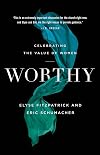
In Worthy: Celebrating the Value of Women authors Elyse Fitzpatrick and Eric Schumacher step boldly into the fray to defend women against stereotypes, assumptions, misogyny, and abuses in today’s Christian culture. I did not agree with everything in this book, but I thoroughly appreciate their work.
As someone who has been deeply wounded by some of the evangelical church’s teachings to and about women, I’m questioning many beliefs I once held tightly. Worthy gave me hope as it breathed show more a new, healthier perspective into the old, damaging teachings I’ve been taught since childhood. It clearly demonstrates that Biblical interpretation can easily be skewed by one’s worldview, social environment, or church culture. Worthy frequently demonstrated that simply shifting how a passage is perceived can completely change its effect and message. I do think at times they presented ideal situations and skipped over challenging passages. Still, the bottom-line message of the book is that God values women as much as He values men. No more, no less. And I can definitely get on board with that message.
I think Worthy: Celebrating the Value of Women by Elyse Fitzpatrick and Eric Schumacher is a step in the right direction and I wish all pastors, especially those on the more conservative side would read it. Given all the SBC endorsements, I wasn’t terribly surprised to read that they consider themselves complementarians and deny that women can hold the office of pastor. However, I appreciated their call for respectful interaction with others of different opinions. They acknowledge that Christians can love God deeply, serve him with devotion, yet still hold different convictions.
Disclosure of Material Connection: I was provided a copy of this book by the publisher. All opinions in this review are my own. show less
As someone who has been deeply wounded by some of the evangelical church’s teachings to and about women, I’m questioning many beliefs I once held tightly. Worthy gave me hope as it breathed show more a new, healthier perspective into the old, damaging teachings I’ve been taught since childhood. It clearly demonstrates that Biblical interpretation can easily be skewed by one’s worldview, social environment, or church culture. Worthy frequently demonstrated that simply shifting how a passage is perceived can completely change its effect and message. I do think at times they presented ideal situations and skipped over challenging passages. Still, the bottom-line message of the book is that God values women as much as He values men. No more, no less. And I can definitely get on board with that message.
I think Worthy: Celebrating the Value of Women by Elyse Fitzpatrick and Eric Schumacher is a step in the right direction and I wish all pastors, especially those on the more conservative side would read it. Given all the SBC endorsements, I wasn’t terribly surprised to read that they consider themselves complementarians and deny that women can hold the office of pastor. However, I appreciated their call for respectful interaction with others of different opinions. They acknowledge that Christians can love God deeply, serve him with devotion, yet still hold different convictions.
Disclosure of Material Connection: I was provided a copy of this book by the publisher. All opinions in this review are my own. show less
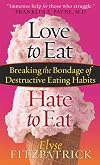
In this insightful book, biblical counselor Elyse Fitzpatrick examines the heart idols that lead to anorexia, bulimia, and overeating. She starts by exploring the different worldly explanations for eating disorders, pointing out the problems and inconsistencies of each. I've read this book spread out over a month so I don't remember if she specifically addresses the term "eating disorder," but the premise of the book reinforces the truth that these food issues are not physical diseases that show more attack a helpless victim, but choices that have led to the person's current condition. The person with the eating problem has chosen attitudes and actions that have brought him or her to the addictive state of either starving or gorging compulsively. (Even the word "compulsively" I want to use carefully, because again it implies that the person has no control.)
Worldly views tend to emphasize the person's helplessness in the face of the problem. My guess is that part of the motivation for this is to remove blame and guilt from the sufferer (a natural desire when we see someone suffering—blaming them for their state seems like kicking them when they're already down). But this view, while removing blame, also removes hope. If the disorder is something they did not choose, then they can't choose otherwise. They're helpless before it.
But thankfully, this is not the biblical perspective. What God says about addictive behavior is sobering but hope-giving. We have a responsibility for our choices and actions, and they have consequences. But God promises grace, forgiveness, and help for all who turn to Him. We do not have to stay the way we are, or put our trust in the world's fruitless strategies for dealing with our problems. Hope!
A couple key points that stuck out to me:
• Thinness is not equivalent to holiness. Nowhere in the Bible are we commanded to be thin. Gluttony, on the other hand, is called sinful in the Bible. A thin person can be gluttonous; the sin is not being overweight. The sin is excess and obsession with food.
• The goal for the Christian dealing with food idols is not to lose (or gain) X number of pounds. No, the goal is to approach food in a way that shows who is Lord of our lives. As Christians, we don't belong to ourselves any longer, and this includes our physical bodies. Our desire needs to be to please Him, not to merely look/feel better. This is especially difficult for women, with the pressure we feel (and put on ourselves) to be slim and trim.
• The 6th Commandment, "Thou shalt not murder," has a much broader meaning than just not going out and murdering someone. Its meaning also encompasses not engaging in behaviors that will lead to our own early deaths or physical deterioration. I never thought about that commandment in that light before... it's true it doesn't say "thou shalt not murder others." As temples of the Holy Spirit, we have a responsibility to maintain our physical bodies for His glory.
I have never struggled with an eating disorder, but I swooped down on this book eagerly when I saw it at the thrift store (speaking of which, I wonder if the person who donated it had benefited from it?). I had two thoughts: anything by Elyse Fitzpatrick was bound to be helpful, and I never knew when I might need to better understand this common struggle for the sake of a friend. I was right on both counts. What I was not expecting was the conviction this book brought to my own heart. I am not overweight or anorexic, and while I enjoy food, it has never been an idol to me. (The closest I get to a problem with food is throwing up when I am extremely nervous or upset.)
But although I don't struggle with the eating problems described in the book, I was convicted in two specific areas. First, I am guilty of not eating to the glory of God. I just tend to take my food (and my lack of eating disorders) for granted—even taking a little pride in the fact that this is something I have never had to struggle with. Second, I was convicted about being far too interested in my physical appearance. I have known for awhile that I placed too much emphasis here, but I hadn't really been confronted with biblical admonitions specific to this idol. As always, God's timing is perfect as I am six months pregnant and realizing my body will never be the same again. I am so thankful that as a Christian woman, I am not stuck with methods of mere self-improvement or self-discipline to make peace with my changing form.
My experience with eating problems and their solutions is not vast, but I can't imagine a more helpful, biblical, or compassionate resource than this book. Highly recommended. show less
Worldly views tend to emphasize the person's helplessness in the face of the problem. My guess is that part of the motivation for this is to remove blame and guilt from the sufferer (a natural desire when we see someone suffering—blaming them for their state seems like kicking them when they're already down). But this view, while removing blame, also removes hope. If the disorder is something they did not choose, then they can't choose otherwise. They're helpless before it.
But thankfully, this is not the biblical perspective. What God says about addictive behavior is sobering but hope-giving. We have a responsibility for our choices and actions, and they have consequences. But God promises grace, forgiveness, and help for all who turn to Him. We do not have to stay the way we are, or put our trust in the world's fruitless strategies for dealing with our problems. Hope!
A couple key points that stuck out to me:
• Thinness is not equivalent to holiness. Nowhere in the Bible are we commanded to be thin. Gluttony, on the other hand, is called sinful in the Bible. A thin person can be gluttonous; the sin is not being overweight. The sin is excess and obsession with food.
• The goal for the Christian dealing with food idols is not to lose (or gain) X number of pounds. No, the goal is to approach food in a way that shows who is Lord of our lives. As Christians, we don't belong to ourselves any longer, and this includes our physical bodies. Our desire needs to be to please Him, not to merely look/feel better. This is especially difficult for women, with the pressure we feel (and put on ourselves) to be slim and trim.
• The 6th Commandment, "Thou shalt not murder," has a much broader meaning than just not going out and murdering someone. Its meaning also encompasses not engaging in behaviors that will lead to our own early deaths or physical deterioration. I never thought about that commandment in that light before... it's true it doesn't say "thou shalt not murder others." As temples of the Holy Spirit, we have a responsibility to maintain our physical bodies for His glory.
I have never struggled with an eating disorder, but I swooped down on this book eagerly when I saw it at the thrift store (speaking of which, I wonder if the person who donated it had benefited from it?). I had two thoughts: anything by Elyse Fitzpatrick was bound to be helpful, and I never knew when I might need to better understand this common struggle for the sake of a friend. I was right on both counts. What I was not expecting was the conviction this book brought to my own heart. I am not overweight or anorexic, and while I enjoy food, it has never been an idol to me. (The closest I get to a problem with food is throwing up when I am extremely nervous or upset.)
But although I don't struggle with the eating problems described in the book, I was convicted in two specific areas. First, I am guilty of not eating to the glory of God. I just tend to take my food (and my lack of eating disorders) for granted—even taking a little pride in the fact that this is something I have never had to struggle with. Second, I was convicted about being far too interested in my physical appearance. I have known for awhile that I placed too much emphasis here, but I hadn't really been confronted with biblical admonitions specific to this idol. As always, God's timing is perfect as I am six months pregnant and realizing my body will never be the same again. I am so thankful that as a Christian woman, I am not stuck with methods of mere self-improvement or self-discipline to make peace with my changing form.
My experience with eating problems and their solutions is not vast, but I can't imagine a more helpful, biblical, or compassionate resource than this book. Highly recommended. show less
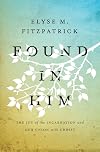
I found plenty to appreciate about this book. I am always pleased to find doctrinally sound books geared toward laypeople, making connections between theology and the concrete details of daily walking with Christ. Fitzpatrick does a wonderful job of instilling the significance of the Incarnation and union with Christ for believers; I was moved to praise many times as I read, and I especially appreciated her emphasis on the humanity of Jesus Christ and what His defeat of sin and death means show more for us in light of that.
A couple of small concerns stuck with me. First, I thought her exegesis was a slight stretch at times. I thought that her redemptive-historical reading of the Old Testament (if that is the correct term to use) almost ran the risk of eliding the significance of events, e.g. the exodus, in favor of showing how everything pointed forward to Christ.
In the final chapter, I also struggled with some of her remarks on sanctification. Though I'd agree that the ground of our growth is in looking continually to Christ, I'm less certain that the whole of our striving is in remembering and resting upon His work. She makes it out to sound like a fairly passive process, and from those who favor this way of talking about sanctification, I've never heard a satisfactory explanation for how it really takes hold cognitively and in one's affections. I was also uncomfortable with her discussion of sin when she makes it sound like it is always a matter of trying to establish our own righteousness rather than believing in Christ's. But I've been wrestling with this topic a lot lately, so it is possible that I'm importing some of my issues from the sanctification debate into my reading of her.
This is still a book I'd happily recommend to most laypeople, caveats and all. show less
A couple of small concerns stuck with me. First, I thought her exegesis was a slight stretch at times. I thought that her redemptive-historical reading of the Old Testament (if that is the correct term to use) almost ran the risk of eliding the significance of events, e.g. the exodus, in favor of showing how everything pointed forward to Christ.
In the final chapter, I also struggled with some of her remarks on sanctification. Though I'd agree that the ground of our growth is in looking continually to Christ, I'm less certain that the whole of our striving is in remembering and resting upon His work. She makes it out to sound like a fairly passive process, and from those who favor this way of talking about sanctification, I've never heard a satisfactory explanation for how it really takes hold cognitively and in one's affections. I was also uncomfortable with her discussion of sin when she makes it sound like it is always a matter of trying to establish our own righteousness rather than believing in Christ's. But I've been wrestling with this topic a lot lately, so it is possible that I'm importing some of my issues from the sanctification debate into my reading of her.
This is still a book I'd happily recommend to most laypeople, caveats and all. show less
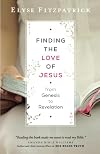
I was really excited about this book, and did end up enjoying it--but felt it was one of those where the back-cover description doesn't match the actual book contents.
Per the back cover, I was expecting more of a general read focused on Jesus; once I actually dove into it, I found the book much more of a women's devotional book highlighting not only Jesus (of course, as it should be!), but also the importance and significance of women in the Bible. Fine ... just again, not what was show more advertised, and I frankly felt like a lot of it had been covered already in other books.
I received an eARC of the book from the publisher via NetGalley. All opinions are my own. show less
Per the back cover, I was expecting more of a general read focused on Jesus; once I actually dove into it, I found the book much more of a women's devotional book highlighting not only Jesus (of course, as it should be!), but also the importance and significance of women in the Bible. Fine ... just again, not what was show more advertised, and I frankly felt like a lot of it had been covered already in other books.
I received an eARC of the book from the publisher via NetGalley. All opinions are my own. show less
Lists
Awards

You May Also Like


Associated Authors
Statistics
- Works
- 66
- Members
- 6,934
- Popularity
- #3,525
- Rating
- 4.3
- Reviews
- 60
- ISBNs
- 126
- Languages
- 6
- Favorited
- 5
