
Brian VanDeMark
Author of Road to Disaster: A New History of America's Descent Into Vietnam
About the Author
Brian VanDeMark is a professor of history at the United States Naval Academy in Annapolis, where for more than twenty-five years he has educated students about the Vietnam War. A Texas native, he now lives in Maryland.
Works by Brian VanDeMark
American Sheikhs: Two Families, Four Generations, and the Story of America's Influence in the Middle East (2012) 11 copies, 1 review
Associated Works
Tagged
Common Knowledge
- Birthdate
- 1960-07-12
- Gender
- male
Members
Reviews
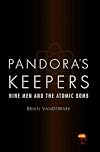
H has become a most ominous letter
In Greek mythology, Pandora was the first woman on earth and was given a beautiful container which she was told never to open. But, of course, her curiosity got the better of her and when she opened it all the evil inside escaped into the world. When she tried to close it the only thing left inside was the Spirit of Hope. Pandora was afraid she would be punished, but Zeus didn't because he knew it would happen from the beginning, and so Hope was released as show more well.
It's easy to see the parallel to the story of Adam and Eve and the forbidden fruit, but Brian VanDeMark draws a more modern parallel to the beginning of the nuclear age. Instead of simply retelling the story of the Manhattan Project or the subsequent nuclear arms race, VanDeMark focuses on nine men who were involved in it: Leo Szilard, Enrico Fermi, I. I. Rabi, Niels Bohr, Edward Teller, Ernest Lawrence, Arthur Compton, Robert Oppenheimer, and Hans Bethe. Some were theoreticists whose insights paved the way, others were instrumental in refining the uranium and plutonium, and others put it all together in the mountains of New Mexico. All were incredibly brilliant men who changed the world.
Many of them had been forced to leave their European homelands by the threat of Nazism and found a welcoming community in America of fellow scientists and thinkers. Physics in those days was a mostly theoretical exercise with little practical application. But when it became known that Nazi scientists were working on splitting the atom to unleash its destructive power, the Manhattan Project was born with a goal of developing an atomic bomb first. But it wasn't just the threat that drove them; it was also the opportunity of a lifetime to pursue an intense professional curiosity.
But for some, seeing the devastation wrought on civilians in Hiroshima and Nagasaki caused anxiety over their work, even describing it as a "sin." They understood their willing role in developing the bomb and were conflicted by the obvious fact that it had indeed ended the war. Some argued for international control of the bomb and warned of an arms race, but not all. When international negotiations failed and the Soviet Union successfully tested their own atomic bomb (using information gained by espionage) some again lent their talents to the race to develop even bigger thermonuclear weapons, which used atoms of hydrogen - the hydrogen or H bomb - and release hundreds of times the destructive energy of the bombs dropped in WWII.
VanDeMark treats the subject rather fairly and he shows a talent for bringing the story to life in an exciting way that emphasizes the moral dilemmas of the time and the questions the physicists faced, and that there were no easy answers. There wasn't just a tremendous amount of research that went into the book but a lot of thought as well. I thought it was both interesting and readable, and it's one of those books that didn't get the kind of attention it deserved. (Incidentally, the title of my review comes from a poem written by Edward Teller for his children.) show less
In Greek mythology, Pandora was the first woman on earth and was given a beautiful container which she was told never to open. But, of course, her curiosity got the better of her and when she opened it all the evil inside escaped into the world. When she tried to close it the only thing left inside was the Spirit of Hope. Pandora was afraid she would be punished, but Zeus didn't because he knew it would happen from the beginning, and so Hope was released as show more well.
It's easy to see the parallel to the story of Adam and Eve and the forbidden fruit, but Brian VanDeMark draws a more modern parallel to the beginning of the nuclear age. Instead of simply retelling the story of the Manhattan Project or the subsequent nuclear arms race, VanDeMark focuses on nine men who were involved in it: Leo Szilard, Enrico Fermi, I. I. Rabi, Niels Bohr, Edward Teller, Ernest Lawrence, Arthur Compton, Robert Oppenheimer, and Hans Bethe. Some were theoreticists whose insights paved the way, others were instrumental in refining the uranium and plutonium, and others put it all together in the mountains of New Mexico. All were incredibly brilliant men who changed the world.
Many of them had been forced to leave their European homelands by the threat of Nazism and found a welcoming community in America of fellow scientists and thinkers. Physics in those days was a mostly theoretical exercise with little practical application. But when it became known that Nazi scientists were working on splitting the atom to unleash its destructive power, the Manhattan Project was born with a goal of developing an atomic bomb first. But it wasn't just the threat that drove them; it was also the opportunity of a lifetime to pursue an intense professional curiosity.
But for some, seeing the devastation wrought on civilians in Hiroshima and Nagasaki caused anxiety over their work, even describing it as a "sin." They understood their willing role in developing the bomb and were conflicted by the obvious fact that it had indeed ended the war. Some argued for international control of the bomb and warned of an arms race, but not all. When international negotiations failed and the Soviet Union successfully tested their own atomic bomb (using information gained by espionage) some again lent their talents to the race to develop even bigger thermonuclear weapons, which used atoms of hydrogen - the hydrogen or H bomb - and release hundreds of times the destructive energy of the bombs dropped in WWII.
VanDeMark treats the subject rather fairly and he shows a talent for bringing the story to life in an exciting way that emphasizes the moral dilemmas of the time and the questions the physicists faced, and that there were no easy answers. There wasn't just a tremendous amount of research that went into the book but a lot of thought as well. I thought it was both interesting and readable, and it's one of those books that didn't get the kind of attention it deserved. (Incidentally, the title of my review comes from a poem written by Edward Teller for his children.) show less
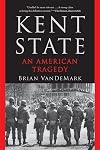
Well Documented History Of The Event. The massacre at Kent State happened when my parents were not quite 10 yrs old and still almost as long away from meeting. It wouldn't be until over a decade after this event when they wed, and I was born just a couple of years later. One uncle was already nearly 30 by the time of the massacre, and my youngest aunt was still in middle single digits at the time. The rest of my dozen or so aunts and uncles were somewhere in between, including at least a show more couple of them that were college age at the time, and one that fought in Vietnam in this era. (I'm not sure exactly when he was deployed there, but I *know* he went and did... something. He was a career Marine, beginning then.) All of this is a long way of saying that this is a history of events that preceded me, but which my direct family knew of at various ages of their own lives and saw how it affected each of them.
Thus, other than the barest of facts of "there was a protest, the National Guard got called in, and the Guard shot and killed a few students"... I never really knew about the details of this massacre before reading this book. I've never read any of the other histories, I've never really seen it covered much at all - and certainly not to this detail - in any other medium. So I can't really say if it has any "new" information about the event and its fallout.
What I *can* say about this book is that it is very well documented, with 23% of its text being official bibliography, and the extensive footnotes throughout the text probably adding another couple of percentage points, *maybe* up to an additional 5% or so. Bringing the total documentation here to somewhere in the 25-28% range, which is pretty solid in my extensive review work of the last several years - I've read books making far stronger claims than this that had far less documentation.
This book is also exceedingly detailed in its presentation of the events of those few days in May at this campus, giving brief biographical sketches of pretty well every single person named- be they victim, shooter, parent, lawyer, politician, commander, or anything else- and detailing with a fair degree of precision exactly where each person was in the periods before, during, and after the massacre. Up to and including which shooters had which guns pointing which directions. Indeed, one of the most tragic and explicit parts of this book is just how graphically the shots are described as they hit the 13 victims, and indeed there are some photographs of some of the bodies included in the text as well. So for those that get particularly squeamish about such details... you may want to skim over these bits. But also don't, because VanDeMark's presentation here, though excessively detailed, also does a tremendous job of showing just how tragic the event was.
To be clear, VanDeMark presents a remarkably *balanced* history as well, not really siding with either side in the debate as to who was at fault, simply presenting the available facts and showing how tragic it was that a group of young adults were all in this situation to begin with, from all of the varying sides. Indeed, perhaps this is the greatest overall strength of the text at hand - in its balance, we are allowed to get perhaps the truest picture available of what is known to have occurred and when, allowing the reader to decide for themselves, with their own biases, who was at fault and why.
After detailing the events of the day, VanDeMark closes the narrative with following the various efforts at criminal and civil trials of the shooters as well as various efforts to memorialize the events before moving on to how each of the survivors - family of the dead, the surviving victims, the shooters, and the various officials - handled the events of that weekend the rest of their lives, reaching right up into the 2020s.
Overall a truly detailed, graphic at times, and moving text, and one anyone with any interest at all in the subject should read.
Very much recommended. show less
Thus, other than the barest of facts of "there was a protest, the National Guard got called in, and the Guard shot and killed a few students"... I never really knew about the details of this massacre before reading this book. I've never read any of the other histories, I've never really seen it covered much at all - and certainly not to this detail - in any other medium. So I can't really say if it has any "new" information about the event and its fallout.
What I *can* say about this book is that it is very well documented, with 23% of its text being official bibliography, and the extensive footnotes throughout the text probably adding another couple of percentage points, *maybe* up to an additional 5% or so. Bringing the total documentation here to somewhere in the 25-28% range, which is pretty solid in my extensive review work of the last several years - I've read books making far stronger claims than this that had far less documentation.
This book is also exceedingly detailed in its presentation of the events of those few days in May at this campus, giving brief biographical sketches of pretty well every single person named- be they victim, shooter, parent, lawyer, politician, commander, or anything else- and detailing with a fair degree of precision exactly where each person was in the periods before, during, and after the massacre. Up to and including which shooters had which guns pointing which directions. Indeed, one of the most tragic and explicit parts of this book is just how graphically the shots are described as they hit the 13 victims, and indeed there are some photographs of some of the bodies included in the text as well. So for those that get particularly squeamish about such details... you may want to skim over these bits. But also don't, because VanDeMark's presentation here, though excessively detailed, also does a tremendous job of showing just how tragic the event was.
To be clear, VanDeMark presents a remarkably *balanced* history as well, not really siding with either side in the debate as to who was at fault, simply presenting the available facts and showing how tragic it was that a group of young adults were all in this situation to begin with, from all of the varying sides. Indeed, perhaps this is the greatest overall strength of the text at hand - in its balance, we are allowed to get perhaps the truest picture available of what is known to have occurred and when, allowing the reader to decide for themselves, with their own biases, who was at fault and why.
After detailing the events of the day, VanDeMark closes the narrative with following the various efforts at criminal and civil trials of the shooters as well as various efforts to memorialize the events before moving on to how each of the survivors - family of the dead, the surviving victims, the shooters, and the various officials - handled the events of that weekend the rest of their lives, reaching right up into the 2020s.
Overall a truly detailed, graphic at times, and moving text, and one anyone with any interest at all in the subject should read.
Very much recommended. show less
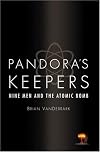
4 stars: Very good.
From the inside cover: There were nine of them: Oppenheimer, Teller, Fermi, Bohr, Lawrence, Bethe, Rabi, Szilard and Compton-- brilliant men who believed in science and who saw before anyone else did the awesome workings of an invisible world. They came from many places, some fleeing Nazism in Europe, others quietly slipping out of university teaching jobs, all gathering in secret wartime laboratories to create the world's fist atomic bomb. At one such place... Los show more Alamos... they would crack the secret of the nuclear chain reaction and construct a device that incinerated a city and melted its victims so thoroughly that the only thing left was the scorched outlines on the sidewalks.
During the war, few of the atomic scientists questioned the wisdom of their desperate endeavour. But afterward, they were forced to deal with the sobering legacy of their creation. Some were haunted by the dead of Nagasaki and Hiroshima and would become anit-nuclear weapons activists; others would go on to build bigger and deadlier bombs. Some would remain friends; others would become bitter rivals and enemies. In explaining their lives and their struggles, Brian Van DeMark superbly illuminates the ways in which these brilliant and sensitive men came to terms with their horrific creation.
----------------
The above describes this book well. It does of course discuss the history, but it puts everything in context of the 9 scientists lives. It focuses on the individual, before the war, as war broke out in Europe (many fleeing to the US), during and after. From this focus on the individual, we understood their motivations more.
I must say, I always knew Teller was --problematic---but did not realise how much until reading this book. He really did all he could to undermine Oppenheimer and it was his testimony that particularly led to Oppenheimer's being stripped of his security clearance. And for that, Teller was ostracized from the physics community--indeed, his family-- for the rest of this life. Very much worth the read, and a book I may refer to again later as I read more about the Manhattan Project.
Some quotes from within that struck me:
"People usually think about what the atomic scientists did, instead of who they were, because they do not see them as human beings with personal histories and emotional lives, hearts --sometimes broken--as well as heads. Scientists are first and foremost people, people who know just how imaginative and human an enterprise science really is."
The atomic scientists originally sought to build something that would save the world and ended up believing what they created might destroy it. They came to fear the very thing they had built to end fear.
[Upon seeing an experiment that showed for the first time that uranium could be forced to chain react] "That night there was very little doubt in my mind that the world was headed for grief." -Leo Szilard
When [Oak Ridge] was operating, a continuous hum sounding like a bee swarm came from the plant.... The electricity for these mammoth facilities came from the nearby TVA and an onsite powerhouse that was the largest power installation ever built. By war's end, Oak Ridge would be consuming the equivalent of the total power output on the American side of Niagara Falls--or one seventh of all electricity generated in the US... The statistics were staggering: 540 buildings, more than 600 miles of roads, 158 miles of railroad track, vast quantities of water, concrete, lumber, and pipe. Eventually 132,000 workers were hired, almost as many as built the Panama canal.
AFter the war, upon debating the "superbomb": Although curious as scientists, they nevertheless concluded that the superbomb was a problem that should not be solved--some science had beocome too deadly, its implications too dangerous. Breaking with their past, they had decided to put the interests of humanity above the pursuit of knowledge, a courageous and farsighted stance that reflected the revulsion that the mass killings of Hiroshima and Nagasaki had brought over each of them.
Szilard's fear of a nuclear World War III appalled him so much that he decided to have nothing more to do with physics, which he had once associated with destruction. In 1947 he took up the study of biology, which was for him a rejection of death and an affirmation of life.
Like most vain and insecure men, Strauss was a close accountant of small insults. All such sins were entered in a ledger, no less permanent for being kept in Strauss's razor sharp memory rather than on a book keeper's pages. It concealed interior tides of terrible anger.
Oppenheimer, after the vote to strip his clearance:" I had two alternatives. One was to seek ways to appeal the decision. I didn't think we'd buy yourselves anything by that. The other was to prove that, in spite of some incredible words the commission wrote about me, these words would not necessarily be believed by all people. In other words, I had to establish by other means that what was put out as a final judgment about me wasn't the final judgment. And the only way to do this was by surviving." Oppenheimer believed in a religion of endurance.
I.I. Rabi: "Our experience in World War II had a profound effect on the scientific community. We saw how our command of scientific knowledge and method, aided by vast sums of money and support, have made it absurdly easy to kill human beings. This fateful truth has brought home to many scientists the fact they they cannot escape the social responsibility of their actions. No longer can science be just "fun and games". "
What a shattering realisation this was for sensitive, thoughtful men who had believed that knowledge was an absolute good, who had assumed that science, and particularly physics, always led to progress, and who had meant to do well. While they felt their work on the bomb was vital to ending World war II, many-indeed, most--of them later came to see what they had done as a great tragedy. They never dreamed in 1945 that there would be so many bombs in the arsenals of so many countries more than half a century later. There was the pride of accomplishment--and the shame of being associated with it. They saw themselves as smart --and foolish. They saw the bomb as a great achievement--but not as a good achievement. These central, painful contradictions remained with all of them to the end of their lives.
Dissociating action from feeling and failing to consider the broader consequences of what they were doing, the atomic scientists made a terrible weapon. But in time they came to terms with their creation. They learned from experience to ask the fundamental questions. And in doing so, questions of usage ultimately became more important to them than questions of research. Their tragedy was also their triumph. show less
From the inside cover: There were nine of them: Oppenheimer, Teller, Fermi, Bohr, Lawrence, Bethe, Rabi, Szilard and Compton-- brilliant men who believed in science and who saw before anyone else did the awesome workings of an invisible world. They came from many places, some fleeing Nazism in Europe, others quietly slipping out of university teaching jobs, all gathering in secret wartime laboratories to create the world's fist atomic bomb. At one such place... Los show more Alamos... they would crack the secret of the nuclear chain reaction and construct a device that incinerated a city and melted its victims so thoroughly that the only thing left was the scorched outlines on the sidewalks.
During the war, few of the atomic scientists questioned the wisdom of their desperate endeavour. But afterward, they were forced to deal with the sobering legacy of their creation. Some were haunted by the dead of Nagasaki and Hiroshima and would become anit-nuclear weapons activists; others would go on to build bigger and deadlier bombs. Some would remain friends; others would become bitter rivals and enemies. In explaining their lives and their struggles, Brian Van DeMark superbly illuminates the ways in which these brilliant and sensitive men came to terms with their horrific creation.
----------------
The above describes this book well. It does of course discuss the history, but it puts everything in context of the 9 scientists lives. It focuses on the individual, before the war, as war broke out in Europe (many fleeing to the US), during and after. From this focus on the individual, we understood their motivations more.
I must say, I always knew Teller was --problematic---but did not realise how much until reading this book. He really did all he could to undermine Oppenheimer and it was his testimony that particularly led to Oppenheimer's being stripped of his security clearance. And for that, Teller was ostracized from the physics community--indeed, his family-- for the rest of this life. Very much worth the read, and a book I may refer to again later as I read more about the Manhattan Project.
Some quotes from within that struck me:
"People usually think about what the atomic scientists did, instead of who they were, because they do not see them as human beings with personal histories and emotional lives, hearts --sometimes broken--as well as heads. Scientists are first and foremost people, people who know just how imaginative and human an enterprise science really is."
The atomic scientists originally sought to build something that would save the world and ended up believing what they created might destroy it. They came to fear the very thing they had built to end fear.
[Upon seeing an experiment that showed for the first time that uranium could be forced to chain react] "That night there was very little doubt in my mind that the world was headed for grief." -Leo Szilard
When [Oak Ridge] was operating, a continuous hum sounding like a bee swarm came from the plant.... The electricity for these mammoth facilities came from the nearby TVA and an onsite powerhouse that was the largest power installation ever built. By war's end, Oak Ridge would be consuming the equivalent of the total power output on the American side of Niagara Falls--or one seventh of all electricity generated in the US... The statistics were staggering: 540 buildings, more than 600 miles of roads, 158 miles of railroad track, vast quantities of water, concrete, lumber, and pipe. Eventually 132,000 workers were hired, almost as many as built the Panama canal.
AFter the war, upon debating the "superbomb": Although curious as scientists, they nevertheless concluded that the superbomb was a problem that should not be solved--some science had beocome too deadly, its implications too dangerous. Breaking with their past, they had decided to put the interests of humanity above the pursuit of knowledge, a courageous and farsighted stance that reflected the revulsion that the mass killings of Hiroshima and Nagasaki had brought over each of them.
Szilard's fear of a nuclear World War III appalled him so much that he decided to have nothing more to do with physics, which he had once associated with destruction. In 1947 he took up the study of biology, which was for him a rejection of death and an affirmation of life.
Like most vain and insecure men, Strauss was a close accountant of small insults. All such sins were entered in a ledger, no less permanent for being kept in Strauss's razor sharp memory rather than on a book keeper's pages. It concealed interior tides of terrible anger.
Oppenheimer, after the vote to strip his clearance:" I had two alternatives. One was to seek ways to appeal the decision. I didn't think we'd buy yourselves anything by that. The other was to prove that, in spite of some incredible words the commission wrote about me, these words would not necessarily be believed by all people. In other words, I had to establish by other means that what was put out as a final judgment about me wasn't the final judgment. And the only way to do this was by surviving." Oppenheimer believed in a religion of endurance.
I.I. Rabi: "Our experience in World War II had a profound effect on the scientific community. We saw how our command of scientific knowledge and method, aided by vast sums of money and support, have made it absurdly easy to kill human beings. This fateful truth has brought home to many scientists the fact they they cannot escape the social responsibility of their actions. No longer can science be just "fun and games". "
What a shattering realisation this was for sensitive, thoughtful men who had believed that knowledge was an absolute good, who had assumed that science, and particularly physics, always led to progress, and who had meant to do well. While they felt their work on the bomb was vital to ending World war II, many-indeed, most--of them later came to see what they had done as a great tragedy. They never dreamed in 1945 that there would be so many bombs in the arsenals of so many countries more than half a century later. There was the pride of accomplishment--and the shame of being associated with it. They saw themselves as smart --and foolish. They saw the bomb as a great achievement--but not as a good achievement. These central, painful contradictions remained with all of them to the end of their lives.
Dissociating action from feeling and failing to consider the broader consequences of what they were doing, the atomic scientists made a terrible weapon. But in time they came to terms with their creation. They learned from experience to ask the fundamental questions. And in doing so, questions of usage ultimately became more important to them than questions of research. Their tragedy was also their triumph. show less
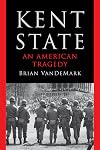
‘Kent State: An American Tragedy’ by Brian VanDeMark was in my opinion a truly unbiased factual collection of the events that occurred prior to, on, and following the May 4, 1970 clash at Kent State University. I have never before known of the events that took place mentioned in this book and I really appreciated that the author captures the view of not only the students but also of guardsmen, faculty, etc. This story was tragic and heartbreaking but should be remembered and talked show more about. I am really grateful for having entered and won the giveaway for this book as it really made a lasting impression on me. I highly recommend this book to everyone! show less
Lists
Awards


You May Also Like


Associated Authors
Statistics
- Works
- 6
- Also by
- 1
- Members
- 357
- Popularity
- #67,135
- Rating
- 3.8
- Reviews
- 9
- ISBNs
- 28