

Nigel Hamilton
Author of JFK: Reckless Youth
About the Author
Nigel Hamilton is a best-selling and award-winning biographer of President John F. Kennedy, General Bernard Montgomery, and President Bill Clinton, among other subjects. His book The Mantle of Command: FDR at War, 1941-1942 was long-listed for the National Book Award.
Image credit: Wikipedia
Series
Works by Nigel Hamilton
American Caesars: Lives of the Presidents from Franklin D. Roosevelt to George W. Bush (2010) 141 copies, 5 reviews
Lincoln At War 1 copy
Tagged
Common Knowledge
- Canonical name
- Hamilton, Nigel
- Birthdate
- 1944-02-16
- Gender
- male
- Education
- University of Cambridge (Trinity College)
Westminster School, London
Munich University - Occupations
- professor
biographer
broadcaster - Organizations
- De Montfort University
University of Massachusetts Boston - Relationships
- Hamilton, Denis (father)
- Nationality
- UK
- Birthplace
- Alnmouth, Northumberland, England, UK
- Places of residence
- London, England, UK
- Associated Place (for map)
- England, UK
Members
Reviews
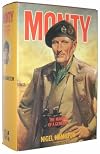
Monty, or Bernard, as Hamilton refers to him was paranoid maybe even schizophrenic but was one of the best senior field commanders that the Allies had during WW2. His mental attributes were a likely result of the union of his muzzy-minded liberal bishop father and his stern fault-finding mother. He was arrogant, mean-spirited, and utterly ruthless in sacking or managing the transfer of the many incompetents that filled the British officer corps at the start of the war. Monty manipulated show more shamelessly to get and keep the best of many bad lots as his staff and commanders, Balancing these useful but unpleasant traits, he truly revered and supported the common soldier and worked diligently to ensure their well-being.
Montgomery developed rigorous training schedules based upon expected battle scenarios and was not promoted to serious field command until Churchill ran out of other options. Churchill was a great political leader but his frequent and not often successful forays into command choices and tactical decisions seriously compromised British military success at the beginning of the war. The BEF, Singapore, and his early CIGS selections were a string of disasters that he and GB barely survived. Hamilton documents Montgomery's rise to command meticulously and extensively with many detailed operational and battle reports. Monty was not a nice person, neither was Patton but they won battles with low casualty rates; capabilities not ofter found in most Allied generals. show less
Montgomery developed rigorous training schedules based upon expected battle scenarios and was not promoted to serious field command until Churchill ran out of other options. Churchill was a great political leader but his frequent and not often successful forays into command choices and tactical decisions seriously compromised British military success at the beginning of the war. The BEF, Singapore, and his early CIGS selections were a string of disasters that he and GB barely survived. Hamilton documents Montgomery's rise to command meticulously and extensively with many detailed operational and battle reports. Monty was not a nice person, neither was Patton but they won battles with low casualty rates; capabilities not ofter found in most Allied generals. show less
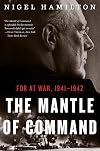
Most leaders during a time of war have the advantage of leaving memoirs - Churchill's six volume History of World War II - to help us understand their reasons for the decisions they made. Franklin Roosevelt did not. Nigel Hamilton's three volume set attempts to do this on his behalf. Hamilton does not spend as much time on the events of the battles as many other works which makes this set less a history than a psychological biography. The Mantle of Command focuses on the political aspect of show more a sitting President during his unprecedented third term having to shift his way of thinking from mostly domestic issues as America is trying to pull itself out of the Great Depression to a focus on more international issues as America becomes "the arsenal of Democracy." It further shows the difficulty in the early part of the war to bring his top military leaders into line without totally alienating them. Until I read this volume, I was not aware how divided the Chiefs of Staff were in their planning or of their reluctance to accept Roosevelt's strategy. The leadership and political acumen Roosevelt shows is truly amazing.
Hamilton's writing style is perfect for most of today's readers. His narrative is highly organized, yet easy to follow. By not dwelling on the minute to minute details of battles but the general development of the war, he makes the history more personal to the average reader. This is the type of work that might cause a mildly curious person to want to learn more about Operation Torch and serve as a springboard to broaden their interest.
For those who want to see hard hitting accounts of battles this work may be disappointing. However, for those who want to see a person in a leadership position develop and broaden his leadership skills, this is an excellent work. This set of three definitely belongs on the shelves of the student of America's and the world's greatest war. show less
Hamilton's writing style is perfect for most of today's readers. His narrative is highly organized, yet easy to follow. By not dwelling on the minute to minute details of battles but the general development of the war, he makes the history more personal to the average reader. This is the type of work that might cause a mildly curious person to want to learn more about Operation Torch and serve as a springboard to broaden their interest.
For those who want to see hard hitting accounts of battles this work may be disappointing. However, for those who want to see a person in a leadership position develop and broaden his leadership skills, this is an excellent work. This set of three definitely belongs on the shelves of the student of America's and the world's greatest war. show less
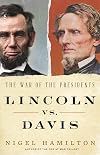
Someday somewhere someone will discover a cure for logorrhea and Nigel Hamilton's ideas will become accessible to the workingman, not just members of the leisure class such as myself. This doorstop closely resembles all those old jokes about a sandwich consisting of two delicious slices of bread with a loathsome meat in the middle. The book was reviewed and blurbed as an examination of strategy and grand strategy as practiced by the opposing presidents in the War of the Rebellion, and it show more begins and ends with short sections which follow that template. In between, though, we get a spurt of schoolboy namecalling and splenetic prose directed at Union General Geo. McClellan and his spineless enabler Abraham Lincoln. One need not think of Little Mac as a battlefield genius to find all this pretty heavy weather; I don't pretend to know what contemporary historical consensus of the man just now is, but I think the historians of my youth who admitted that in many ways he was the right man at the right time for the Union's armies had a point. And, as for Honest Abe, let's just point out that he eventually got results. The book is excruciatingly repetitious; the reader will encounter an enumeration of the number of slaves held in the CSA on virtually every page of a 700-page book. The book's main thesis, that the Emancipation Proclamation finished off any chance of foreign intervention of behalf of the CSA, and thus, the war, is correct, but it's nothing that I couldn't have, and did, read, sixty years ago. The politically correct need not fear the book; he's all in on the ridiculous euphemism "enslaved people" and he assiduously capitalizes the word 'black', so if that's your rap, it will read smoothly. The book at points has good information, and Hamilton's style is okay if you don't mind a shedload of exclamation points and question marks, but really is a colossal waste of precious reading time. show less

Sadly, this is only the first volume of a projected trilogy that never came to be, concluding as the protagonist wins election to the U.S. Congress in 1946, but before he takes his seat. After its appearance, the family and other keepers of the flame closed off any further access, so the author moved on to other projects. It’s interesting to read the book asking why this would be so, for reading it increased my admiration of Kennedy. I found it remarkable that such a charming, intelligent, show more courageous individual came from that family.
It must be conceded that the author repeats more than necessary what a dysfunctional family this was. Does the reader need to be reminded quite this often that “the Ambassador” was a tyrant and an isolationist, or that Rose primly refused to acknowledge what was going on in the lives of the children she abandoned to a series of nannies and boarding schools? This might explain why the author was shut off. Or perhaps it is his devotion to detailing one trait in which Jack did take after his father, his overactive sexual life of compulsion mixed with indifference toward his conquests. Then again, it might be his revelation of the lengths to which JFK’s Addison’s and venereal disease were covered up, not only in his lifetime, but long after his death. Since the protagonist is not even thirty when the book closes, he was clearly just getting up to speed. What more revelations were to come?
Hamilton does a good job untangling myth and reality in the PT 109 incident, and shows the uses to which it was put to launch JFK’s career. One might regret that the author devotes less attention to Kennedy’s political opinions than to other matters, but this leads to one of Hamilton’s contentions, an insight he shares with other observers: Kennedy relished the process of politics, but had a detachment from political stances. This, often seen as simultaneously his greatest strength and weakness as a politician, is traced by Hamilton to an emotional stunting for which his parents were to blame. Yet while it might be true that Kennedy did not care about domestic political issues, Hamilton traces his precocious awakening and grasp of international affairs. In part because of his father’s position, but also in no small measure to his own wit, initiative, and inquisitive nature, Kennedy personally met statesmen of the older generation, many of whom spotted his potential. Even here, though, Hamilton sees the psychology of Kennedy’s family of origin at work. One constant of Kennedy’s entire career was a resolute anti-communism. Hamilton suggests this was rooted in the ways Stalin reminded JFK of his father.
A big book, but despite some repetitiousness, a fascinating read. Recommended. show less
It must be conceded that the author repeats more than necessary what a dysfunctional family this was. Does the reader need to be reminded quite this often that “the Ambassador” was a tyrant and an isolationist, or that Rose primly refused to acknowledge what was going on in the lives of the children she abandoned to a series of nannies and boarding schools? This might explain why the author was shut off. Or perhaps it is his devotion to detailing one trait in which Jack did take after his father, his overactive sexual life of compulsion mixed with indifference toward his conquests. Then again, it might be his revelation of the lengths to which JFK’s Addison’s and venereal disease were covered up, not only in his lifetime, but long after his death. Since the protagonist is not even thirty when the book closes, he was clearly just getting up to speed. What more revelations were to come?
Hamilton does a good job untangling myth and reality in the PT 109 incident, and shows the uses to which it was put to launch JFK’s career. One might regret that the author devotes less attention to Kennedy’s political opinions than to other matters, but this leads to one of Hamilton’s contentions, an insight he shares with other observers: Kennedy relished the process of politics, but had a detachment from political stances. This, often seen as simultaneously his greatest strength and weakness as a politician, is traced by Hamilton to an emotional stunting for which his parents were to blame. Yet while it might be true that Kennedy did not care about domestic political issues, Hamilton traces his precocious awakening and grasp of international affairs. In part because of his father’s position, but also in no small measure to his own wit, initiative, and inquisitive nature, Kennedy personally met statesmen of the older generation, many of whom spotted his potential. Even here, though, Hamilton sees the psychology of Kennedy’s family of origin at work. One constant of Kennedy’s entire career was a resolute anti-communism. Hamilton suggests this was rooted in the ways Stalin reminded JFK of his father.
A big book, but despite some repetitiousness, a fascinating read. Recommended. show less
Awards


You May Also Like


Statistics
- Works
- 28
- Members
- 2,349
- Popularity
- #10,919
- Rating
- 3.8
- Reviews
- 31
- ISBNs
- 135
- Languages
- 5
- Favorited
- 1