
Max Boot
Author of The Savage Wars of Peace: Small Wars and the Rise of American Power
About the Author
Max Boot is a senior fellow at the Council on Foreign Relations, a columnist for the Washington Post, and a global affairs analyst for CNN. He is the author of The Road Not Taken, a finalist for the Pulitzer Prize in biography, and Invisible Armies, both of which were New York Times bestsellers.
Works by Max Boot
Invisible Armies: An Epic History of Guerrilla Warfare from Ancient Times to the Present (2013) 427 copies, 2 reviews
War Made New: Technology, Warfare, and the Course of History: 1500 to Today (2006) 405 copies, 7 reviews
The Road Not Taken: Edward Lansdale and the American Tragedy in Vietnam (2018) 268 copies, 5 reviews
Associated Works
Presidential Leadership: Rating the Best and the Worst in the White House (2004) — Contributor — 158 copies, 3 reviews
MHQ: The Quarterly Journal of Military History — Spring 2003 (2003) — Author "America's Overlooked Peacekeeping Mission" — 9 copies
MHQ: The Quarterly Journal of Military History — Autumn 2006 (2006) — Author "Triumph of Prussian Technology and Tactics" — 5 copies
MHQ: The Quarterly Journal of Military History — Winter 2013 (2012) — Author "Kick the Bully" — 3 copies
Tagged
Common Knowledge
- Birthdate
- 1969-09-12
- Gender
- male
- Education
- University of California, Berkeley (B.A.|History|1991)
Yale University (M.A.|Diplomatic History|1992) - Occupations
- journalist
consultant
policy analyst
historian - Organizations
- Council on Foreign Relations
- Nationality
- USA
- Birthplace
- Moscow, Soviet Union
- Places of residence
- Los Angeles, California, USA
New York, New York, USA - Map Location
- USA
Members
Reviews
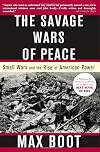
Savage Wars of Peace is a decent, if unsystematic study of American military interventions prior to 1941, wedded to an ideology that has aged like a burn-pit outside Bagram Air Base.
I'll tackle the first bit. America has a long history of deploying force overseas, in gunboat diplomacy and putative expeditions stretching back to the wars against the Barbary Corsairs: "...to the shores of Tripoli", as the Marine corps hymn goes. As Toll's magisterial Six Frigates discusses, these early wars show more were at the pivot of a debate about the power of the Federal government and America's role in the world. The 18th century was marked by constant, if limited use of the Navy and Marines to open Japan, Korea, and China to American trade, and to punish various groups in Malaysia and the Caribbean who had decided that plundering American merchants was better than trading with them.
The Spanish-American War marked a distinct change in American policy, with the Philippines and Puerto Rico now directly ruled colonies, Cuba a protectorate, and a newly more assertive posture worldwide. A combination of Teddy Roosevelt's imperialism, and Woodrow Wilson's moralism, summed up in the statement that 'America should teach Latin Americans to elect good men', resulted in repeated interventions in Haiti and Nicaragua, as well as a protracted counter-insurgency in the Philippines, Pershing's putative expedition against Pancho Villa, which nearly resulted in an actual shooting war with Mexico, and the gunboat operations of the China patrol. Generally, small groups of American Marines outfought their local opponents with superior training and armaments. Boot takes a universally uncritical view of the American role in all these operations, arguing that American intervention was broadly popular because Americans provided hygiene and displaced local corrupt strongmen. I'm sure a historian who bothered to read what the locals involved thought would consider otherwise.
The final chapter is a brief skip through the latter half of the 20th century. Boot's take is that Vietnam was lost because Westmoreland's war of attrition destroyed American morale at home, and that the COIN side of the Combined Action Patrol (see Bing West's The Village) and Phoenix Program (Herrington's Stalking The Vietcong) showed that the war could be won. If America had the will to intervene as decisively in 1975 as it did in 1972, there'd still be a South Vietnam. This is a conclusion that I'm skeptical of. I think America would have had to intervene again in 1978, 81, etc. There's a brief skip through Desert Storm and Clinton's operations of the 90s.
This pure history isn't a bad one, per se, as a military history of forgotten American interventions. My problems are twofold, first Boot agrees completely with Kipling's 'white man's burden' thesis of history, without managing to capture any of the actual zeitgest of period, what I consider to be the highest aim of history. Second, this book includes nothing on the US Army and the Indian Wars, certainly the most protracted and decisive of American Small Wars. The relationship between the genocide of American Indians, the Federal government, and historiography is a complex one, but to write an entire book on Small Wars without discussing Custer or Geronimo is a curious choice-perhaps because it's impossible to fit genocide into Boot's theoretical framework that imperialism is both authentically American and generally good for all concerned.
And that theoretical framework is where this book stinks. The book was written in that halcyon 'End of History' prior to 9/11, and published immediately afterwards, before the true nature of the quagmire of Afghanistan and the fiasco of Iraq had sunk in to public perception. Assessing the total cost of the War of Terror and its children is foolhardy, but the total cost cannot be considered anything less than high. Around $45 billion per year, as the Afghanistan War becomes old enough vote, according to the Pentagon's numbers. Perhaps $5.9 TRILLION, according to the Crawford Report.
If these are Small Wars, I shudder to think of what a big one would look like. And that doesn't even include the human costs to American soldiers, and to especially the Afghans, Iraqis, and Yemeni (among many others) on the receiving end of "American liberty".
Since publishing this book, Boot has gone on to a successful career as a chickenhawk Washington Post columnist and perpetually owned twitter figure. He lacks the truly sublime idiocy of a Thomas Friedman or David Brooks, but he's still out there, saying America should bomb some more people, and getting wrecked on Twitter. I picked this book up for a dollar at a used book sale, I almost decided to toss it away unread when I saw Boot's name on. And I persisted in reading just so I could write a very sarcastic review. show less
I'll tackle the first bit. America has a long history of deploying force overseas, in gunboat diplomacy and putative expeditions stretching back to the wars against the Barbary Corsairs: "...to the shores of Tripoli", as the Marine corps hymn goes. As Toll's magisterial Six Frigates discusses, these early wars show more were at the pivot of a debate about the power of the Federal government and America's role in the world. The 18th century was marked by constant, if limited use of the Navy and Marines to open Japan, Korea, and China to American trade, and to punish various groups in Malaysia and the Caribbean who had decided that plundering American merchants was better than trading with them.
The Spanish-American War marked a distinct change in American policy, with the Philippines and Puerto Rico now directly ruled colonies, Cuba a protectorate, and a newly more assertive posture worldwide. A combination of Teddy Roosevelt's imperialism, and Woodrow Wilson's moralism, summed up in the statement that 'America should teach Latin Americans to elect good men', resulted in repeated interventions in Haiti and Nicaragua, as well as a protracted counter-insurgency in the Philippines, Pershing's putative expedition against Pancho Villa, which nearly resulted in an actual shooting war with Mexico, and the gunboat operations of the China patrol. Generally, small groups of American Marines outfought their local opponents with superior training and armaments. Boot takes a universally uncritical view of the American role in all these operations, arguing that American intervention was broadly popular because Americans provided hygiene and displaced local corrupt strongmen. I'm sure a historian who bothered to read what the locals involved thought would consider otherwise.
The final chapter is a brief skip through the latter half of the 20th century. Boot's take is that Vietnam was lost because Westmoreland's war of attrition destroyed American morale at home, and that the COIN side of the Combined Action Patrol (see Bing West's The Village) and Phoenix Program (Herrington's Stalking The Vietcong) showed that the war could be won. If America had the will to intervene as decisively in 1975 as it did in 1972, there'd still be a South Vietnam. This is a conclusion that I'm skeptical of. I think America would have had to intervene again in 1978, 81, etc. There's a brief skip through Desert Storm and Clinton's operations of the 90s.
This pure history isn't a bad one, per se, as a military history of forgotten American interventions. My problems are twofold, first Boot agrees completely with Kipling's 'white man's burden' thesis of history, without managing to capture any of the actual zeitgest of period, what I consider to be the highest aim of history. Second, this book includes nothing on the US Army and the Indian Wars, certainly the most protracted and decisive of American Small Wars. The relationship between the genocide of American Indians, the Federal government, and historiography is a complex one, but to write an entire book on Small Wars without discussing Custer or Geronimo is a curious choice-perhaps because it's impossible to fit genocide into Boot's theoretical framework that imperialism is both authentically American and generally good for all concerned.
And that theoretical framework is where this book stinks. The book was written in that halcyon 'End of History' prior to 9/11, and published immediately afterwards, before the true nature of the quagmire of Afghanistan and the fiasco of Iraq had sunk in to public perception. Assessing the total cost of the War of Terror and its children is foolhardy, but the total cost cannot be considered anything less than high. Around $45 billion per year, as the Afghanistan War becomes old enough vote, according to the Pentagon's numbers. Perhaps $5.9 TRILLION, according to the Crawford Report.
If these are Small Wars, I shudder to think of what a big one would look like. And that doesn't even include the human costs to American soldiers, and to especially the Afghans, Iraqis, and Yemeni (among many others) on the receiving end of "American liberty".
Since publishing this book, Boot has gone on to a successful career as a chickenhawk Washington Post columnist and perpetually owned twitter figure. He lacks the truly sublime idiocy of a Thomas Friedman or David Brooks, but he's still out there, saying America should bomb some more people, and getting wrecked on Twitter. I picked this book up for a dollar at a used book sale, I almost decided to toss it away unread when I saw Boot's name on. And I persisted in reading just so I could write a very sarcastic review. show less
I remember reading with relish, now some years ago, Boot’s “War Made New,” long before I was aware of the “neocon” label, much less those thinkers who bore it. I remember admiring Boot’s grasp of military history, his ability to discern the important developments (and their crystallizing moment/s), and above all his ability to make such information both clear and important to a general audience. Perhaps that is the long way around to simply saying that I enjoyed the book.
Knowing show more Boot, then, as primarily a military historian, left me a bit ill-prepared for the content of this work. Part memoir, part political commentary, part lament, Boot’s work, I think, will speak both to and for many members of the post-Trump conservative movement in America. However, I’m disappointed to say that I don’t feel that it really spoke to and for ME.
There were parts of the book I really enjoyed, particularly the opening section on Boot’s immigration to America and his introduction to the conservative movement through the likes of William F. Buckley, Jr and Irving Kristol. Here, the book is straightforward and heartfelt, recapturing well for the reader his youthful enthusiasm for those ideas, ideas that still persist as core to his thinking.
However, for me, when Boot then turned his attention to CONTEMPORARY conservatism, the book began to lose its luster. For one thing, I did not appreciate the “‘conservative’ equals ‘Republican’” equation that was the core of this book. In fact, the book would have been much more aptly titled “The Corrosion of the Republican Party.” I feel like I’ve read a good number of opinion pieces and have a good number of friends that fall well within the definition of “conservatism” (perhaps even “far right” in instances) that deeply lament Trump’s election as a sign of the folly and perhaps even madness that is our current political climate. Like Boot, I am appalled at much of the almost “messianic” language I hear coming from key Evangelical leaders. Yes, as an OT scholar, I am well aware that YHWH used the Persian king Cyrus to accomplish His plan to return the children of Israel to their homeland; but those who cite such a “biblical” example tend to forget that Cyrus was ever in Scripture in PAGAN EVIL TYRANT. He was USED not CONVERTED. That’s a big difference.
Chapter 5 is where Boot lays out his case against Trump. This book was published in the throes of ongoing Mueller investigation (which has since concluded), so parts of this section would probably be written much differently now, but the substance of the charges I feel would remain. And I feel that, in the main, some of these charges have merit. Trump HAS used racist language (especially against immigrants) and IS a bully on social media and seemingly CANNOT fact-check statements. Trump is, by all accounts, an amoral cretin.
But—and this is where Boot’s sense of the “big picture” fails him—that is not the real issue here. As convinced as I am that Trump has little or no moral character to speak of, I’m not sure I could say much better about Hillary Clinton (as Boot does). There were about as many scandals related to inappropriate Russian ties in the Clinton campaign as in the Trump campaign, though that seems to have been largely forgotten. The issue is not Trump’s election; the issue is what is passing for “Presidential material” right now. The flaws we see in Trump is a reflection of something in our national character. The solution, then, is not to throw Trump out of office but to revive the morality and integrity of the electoral base so leaders like Trump and Clinton won’t have a chance.
In the concluding section, Boot again lays his finger on the deeper issue…and then, just as quickly, rushes on. Analyzing the rise of Bernie Sanders, he writes: “All of this suggests that the Democratic Party is drifting leftward as the Republican Party is drifting rightward.” Exactly. But why? Boot never ventures a guess, even though he acknowledges that this is “a situation that is increasingly common across the democratic world.”
I, like Boot, feel very much like a “man without a party” in the current political climate. However, when I read Boot’s rundown of his core political convictions: socially liberal (pro-LGBTQ rights/pro-choice), pro-free markets, pro-environment, pro-gun control, anti-identity politics (both minority and majority strains), I’m not sure that I can see myself in, pardon the pun, Boot’s camp. Especially when he appends to his statement on LGBTQ and pro-choice rights: “I am not religious but am respectful of those who are—as long as their beliefs do not impinge on anyone’s individual rights.” I am dying to ask, then, whether Boot would consider it “infringement” for a devoutly Christian baker to refuse to bake a cake for a same-sex wedding.
I am saddened that Boot has felt himself “forced out of” the conservative movement by the shifts happening within the Republican Party. However, I am MORE disappointed to consider that Boot’s definition of “centrist” politics as defined above might win the day. It would mean nothing different for me, a strong social conservative, than the current political climate. show less
Knowing show more Boot, then, as primarily a military historian, left me a bit ill-prepared for the content of this work. Part memoir, part political commentary, part lament, Boot’s work, I think, will speak both to and for many members of the post-Trump conservative movement in America. However, I’m disappointed to say that I don’t feel that it really spoke to and for ME.
There were parts of the book I really enjoyed, particularly the opening section on Boot’s immigration to America and his introduction to the conservative movement through the likes of William F. Buckley, Jr and Irving Kristol. Here, the book is straightforward and heartfelt, recapturing well for the reader his youthful enthusiasm for those ideas, ideas that still persist as core to his thinking.
However, for me, when Boot then turned his attention to CONTEMPORARY conservatism, the book began to lose its luster. For one thing, I did not appreciate the “‘conservative’ equals ‘Republican’” equation that was the core of this book. In fact, the book would have been much more aptly titled “The Corrosion of the Republican Party.” I feel like I’ve read a good number of opinion pieces and have a good number of friends that fall well within the definition of “conservatism” (perhaps even “far right” in instances) that deeply lament Trump’s election as a sign of the folly and perhaps even madness that is our current political climate. Like Boot, I am appalled at much of the almost “messianic” language I hear coming from key Evangelical leaders. Yes, as an OT scholar, I am well aware that YHWH used the Persian king Cyrus to accomplish His plan to return the children of Israel to their homeland; but those who cite such a “biblical” example tend to forget that Cyrus was ever in Scripture in PAGAN EVIL TYRANT. He was USED not CONVERTED. That’s a big difference.
Chapter 5 is where Boot lays out his case against Trump. This book was published in the throes of ongoing Mueller investigation (which has since concluded), so parts of this section would probably be written much differently now, but the substance of the charges I feel would remain. And I feel that, in the main, some of these charges have merit. Trump HAS used racist language (especially against immigrants) and IS a bully on social media and seemingly CANNOT fact-check statements. Trump is, by all accounts, an amoral cretin.
But—and this is where Boot’s sense of the “big picture” fails him—that is not the real issue here. As convinced as I am that Trump has little or no moral character to speak of, I’m not sure I could say much better about Hillary Clinton (as Boot does). There were about as many scandals related to inappropriate Russian ties in the Clinton campaign as in the Trump campaign, though that seems to have been largely forgotten. The issue is not Trump’s election; the issue is what is passing for “Presidential material” right now. The flaws we see in Trump is a reflection of something in our national character. The solution, then, is not to throw Trump out of office but to revive the morality and integrity of the electoral base so leaders like Trump and Clinton won’t have a chance.
In the concluding section, Boot again lays his finger on the deeper issue…and then, just as quickly, rushes on. Analyzing the rise of Bernie Sanders, he writes: “All of this suggests that the Democratic Party is drifting leftward as the Republican Party is drifting rightward.” Exactly. But why? Boot never ventures a guess, even though he acknowledges that this is “a situation that is increasingly common across the democratic world.”
I, like Boot, feel very much like a “man without a party” in the current political climate. However, when I read Boot’s rundown of his core political convictions: socially liberal (pro-LGBTQ rights/pro-choice), pro-free markets, pro-environment, pro-gun control, anti-identity politics (both minority and majority strains), I’m not sure that I can see myself in, pardon the pun, Boot’s camp. Especially when he appends to his statement on LGBTQ and pro-choice rights: “I am not religious but am respectful of those who are—as long as their beliefs do not impinge on anyone’s individual rights.” I am dying to ask, then, whether Boot would consider it “infringement” for a devoutly Christian baker to refuse to bake a cake for a same-sex wedding.
I am saddened that Boot has felt himself “forced out of” the conservative movement by the shifts happening within the Republican Party. However, I am MORE disappointed to consider that Boot’s definition of “centrist” politics as defined above might win the day. It would mean nothing different for me, a strong social conservative, than the current political climate. show less
As a liberal Democrat, I will say that this book was an unexpected pleasure to read. Boot’s analysis of the Republican Party is spot on. I have the impression that he hopes the party will eventually regain its sanity, but I feel certain that the hard right ideology of his former party is so baked in that it will take a miracle to resurrect it.
I enjoyed reading about his youth, college and graduate school years, and his love of history. Boot was not your typical right-winger, although he show more was a true believer...until he wasn’t.
Boot emigrated from the USSR to America as a child. He grew up in Southern California (a State very unlike the Deep South State of Alabama where I was raised). In a sense, California is more of a bubble than Washington, DC. It is a true laboratory of Democracy, whereas Washington is and has been a massive contradiction of competing ideologies for years. This is not to say that there aren’t extremes in California, but it is difficult to to imagine that an immigrant child growing up in Reagan’s California would not have been awestruck by the Gipper. Max Boot did not witness the hate-mongering of George Wallace, Bull Connor, Ross Barnett, and Lester Maddox and apparently was never exposed to modern Southern History as part of his studies. This is less a criticism than a recognition that his revulsion to Soviet communism may have resulted in a natural tendency to conservatism and a youthful rejection of the Democratic Party.
Boot has left the Republican Party and now considers himself to be an independent. That is a nice position that a lot of people find themselves in. I don’t especially love today’s Democratic Party and agree with Will Rogers: “I belong to no organized party. I’m a Democrat.”
Boot’s book should be on everyone’s reading list. While I disagree with some/many of his positions, his analysis of our current situation is dead on. show less
I enjoyed reading about his youth, college and graduate school years, and his love of history. Boot was not your typical right-winger, although he show more was a true believer...until he wasn’t.
Boot emigrated from the USSR to America as a child. He grew up in Southern California (a State very unlike the Deep South State of Alabama where I was raised). In a sense, California is more of a bubble than Washington, DC. It is a true laboratory of Democracy, whereas Washington is and has been a massive contradiction of competing ideologies for years. This is not to say that there aren’t extremes in California, but it is difficult to to imagine that an immigrant child growing up in Reagan’s California would not have been awestruck by the Gipper. Max Boot did not witness the hate-mongering of George Wallace, Bull Connor, Ross Barnett, and Lester Maddox and apparently was never exposed to modern Southern History as part of his studies. This is less a criticism than a recognition that his revulsion to Soviet communism may have resulted in a natural tendency to conservatism and a youthful rejection of the Democratic Party.
Boot has left the Republican Party and now considers himself to be an independent. That is a nice position that a lot of people find themselves in. I don’t especially love today’s Democratic Party and agree with Will Rogers: “I belong to no organized party. I’m a Democrat.”
Boot’s book should be on everyone’s reading list. While I disagree with some/many of his positions, his analysis of our current situation is dead on. show less
The Savage Wars Of Peace: Small Wars And The Rise Of American Power by Max Boot is the detailed history of the wars that are not common knowledge to most Americans. Boot holds a Bachelor’s degree in history, with high honors, from the University of California, Berkeley (1991), and a Master’s degree in history from Yale University (1992). He was born in Russia, grew up in Los Angeles. He was and editor and writer for both The Christian Science Monitor and the Wall Street Journal. He is show more also the Jeane J. Kirkpatrick Senior Fellow in National Security Studies at the Council on Foreign Relations in New York.
A colleague from work gave me this book to read. I looked at the title and saw "Small Wars" and immediately assumed it was about the Marines. I was, however, only partially right. Ask the average American what wars we fought and you'll get the Revolutionary War, Civil War, WWI, WWII, Vietnam, Gulf Wars, and Afghanistan. A few might add the War of 1812, Panama, and Korea. Not many realize how many (undeclared) wars America actually fought in its history. I was familiar with most covered in the book from boot camp on Parris Island. The Marines' history is full these small wars throughout Latin America and Asia.
Several aspects surprised me probably more than they should have in reading this book. Up until the beginning of the 20th century, American Naval commanders had quite a bit of leeway in making American foreign policy. In an era of very slow communications, quick actions by captains set policy. Secondly, the United States and Britain had a rather cozy, if unofficial, naval alliance.
The first part of the book stresses America's naval history and the navy as an arm of American policy and interests. Its rise from six ships commissioned in 1794, (a privileged officer corps, and dregs, foreigners and a high percentage of blacks making the the enlisted ranks) to a premiere navy with an elite amphibious infantry force. An interesting look at the army is also included. Throughout America's history, there seems to be a division of power. The army is successful in big wars and fighting outside of the urban environment. Boot states that even today Marines clear cities and the army prefers to go around them. There is good reason for that too. A very heavy mechanized army finds it hard to maneuver huge M1 tanks down third world streets.
Some of this history may be based on tradition. The Marines spent much of the pre-WWI years and the interwar years fighting insurgencies in Latin America. It entered Vietnam as the insurgency fighting force based on experience decades before. Even then, the only small wars manual was written by the Marines. It stated, "Small Wars represent the normal and frequent operations of the Marine Corps." It is the big wars that gain the attention and the prestige in the military...and the budget too.
In Vietnam, Khe Sanh is a battle the US wanted. A head to head fight and a way to confront the enemy. The US poured supplies and Marines into Khe Sahn to make a stand that lasted over five months. Once the siege was over, Khe Sanh was immediately dismantled. In the meantime, the Viet Cong built up strength. Forgetting everything the US learned about insurgencies, the US was happy to fight a battle on its terms instead of the enemy's. Sadly, the victory really did not accomplish anything.
There are plenty of events covered from the beginning of America's navy through the First Gulf War. The book was published in early 2002 and does not include Afghanistan or the Second War in Iraq although the tone of the US failure to successfully fight insurgencies is clearly set. It is almost as if this book was written in hindsight to the Afghan and Iraq war. I found this book to be very informative and well written. This is an important book as modern warfare is quickly turning into insurgency and counter-insurgency conflicts. The days of large naval battles and large scale tank warfare seem to be over. The new warfare needs to be quick, mobile, and have the ability to operate in urban environments. Boot gives us a history of our past battles and a commentary on the present. show less
A colleague from work gave me this book to read. I looked at the title and saw "Small Wars" and immediately assumed it was about the Marines. I was, however, only partially right. Ask the average American what wars we fought and you'll get the Revolutionary War, Civil War, WWI, WWII, Vietnam, Gulf Wars, and Afghanistan. A few might add the War of 1812, Panama, and Korea. Not many realize how many (undeclared) wars America actually fought in its history. I was familiar with most covered in the book from boot camp on Parris Island. The Marines' history is full these small wars throughout Latin America and Asia.
Several aspects surprised me probably more than they should have in reading this book. Up until the beginning of the 20th century, American Naval commanders had quite a bit of leeway in making American foreign policy. In an era of very slow communications, quick actions by captains set policy. Secondly, the United States and Britain had a rather cozy, if unofficial, naval alliance.
The first part of the book stresses America's naval history and the navy as an arm of American policy and interests. Its rise from six ships commissioned in 1794, (a privileged officer corps, and dregs, foreigners and a high percentage of blacks making the the enlisted ranks) to a premiere navy with an elite amphibious infantry force. An interesting look at the army is also included. Throughout America's history, there seems to be a division of power. The army is successful in big wars and fighting outside of the urban environment. Boot states that even today Marines clear cities and the army prefers to go around them. There is good reason for that too. A very heavy mechanized army finds it hard to maneuver huge M1 tanks down third world streets.
Some of this history may be based on tradition. The Marines spent much of the pre-WWI years and the interwar years fighting insurgencies in Latin America. It entered Vietnam as the insurgency fighting force based on experience decades before. Even then, the only small wars manual was written by the Marines. It stated, "Small Wars represent the normal and frequent operations of the Marine Corps." It is the big wars that gain the attention and the prestige in the military...and the budget too.
In Vietnam, Khe Sanh is a battle the US wanted. A head to head fight and a way to confront the enemy. The US poured supplies and Marines into Khe Sahn to make a stand that lasted over five months. Once the siege was over, Khe Sanh was immediately dismantled. In the meantime, the Viet Cong built up strength. Forgetting everything the US learned about insurgencies, the US was happy to fight a battle on its terms instead of the enemy's. Sadly, the victory really did not accomplish anything.
There are plenty of events covered from the beginning of America's navy through the First Gulf War. The book was published in early 2002 and does not include Afghanistan or the Second War in Iraq although the tone of the US failure to successfully fight insurgencies is clearly set. It is almost as if this book was written in hindsight to the Afghan and Iraq war. I found this book to be very informative and well written. This is an important book as modern warfare is quickly turning into insurgency and counter-insurgency conflicts. The days of large naval battles and large scale tank warfare seem to be over. The new warfare needs to be quick, mobile, and have the ability to operate in urban environments. Boot gives us a history of our past battles and a commentary on the present. show less
Lists
Awards


You May Also Like


Associated Authors
Statistics
- Works
- 10
- Also by
- 4
- Members
- 2,184
- Popularity
- #11,733
- Rating
- 3.9
- Reviews
- 26
- ISBNs
- 41
- Languages
- 1
- Favorited
- 5
