
James R. Arnold
Author of Ardennes 1944: Hitler's last gamble in the West
About the Author
James R. Arnold is the author of more than twenty books, including The First Domino: Eisenhower, the Military, and America's Intervention in Vietnam and Presidents Under Fire: Commanders in Chief in Victory and Defeat. He lives on a farm near Lexington, Virginia.
Series
Works by James R. Arnold
Jeff Davis's Own: Cavalry, Comanches, and the Battle for the Texas Frontier (2000) 93 copies, 2 reviews
The Moro War: How America Battled a Muslim Insurgency in the Philippine Jungle, 1902-1913 (2011) 68 copies, 2 reviews
Jungle of Snakes: A Century of Counterinsurgency Warfare from the Philippines to Iraq (2009) 53 copies, 2 reviews
Gettysburg Confederate: The Army of Northern Virginia 1 July 1863 (Order of Battle Series , No 1) (1998) 31 copies
Gettysburg July 2 1863: Confederate: The Army of Northern Virginia (Order of Battle) (2000) 21 copies
Gettysburg July 3 1863: Confederate: The Army of Northern Virginia (Order of Battle) (2000) 16 copies
Operation Overlord: Utah Beach & the U S Airborne Divisions 6 June 1944 (Order of Battle, 4) (1994) 12 copies
Napoleon's Triumph: La Grande Armee versus the Tsar's Army. The Friedland Campaign, 1807 (2011) 12 copies
Americans at war : eyewitness accounts from the American revolution to the 21st century Vol 2 (2018) 4 copies
Americans at war : eyewitness accounts from the American revolution to the 21st century Vol 1 (2018) 1 copy
Americans at war : eyewitness accounts from the American revolution to the 21st century Vol 3 (2018) 1 copy
Tagged
Common Knowledge
- Birthdate
- 1952
- Gender
- male
- Occupations
- military historian
- Short biography
- \
- Nationality
- USA
- Associated Place (for map)
- USA
Members
Reviews
The Moro War: How America Battled a Muslim Insurgency in the Philippine Jungle, 1902-1913 by James R. Arnold
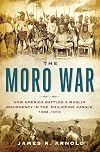
This book about America's first extended ground conflict with a Muslim society can't fail to resonate with current events, and Arnold seems to do a fine job of capturing the ebb and flow of how policy drove whether the American army undertook aggressive moves or not. While certainly not written to point fingers, the governorship of Leonard Wood can't help but to compare unfavorably with that of, say, John J. Pershing, if only because of Wood's grand-standing drive for distinction led him to show more sanction acts that are hard not to describe as genocidal.
As for what would have been the other option, apart from not getting involved in the Philippines in the first place, Arnold suggests that the American invaders failed to recognize that there was more of a social structure to work with than they cared to admit. Of course, this would have meant a tolerance for the superficially Islamic tribal culture of Mindano and the Sulu Archipelago that was unlikely in an army and government in a hurry to impose order and commercial development, and had absolute conviction that they were in the right. show less
As for what would have been the other option, apart from not getting involved in the Philippines in the first place, Arnold suggests that the American invaders failed to recognize that there was more of a social structure to work with than they cared to admit. Of course, this would have meant a tolerance for the superficially Islamic tribal culture of Mindano and the Sulu Archipelago that was unlikely in an army and government in a hurry to impose order and commercial development, and had absolute conviction that they were in the right. show less
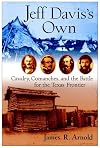
Jeff Davis's Own is a splendid book which details both the early U.S. attempts to secure the western frontier as well as the development of several important general officers of the Civil War. The book is concentrated on the 2nd U.S. Cavalry, which was composed of officers hand-picked by then Secretary of War Jefferson Davis. Davis, noted for his long memory, rewarded officers he thought superior by placing them in this elite regiment designed specifically to combat the swift-moving show more Comanche.
The regiment experimented with everything from saddles to tactics in an effort to defend against the Comanche. Some of their experiments, such as the use of gutta percha ponchos, were successful. Other aspects of the regiment belonged only on the parade ground. For instance, the regiment arrived in Texas riding thoroughbred horses, the colors of which were uniform in each company. However, it seems that no one bothered to think about the effect sparse feed and hard use would have on these animals and many died or simply gave out. Additionally, the command was consistently hampered by poor logistics, a fact which greatly reduced the ability of the unit to carry out its duty.
The effectiveness of the unit was questionable. They employed tactics similar to those used in Vietnam, in that patrols went out from the forts in an effort to find the enemy, who proved remarkably elusive. While there were some fierce battles, the periodic large sweeps usually resulted in nothing more than days of riding with a few sightings if the unit was lucky. Comanche raids were not noticeably reduced and the civilians of Texas were less than pleased with the effectiveness of their new protectors. However, the unit did serve to train several of the leaders of the next great war.
Of the officers who accepted positions in the 2nd Cavalry, 16 became generals in the Civil War. 11 Confederate, including four full generals, and five Union. These generals included notables such as Albert Sidney Johnston (Colonel), Robert E. Lee (Lieutenant Colonel), George H. Thomas (Major), Earl Van Dorn (Captain), Edmund Kirby Smith (Captain), and John B. Hood (Second Lieutenant). Other notables who appear in this book are Texas Ranger Captain Sul Ross and Tonkawa Chief Placedo. In fact, the exploits of Ross detailed in the book are worth the price.
Throughout this well written and very readable book, Arnold has included the writings of the principle participants. One of the more fascinating aspects of the book for me was a description written by R. E. Lee of his hand-to-hand combat with a Comanche indian. For some reason, I had never thought of Lee as participating in battle, but directing it from afar. This book gave me new insight into the man and his character.
This book was a wonderfully easy book to read and kept me up late at night. The tales of Texas heroes and the frontier will appeal to Texana lovers and the inclusion of so many Civil War generals will do the same for students of that struggle. The book is indexed and contains a plethora of footnotes which serve to greatly enhance the educational aspects of the book. This is one volume no Texas or Civil War historian should leave out of their collection. show less
The regiment experimented with everything from saddles to tactics in an effort to defend against the Comanche. Some of their experiments, such as the use of gutta percha ponchos, were successful. Other aspects of the regiment belonged only on the parade ground. For instance, the regiment arrived in Texas riding thoroughbred horses, the colors of which were uniform in each company. However, it seems that no one bothered to think about the effect sparse feed and hard use would have on these animals and many died or simply gave out. Additionally, the command was consistently hampered by poor logistics, a fact which greatly reduced the ability of the unit to carry out its duty.
The effectiveness of the unit was questionable. They employed tactics similar to those used in Vietnam, in that patrols went out from the forts in an effort to find the enemy, who proved remarkably elusive. While there were some fierce battles, the periodic large sweeps usually resulted in nothing more than days of riding with a few sightings if the unit was lucky. Comanche raids were not noticeably reduced and the civilians of Texas were less than pleased with the effectiveness of their new protectors. However, the unit did serve to train several of the leaders of the next great war.
Of the officers who accepted positions in the 2nd Cavalry, 16 became generals in the Civil War. 11 Confederate, including four full generals, and five Union. These generals included notables such as Albert Sidney Johnston (Colonel), Robert E. Lee (Lieutenant Colonel), George H. Thomas (Major), Earl Van Dorn (Captain), Edmund Kirby Smith (Captain), and John B. Hood (Second Lieutenant). Other notables who appear in this book are Texas Ranger Captain Sul Ross and Tonkawa Chief Placedo. In fact, the exploits of Ross detailed in the book are worth the price.
Throughout this well written and very readable book, Arnold has included the writings of the principle participants. One of the more fascinating aspects of the book for me was a description written by R. E. Lee of his hand-to-hand combat with a Comanche indian. For some reason, I had never thought of Lee as participating in battle, but directing it from afar. This book gave me new insight into the man and his character.
This book was a wonderfully easy book to read and kept me up late at night. The tales of Texas heroes and the frontier will appeal to Texana lovers and the inclusion of so many Civil War generals will do the same for students of that struggle. The book is indexed and contains a plethora of footnotes which serve to greatly enhance the educational aspects of the book. This is one volume no Texas or Civil War historian should leave out of their collection. show less
Jungle of Snakes: A Century of Counterinsurgency Warfare from the Philippines to Iraq by James R. Arnold
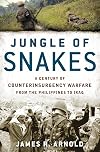
The best book on the topic of insurgency and counterinsurgency I have read. Excellent selections to explicate the main themes, showing how some methods of counterinsurgency succeeded as well as dissecting the problems in the ones that failed.
Begins with the U.S. dealing with the insurrection in the Philippines at the turn of the 20th century and continues into modern era with special focus on Algeria from 1954-62.
If you are looking for a readable yet scholarly commentary on the topic, I show more strongly recommend this work. show less
Begins with the U.S. dealing with the insurrection in the Philippines at the turn of the 20th century and continues into modern era with special focus on Algeria from 1954-62.
If you are looking for a readable yet scholarly commentary on the topic, I show more strongly recommend this work. show less
Excellent book on the 2nd Cavalry and its service in Texas against the Comanche. The documentation is very good and the author makes the story very readable. The author brings the story like a novel and keeps the readers interest. Recommend this to fill in the gaps of pre-Civil War history.
Awards

You May Also Like


Associated Authors
Statistics
- Works
- 75
- Members
- 1,736
- Popularity
- #14,815
- Rating
- 3.6
- Reviews
- 11
- ISBNs
- 133
- Languages
- 3
- Favorited
- 1