
Norman Polmar
Author of The Death of the USS Thresher
About the Author
Norman Polmar has been a consultant to senior officials of the U.S. Navy and Department of Defense, and was a member of the Secretary of the Navy's Research Advisory Committee (NRAC). For four years -- as an employee of the Northrop Corporation -- he worked on the Navy's program to develop show more submarine escape and rescue systems. He is the author of more than thirty books on naval, aviation, and intelligence subjects. He lives in Alexandria, Virginia show less
Series
Works by Norman Polmar
Cold War Submarines: The Design and Construction of U.S. and Soviet Submarines, 1945-2001 (2003) 78 copies
Aircraft Carriers: A History of Carrier Aviation and Its Influence on World Events, Volume 1: 1909-1945 (1969) 65 copies
Aircraft Carriers: A History of Carrier Aviation and Its Influence on World Events: Vol. II, 1946-2006 (2008) 39 copies
The Naval Institute Guide to Ships and Aircraft of the U.S. Fleet, 19th Edition (Naval Institute Guide to the Ships and Aircraft of the US Fleet) (2013) 24 copies
Spyplanes: The Illustrated Guide to Manned Reconnaissance and Surveillance Aircraft from World War I to Today (2016) 19 copies, 1 review
The Naval Institute Guide to the Ships and Aircraft of the U.S. Fleet, 17th Edition (2001) 17 copies
Navy's Most Wanted™: The Top 10 Book of Admirable Admirals, Sleek Submarines, and Other Naval Oddities (Most Wanted™ Series) (2009) 8 copies, 1 review
Strike from the Sea: The Development and Deployment of Strategic Cruise Missiles since 1934 (2020) 6 copies
Submarine Aircraft Carriers: From World War I to the Age of Drones (2025) — Author — 5 copies, 1 review
Opening the Great Depths: The Bathyscaph Trieste and Pioneers of Undersea Exploration (2021) 4 copies
Oorlogsschepen 3 copies
Unmanned Combat Air Systems 1 copy
'The Soviet Navy' 1 copy
Associated Works
Code-Name Downfall: The Secret Plan to Invade Japan-And Why Truman Dropped the Bomb (1995) — Author — 141 copies, 1 review
MHQ: The Quarterly Journal of Military History — Spring 1995 (1995) — Co-Author "The Voice of the Crane" — 23 copies
MHQ: The Quarterly Journal of Military History — Summer 1992 (1992) — Co-Author "Arms and Men: The LST" — 20 copies
MHQ: The Quarterly Journal of Military History — Summer 1997 (1997) — Author "Arms and Men: Torpedoes That Think" — 14 copies
MHQ: The Quarterly Journal of Military History — Autumn 1997 (1997) — Co-Author "Gassing Japan" — 13 copies
Naval History — August 2006 (2006) — Author "Atomic Fish," "The First Nuclear Surface Ship," and "Historic Aircraft" — 1 copy
Tagged
Common Knowledge
- Canonical name
- Polmar, Norman
- Birthdate
- 1938-05-14
- Gender
- male
- Education
- American University (BA, 1965)
- Occupations
- historian
journalist - Organizations
- American Aviation Historical Society
American Military Institute
National Press Club
United States Naval Institute (assistant editor ∙ Naval Institute Proceedings ∙ 1963 - 1967)
Washington Daily News (copyboy and reporter ∙ 1958 - 1960)
Navy Times (associate editor ∙ 1961 - 1963) (show all 9)
Northrop Grumman (technical support advisor ∙ 1967 - 1970)
Lulejian & Associates (assistant to the president ∙ [1970])
Navy Research Advisory Committee (1982 - 1986) - Nationality
- USA
- Associated Place (for map)
- USA
Members
Reviews

Hyman Rickover had more impact on the Navy than anyone else in its history. He was enormously effective in manipulating the bureaucracy and political power. Indeed, after being passed over twice for rear admiral normally requiring mandatory retirement, he called in some political markers and he was awarded the promotion. He used his position to try to influence American education, worried that a Soviet leadership in a technological world would disadvantage this country. At one time, he show more controlled more public funds than perhaps anyone else in government, but he was also adamant that contractors be accountable for the way the funds were spent.
Rickover's love of engineering began during his first assignment following graduation from Annapolis. He was assigned to the destroyer La Vallette and spent his time reading in his bunk or crawling around the steam propulsion plant which took up most of the space in destroyers which were built for speed. The Navy was divided into the "black gang," or engineers, and the "white glove" types, who wanted to make a name for themselves leading ships into battle. Rickover's hero was Robert Milligan, engineer of the battleship Oregon, who managed to get his boilers to such efficiency that the Oregon was able to race to Cuba during the Spanish-American war. (In fact, Milligan wrote a well-researched analysis of the explosion on the Maine.) Rickover prided himself in being able to detect faults in the plant by just hearing particular noises and could tell if they were overheating by testing the temperature of the oil with his fingertips. Engineers were Rickover's heroes.
He learned early that he was not command material. Assigned in the early thirties to the Finch, a small minesweeper with a crew of about fifty, he is remembered as being a martinet and was relieved within a few months. He asked to be transferred to engineering duty, traditionally a dead-end for Navy officers. Earlier, as engineering officer on the battleship New Mexico, he had fanatically gone to great lengths to save water in his attempt to win an efficiency award. He plugged the shower heads so that only a trickle of water would be delivered and was known to drag men out of the shower if he felt they were taking too much time.
His fanatical attention to detail and efficiency was an asset during the war. He was appointed to head the electrical section of BuShips (Bureau of Ships), a division of the Navy that was responsible for the design and construction of all Navy ships during the war, an enormous task. His section was soon recognized as one of the most efficient — and controversial. Unlike most of the rest of BuShip sections, Rickover employed as few Navy men as possible noting that the Navy placed rank ahead of competence and that its practice of rotating men in and out of positions led to inefficiencies. It was a prejudice that continued when he was head of the nuclear program.
By the fifties, Rickover’s independent frame of mind was beginning to wear on the Navy brass, who looked forward to passing over his promotion to admiral, making retirement mandatory. Rickover played them like puppets, using the media and friends in Congress to force them to retain him. He became seemingly so indispensable that Congress, by the sixties, was falling all over itself to make sure he was regularly promoted and retained beyond the maximum retirement age of sixty-two. Rickover had learned something very important: congressmen preferred to give money to individuals rather than to institutions that remained abstractions. He prepared rigorously for his testimony before Congress, using epigrams and quotations—in one speech he quoted over forty different people — and one-liners that could be used in headlines, e.g., “Give the Admirals Coloring Books.” He appeared before the committees as an individual, not as a Navy official, and his candor and honesty were appealing. But he was also careful to support his Navy, the nuclear submarine Navy, not the Navy as a whole.
The Enterprise was the first nuclear aircraft carrier. Its advantages were obvious: a cruising range of 200,000 miles as opposed to only seven days steaming at full power in a diesel carrier before refueling was required (destroyers on maneuvers require fueling every other day at sea), and this meant lots more space for weapons systems and stores because fuel bunkers were no longer needed. Rickover lobbied for other nuclear surface ships, as well. The Long Beach was the first nuclear guided-missile cruiser. Typically, officers complained that too much attention was paid to nuclear components at the expense of more mundane things like weapons systems, and when the Long Beach put to sea, the power plant worked perfectly, but the rest of the ship had serious deficiencies.
Rickover’s interview process for nuclear power Navy candidates became notorious. He insisted on interviewing each candidate, and the interviews could become so strenuous that many candidates remembered them verbatim. Each interview had a common thread: the candidate had to prove that he (no women) would willingly sacrifice everything including family to become a nuc. (Rickover’s refusal to allow nuc students at the Academy to have Christmas leave caused a minor scandal.) One problem he posed was to have the candidate imagine he was on a sinking boat with five other men, and only one of them could be saved. “Are you resourceful enough to talk the other five into letting you be the one saved?” The candidate was expected to reply in the affirmative. Rickover would then call five staff members into the room and tell the candidate, “Start talking.” Another favorite ploy was to tell the candidate to, “Piss me off, if you can.” The candidate who swept everything off Rickover’s desk onto the floor passed. One critic later wrote that often the interviews had less to do with finding qualified candidates than they did with letting everyone know who was boss.
Rickover’s professed philosophy of management and leadership, i.e., that there be freedom to “argue and dissent in what concerns ideas and knowledge . . . the foundation of a true system of education,” were challenged in the late seventies by Lieutenant Ralph Chatham in a prize-winning essay published in the Proceedings of the United States Naval Institute. Chatham argued that each nuclear submarine had two captains: its appointed one and Rickover, operating from his office in Washington. Chatham cited instances where Rickover had called a submarine while on station to change the captain’s watch bill. Rickover had created an atmosphere that had officers so worried about making mistakes that initiative was destroyed and trust was eliminated. Despite the public criticism, Rickover was again reappointed in 1979 as “Head of the Nuclear Propulsion Program” for two more years. By this time, more than thirty-five percent of the Navy was nuclear- powered.
He knew what was right about everything. He complained about the “sophomoric drivel” being written about leadership in the Proceedings in 1981. Leadership, he wrote, required four components: “a.) Learn your job. (This involves study and hard work.) b.) Work hard at your job. c.) Train your people. d.) Inspect frequently to see that the job is being done properly."
Rickover constantly complained about the other admirals, arguing that there were too many of them, thereby leading to inefficiency. As the shipbuilding industry was bought up by large conglomerates, he became more and more distrustful, and it was widely known that many of the Navy representatives were nothing more than spies for Rickover's Nuclear Branch. Some shipbuilders, tiring of the constant interference and changes, refused to bid on Navy contracts. In one case, a contractor refused to continue work on an aircraft carrier, and was forced to continue only under court order. Ostensibly Rickover believed smaller was better. "If you really want to get a job done," he once said, "you do not need a large group of people. If you do, the first thing you know your time gets taken up arranging for baseball games, picnics, and Easter parades for your employees; worrying about their morale rather than greeting them to do the job for which they are paid. People who are doing work do not need these trivia for satisfaction."
Unfortunately for him, Rickover, a man of words, found himself in the seventies increasingly in a world dominated by sound bites and images. He disliked the press for their shallowness, but he reserved hatred for television. "No one sitting through these nightly TV shows is likely to make the mistake of thinking that he is participating in a flowering of American culture. He is taking part in the surrender of the will to the conception of society as a captive mass audience. . . . First attracted and then corrupted by the deliberate employment of superficial and meretricious modes of entertainment, this mass audience becomes acquiescent to dishonest and fantastic commercial claims."
It's depressing that as Rickover became an icon, he became more impossible and arrogant, unwilling to admit that his views might not be the only correct views. He was right about a great deal, but, by the end of his life, the manner in which he tried to enforce his correctness hindered their implementation. show less
Rickover's love of engineering began during his first assignment following graduation from Annapolis. He was assigned to the destroyer La Vallette and spent his time reading in his bunk or crawling around the steam propulsion plant which took up most of the space in destroyers which were built for speed. The Navy was divided into the "black gang," or engineers, and the "white glove" types, who wanted to make a name for themselves leading ships into battle. Rickover's hero was Robert Milligan, engineer of the battleship Oregon, who managed to get his boilers to such efficiency that the Oregon was able to race to Cuba during the Spanish-American war. (In fact, Milligan wrote a well-researched analysis of the explosion on the Maine.) Rickover prided himself in being able to detect faults in the plant by just hearing particular noises and could tell if they were overheating by testing the temperature of the oil with his fingertips. Engineers were Rickover's heroes.
He learned early that he was not command material. Assigned in the early thirties to the Finch, a small minesweeper with a crew of about fifty, he is remembered as being a martinet and was relieved within a few months. He asked to be transferred to engineering duty, traditionally a dead-end for Navy officers. Earlier, as engineering officer on the battleship New Mexico, he had fanatically gone to great lengths to save water in his attempt to win an efficiency award. He plugged the shower heads so that only a trickle of water would be delivered and was known to drag men out of the shower if he felt they were taking too much time.
His fanatical attention to detail and efficiency was an asset during the war. He was appointed to head the electrical section of BuShips (Bureau of Ships), a division of the Navy that was responsible for the design and construction of all Navy ships during the war, an enormous task. His section was soon recognized as one of the most efficient — and controversial. Unlike most of the rest of BuShip sections, Rickover employed as few Navy men as possible noting that the Navy placed rank ahead of competence and that its practice of rotating men in and out of positions led to inefficiencies. It was a prejudice that continued when he was head of the nuclear program.
By the fifties, Rickover’s independent frame of mind was beginning to wear on the Navy brass, who looked forward to passing over his promotion to admiral, making retirement mandatory. Rickover played them like puppets, using the media and friends in Congress to force them to retain him. He became seemingly so indispensable that Congress, by the sixties, was falling all over itself to make sure he was regularly promoted and retained beyond the maximum retirement age of sixty-two. Rickover had learned something very important: congressmen preferred to give money to individuals rather than to institutions that remained abstractions. He prepared rigorously for his testimony before Congress, using epigrams and quotations—in one speech he quoted over forty different people — and one-liners that could be used in headlines, e.g., “Give the Admirals Coloring Books.” He appeared before the committees as an individual, not as a Navy official, and his candor and honesty were appealing. But he was also careful to support his Navy, the nuclear submarine Navy, not the Navy as a whole.
The Enterprise was the first nuclear aircraft carrier. Its advantages were obvious: a cruising range of 200,000 miles as opposed to only seven days steaming at full power in a diesel carrier before refueling was required (destroyers on maneuvers require fueling every other day at sea), and this meant lots more space for weapons systems and stores because fuel bunkers were no longer needed. Rickover lobbied for other nuclear surface ships, as well. The Long Beach was the first nuclear guided-missile cruiser. Typically, officers complained that too much attention was paid to nuclear components at the expense of more mundane things like weapons systems, and when the Long Beach put to sea, the power plant worked perfectly, but the rest of the ship had serious deficiencies.
Rickover’s interview process for nuclear power Navy candidates became notorious. He insisted on interviewing each candidate, and the interviews could become so strenuous that many candidates remembered them verbatim. Each interview had a common thread: the candidate had to prove that he (no women) would willingly sacrifice everything including family to become a nuc. (Rickover’s refusal to allow nuc students at the Academy to have Christmas leave caused a minor scandal.) One problem he posed was to have the candidate imagine he was on a sinking boat with five other men, and only one of them could be saved. “Are you resourceful enough to talk the other five into letting you be the one saved?” The candidate was expected to reply in the affirmative. Rickover would then call five staff members into the room and tell the candidate, “Start talking.” Another favorite ploy was to tell the candidate to, “Piss me off, if you can.” The candidate who swept everything off Rickover’s desk onto the floor passed. One critic later wrote that often the interviews had less to do with finding qualified candidates than they did with letting everyone know who was boss.
Rickover’s professed philosophy of management and leadership, i.e., that there be freedom to “argue and dissent in what concerns ideas and knowledge . . . the foundation of a true system of education,” were challenged in the late seventies by Lieutenant Ralph Chatham in a prize-winning essay published in the Proceedings of the United States Naval Institute. Chatham argued that each nuclear submarine had two captains: its appointed one and Rickover, operating from his office in Washington. Chatham cited instances where Rickover had called a submarine while on station to change the captain’s watch bill. Rickover had created an atmosphere that had officers so worried about making mistakes that initiative was destroyed and trust was eliminated. Despite the public criticism, Rickover was again reappointed in 1979 as “Head of the Nuclear Propulsion Program” for two more years. By this time, more than thirty-five percent of the Navy was nuclear- powered.
He knew what was right about everything. He complained about the “sophomoric drivel” being written about leadership in the Proceedings in 1981. Leadership, he wrote, required four components: “a.) Learn your job. (This involves study and hard work.) b.) Work hard at your job. c.) Train your people. d.) Inspect frequently to see that the job is being done properly."
Rickover constantly complained about the other admirals, arguing that there were too many of them, thereby leading to inefficiency. As the shipbuilding industry was bought up by large conglomerates, he became more and more distrustful, and it was widely known that many of the Navy representatives were nothing more than spies for Rickover's Nuclear Branch. Some shipbuilders, tiring of the constant interference and changes, refused to bid on Navy contracts. In one case, a contractor refused to continue work on an aircraft carrier, and was forced to continue only under court order. Ostensibly Rickover believed smaller was better. "If you really want to get a job done," he once said, "you do not need a large group of people. If you do, the first thing you know your time gets taken up arranging for baseball games, picnics, and Easter parades for your employees; worrying about their morale rather than greeting them to do the job for which they are paid. People who are doing work do not need these trivia for satisfaction."
Unfortunately for him, Rickover, a man of words, found himself in the seventies increasingly in a world dominated by sound bites and images. He disliked the press for their shallowness, but he reserved hatred for television. "No one sitting through these nightly TV shows is likely to make the mistake of thinking that he is participating in a flowering of American culture. He is taking part in the surrender of the will to the conception of society as a captive mass audience. . . . First attracted and then corrupted by the deliberate employment of superficial and meretricious modes of entertainment, this mass audience becomes acquiescent to dishonest and fantastic commercial claims."
It's depressing that as Rickover became an icon, he became more impossible and arrogant, unwilling to admit that his views might not be the only correct views. He was right about a great deal, but, by the end of his life, the manner in which he tried to enforce his correctness hindered their implementation. show less

I had heard of the Hughes Glomar Explorer before. The kind of science books I read as a kid often featured engineering feats such as the HGE, I can still remember the blurb about the ship being built for seafloor mining of manganese nodules. For reason or another it never worked out, but these books never said why.
It turns out it was all a lie. The Hughes Glomar Explorer was really one of the most ambitious gambits of the Cold War. The HGE was constructed for the singular purpose of show more clandestinely recovering a sunken Soviet submarine from the bottom of the Pacific.
The ballistic missle submarine K-129 sank on March 8, 1968 1,500 miles northwest of Hawaii. The American underwater sonophone network discovered that something had happened, and the position was triangulated. The USS Halibut was sent to locate the wreckage, and was able to accurately locate the wreck and take photographs.
Using this information, the CIA decided to try to recover the submarine, and the HGE was commissioned under the codename Project Azorian. The CIA contacted Howard Hughes and he was more than happy to provide a cover story for the mission and laundering of the money to disguise the true ownership of the ship. His many companies and eccentric reputation made both of these things possible. The cover story was so good that some universities began to offer programs in Ocean Engineering to prepare students for the seafloor mining boom.
The Soviets were fooled as well. They never discovered the true purpose of the ship until after it had already been used. The HGE was constructed in public, but the critical recovery vehicle codenamed Clementine was built inside a submersible barge to prevent anyone from realizing the ship was not actually equipped for mining.
This crazy idea almost worked. The submarine was successfully captured, but broke in half while being lifted to the surface. Only the bow was actually recovered. The Soviets actually watched this lift taking place, but did not know what had been done until the story was leaked in the American press in 1975. This leak scrapped plans to send the HGE back to recover the rest of the submarine, because the Soviets threatened war if an American ship returned to the site.
Project Azorian would ultimately cost $500 million, the same as a lunar mission in 1970. This project pushed the state of the art so far that the ship would not find another use for 40 years, when it was leased to Global Santa Fe for its stated purpose: seafloor mining. The American Society of Mechanical Engineering designated the ship a Historic Mechanical Engineering Landmark in 2006.
This is the second Historic Mechanical Engineering Landmark I have come across in a month. When I was touring the Johnson Space Center, my fellow associate asked me, "Why can't we make something like this?" We have vastly better technology as engineers. These guys worked on paper! However, I realize now that one of the things we are lacking is money. Project Azorian would cost $2.7 billion today. Not many people are willing to throw down that kind of money on something that will only be used once.
This book was a great read. I read the whole thing in two days while on vacation. The book is well-researched, with the explicit purpose of correcting the earlier mistakes of other books on the HGE and K-129. There are lots of fun asides about Cold War espionage and politics that situate the book in its historical context. Anyone interested in the Cold War, submarines, or just science and history should find this book engaging. show less
It turns out it was all a lie. The Hughes Glomar Explorer was really one of the most ambitious gambits of the Cold War. The HGE was constructed for the singular purpose of show more clandestinely recovering a sunken Soviet submarine from the bottom of the Pacific.
The ballistic missle submarine K-129 sank on March 8, 1968 1,500 miles northwest of Hawaii. The American underwater sonophone network discovered that something had happened, and the position was triangulated. The USS Halibut was sent to locate the wreckage, and was able to accurately locate the wreck and take photographs.
Using this information, the CIA decided to try to recover the submarine, and the HGE was commissioned under the codename Project Azorian. The CIA contacted Howard Hughes and he was more than happy to provide a cover story for the mission and laundering of the money to disguise the true ownership of the ship. His many companies and eccentric reputation made both of these things possible. The cover story was so good that some universities began to offer programs in Ocean Engineering to prepare students for the seafloor mining boom.
The Soviets were fooled as well. They never discovered the true purpose of the ship until after it had already been used. The HGE was constructed in public, but the critical recovery vehicle codenamed Clementine was built inside a submersible barge to prevent anyone from realizing the ship was not actually equipped for mining.
This crazy idea almost worked. The submarine was successfully captured, but broke in half while being lifted to the surface. Only the bow was actually recovered. The Soviets actually watched this lift taking place, but did not know what had been done until the story was leaked in the American press in 1975. This leak scrapped plans to send the HGE back to recover the rest of the submarine, because the Soviets threatened war if an American ship returned to the site.
Project Azorian would ultimately cost $500 million, the same as a lunar mission in 1970. This project pushed the state of the art so far that the ship would not find another use for 40 years, when it was leased to Global Santa Fe for its stated purpose: seafloor mining. The American Society of Mechanical Engineering designated the ship a Historic Mechanical Engineering Landmark in 2006.
This is the second Historic Mechanical Engineering Landmark I have come across in a month. When I was touring the Johnson Space Center, my fellow associate asked me, "Why can't we make something like this?" We have vastly better technology as engineers. These guys worked on paper! However, I realize now that one of the things we are lacking is money. Project Azorian would cost $2.7 billion today. Not many people are willing to throw down that kind of money on something that will only be used once.
This book was a great read. I read the whole thing in two days while on vacation. The book is well-researched, with the explicit purpose of correcting the earlier mistakes of other books on the HGE and K-129. There are lots of fun asides about Cold War espionage and politics that situate the book in its historical context. Anyone interested in the Cold War, submarines, or just science and history should find this book engaging. show less
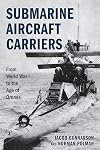
Submarine Aircraft Carriers, by Jacob Gunnarson and Norman Polmar, is an interesting and comprehensive history of the efforts to combine submersibles and aircraft, with mixed results.
As a former submariner I had heard a very rough outline of some of the non-US attempts as well as some of ours, but it was mostly senior personnel (usually COBs or other chiefs) telling us about what they had seen (or supposedly had seen). This book definitely filled in all of the holes in their stories, and show more made me even more curious.
I'm not going to give a book report, you can read the book to learn how successful the Germans and Japanese were before and during WWII, as well as the many efforts from Allied countries. What I will say is that you will get both the stories and the technical information (diagrams and specs) that make a lot of the work come to life.
The appendices, notes, and bibliography offer plenty of avenues if you want to look into any topics or equipment mentioned in the book. While I would have loved more pictures, there were enough to supplement the text and let you see what these things looked like.
It does look like the use of drones launched from submarines is a usable idea with a contract already awarded for one that can be launched while submerged. I was on a fast attack, so this would have been of particular interest to me at the time.
Recommended for military history readers as well as those who find the act of creatively working on the synthesis of seemingly incompatible machines fascinating.
Reviewed from a copy made available by the publisher via NetGalley. show less
As a former submariner I had heard a very rough outline of some of the non-US attempts as well as some of ours, but it was mostly senior personnel (usually COBs or other chiefs) telling us about what they had seen (or supposedly had seen). This book definitely filled in all of the holes in their stories, and show more made me even more curious.
I'm not going to give a book report, you can read the book to learn how successful the Germans and Japanese were before and during WWII, as well as the many efforts from Allied countries. What I will say is that you will get both the stories and the technical information (diagrams and specs) that make a lot of the work come to life.
The appendices, notes, and bibliography offer plenty of avenues if you want to look into any topics or equipment mentioned in the book. While I would have loved more pictures, there were enough to supplement the text and let you see what these things looked like.
It does look like the use of drones launched from submarines is a usable idea with a contract already awarded for one that can be launched while submerged. I was on a fast attack, so this would have been of particular interest to me at the time.
Recommended for military history readers as well as those who find the act of creatively working on the synthesis of seemingly incompatible machines fascinating.
Reviewed from a copy made available by the publisher via NetGalley. show less
The Death of the USS Thresher: The Story Behind History's Deadliest Submarine Disaster by Norman Polmar
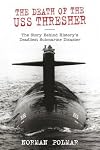
The Thresher came alive in 1963. It was to be a short life. Manufactured from the new “stronger steel—the so-called HY-80 steel which could withstand the pressure of 80,000 pounds per square inch before it would start pulling apart. With a submarine hull built for deeper operation the Navy would get a bonus with the Thresher. Because of her hull strength, in shallow waters she would be able to withstand greater shocks from enemy weapons.” The decision to emphasise depth was show more controversial. Rickover, in particular, thought the Navy was wasting its money, but the idea was, as a hunter-killer attack sub, that Thresher could hide deep, way below the thermal layers.
Polmar, an excellent naval writer who wrote a terrific biography of Rickover, [b:Rickover: Controversy and Genius: A Biography|2890887|Rickover|Norman Polmar|http://photo.goodreads.com/books/1310215052s/2890887.jpg|2917142] takes us through the short life of the Thresher. One wonders if any one of several items might have hastened the boat’s demise: the accidental collision with a tugboat in Florida which required rewelding of the outer hull; the explosion tests intended to see what the effects of underwater explosions might be ( “There was no question that the Thresher suffered damage,” he said. “But it was all relatively minor.... The damage we sustained did not impair the ship’s ability to operate, and much of it, such as the damage to vital sonar tubes, we could repair ourselves with our store of spare parts.”)--perhaps one of the internal pipes was damaged; the refit itself, which required cutting holes in the sub to move equipment in and out, and removing and reconnected hundreds of internal pipes; too hasty to test at “test” depth (the maximum depth a sub is never supposed to exceed, in Thresher’s case about 1300 feet. “Below test depth the fittings and pipes on the submarine begin to give way.” Was it any one of these events or a subtle combination thereof?
There was the usual, “golly gee everyone was great, the ship-builders were the best, the crew was the greatest, the boat was perfect, yadayadayada.” (“Captain William Heronemus, testified next. As the repair and ship-building superintendent of the Portsmouth yard, he was intimately familiar with the work that had been done on the Thresher during the past nine months. “I have known no other ship in a higher state of readiness for sea than the Thresher.”) Yet several contrarian tidbits did leak out: the laissez faire attitude of many of the workmen during the refit; the astonishing number of hydraulic vlaves that had been installed backwards (20%, but they got them all corrected before the final dive, yeah right.) A retired CPO who lost two brothers on the Thresher, both CPO’s, Joseph Shafer noted, “ that his brothers were “not sure” that people who worked on the Thresher during her overhaul had done their job. He said there was a jocular attitude of “what’s going to be wrong this time” on the part of his late brothers. David Main, a welder at the Electric Boat yard and a brother-in-law of the Shafers, substantiated the testimony of Joseph Shafer regarding his brothers.” Others testified, “that there had been trouble with a main sea water valve in the Thresher during the nine months the submarine was undergoing overhaul. This was a large valve that admitted water for several of the submarine’s cooling systems. Lieutenant McCoole also said that the air systems of the Thresher had been a continuing problem; that there had been errors in the indicators that showed whether or not the submarine was on an even keel...”
Lieutenant Commander William J. Cowhill, executive officer of the submarine from March 1962, to January 1963 rated the Thresher’s construction and overhaul work at the Portsmouth yard as excellent—“with one reservation, the silver brazing process on piping.” Silver brazing is the process of joining pipes on submarines with silver solder instead of the more common lead solder. The silver solder melts at a higher temperature than lead and gives a much stronger joint. There were hundreds of silver brazed joints in the maze of pipes in the Thresher, many of them on pipes that penetrated the craft’s pressure hull.
Polmar does present alternative scenarios based on the skimpy evidence but all related to the last transmission which described having a “minor problem.” Polmar doubts a pipe fracture letting in a high pressure stream of water as being described as “minor” by any submariner. His suggestion: reactor failure, due perhaps to a stream of water, that might have prevented operating the diving planes (no battery backup?) which in turn led to loss of forward motion causing it to sink, the attempt to blow the ballast tanks which might have failed due to freezing (it was later discovered that blowing the tanks at such a depth was rarely successful.)
I was astonished at the revelations regarding sabotage against U.S. subs. At that time a hose used to test the submarine’s evaporators was cut. The Navy said later that a crew member was responsible, but refused to give any details. Intentional damage was also reported aboard the nuclear-propelled submarine Snook. On December 21, 1959, while the Snook was in drydock at Pascagoula, Mississippi, it was discovered that someone had cut through the elbow of some piping in the submarine. Less than a month after the Snook incident possible sabotage was discovered aboard the nuclear-propelled missile cruiser Long Beach. The then-unfinished Long Beach was at Quincy, Massachusetts, when it was discovered that a 3½-inch armored anti-mine cable had been cut in three places. Although termed “relatively insignificant,” this incident was also carefully investigated by the FBI as well as by Naval Intelligence. Sabotage is usually connected with a deliberate attempt by an enemy agent. However, because of the circumstances it is generally accepted that these incidents were a form of adult vandalism or mischievousness on the part of a civilian worker or possibly naval personnel. It appears the purpose of the sabotage was to delay the ships involved rather than to cause their loss. Numerous other incidents were detailed, but the idea that workmen might do such actions boggles the mind. Rickover testified before Congress (admittedly in a self-serving manner since he was warding off any blame that might have been attached to the nuclear power plant): “ the lack of adequate welding techniques of the critical piping that penetrated the submarine’s pressure hull; the poor management and quality control in submarine construction; and the manner in which the Navy’s leadership made decisions about submarine requirements [including too frequent rotations]. Admiral Rickover was correct in his accusations—there were problems in all of those areas.”
I was a little disappointed in Polmar’s account of the inquiry. It was just a chronological, very brief, recounting of the testimony. The actual transcript ran to more than 1500 pages. I wanted a more detailed and critical review of that inquiry. The formal conclusion was that a silver brazed weld must have given way at test depth resulting in an unstoppable flow of water that rendered the boat uncontrollable and it sank below crush depth. show less
Polmar, an excellent naval writer who wrote a terrific biography of Rickover, [b:Rickover: Controversy and Genius: A Biography|2890887|Rickover|Norman Polmar|http://photo.goodreads.com/books/1310215052s/2890887.jpg|2917142] takes us through the short life of the Thresher. One wonders if any one of several items might have hastened the boat’s demise: the accidental collision with a tugboat in Florida which required rewelding of the outer hull; the explosion tests intended to see what the effects of underwater explosions might be ( “There was no question that the Thresher suffered damage,” he said. “But it was all relatively minor.... The damage we sustained did not impair the ship’s ability to operate, and much of it, such as the damage to vital sonar tubes, we could repair ourselves with our store of spare parts.”)--perhaps one of the internal pipes was damaged; the refit itself, which required cutting holes in the sub to move equipment in and out, and removing and reconnected hundreds of internal pipes; too hasty to test at “test” depth (the maximum depth a sub is never supposed to exceed, in Thresher’s case about 1300 feet. “Below test depth the fittings and pipes on the submarine begin to give way.” Was it any one of these events or a subtle combination thereof?
There was the usual, “golly gee everyone was great, the ship-builders were the best, the crew was the greatest, the boat was perfect, yadayadayada.” (“Captain William Heronemus, testified next. As the repair and ship-building superintendent of the Portsmouth yard, he was intimately familiar with the work that had been done on the Thresher during the past nine months. “I have known no other ship in a higher state of readiness for sea than the Thresher.”) Yet several contrarian tidbits did leak out: the laissez faire attitude of many of the workmen during the refit; the astonishing number of hydraulic vlaves that had been installed backwards (20%, but they got them all corrected before the final dive, yeah right.) A retired CPO who lost two brothers on the Thresher, both CPO’s, Joseph Shafer noted, “ that his brothers were “not sure” that people who worked on the Thresher during her overhaul had done their job. He said there was a jocular attitude of “what’s going to be wrong this time” on the part of his late brothers. David Main, a welder at the Electric Boat yard and a brother-in-law of the Shafers, substantiated the testimony of Joseph Shafer regarding his brothers.” Others testified, “that there had been trouble with a main sea water valve in the Thresher during the nine months the submarine was undergoing overhaul. This was a large valve that admitted water for several of the submarine’s cooling systems. Lieutenant McCoole also said that the air systems of the Thresher had been a continuing problem; that there had been errors in the indicators that showed whether or not the submarine was on an even keel...”
Lieutenant Commander William J. Cowhill, executive officer of the submarine from March 1962, to January 1963 rated the Thresher’s construction and overhaul work at the Portsmouth yard as excellent—“with one reservation, the silver brazing process on piping.” Silver brazing is the process of joining pipes on submarines with silver solder instead of the more common lead solder. The silver solder melts at a higher temperature than lead and gives a much stronger joint. There were hundreds of silver brazed joints in the maze of pipes in the Thresher, many of them on pipes that penetrated the craft’s pressure hull.
Polmar does present alternative scenarios based on the skimpy evidence but all related to the last transmission which described having a “minor problem.” Polmar doubts a pipe fracture letting in a high pressure stream of water as being described as “minor” by any submariner. His suggestion: reactor failure, due perhaps to a stream of water, that might have prevented operating the diving planes (no battery backup?) which in turn led to loss of forward motion causing it to sink, the attempt to blow the ballast tanks which might have failed due to freezing (it was later discovered that blowing the tanks at such a depth was rarely successful.)
I was astonished at the revelations regarding sabotage against U.S. subs. At that time a hose used to test the submarine’s evaporators was cut. The Navy said later that a crew member was responsible, but refused to give any details. Intentional damage was also reported aboard the nuclear-propelled submarine Snook. On December 21, 1959, while the Snook was in drydock at Pascagoula, Mississippi, it was discovered that someone had cut through the elbow of some piping in the submarine. Less than a month after the Snook incident possible sabotage was discovered aboard the nuclear-propelled missile cruiser Long Beach. The then-unfinished Long Beach was at Quincy, Massachusetts, when it was discovered that a 3½-inch armored anti-mine cable had been cut in three places. Although termed “relatively insignificant,” this incident was also carefully investigated by the FBI as well as by Naval Intelligence. Sabotage is usually connected with a deliberate attempt by an enemy agent. However, because of the circumstances it is generally accepted that these incidents were a form of adult vandalism or mischievousness on the part of a civilian worker or possibly naval personnel. It appears the purpose of the sabotage was to delay the ships involved rather than to cause their loss. Numerous other incidents were detailed, but the idea that workmen might do such actions boggles the mind. Rickover testified before Congress (admittedly in a self-serving manner since he was warding off any blame that might have been attached to the nuclear power plant): “ the lack of adequate welding techniques of the critical piping that penetrated the submarine’s pressure hull; the poor management and quality control in submarine construction; and the manner in which the Navy’s leadership made decisions about submarine requirements [including too frequent rotations]. Admiral Rickover was correct in his accusations—there were problems in all of those areas.”
I was a little disappointed in Polmar’s account of the inquiry. It was just a chronological, very brief, recounting of the testimony. The actual transcript ran to more than 1500 pages. I wanted a more detailed and critical review of that inquiry. The formal conclusion was that a silver brazed weld must have given way at test depth resulting in an unstoppable flow of water that rendered the boat uncontrollable and it sank below crush depth. show less
Lists
Awards


You May Also Like


Associated Authors
Statistics
- Works
- 58
- Also by
- 13
- Members
- 1,689
- Popularity
- #15,216
- Rating
- 4.0
- Reviews
- 18
- ISBNs
- 109
- Languages
- 1
- Favorited
- 2