
Alexander Münninghoff (1944–2020)
Author of The Son and Heir
About the Author
Works by Alexander Münninghoff
L'héritier du nom (PAYOT) 1 copy
Tagged
Common Knowledge
- Canonical name
- Münninghoff, Alexander
- Birthdate
- 1944-04-13
- Date of death
- 2020-04-28
- Gender
- male
- Education
- Leiden University (Slavic literature)
- Occupations
- chess
journalist
newspaper editor - Organizations
- Haagse Courant
Dutch Secret Service (MID)
50plus party - Awards and honors
- Prijs voor de Dagbladjournalistiek
- Cause of death
- cancer
- Nationality
- Netherlands
- Birthplace
- Posen, Germany (now Poznan, Poland)
- Places of residence
- Posen, Prussia, Germany
Voorburg, Netherlands
The Hague, South Holland, the Netherlands
Moscow, Russia, USSR
St Petersburg, Russia - Place of death
- Leiden University Hospital, Leiden, the Netherlands
- Map Location
- Polen
Members
Reviews
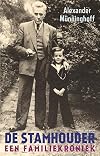
Ik ben geboren op 13 april 1944 in Posen, een oude Poolse stad die eeuwenlang Pozna werd genoemd. Maar toen ik er geboren werd, te midden van bombardementen die het einde der tijden leken aan te kondigen, was dit Posen een Duitse stad vanwaaruit Hitler-Duitsland zijn Heerestruppen naar de Sovjet-Unie had gestuurd en die nu de verminkten, de gewonden, de doden en een onafzienbare stoet vluchtelingen terugkreeg. Mijn familie had deel aan dat drama. Over hen gaat dit boek. En over de gevolgen show more van de oorlog. Over een sluwe grootvader, die op spectaculaire wijze een van de rijkste mensen van Letland was geworden, maar twee dagen voordat de oorlog uitbrak met zijn Russische vrouw en vier kinderen, met achterlating van al zijn bezittingen, moest vluchten naar Nederland. Over een naïeve vader, die aan het Oostfront, in het uniform van de Waffen ss, uit idealisme tegen de Sovjets vocht en vervolgens in Nederland ten onder ging. Over een moeder, die na de scheiding naar Duitsland vluchtte en mijn moeder niet mocht zijn. En over mij, de kleinzoon, de zoon, de stamhouder. Alexander Münninghoff (Pozna, 1944) is journalist en Ruslandkenner. Hij is winnaar van de Prijs voor de Dagbladjournalistiek en auteur van Tropenjaren in Moskou (1991), over zijn tijd als correspondent in de Sovjet-Unie. De stamhouder is autobiografisch en berust op feiten en familieverhalen. `Een overweldigend boek, geschreven met beheerste passie en subtiele humor. Ik heb het ademloos uitgelezen. Anna Enquist show less
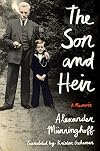
The author, an award-winning Dutch journalist with professional expertise on Russia, writes his family history that is well-grounded in the European experience. This family of riches and complexities has ties to Latvia, Germany, the Netherlands, and Belgium. Like most memoirs, this work can be seen as the author making sense of his own complex life here. Münginghoff died in April of 2020, shortly before this translation was published.
Overall, this is a tragic story, not a hopeful one. There show more are few noble characters detailed inside. It is simply a story of European life, caught up in the difficulties of the Second World War. The author’s grandfather was a rich businessman who was kicked out of Latvia by the Bolsheviks. His son, the author’s father, was a German SS officer on the Eastern front. He had many failings, which are detailed in this work. The family story bobs and weaves from there. His son, a writer and lawyer by trade, has obviously tried to make sense of his family history.
There are very few healthy relationships described in this book. Indeed, there is much strangeness. In some ways, it reads like a Franz Kafka novel with all of its grotesqueness. Each of the main characters appear profoundly lonely and manipulate their family members to achieve their individually desired ends. The author seems to be seeking some sort of peace and normalcy within this maelstrom.
This book is recommended to those seeking to make sense of their own variegated family experiences. Also, the European backdrop highlights national rivalries and historical prejudices of this complex continent. As one would expect from an award-winning journalist, it is well-composed and appears thoroughly researched. I am left desiring more hopefulness and noble character, however. These people seem to lack virtue – at least, when virtue is present, the author views it as a mere mask of darker sentiments. Thus, the reader is left with much cynicism and without much positive to take away. show less
Overall, this is a tragic story, not a hopeful one. There show more are few noble characters detailed inside. It is simply a story of European life, caught up in the difficulties of the Second World War. The author’s grandfather was a rich businessman who was kicked out of Latvia by the Bolsheviks. His son, the author’s father, was a German SS officer on the Eastern front. He had many failings, which are detailed in this work. The family story bobs and weaves from there. His son, a writer and lawyer by trade, has obviously tried to make sense of his family history.
There are very few healthy relationships described in this book. Indeed, there is much strangeness. In some ways, it reads like a Franz Kafka novel with all of its grotesqueness. Each of the main characters appear profoundly lonely and manipulate their family members to achieve their individually desired ends. The author seems to be seeking some sort of peace and normalcy within this maelstrom.
This book is recommended to those seeking to make sense of their own variegated family experiences. Also, the European backdrop highlights national rivalries and historical prejudices of this complex continent. As one would expect from an award-winning journalist, it is well-composed and appears thoroughly researched. I am left desiring more hopefulness and noble character, however. These people seem to lack virtue – at least, when virtue is present, the author views it as a mere mask of darker sentiments. Thus, the reader is left with much cynicism and without much positive to take away. show less
This is a memoir about how one European family navigated WWII and its aftermath. With a jaundiced eye, Alexander Münninghoff dispassionately chronicles the strange and often tragic behavior of his extended family. In the midst of war and devastation, they lived a privileged existence marred by greed, compromise, rebellion and duplicity.
His grandfather was a wealthy businessman who fled Latvia for the Netherlands following the Russian takeover. He was passionate about his religion, his Dutch show more heritage, and the future of his business dynasty. He was a clever businessman always on the lookout for the next big opportunity. With little regard for virtue, he used his many powerful connections to achieve personal and business goals.
His eldest son, Frans, was Alexander’s father. He clearly was a disappointment to his own father for embracing the Nazis and eschewing his Dutch heritage. Frans served in the SS and was wounded during the war. He disowned his wife and son and had an open affair with is best friend’s wife, producing a daughter from the liaison. Moreover, Frans was a total failure and a joke in business circles. His most redeeming quality seemed to have been an intense sense of loyalty to his wartime compatriot who eventually committed suicide and his drug-addicted illegitimate daughter.
Following his removal from the family home, Alexander lived with his mother for a short time until he was abducted on the orders of his grandfather who saw him as the heir to the family’s business. Alexander was returned to the family home in Voorburg, where he remained separated from his mother for the rest of his life. Münninghoff shows the tragic outcome of his separation from his mother with her much diminished state following the war.
The telling of the dark events in this memoir can be unsettling. Yet his descriptions of things he actually observed or experienced can be quite effective, especially his discovery of his father’s SS helmet and his own abduction. Despite an uneven narrative, Münninghoff generally seems to view the unusual behavior of his family with detachment and empathy. show less
His grandfather was a wealthy businessman who fled Latvia for the Netherlands following the Russian takeover. He was passionate about his religion, his Dutch show more heritage, and the future of his business dynasty. He was a clever businessman always on the lookout for the next big opportunity. With little regard for virtue, he used his many powerful connections to achieve personal and business goals.
His eldest son, Frans, was Alexander’s father. He clearly was a disappointment to his own father for embracing the Nazis and eschewing his Dutch heritage. Frans served in the SS and was wounded during the war. He disowned his wife and son and had an open affair with is best friend’s wife, producing a daughter from the liaison. Moreover, Frans was a total failure and a joke in business circles. His most redeeming quality seemed to have been an intense sense of loyalty to his wartime compatriot who eventually committed suicide and his drug-addicted illegitimate daughter.
Following his removal from the family home, Alexander lived with his mother for a short time until he was abducted on the orders of his grandfather who saw him as the heir to the family’s business. Alexander was returned to the family home in Voorburg, where he remained separated from his mother for the rest of his life. Münninghoff shows the tragic outcome of his separation from his mother with her much diminished state following the war.
The telling of the dark events in this memoir can be unsettling. Yet his descriptions of things he actually observed or experienced can be quite effective, especially his discovery of his father’s SS helmet and his own abduction. Despite an uneven narrative, Münninghoff generally seems to view the unusual behavior of his family with detachment and empathy. show less
In this Dutch lawyer/journalist's memoir/biography, Mr. Münninghoff writes his family history in the years before and after World War II in Latvia, Germany, Belgium, and the Netherlands. It's a tragic story, full of family secrets and petty (and not so petty) family divisions. It's a story with no heroes and plenty of misguided bad actors. When Münninghoff was four, he found an SS's officer's helmet in the attic and thus learned his father had been a German SS officer on the Eastern Front, show more who, while loving Russian people, hated the Bolsheviks and enlisted for that reason. The father (Franz) is a trainwreck, with many failings; his grandfather, Joan, was a self-righteous, rich, shrewd businessman who was supremely capable of negotiating his way through the complex political scene in Europe both before and after the war, who calls himself a Catholic but belittles, betrays, and beleaguers everyone around him on his ruthless quest for wealth. On a larger scale, the book chronicles the decline of the old Prussian, Russian, and Baltic aristocracies, political corruption, what we would call today Post Traumatic Stress Disorder, political corruption, and the economic and political realities of Europe from the 1930s forward. More personally, it also chronicles the story of a dysfunctional family, alcoholism, drug addiction, family feuds, exploitation, adultery, kidnapping, poverty, hippie communes, loneliness, suicide, and, somewhat, redemption. I learned that the English translation of this novel was published posthumously on August 1, 2020, three months after Münninghoff died. It's a difficult, interesting story, but rambling at times and full of long supposed "stories" (in quotes) told by family members, which seems impossible, as Münninghoff claimed to be recounting oral stories told to him in his youth or early adulthood. One suspects this future journalist was not sitting there with his reporter's notebook or a tape recorder at the time when these tales were told, so the quotes were somewhat off-putting, long, rambling, and generally not very credible, but they did convey the points he was trying to make. That is the biggest criticism I had; the other was that, largely because Münninghoff wrote this as a reporter, his descriptions of things that happened in his family seemed far too cold and detached. I was most fascinated learning about Franz's motivations for joining the SS. show less
Awards


You May Also Like


Associated Authors
Statistics
- Works
- 9
- Members
- 488
- Popularity
- #50,612
- Rating
- 3.8
- Reviews
- 14
- ISBNs
- 24
- Languages
- 3
- Favorited
- 1