
Janet Groth
Author of The Receptionist: An Education at The New Yorker
About the Author
Works by Janet Groth
Associated Works
The Wound and the Bow: Seven Studies in Literature (1941) — Introduction, some editions — 155 copies, 1 review
Tagged
Common Knowledge
- Gender
- female
Members
Reviews
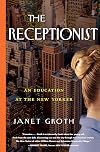
I was intrigued by this book because it supposedly told the story of a young woman from the Midwest who came to the big city, worked for the New Yorker, got a Ph.D. and taught literature at university. An autobiography of sorts, supplemented with delicious tales of behind the scenes at the best magazine in the country. NOT. That is not at all what this book is about- sadly. The magazine anecdotes are mostly about who was shagging whom in spite of the fact that both parties were married. show more Mostly, however, it is about a young woman with so little self-worth and self-knowledge that she chooses the wrong men for the wrong reasons- again and again and yet again. I did slog through to the end; I think she does find true love, but by that time I honestly did not care. She annoyed me and the book annoyed me. show less
Although I don't read The New Yorker, I'm aware of its reputation, the careers launched, the personalities housed there, (and I've certainly read pieces that debuted there, anthologized later); so when offered a review copy of Groth's memoir, I pounced.
This was a book so good I've lost the ability to arrange letters into words. So I apologize now for the jumpy, incoherent gush of a review that follows.
From the first pages, I was sold on Groth.
I want Groth to be my bestie -- who wouldn't?! Candidly she shares how she got her job, the professors who inspired her to take up writing, the writers she worked with, the love affairs, her aspirations as a writer and a scholar, and the way The New Yorker changed throughout her time there. This memoir is a series of vignettes from 1957 to 1978. Technically there as just a receptionist, Groth's life was shaped and impacted by the personalities she assisted, supported, befriended, romanced, entertained, liked, disliked, loved, and lost: Muriel Spark, John Berryman, Joseph Mitchell, Renata Adler, and hosts of others.
Groth came-of-age at an era that, frankly, frightens me -- the late '50s and '60s -- in big, bad New York City, working for a literary magazine that was renown then for the personalities and expense lines. When women were having to find, invent, reinvent, discover, and hide themselves, Groth navigated that time with not unsurprising bumps and fits, and she shares her experiences without shame. (Happily!) I found her to be breathtakingly honest in her account of her time at The New Yorker. Her tone sounds a little bemused, a little pained, a little wry -- not aloof, but aware -- and I was often holding my breath in amazement. Her writing is so honest and unapologetic, and yet, she shares enough warmth and vulnerability that I felt deeply sympathetic toward her.
Even if you're not familiar with the writers from The New Yorker, if you enjoy memoirs and coming-of-age stories, get this one. Like a surprisingly dangerous aunt, Groth's stories are titillating, gasp-inducing, fascinating, depressing, and inspiring. show less
This was a book so good I've lost the ability to arrange letters into words. So I apologize now for the jumpy, incoherent gush of a review that follows.
From the first pages, I was sold on Groth.
Mr. [E.B.] White took a moment to absorb thisshow more
information. When he could bring himself to speak again, he asked, "Can you type?"
"Not at a professional level," I said.
He coughed and looked at the resume that Arthur Zegart had given him and that had led to my being there in his office. "What about this short story prize you won?...Was that story typed?"
I told him that yes, of course it had been, but that I deliberately maintained a slow, self-devised system that involved looking at the keyboard.
"I was afraid, you see, that if I became a skilled typist, I would wind up in an office typing pool." (p2)
I want Groth to be my bestie -- who wouldn't?! Candidly she shares how she got her job, the professors who inspired her to take up writing, the writers she worked with, the love affairs, her aspirations as a writer and a scholar, and the way The New Yorker changed throughout her time there. This memoir is a series of vignettes from 1957 to 1978. Technically there as just a receptionist, Groth's life was shaped and impacted by the personalities she assisted, supported, befriended, romanced, entertained, liked, disliked, loved, and lost: Muriel Spark, John Berryman, Joseph Mitchell, Renata Adler, and hosts of others.
Groth came-of-age at an era that, frankly, frightens me -- the late '50s and '60s -- in big, bad New York City, working for a literary magazine that was renown then for the personalities and expense lines. When women were having to find, invent, reinvent, discover, and hide themselves, Groth navigated that time with not unsurprising bumps and fits, and she shares her experiences without shame. (Happily!) I found her to be breathtakingly honest in her account of her time at The New Yorker. Her tone sounds a little bemused, a little pained, a little wry -- not aloof, but aware -- and I was often holding my breath in amazement. Her writing is so honest and unapologetic, and yet, she shares enough warmth and vulnerability that I felt deeply sympathetic toward her.
Even if you're not familiar with the writers from The New Yorker, if you enjoy memoirs and coming-of-age stories, get this one. Like a surprisingly dangerous aunt, Groth's stories are titillating, gasp-inducing, fascinating, depressing, and inspiring. show less
It's hard to succinctly summarize this book. In part, it is a memoir of the author's 20+ years working as a receptionist at the New Yorker, full of observations of the likes of Calvin Trillin, Charles Addams, E.B. White, William Shawn, Pauline Kael, and others -- the kind of tale a literary Joan Holloway might pen. It's also a remembrance of a career of two parallel tracts: Groth tends the desk while teaching at Vassar and nurtures the professional and personal lives of her authors even as show more she earns her own PhD in English literature. Beyond that, it is a reflection of a time and place where literature and opera shared the throne with old-school drinking and sexual tension. But to oversimplify this as a Mad Men and women's lib journey is an oversimplification: underlying all of this is a personal story of a woman finding herself at a time when she was exploring options beyond marriage and motherhood. Recommended. (129) show less
Janet Groth has some great stories about writers she worked with and she tells them very well in this book. However, when she get into her ugly sexual history and psychoanalysis, I lost interest. She does have some interesting things to say about the New Yorker as a workplace and I felt good knowing that she got an education and embarked on a 20 year teaching career and found a good guy, but I got there after skimming through her sorted sexual history. Strong beginning and ending, but weak show more in the middle. show less
Lists
You May Also Like


Associated Authors
Statistics
- Works
- 2
- Also by
- 2
- Members
- 337
- Popularity
- #70,619
- Rating
- 2.7
- Reviews
- 24
- ISBNs
- 9