
Judith R. Hendricks
Author of Bread Alone
About the Author
Image credit: Photo by Axel Schonfeld
Series
Works by Judith R. Hendricks
Lykkens cafe 1 copy
Associated Works
Tagged
Common Knowledge
- Birthdate
- 20th Century
- Gender
- female
- Education
- Georgia State University
- Organizations
- Authors Guild
American Association of University Women - Nationality
- USA
- Places of residence
- California, USA (birth)
Santa Fe, New Mexico, USA - Associated Place (for map)
- USA
Members
Reviews
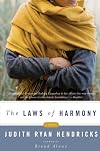
Judith Ryan Hendricks’ fourth novel, The Laws of Harmony, opens in New Mexico and is narrated by Sunny Cooper - a 32 year old woman whose life is suddenly wrenched out from under her. When detectives arrive at Sunny’s door to inform her that her fiance Michael has been killed in a fiery car crash, Sunny’s grief is quickly replaced by confusion and then anger when she discovers Michael was keeping secrets from her.
There was an aura about him - daring, adventurous, carefree, almost show more joyful - but with a darkness just under the surface. Like you could scratch him with a fingernail and find something you might not really want to see. - from The Laws of Harmony, page 68 -
The tragedy opens a floodgate of memories from Sunny’s childhood growing up in a commune - the drugs, sex and rock n’ roll; her close relationship with a brother who has since disappeared from her life; the sister she lost to a freak accident; and the strained connection she still has with her mother. On an impulse, Sunny sells nearly all her possessions and quits her job, heading west to a new future in the tiny town of Harmony on San Miguel Island.
I’ve entered a different world, and my heart suddenly lifts. It seems I’ve finally slipped the gravitational pull of New Mexico, and the past is dropping away behind me like a spent booster rocket. - from The Laws of Harmony, page 146 -
The Laws of Harmony is a novel about personal growth, the impact of the past on our future, and the delicate connections we make with other people. Sunny’s journey is not just a physical one from New Mexico to Harmony. Her memories do not simply stop the moment she leaves the desert and arrives on the fog enshrouded island of San Miguel. Sunny’s journey from despair to hope and her gradual understanding that she cannot walk through life alone is what drives the narrative…and it is a compelling and satisfying story.
Hendricks is a capable and talented writer whose prose is filled with warmth, humor and a deep understanding of what it means to be human. Half way through the novel, I found myself immersed in Sunny’s world, comforted by the rich descriptions of food, and not wanting the novel to end. Although there is a bit of a mystery in the book, it is not the mystery which kept me turning the pages. Hendricks’ ability to create character is her strength, and it is the characters who engaged me.
The best novels are those which leave the reader with a more acute awareness of what motivates a character - and a better understanding of how a character’s life might parallel our own. The Laws of Harmony does both those things. The writing is accessible and honest. Judith Ryan Hendricks has written a novel which women especially will love. If you are looking for a comfortable and gratifying summer read, look no further.
Highly recommended. show less
There was an aura about him - daring, adventurous, carefree, almost show more joyful - but with a darkness just under the surface. Like you could scratch him with a fingernail and find something you might not really want to see. - from The Laws of Harmony, page 68 -
The tragedy opens a floodgate of memories from Sunny’s childhood growing up in a commune - the drugs, sex and rock n’ roll; her close relationship with a brother who has since disappeared from her life; the sister she lost to a freak accident; and the strained connection she still has with her mother. On an impulse, Sunny sells nearly all her possessions and quits her job, heading west to a new future in the tiny town of Harmony on San Miguel Island.
I’ve entered a different world, and my heart suddenly lifts. It seems I’ve finally slipped the gravitational pull of New Mexico, and the past is dropping away behind me like a spent booster rocket. - from The Laws of Harmony, page 146 -
The Laws of Harmony is a novel about personal growth, the impact of the past on our future, and the delicate connections we make with other people. Sunny’s journey is not just a physical one from New Mexico to Harmony. Her memories do not simply stop the moment she leaves the desert and arrives on the fog enshrouded island of San Miguel. Sunny’s journey from despair to hope and her gradual understanding that she cannot walk through life alone is what drives the narrative…and it is a compelling and satisfying story.
Hendricks is a capable and talented writer whose prose is filled with warmth, humor and a deep understanding of what it means to be human. Half way through the novel, I found myself immersed in Sunny’s world, comforted by the rich descriptions of food, and not wanting the novel to end. Although there is a bit of a mystery in the book, it is not the mystery which kept me turning the pages. Hendricks’ ability to create character is her strength, and it is the characters who engaged me.
The best novels are those which leave the reader with a more acute awareness of what motivates a character - and a better understanding of how a character’s life might parallel our own. The Laws of Harmony does both those things. The writing is accessible and honest. Judith Ryan Hendricks has written a novel which women especially will love. If you are looking for a comfortable and gratifying summer read, look no further.
Highly recommended. show less
I’ve read two of Judith Ryan Hendricks’ other books and loved both of them. This book is no different. Her books are like settling down with an old friend to catch up on everything going on in her dysfunctional life. I couldn’t put down The Laws of Harmony. Her vivid descriptions of New Mexico and the Pacific Northeast, made you feel like you were living part of the story. I look forward to reading many more Hendricks books!
 This review was written for LibraryThing Early Reviewers.
Sunny Cooper grew up on a hippie commune in New Mexico with her parents she calls by name, Rob and Gwen, her older brother Hart, her younger sister Mari, and all types of other people interested in living a communal lifestyle or at least partaking in its sexual and drug-related freedoms. Although she left the Armonia compound after graduating from high school, is now in her early 30s, and is a successful radio voice over talent, Sunny never seems to be able to escape the impact of her show more childhood, especially her relationship with her mother and the loss of her sister Mari. She finds herself unable to commit to marriage with Michael and hopes that living together will keep him satisfied. When he is pronounced dead after a tragic traffic accident, Sunny no longer has even a loose grip on her life. Impulsively, she sells everything she owns and travels as far away from Albequerque as she can get. She ends up on San Miguel Island in a small town called Harmony. She finds that even on an island surrounded by strangers that she can never fully escape her past. She has to learn to forgive and to acknowledge all that made her the person she is.
It was great to read a novel about a woman my age. Just because a woman is in her 30s doesn't mean that she's got her life together. Sometimes it feels far from it. Sunny and I had dramatically different childhoods, but I related to her as if she were my my sister. The scene at her maternal grandparent's house as a child hit me both as a young girl and as a mother. Gwen grew up in a well-to-do family in California. When she left home, she turned her back on her family's lifestyle. What drove her away appealed to Sunny and her grandmother saw to it that she got what she wanted. As they were leaving to return to the commune, Sunny begged her grandmother to let her stay where there was access to new clothes and indoor plumbing. I could feel Sunny's anxiety over leaving a more normal life to return to New Mexico. I could equally feel Gwen's pain as Sunny opening showed her partiality to the life she could no longer condone. It is interesting how each generation feels they know better how to raise children only to discover that their children do not agree.
This is the first novel I've read by Judith Ryan Hendricks. If her fourth novel is any indication of Hendrick's talent, she is an author to watch. The Laws of Harmony is full of interesting twists, so it's difficult to discuss the novel more in depth without giving anything away. It addresses relationships without being cliched or heavy handed. The fact that not all of Sunny's issues and relationships ended neatly or with a dramatic reconciliation made this novel so much more realistic than most. What she discovers instead is that the strength and fortitude needed to move on with your life is there if you are only honest with yourself. It would make for an active and interesting book club discussion.
I cannot say enough about The Laws of Harmony. Although there were a few sections that slowed the story down for me, I did not regret a single moment I spent with Sunny. There is so much depth to her character and in her story. I enjoyed being surprised when several twists - including the ending - turned out much differently than I had suspected. If you ever dreamed of running away from your cares, you can relate to this novel. You might even find yourself thinking through similar issues in your own life. It's always a rewarding reading experience to be invited to learn more about yourself through the telling of a story. show less
It was great to read a novel about a woman my age. Just because a woman is in her 30s doesn't mean that she's got her life together. Sometimes it feels far from it. Sunny and I had dramatically different childhoods, but I related to her as if she were my my sister. The scene at her maternal grandparent's house as a child hit me both as a young girl and as a mother. Gwen grew up in a well-to-do family in California. When she left home, she turned her back on her family's lifestyle. What drove her away appealed to Sunny and her grandmother saw to it that she got what she wanted. As they were leaving to return to the commune, Sunny begged her grandmother to let her stay where there was access to new clothes and indoor plumbing. I could feel Sunny's anxiety over leaving a more normal life to return to New Mexico. I could equally feel Gwen's pain as Sunny opening showed her partiality to the life she could no longer condone. It is interesting how each generation feels they know better how to raise children only to discover that their children do not agree.
This is the first novel I've read by Judith Ryan Hendricks. If her fourth novel is any indication of Hendrick's talent, she is an author to watch. The Laws of Harmony is full of interesting twists, so it's difficult to discuss the novel more in depth without giving anything away. It addresses relationships without being cliched or heavy handed. The fact that not all of Sunny's issues and relationships ended neatly or with a dramatic reconciliation made this novel so much more realistic than most. What she discovers instead is that the strength and fortitude needed to move on with your life is there if you are only honest with yourself. It would make for an active and interesting book club discussion.
I cannot say enough about The Laws of Harmony. Although there were a few sections that slowed the story down for me, I did not regret a single moment I spent with Sunny. There is so much depth to her character and in her story. I enjoyed being surprised when several twists - including the ending - turned out much differently than I had suspected. If you ever dreamed of running away from your cares, you can relate to this novel. You might even find yourself thinking through similar issues in your own life. It's always a rewarding reading experience to be invited to learn more about yourself through the telling of a story. show less

I must admit that I have a bread machine. It probably doesn't redeem me in any way to say that it is generally dusty with disuse either. I know that it is merely a shortcut for homemade bread and that it cannot come close to the delectable stuff made by hand in artisanal bakeries and the kitchens of home bakers but we all work with our own skills. And much as I'd love to actually learn to bake my own bread from scratch, I just don't see it in the cards for me, at least not on a regular show more basis, and certainly not as a passion. That doesn't mean that I can't appreciate the skill that goes into making it or a gorgeous description of warm, yeasty bread with steam curling up from the torn bit of crust. Now I'm just making myself hungry! Judith Ryan Hendrick's newest novel, Baker's Blues, about a baker and her ex-husband, is the third in a trilogy that gets both bread making and the complications of love and relationships right.
Wynter Morrison owns a successful bakery in Los Angeles. She's somehow gotten away from making the bread herself, caught up in the logistics of owning the business rather than sinking her hands into the dough. She's been divorced from ex-husband Mac for several years but she is still thrown for a loop when she gets the early morning phone call that he has died unexpectedly. They share a long history and still cared for each other despite their divorce. Jumping back in time from the funeral and Mac's daughter's unreasonable anger at Wyn for her father's death, the novel turns to the past and the story of Wyn and Mac's marriage unraveling. Wyn works hard at her bakery and tries to support Mac, a best-selling author turning his book into a screenplay, as he does PR events and hits the party circuit. She misses the old, uncomplicated Mac she used to know, not certain of this slick and unhappy seeming version of himself. She wants him to open up and talk to her about his feelings, something he cannot do. In fact, he walks out on their marriage rather than face his demons or share his secrets. When Mac goes, Wyn has to find strength and meaning in herself again.
Opening the novel with Mac's death and then going back to plumb the depths of their relationship is very effective, allowing the reader to know that despite their divorce, Wyn's reaction to his death proves that neither Wyn nor Mac is a villain in the novel. The slow disintegration of their marriage and the reason behind it is incredibly emotional. Hendricks has drawn both Wyn's hurt frustration and Mac's deep despair and inability to stop sabotaging them very true to life. Wyn's character is hit with a confluence of terrible or life altering events all at once: Mac's desertion, the death of her beloved dog, an earthquake hitting Southern California, and her manager and friend leaving to go to school. It is no wonder that she's completely adrift or that she turns back to the slow art of creating, kneading, and baking bread as she tries to wrap her head around an unimaginable future. The majority of the novel is narrated by Wyn but there are several chapters where the perspective turns to the third person and the focus is on Mac. This gives the reader both Wyn's thoughts and reactions to Mac but also shows the depth of the depression crippling Mac's interpersonal relations and a well rounded explanation into the complexity of their love, which outlasts their marriage.
The novel is the final book in a trilogy but it easily stands on its own. Readers who start at the beginning with Bread Alone and continue with The Baker's Apprentice will already know some of the history that haunts Wyn and Mac and they will have a richer understanding of their relationships with many of the secondary characters but none of this knowledge is necessary to enjoy Baker's Blues. Although it tackles the hard topic of being depressed and living with someone who is depressed, there is still a warm and comfortable feel to the writing and the story. The reader is pulled along through the end of Wyn and Mac's marriage, knowing what is coming but still turning the pages to see how they get there and how Wyn will go on after Mac's death. There are a significant number of secondary plot lines here that compliment the main story arc. Be warned that the luscious descriptions of food and bread will have your stomach rumbling as you read. Sad and lovely, I recommend you read all three of the books but even just this one will do. show less
Wynter Morrison owns a successful bakery in Los Angeles. She's somehow gotten away from making the bread herself, caught up in the logistics of owning the business rather than sinking her hands into the dough. She's been divorced from ex-husband Mac for several years but she is still thrown for a loop when she gets the early morning phone call that he has died unexpectedly. They share a long history and still cared for each other despite their divorce. Jumping back in time from the funeral and Mac's daughter's unreasonable anger at Wyn for her father's death, the novel turns to the past and the story of Wyn and Mac's marriage unraveling. Wyn works hard at her bakery and tries to support Mac, a best-selling author turning his book into a screenplay, as he does PR events and hits the party circuit. She misses the old, uncomplicated Mac she used to know, not certain of this slick and unhappy seeming version of himself. She wants him to open up and talk to her about his feelings, something he cannot do. In fact, he walks out on their marriage rather than face his demons or share his secrets. When Mac goes, Wyn has to find strength and meaning in herself again.
Opening the novel with Mac's death and then going back to plumb the depths of their relationship is very effective, allowing the reader to know that despite their divorce, Wyn's reaction to his death proves that neither Wyn nor Mac is a villain in the novel. The slow disintegration of their marriage and the reason behind it is incredibly emotional. Hendricks has drawn both Wyn's hurt frustration and Mac's deep despair and inability to stop sabotaging them very true to life. Wyn's character is hit with a confluence of terrible or life altering events all at once: Mac's desertion, the death of her beloved dog, an earthquake hitting Southern California, and her manager and friend leaving to go to school. It is no wonder that she's completely adrift or that she turns back to the slow art of creating, kneading, and baking bread as she tries to wrap her head around an unimaginable future. The majority of the novel is narrated by Wyn but there are several chapters where the perspective turns to the third person and the focus is on Mac. This gives the reader both Wyn's thoughts and reactions to Mac but also shows the depth of the depression crippling Mac's interpersonal relations and a well rounded explanation into the complexity of their love, which outlasts their marriage.
The novel is the final book in a trilogy but it easily stands on its own. Readers who start at the beginning with Bread Alone and continue with The Baker's Apprentice will already know some of the history that haunts Wyn and Mac and they will have a richer understanding of their relationships with many of the secondary characters but none of this knowledge is necessary to enjoy Baker's Blues. Although it tackles the hard topic of being depressed and living with someone who is depressed, there is still a warm and comfortable feel to the writing and the story. The reader is pulled along through the end of Wyn and Mac's marriage, knowing what is coming but still turning the pages to see how they get there and how Wyn will go on after Mac's death. There are a significant number of secondary plot lines here that compliment the main story arc. Be warned that the luscious descriptions of food and bread will have your stomach rumbling as you read. Sad and lovely, I recommend you read all three of the books but even just this one will do. show less
Lists
You May Also Like


Associated Authors
Statistics
- Works
- 13
- Also by
- 2
- Members
- 1,367
- Popularity
- #18,808
- Rating
- 3.6
- Reviews
- 82
- ISBNs
- 53
- Languages
- 8

