
Robert Letham
Author of The Holy Trinity: In Scripture, History, Theology, and Worship
About the Author
Robert Letham (MAR, ThM, Westminster Theological Seminary; PhD, Aberdeen University) is professor of systematic and historical theology at Union School of Theology in Bridgend, Wales, and the author of a number of other books, including The Lord's Supper and Union with Christ.
Image credit: Mark Barnes
Works by Robert Letham
A trindade: Na Escritura, história, teologia e adoração (Portuguese Edition) (2022) 6 copies, 1 review
Eastern Orthodoxy 1 copy
Associated Works
The Ashgate Research Companion to John Owen's Theology (Ashgate Research Companions) (2012) — Contributor — 40 copies
Tagged
Common Knowledge
- Birthdate
- 1947-11-15
- Gender
- male
Members
Reviews
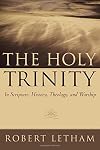
This is an absolutely outstanding book that deals with one of the doctrines of Christian faith that is hardest to grasp: that of the Trinity. What does it mean to say that God is one God, revealed in three persons? That basic question, and possibly every ramification that flows from trying to understand the Trinity, is dealt with masterfully in this volume.
Robert Letham begins his exploration of the Trinity in Scripture, then works through the historical development in both the Eastern and show more Western churches, reviews the modern discussion of the Trinity and then closes by addressing current ways in which understanding the Trinity is critical to the church today. Letham's premise is that understanding the Trinity well is essential to the church and lies at the heart of everything the church believes. And he holds this position knowing better than most people how difficult it is to grasp, define, understand and worship God as Triune. I felt that among the strengths of this work were the way Letham reviewed the historical and modern discussions of the Trinity. In doing so he went at length into the writings of a number of significant leaders in the church, such as Athanasius, Arius, Augustine, the Cappadocian's, Calvin, Barth and Rahner, showing both the strengths and weaknesses in their apprehension of the Trinity.
And perhaps apprehend is the best word to describe this book, for even with Letham's expertise, he freely acknowledges is there is much about the Trinity that will always be outside of our understanding. He pulls this volume together so that we may grow in our apprehension of the Trinity, and thereby grow in our love of God and our ability to give Him the glory that He alone is due. show less
Robert Letham begins his exploration of the Trinity in Scripture, then works through the historical development in both the Eastern and show more Western churches, reviews the modern discussion of the Trinity and then closes by addressing current ways in which understanding the Trinity is critical to the church today. Letham's premise is that understanding the Trinity well is essential to the church and lies at the heart of everything the church believes. And he holds this position knowing better than most people how difficult it is to grasp, define, understand and worship God as Triune. I felt that among the strengths of this work were the way Letham reviewed the historical and modern discussions of the Trinity. In doing so he went at length into the writings of a number of significant leaders in the church, such as Athanasius, Arius, Augustine, the Cappadocian's, Calvin, Barth and Rahner, showing both the strengths and weaknesses in their apprehension of the Trinity.
And perhaps apprehend is the best word to describe this book, for even with Letham's expertise, he freely acknowledges is there is much about the Trinity that will always be outside of our understanding. He pulls this volume together so that we may grow in our apprehension of the Trinity, and thereby grow in our love of God and our ability to give Him the glory that He alone is due. show less
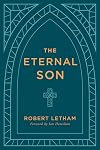
Summary: A Christology focused on Christ’s Person, his eternal sonship, and Incarnation, as clarified in councils and more recently.
Robert Letham has written extensively on the Godhead, beginning with a work on the Trinity. This work is the second of a projected three-volume series on the persons of the Godhead, the first being The Holy Spirit. Having in another work addressed the work of Christ, Letham focuses here on the Person of Christ. However, the final chapter, “For Us and our show more Salvation” does address aspects of Christ’s work.
Letham begins with three chapters which frame out what Christians have historically affirmed concerning the person of the Son. Firstly, he addresses the “Son in the Divine Trinity.” He summarizes developments between the New Testament and Constantinople, in 381. Discussing the Nicene-Constantinople Creed, he focuses on God’s indivisibility, three persons who are one substance, yet distinct persons. He focuses on the divine order, and the idea of the eternal generation of the Son, that from eternity without beginning, the Son is the Son of the Father. Secondly, in the following chapter, “Before The Beginning” he goes more deeply into the Son’s eternal relations with the Father. Then thirdly, in “The Word Became Flesh,” Letham discusses the biblical evidence of the Incarnation.
Chapters 4 through 8 address the controversies that arose related to the person of Christ and the conciliar decisions, post-Constantinople. One of the things that stands out in the controversies with Apollinaris and Nestorius and in the lead up to Council of Chalcedon is the singular influence of Cyril of Alexandria. Cyril defends the eternal nature of the Son, his taking on of human nature in full union, such that all his actions are of one person in two natures. One of the most interesting ideas was that the assumption of a human nature was not problematic for the Son through whom humans were created in the imago dei.
However, Chalcedon did not resolve all problems and led to new ones. Letham discusses the shortcomings of Chalcedon and the continuing challenge of Nestorians and the rise of Monophysites. Also, challenges arose around the two natures of the Incarnate Son willing and acting as one. Letham walks us through Monoenergism and Monothelitism, including a recent revival of the latter. Finally, he summarizes the consolidation of the church’s thought on Christology in both East and West. To do so, he focuses on two key figures, John of Damascus and Thomas Aquinas.
Chapters 9 and 10 then focus on the Reformation and the Post-Enlightenment. The discussion of Luther and Calvin both emphasized their contributions and how at times they could wander from Chalcedonian orthodoxy. The Post-Enlightenment discussion focuses on kenotic theories–what did it mean that Christ “emptied” himself? Letham also discusses theories of peccability. That is, was it possible for Christ, having a human nature, to sin. Letham argues that Christ’s nature was neither a fallen nature or a nature like Adam’s before the fall. “Rather, he lived in a state of humiliation, sinless and righteous but with a nature bearing the consequences of the fall in its mortality, its vulnerability, and its suffering–but not fallen.”
Finally, after his concluding chapter on Christ’s work, he includes two appendices. One has to do with recent thinkers who have resurrected the idea of the adoption of Jesus as Son, particularly as the basis for our on adoption. The second, promoted by David Moffitt, proposes that Christ’s atoning work was not on the cross but when he presented himself as a blood sacrifice in heaven. Letham refutes both ideas.
I found Letham generally clear in his explanations and discussion of different controversies and councils (he also includes a glossary to help us keep our terms straight). In particular, Letham is good at explaining what is at stake with various proposals, and what stands to be lost. He also offers a good summary, as a Reformed writer, of Reformation developments, probably worth a book in itself. Most of all, I feel Letham writes doxologically. He speaks in his introduction of the hope that we might “Behold, the Lamb!” And I found myself often stopping to do just that.
_____________
Disclosure of Material Connection: I received a complimentary copy of this book from the publisher for review. show less
Robert Letham has written extensively on the Godhead, beginning with a work on the Trinity. This work is the second of a projected three-volume series on the persons of the Godhead, the first being The Holy Spirit. Having in another work addressed the work of Christ, Letham focuses here on the Person of Christ. However, the final chapter, “For Us and our show more Salvation” does address aspects of Christ’s work.
Letham begins with three chapters which frame out what Christians have historically affirmed concerning the person of the Son. Firstly, he addresses the “Son in the Divine Trinity.” He summarizes developments between the New Testament and Constantinople, in 381. Discussing the Nicene-Constantinople Creed, he focuses on God’s indivisibility, three persons who are one substance, yet distinct persons. He focuses on the divine order, and the idea of the eternal generation of the Son, that from eternity without beginning, the Son is the Son of the Father. Secondly, in the following chapter, “Before The Beginning” he goes more deeply into the Son’s eternal relations with the Father. Then thirdly, in “The Word Became Flesh,” Letham discusses the biblical evidence of the Incarnation.
Chapters 4 through 8 address the controversies that arose related to the person of Christ and the conciliar decisions, post-Constantinople. One of the things that stands out in the controversies with Apollinaris and Nestorius and in the lead up to Council of Chalcedon is the singular influence of Cyril of Alexandria. Cyril defends the eternal nature of the Son, his taking on of human nature in full union, such that all his actions are of one person in two natures. One of the most interesting ideas was that the assumption of a human nature was not problematic for the Son through whom humans were created in the imago dei.
However, Chalcedon did not resolve all problems and led to new ones. Letham discusses the shortcomings of Chalcedon and the continuing challenge of Nestorians and the rise of Monophysites. Also, challenges arose around the two natures of the Incarnate Son willing and acting as one. Letham walks us through Monoenergism and Monothelitism, including a recent revival of the latter. Finally, he summarizes the consolidation of the church’s thought on Christology in both East and West. To do so, he focuses on two key figures, John of Damascus and Thomas Aquinas.
Chapters 9 and 10 then focus on the Reformation and the Post-Enlightenment. The discussion of Luther and Calvin both emphasized their contributions and how at times they could wander from Chalcedonian orthodoxy. The Post-Enlightenment discussion focuses on kenotic theories–what did it mean that Christ “emptied” himself? Letham also discusses theories of peccability. That is, was it possible for Christ, having a human nature, to sin. Letham argues that Christ’s nature was neither a fallen nature or a nature like Adam’s before the fall. “Rather, he lived in a state of humiliation, sinless and righteous but with a nature bearing the consequences of the fall in its mortality, its vulnerability, and its suffering–but not fallen.”
Finally, after his concluding chapter on Christ’s work, he includes two appendices. One has to do with recent thinkers who have resurrected the idea of the adoption of Jesus as Son, particularly as the basis for our on adoption. The second, promoted by David Moffitt, proposes that Christ’s atoning work was not on the cross but when he presented himself as a blood sacrifice in heaven. Letham refutes both ideas.
I found Letham generally clear in his explanations and discussion of different controversies and councils (he also includes a glossary to help us keep our terms straight). In particular, Letham is good at explaining what is at stake with various proposals, and what stands to be lost. He also offers a good summary, as a Reformed writer, of Reformation developments, probably worth a book in itself. Most of all, I feel Letham writes doxologically. He speaks in his introduction of the hope that we might “Behold, the Lamb!” And I found myself often stopping to do just that.
_____________
Disclosure of Material Connection: I received a complimentary copy of this book from the publisher for review. show less
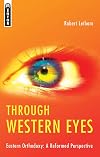
Searching for information that would brush away the misty vale that has always obscured my understanding of Eastern Orthodoxy, I came upon Robert Letham's "Through Western Eyes" which exceeded my expectations. Not only highly informative, but also very fair and irenic, the author opened my eyes to issues where the Eastern church has much to contribute to a fuller understanding of the faith as well as areas where they could learn from adherents to Reformed theology.
Letham, a Reformed theologian, reviews the history and theology of the Orthodox church, with the goal of clarifying the common ground and differences between the Orthodox and Reformed theology as represented by the Westminster Confession. His is an irenic approach, but does not paper over what he perceives to be the real differences between the traditions. He surveys the church councils and gives a précis of the primary fathers and influential theologians of the Orthodox. For some readers show more the detailed tracking of changes and differences in theological formulations of the Trinity and Christology will be off putting. For those interested in church history and history of doctrine, this book is a great read. show less
Awards

You May Also Like


Associated Authors
Statistics
- Works
- 21
- Also by
- 2
- Members
- 2,817
- Popularity
- #9,108
- Rating
- 4.2
- Reviews
- 14
- ISBNs
- 24
- Languages
- 2