
Peter Christen Asbjørnsen (1812–1885)
Author of East of the Sun and West of the Moon: Old Tales from the North
About the Author
Image credit: wikimedia commons
Series
Works by Peter Christen Asbjørnsen
East of the Sun and West of the Moon: Old Tales from the North (1977) — Author — 875 copies, 7 reviews
The Complete and Original Norwegian Folktales of Asbjørnsen and Moe (2019) — Author — 87 copies, 1 review
Saga Six Pack 5 – Erling the Bold, Big Peter and Little Peter, The Saga of Harald Hardrade, The Master Thief, A Sea Queen's Sailing and Bruin and Reynard (2015) 13 copies
Hedaleni metsa trollid : norra muinasjutte ja muistendeid : nooremale ja keskmisele koolieale (1989) 11 copies
Samlede eventyr. B.2 6 copies
Os melhores contos de fadas Nórdicos 3 copies
Racconti popolari norvegesi 3 copies
Why the Bear Is Stumpy-Tailed 2 copies
Folke og Huldre Eventyr Bind 1 2 copies
Tales of the Norsemen 2 copies
Norske Folkeeventyr 1 copy
Norwegische Volksmärchen II 1 copy
Asbjr̜nsen og Moe. 4 Tommeliten ; Mumle Gs̄egg ; Pannekaka ; Dumme menn og troll til kjerringer (1993) 1 copy
Eventyr 1 copy
Norwegian fairy tales 1 copy
Christmas in Many Lands 1 copy
Christmas Fireside Stories; Or Round the Yule Log, Norwegian: Folk and Fairy Tales (Classic Reprint) 1 copy
The Fox as Herdsman 1 copy
Folksagor 1 copy
Norwegische Volksmärchen I 1 copy
East of the Sun and West of the Moon - Old Tales From the North - Illustrated by Kay Nielsen (2013) 1 copy
Eventyr. I 1 copy
Kaksitoista Villisorsaa 1 copy
Eventyr Asbjørnsen og Moe 1 copy
Drengen og Nordenvinden 1 copy
Eventyrjenter med bein i nesa: 16 eventyr fra Asbjørnsen og Moes samlinger (Norwegian Edition) (1983) 1 copy
Folke- og huldreeventyr 1 copy
Folke- og huldreeventyr 1 copy
Associated Works
Nordic Tales: Folktales from Norway, Sweden, Finland, Iceland, and Denmark (2019) — Contributor — 574 copies, 15 reviews
The Illustrated Treasury of Children's Literature, Volumes 1-2 (1955) — Contributor — 523 copies, 4 reviews
Beauty and the Beast: Classic Tales About Animal Brides and Grooms from Around the World (2017) — Contributor — 132 copies, 2 reviews
A Very Scandinavian Christmas: The Greatest Nordic Holiday Stories of All Time (2019) — Contributor — 26 copies, 1 review
Hvid & sort som mælk & blod (1988) — Author, some editions; Author, some editions — 5 copies, 2 reviews
Tagged
Common Knowledge
- Legal name
- Asbjørnsen, Peter Christen
- Other names
- Asbjörnsen, Peter Christen
- Birthdate
- 1812-01-15
- Date of death
- 1885-01-06
- Gender
- male
- Education
- University of Oslo
- Occupations
- zoologist
fairytale collector
forest master - Organizations
- Royal Norwegian Society of Sciences
- Relationships
- Moe, Jørgen (collaborator)
- Short biography
- Peter Christen Asbjørnsen (15 January 1812 — 6 January 1885) was a Norwegian writer and scholar. He and Jørgen Engebretsen Moe were collectors of Norwegian folklore.
- Nationality
- Norway
- Birthplace
- Christiania, Norway
- Places of residence
- Christiania, Norway
- Place of death
- Christiania, Norway
- Associated Place (for map)
- Christiania, Norway
Members
Reviews

A young military lieutenant, recently ill and unable to travel to his childhood home in the country, looks forward to his first Christmas without his family in this holiday short story from Peter Christen Asbjørnsen, the noted Norwegian author and folklorist who, together with Jørgen Engebretsen Moe, is celebrated for his role in collecting Norwegian folklore in the 19th century. Rooming with two maiden ladies in Christiania (modern-day Oslo), the lieutenant joins a fireside Christmas Eve show more party with his landladies and their young nieces and nephews, visiting for the occasion. It is then, round the Yule log, that the lieutenant and some of the other adults share thrilling stories from folklore: tales of trolls, brownies (nisse), and ghosts. After a night of dreams influenced by these tales, the lieutenant awakens to happy news: a family servant has come to take him home...
'Round the Yule-Log: Christmas in Norway is the sixth installment of Boston-based Dana Estes and Company's Christmas in Many Lands series that I have read, and it is by far my favorite so far. The series began in 1892, when the American publisher reprinted four Christmas short stories by sisters and author/illustrator team Florence and Edith Scannell, originally published in their native Britain in 1888, and set (respectively) in England, France, Germany and Italy. Each of these brief stories was published separately, in slim 32-page volumes that were profusely illustrated. It is worth noting that these first four books in the series were also published in a single volume, Christmas in Many Lands: England, France, Germany, and Italy, in 1888 (the same year they were published in the UK). In 1894 the Boston publisher added an American volume to the collection, with Hezekiah Butterworth's The Parson's Miracle and My Grandmother's Grandmother's Christmas Candle: Christmas In America, and then in 1895 this Norwegian Christmas story was published. The story in this American publication was translated into English by H.L. Brœkstad, and initially appeared as the opening tale in the similarly titled Round the Yule Log: Norwegian Folk and Fairy Tales, a collection published in Britain in 1881, fourteen years earlier, which presented a much more extensive selection of traditional Norwegian tales, using the ailing lieutenant's convalescence as a framing device for their telling.
As someone with a great love of folklore, who has enjoyed a number of translations of Asbjørnsen and Moe's work in this area, I approached this book with some curiosity. Perhaps owing to the nature of the foregoing five entries in the Christmas in Many Lands series, I had the impression that it was an original story written by someone who was also famed for his folktale collections. How happy I was to discover however, that the sharing of traditional tales was an integral part of the Christmas celebration around which this story was organized. I immediately recognized the first tale related by the lieutenant as the classic The Cat on the Dovrefell, which I have encountered in picture book form at least three different times. The other stories also felt familiar to me, particularly the one about the ghostly church service, although I couldn't name it specifically. I did wonder a bit at the fact that the house spirits / elves / gnomes known as "nisse" in Norway were referred to here as brownies, but perhaps it was the custom in that day to use a similar term, taken from English and Scottish folklore, rather than retain the original word, when translating such stories. However that may be, this was very enjoyable, and more than enough to convince me, not just to carry on with my reading of the Christmas in Many Lands series, but also to seek out the larger collection containing this one story. show less
'Round the Yule-Log: Christmas in Norway is the sixth installment of Boston-based Dana Estes and Company's Christmas in Many Lands series that I have read, and it is by far my favorite so far. The series began in 1892, when the American publisher reprinted four Christmas short stories by sisters and author/illustrator team Florence and Edith Scannell, originally published in their native Britain in 1888, and set (respectively) in England, France, Germany and Italy. Each of these brief stories was published separately, in slim 32-page volumes that were profusely illustrated. It is worth noting that these first four books in the series were also published in a single volume, Christmas in Many Lands: England, France, Germany, and Italy, in 1888 (the same year they were published in the UK). In 1894 the Boston publisher added an American volume to the collection, with Hezekiah Butterworth's The Parson's Miracle and My Grandmother's Grandmother's Christmas Candle: Christmas In America, and then in 1895 this Norwegian Christmas story was published. The story in this American publication was translated into English by H.L. Brœkstad, and initially appeared as the opening tale in the similarly titled Round the Yule Log: Norwegian Folk and Fairy Tales, a collection published in Britain in 1881, fourteen years earlier, which presented a much more extensive selection of traditional Norwegian tales, using the ailing lieutenant's convalescence as a framing device for their telling.
As someone with a great love of folklore, who has enjoyed a number of translations of Asbjørnsen and Moe's work in this area, I approached this book with some curiosity. Perhaps owing to the nature of the foregoing five entries in the Christmas in Many Lands series, I had the impression that it was an original story written by someone who was also famed for his folktale collections. How happy I was to discover however, that the sharing of traditional tales was an integral part of the Christmas celebration around which this story was organized. I immediately recognized the first tale related by the lieutenant as the classic The Cat on the Dovrefell, which I have encountered in picture book form at least three different times. The other stories also felt familiar to me, particularly the one about the ghostly church service, although I couldn't name it specifically. I did wonder a bit at the fact that the house spirits / elves / gnomes known as "nisse" in Norway were referred to here as brownies, but perhaps it was the custom in that day to use a similar term, taken from English and Scottish folklore, rather than retain the original word, when translating such stories. However that may be, this was very enjoyable, and more than enough to convince me, not just to carry on with my reading of the Christmas in Many Lands series, but also to seek out the larger collection containing this one story. show less

Originally published in Asbjørnsen and Moe's nineteenth century collection of Norwegian folktales, this humorous story - Mannen som skulle stelle hjemme in the original - follows the trials and tribulations of a bad-tempered husband, whose criticism of his wife's housekeeping results in a day of swapped duties. Convinced that he can get more work done in the house, the husband stays home for the day, letting his wife take over his job in the fields. But a series of hilarious mistakes - each show more one compounding the previous - leads him into a very sticky mess. Luckily, his wife comes home in time to set things to rights...
I have always enjoyed this gender-bender folktale from Norway, appreciating its affirmation of the worth - and difficulty - of women's work, and its cautionary lesson about criticizing others. I imagine that some might read it as a reinforcement of traditional gender roles, with the woman belonging in the home, and the man out in the world, but I myself am always struck by the fact that although the husband has such difficulties performing his wife's tasks, she encounters none in doing his. That fact gives this tale a particularly subversive quality, in my eyes, turning it into a fascinating social commentary, not only on the devaluing of "women's" work, but on the very real difficulties that can emerge, if men are ignorant of how that work is done.
Young readers, of course, will probably not be interested in the social ramifications of The Man Who Kept House, and in a culture in which many domestic duties are now shared (to a greater or lesser extent), one wonders how this tale would be perceived. Still, the humor of this story shines through, and the illustrations by Svend Otto S. are quite appealing. Norwegian folklore enthusiasts will surely want to take a look at this one! show less
I have always enjoyed this gender-bender folktale from Norway, appreciating its affirmation of the worth - and difficulty - of women's work, and its cautionary lesson about criticizing others. I imagine that some might read it as a reinforcement of traditional gender roles, with the woman belonging in the home, and the man out in the world, but I myself am always struck by the fact that although the husband has such difficulties performing his wife's tasks, she encounters none in doing his. That fact gives this tale a particularly subversive quality, in my eyes, turning it into a fascinating social commentary, not only on the devaluing of "women's" work, but on the very real difficulties that can emerge, if men are ignorant of how that work is done.
Young readers, of course, will probably not be interested in the social ramifications of The Man Who Kept House, and in a culture in which many domestic duties are now shared (to a greater or lesser extent), one wonders how this tale would be perceived. Still, the humor of this story shines through, and the illustrations by Svend Otto S. are quite appealing. Norwegian folklore enthusiasts will surely want to take a look at this one! show less

A wealthy squire decides he wishes to remarry in this Norwegian folktale, only to discover that the object of his affections—the daughter of a poor farmer in the area—is not interested in becoming his wife. Determined to make her his nonetheless, the squire involves the girl's father in his efforts, and when even parental persuasion proves ineffective, a new plan is devised. The wedding will be prepared, and the girl sent to the squire's house unawares... but things do not go quite as show more planned, when the girl sends a mare in her place...
Collected by those giants of Norwegian folklore, Peter Christen Asbjørnsen and Jørgen Moe, as part of their 1871 Norske Folke-Eventyr. Ny Samling ("Norwegian Folktales. New Collection"), where it was known as Herremannsbruden, this humorous tale is presented in this picture-book edition with the lovely illustrations of American artist Marcia Sewell. The story itself was enjoyable, celebrating a clever young girl who knows what she wants (and what she doesn't!), but what lifted this presentation above the ordinary was the pencil drawings from Sewell. Delicate but quite expressive, these pictures draw the reader in, every bit as engaging as more colorful folktale artwork. Recommended to young folklore lovers, or to picture-book readers looking for books with Norwegian content. For my part, I hope to track down more of Sewell's books. show less
Collected by those giants of Norwegian folklore, Peter Christen Asbjørnsen and Jørgen Moe, as part of their 1871 Norske Folke-Eventyr. Ny Samling ("Norwegian Folktales. New Collection"), where it was known as Herremannsbruden, this humorous tale is presented in this picture-book edition with the lovely illustrations of American artist Marcia Sewell. The story itself was enjoyable, celebrating a clever young girl who knows what she wants (and what she doesn't!), but what lifted this presentation above the ordinary was the pencil drawings from Sewell. Delicate but quite expressive, these pictures draw the reader in, every bit as engaging as more colorful folktale artwork. Recommended to young folklore lovers, or to picture-book readers looking for books with Norwegian content. For my part, I hope to track down more of Sewell's books. show less
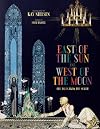
This gorgeous edition of Norwegian folktales as illustrated by Kay Nielsen might be an absolute shoe in for my top books of the year list. Taschen’s art publications are always of high quality, but they surpassed themselves with this lush reprint. Nielsen’s illustrations are showcased alongside their accompanying stories wonderfully and the introductory essays provide some much appreciated context on the importance of Asbjørnsen and Moe’s work to collect and chronicle the folktales of show more Norway, so it is easy to see how this book was a smash hit when it was first published and why Taschen chose to reimagine it for the modern market. What I liked most about this book (besides the illustrations and quality of publication, of course) is the fact that the stories are actually readable. Many collections of this sort either cater to a child audience or become too academic in their transcription, in addition to collecting too many stories of the same sort which quickly becomes tedious to read in any attempt to read the collection cover to cover, but each story stands well alone and is easily accessible by readers of any age. My only small complaint is that Taschen chose to have captions for the images taken straight from the text of the stories, which I felt was alternatingly pointless (readers can either easily identify the match between image and text, or the specific image can apply to many parts of the story) and a wasted opportunity to provide more context and commentary extraneous to the text of the stories. show less
Lists
Folio Society (1)
Awards


You May Also Like


Associated Authors
Statistics
- Works
- 197
- Also by
- 24
- Members
- 4,136
- Popularity
- #6,086
- Rating
- 4.0
- Reviews
- 68
- ISBNs
- 292
- Languages
- 17