
Roger Abrahams (1933–2017)
Author of African Folktales
About the Author
Roger David Abrahams was born in Philadelphia, Pennsylvania on June 12, 1933. He received a bachelor's degree in English from Swarthmore College in 1955, a master's degree in literature and folklore from Columbia University in 1959, and a doctorate in literature and folklore from the University of show more Pennsylvania in 1961. He sang with Paul Clayton and Dave Van Ronk on the Folkways album Foc'sle Songs and Shanties and later recorded his own album, Make Me a Pallet on Your Floor and Other Folk Songs, in 1962. He was an editor and writer at the folk-music magazine Caravan. He taught at the University of Texas in Austin before teaching at the University of Pennsylvania from 1985 until his retirement in 2002. He was one of the first folklorists to study the language and performance styles of black Americans as reflected in songs, proverbs, and riddles both old and new. He wrote several books including Deep Down in the Jungle: Negro Narrative Folklore from the Streets of Philadelphia; Jump-Rope Rhymes: A Dictionary; Positively Black; Talking Black; Afro-American Folk Culture: An Annotated Bibliography of Materials from North, Central and South America, and the West Indies; Counting-Out Rhymes: A Dictionary; Between the Living and the Dead: Riddles Which Tell Stories; The Man-of-Words in the West Indies: Performance and the Emergence of Creole Culture; Singing the Master: The Emergence of African-American Culture in the Plantation South; and Everyday Life: A Poetics of Vernacular Practices. With John F. Szwed, he wrote Discovering Afro-America and Blues for New Orleans: Mardi Gras and America's Creole Soul. He died on June 20, 2017 at the age of 84. (Bowker Author Biography) show less
Image credit: Roger Abrahams / Courtesy of Oral History Association Collection (HM12), University of North Texas Special Collections
Series
Works by Roger Abrahams
Singing the Master: The Emergence of African-American Culture in the PlantationSouth (1992) 61 copies
Blues for New Orleans: Mardi Gras And America's Creole Soul (The City in the Twenty-First Century) (2006) 21 copies
Jump Rope Rhymes: A Dictionary (Publications of the American Folklore Society) (1969) 15 copies, 1 review
And Other Neighborly Names: Social Process and Cultural Image in Texas Folklore (1981) — Editor — 8 copies
Associated Works
Beauty and the Beast: Classic Tales About Animal Brides and Grooms from Around the World (2017) — Contributor — 132 copies, 2 reviews
Tagged
Common Knowledge
- Birthdate
- 1933-06-12
- Date of death
- 2017-06-20
- Gender
- male
- Education
- Cheltenham High School, Elkins Park
Swarthmore College (BA ∙ English ∙ 1955)
Columbia University (MA ∙ Literature and Folklore ∙ 1959)
University of Pennsylvania (PhD ∙ Literature and Folklore ∙ 1961) - Occupations
- educator
folklorist
teacher (University of Texas, Dept. of English)
professor (english, University of Texas at Austin)
professor (anthropology, University of Texas at Austin)
professor (humanities and anthropology, Scripps and Pitzer Colleges, San Antonio, California) (show all 10)
professor (folklore and folklife, University of Pennsylvania)
author
writer
ethnographer - Organizations
- University of Texas Center of Intercultural Studies in Folklore and Oral History (Associate Director)
African and Afro-American Research Institute (director)
Department of English, University of Texas at Austin (chairman)
Center for Folklore and Ethnography, University of Pennsylvania (director) - Relationships
- Abrahams, Robert D. (father)
Leach, MacEdward (professor) - Nationality
- USA
- Birthplace
- Philadelphia, Pennsylvania, USA
- Places of residence
- Elkins Park, Pennsylvania, USA
Swarthmore, Pennsylvania, USA
New York, New York, USA
Austin, Texas, USA - Associated Place (for map)
- Pennsylvania, USA
Members
Reviews
African American Folktales: Stories from Black Traditions in the New World (The Pantheon Fairy Tale and Folklore Library) by Roger D. Abrahams
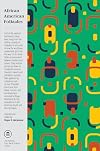
These tales range from the earthy comedy of tricksters to stories explaining how the world was created and (fairly or unfairly) got to be the way it is to moral fables that tell of encounters between masters and slaves. They include stories set down in travelers' reports and plantation journals from the early nineteenth century, tales gathered by collectors such as Joel Chandler Harris and Zora Neale Hurston, and narratives tape-recorded by Roger Abrahams himself during extensive expeditions show more throughout the American South and the Caribbean. These elaborate, often exaggerated fictions were told by tale spinners mostly for the fun of it, but within them are embedded hard truths about dealing with the world of white people. They offer a robust, engaging demonstration of the ways in which an uprooted people have drawn from the traditions of their distant past to fashion a life - and with it, a new and vital culture - in the New World. show less

Books of children's game songs are a challenge: They represent a tremendous amount of information in a tiny amount of space, because most of the games are just two or four or six lines long. So this thin little volume contains more than six hundred items, and (as a wild guess) maybe three thousand references.
It is a tremendous achievement, which I suspect will never be equaled. If you have an interest in children's folklore, it is vital. Unfortunately, it will leave you wanting more.
For show more starters, Roger D. Abrahams quotes only one text of each item, even if it's something like "Cinderella Dressed in Yellow" or "Miss Mary Mack" that has been collected dozens or hundreds of times. If Abrahams quotes other Cinderella verses, they are separate items; it is not clear that kids might take turns with "Cinderella dressed in yellow," then red, green, pink.... Also, no melodies are cited. And while Abrahams always quotes a text, and then lists books and page references for each rhyme, he does not cite which of the various sources he cites was the source of the text he quotes. (In this, he falls short of the practice of, say, Malcolm Laws, who created a somewhat-similar catalog of ballads.) And there is almost no background; Abrahams has a glossary of technical terms (e.g. "Hot peppers" making the rope twirl particularly quickly) and of characters mentioned in the pieces, but nothing about the contexts in which the rhymes arose.
These are significant weaknesses, especially the lack of clarity about which text he cites and the lack of background about the pieces. And, given that lines and couplets often "float" between these songs, he needs more cross-references, and clearer cross references (distinguishing cases where two items are "the same" and when they just share some words, or a character such as Charlie Chaplin or Shirley Temple). Which does not change the fact that this is a tremendous reference. If you are using one of the several dozen books Abrahams cites, and find in it a jump-rope rhyme and want to know if it has been found elsewhere, then Abrahams is the reference you need. It's just that you'll need to do a lot of work after finding the song in Abrahams. show less
It is a tremendous achievement, which I suspect will never be equaled. If you have an interest in children's folklore, it is vital. Unfortunately, it will leave you wanting more.
For show more starters, Roger D. Abrahams quotes only one text of each item, even if it's something like "Cinderella Dressed in Yellow" or "Miss Mary Mack" that has been collected dozens or hundreds of times. If Abrahams quotes other Cinderella verses, they are separate items; it is not clear that kids might take turns with "Cinderella dressed in yellow," then red, green, pink.... Also, no melodies are cited. And while Abrahams always quotes a text, and then lists books and page references for each rhyme, he does not cite which of the various sources he cites was the source of the text he quotes. (In this, he falls short of the practice of, say, Malcolm Laws, who created a somewhat-similar catalog of ballads.) And there is almost no background; Abrahams has a glossary of technical terms (e.g. "Hot peppers" making the rope twirl particularly quickly) and of characters mentioned in the pieces, but nothing about the contexts in which the rhymes arose.
These are significant weaknesses, especially the lack of clarity about which text he cites and the lack of background about the pieces. And, given that lines and couplets often "float" between these songs, he needs more cross-references, and clearer cross references (distinguishing cases where two items are "the same" and when they just share some words, or a character such as Charlie Chaplin or Shirley Temple). Which does not change the fact that this is a tremendous reference. If you are using one of the several dozen books Abrahams cites, and find in it a jump-rope rhyme and want to know if it has been found elsewhere, then Abrahams is the reference you need. It's just that you'll need to do a lot of work after finding the song in Abrahams. show less
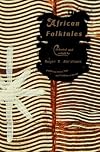
The deep forest and broad savannah, the campsites, kraals, and villages — from this immense area south of the Sahara Desert the distinguished American folklorist Roger D. Abrahams has selected ninety-five tales that suggest both the diversity and the interconnectedness of the people who live there. The storytellers weave imaginative myths of creation and tales of epic deeds, chilling ghost stories, and ribald tales of mischief and magic in the animal and human realms. Abrahams renders show more these stories in a narrative voice that reverberates with the rhythms of tribal song and dance and the emotional language of universal concerns. show less
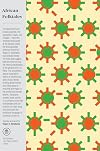
African folktales is fairytale book about different stories that were told based around the African culture and traditions. These stories help children learn about creativity and imagination from the people that wrote the books a long time ago. In a way children learn about the varieties of stories and different aspects of what a fairytale is about.
Lists
You May Also Like


Associated Authors
Statistics
- Works
- 23
- Also by
- 5
- Members
- 1,087
- Popularity
- #23,625
- Rating
- 3.6
- Reviews
- 7
- ISBNs
- 59
- Languages
- 2