
Kelly Barnhill
Author of The Girl Who Drank the Moon
About the Author
Kelly Barnhill is a children's book author. Her novels include The Mostly True Story of Jack, Iron Hearted Violet, The Witch's Boy, and The Girl Who Drank the Moon, which received the 2017 John Newbery Medal. She has also received the World Fantasy Award, the Parents Choice Gold Award, the Texas show more Library Association Bluebonnet award, and a Charlotte Huck Honor. (Bowker Author Biography) show less
Series
Works by Kelly Barnhill
Do You Know Where Your Water Has Been? The Disgusting Story Behind What You're Drinking (2009) 25 copies, 1 review
Elegy to Gabrielle, Patron Saint of Healers, Whores, and Righteous Thieves [short story] (2018) 4 copies
The Girl Who Drank the Moon 1 copy
Kelly Barnhill Collection 3 Books Set (The Girl Who Drank the Moon, The Witch's Boy & The Ogress and the Orphans) (2023) 1 copy
The Taxidermist's Other Wife 1 copy
The Stone-hearted Queen 1 copy
VAJZA QË PIU HËNËN 1 copy
Associated Works
The Thackery T. Lambshead Cabinet of Curiosities: Exhibits, Oddities, Images, and Stories from Top Authors and Artists (2011) — Contributor — 491 copies, 17 reviews
Sisters of the Revolution: A Feminist Speculative Fiction Anthology (2015) — Contributor — 345 copies, 8 reviews
Worlds Seen in Passing: Ten Years of Tor.com Short Fiction (2018) — Contributor — 161 copies, 1 review
Clockwork Phoenix 2: More Tales of Beauty and Strangeness (2009) — Contributor — 70 copies, 1 review
The Best Science Fiction and Fantasy of the Year, Volume 13 (2019) — Contributor — 68 copies, 3 reviews
The Best Science Fiction and Fantasy of the Year, Volume 12 (2018) — Contributor — 47 copies, 2 reviews
Postscripts Magazine, Issue 15: Worldcon 2008 Special (2008) — Contributor, some editions — 15 copies
Tagged
Common Knowledge
- Birthdate
- 1973-12-07
- Gender
- female
- Education
- St. Catherine University
- Agent
- Stephen Malk
- Nationality
- USA
- Birthplace
- Minneapolis, Minnesota, USA
- Places of residence
- Minneapolis, Minnesota, USA
- Associated Place (for map)
- Minneapolis, Minnesota, USA
Members
Reviews
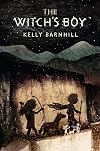
Okay, so, I LOVED The Girl Who Drank The Moon, so I had reasonably high hopes for this one.
I was so, so disappointed.
The pacing stumbles and lurches, with far too much detail spent on minutiae and not near enough attention given to essential plot and character moments before rushing on to other things. The world-building makes no sense. And, worst of all, there's no FUN in this 'verse. The sole character who enjoys anything is the Bandit King, who loves and lives for thievery. Magic is a show more burden or a torment. Parents are terrible or neglectful. No one plays. There's none of the natural joy and curiosity you expect from "Magic is real and YOU HAVE IT!" books like Harry Potter, The Dark Is Rising, or The Young Wizards series. There's no "Hey, this rocks!" moment just before the character accidentally blows something up. It's all misery, dire pursuit, pain, fear, bleeding, running for their lives, etc., etc., etc., all the time.
Instead, we get a book about a couple of traumatized, depressed, alienated kids befriending a wolf pup, saving the world, and burying the dead (in that order). Which could have been interesting (compelling! unusual in children's fantasy!) if the pacing had worked. But it didn't. show less
I was so, so disappointed.
The pacing stumbles and lurches, with far too much detail spent on minutiae and not near enough attention given to essential plot and character moments before rushing on to other things. The world-building makes no sense. And, worst of all, there's no FUN in this 'verse. The sole character who enjoys anything is the Bandit King, who loves and lives for thievery. Magic is a show more burden or a torment. Parents are terrible or neglectful. No one plays. There's none of the natural joy and curiosity you expect from "Magic is real and YOU HAVE IT!" books like Harry Potter, The Dark Is Rising, or The Young Wizards series. There's no "Hey, this rocks!" moment just before the character accidentally blows something up. It's all misery, dire pursuit, pain, fear, bleeding, running for their lives, etc., etc., etc., all the time.
Instead, we get a book about a couple of traumatized, depressed, alienated kids befriending a wolf pup, saving the world, and burying the dead (in that order). Which could have been interesting (compelling! unusual in children's fantasy!) if the pacing had worked. But it didn't. show less
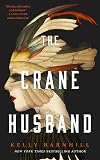
I enjoyed--although that is too light a term--this when I read it, but it has also stuck with me. I appreciated the minimalist approach here, which befits a contemporary revision of a traditional (there are actually several versions) fairy tale. Barnhill really understands how fairy tales work and has resisted the temptation of many of her contemporaries to over-elaborate on them in their own retellings. The narrative feels claustrophobic, but at the same time leaves a lot of gaps and spaces show more for us to think our way into the story and its implications. Traditional fairy tales are often more deeply ambiguous than many believe, particularly if we are familiar only with the sanitized versions of the much darker originals collected by the Grimms, etc. In this case much of the ambiguity comes from a single question: why is such an old, familiar story--a woman whom submits to abuse and abandons herself and those around her--one that too many people inhabit anew, and as if for the first time, everyday? Her teenage protagonist provides one set of answers: we inhabit a world where people see and don't see what is right in front of them.
Much of the attention this book has garnered--and you can see it in many of the other reviews here so far on LT--focuses on gender issue. However Barnhill's interest in the gender dynamics is wrapped up in a broader examination of cultural shifts in technology, farming, commerce, and the art market. Many of those elements nag at the edges of consciousness while reading the book (the creepy agribusiness next door, the fawning online collectors for the mother's art); this is, fundamentally, a smart story about how private abuse is fostered by a broader culture that turns a blind eye to all kinds of abuse. show less
Much of the attention this book has garnered--and you can see it in many of the other reviews here so far on LT--focuses on gender issue. However Barnhill's interest in the gender dynamics is wrapped up in a broader examination of cultural shifts in technology, farming, commerce, and the art market. Many of those elements nag at the edges of consciousness while reading the book (the creepy agribusiness next door, the fawning online collectors for the mother's art); this is, fundamentally, a smart story about how private abuse is fostered by a broader culture that turns a blind eye to all kinds of abuse. show less
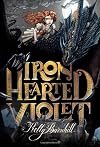
I was ready to fall in love with this novel -- it came highly recommended as a brilliant example of upper middle grade fantasy overall and more specifically as an example of wildly inventive world-building. And, truly, it is both of those things. It is also dryly old-fashioned in tone, something that I typically find delightful, and involves not only a heroic princess who doesn't have to be traditionally beautiful but also... dragons. And gods. And books, and spaces between the walls, and show more dusty libraries, and storytelling... In short, it is practically designed for me to love it to pieces.
And yet, for reasons I could not quite put my finger on, I struggled to actually love it. I definitely liked it. I enjoyed it. But where I expected to find a new literary love of my life, I found instead some small barrier to that connection. I think, perhaps, it has to do with the narrative voice; the book is told by a character within it, a character who is at first admirable and later not, and the choice of narrator makes perfect sense in the context of the story... but that narrator's perspective, including his frequent interjections about his own state of mind, creates a little bit of distance between the reader and the story.
In a way, this narrative style is a mark of a more sophisticated book than the usual middle grade fantasy, but it also creates something of a barrier to the kind of pathos one might be used to in recent classics of the genre (some, much worse examples of writing). That barrier echoes the many walls and prisons in the story itself; everything here is part of an elegant pattern, right down to the extraordinary twin-sunned mirror world that the characters inhabit. It's not until the very end that the emotional resonance of the novel catches up with the wonder of the world, and by then it was too little, too late for me (though that might not be true for its target audience).
Overall, and honestly, it is beautifully executed. So, I encourage you to read it -- really, I do. It is an excellent fantasy full of imaginative beings and shining ideas and a magnificently rendered world. Just know that, in reading it, you too may reach out for love and find only admiration. show less
And yet, for reasons I could not quite put my finger on, I struggled to actually love it. I definitely liked it. I enjoyed it. But where I expected to find a new literary love of my life, I found instead some small barrier to that connection. I think, perhaps, it has to do with the narrative voice; the book is told by a character within it, a character who is at first admirable and later not, and the choice of narrator makes perfect sense in the context of the story... but that narrator's perspective, including his frequent interjections about his own state of mind, creates a little bit of distance between the reader and the story.
In a way, this narrative style is a mark of a more sophisticated book than the usual middle grade fantasy, but it also creates something of a barrier to the kind of pathos one might be used to in recent classics of the genre (some, much worse examples of writing). That barrier echoes the many walls and prisons in the story itself; everything here is part of an elegant pattern, right down to the extraordinary twin-sunned mirror world that the characters inhabit. It's not until the very end that the emotional resonance of the novel catches up with the wonder of the world, and by then it was too little, too late for me (though that might not be true for its target audience).
Overall, and honestly, it is beautifully executed. So, I encourage you to read it -- really, I do. It is an excellent fantasy full of imaginative beings and shining ideas and a magnificently rendered world. Just know that, in reading it, you too may reach out for love and find only admiration. show less
I received this book as an uncorrected digital proof from the publisher, via Edelweiss.
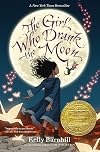
The citizens of the Protectorate have learned to accept that every year the youngest child in the village has to be sacrificed to the witch who lives in the bog. They have been taught that the witch protects the citizens from the woods in exchange for this sacrifice. It has been this way for 500 years, but one baby, one little girl with a crescent birthmark on her forehead, is about to change show more everything.
The Girl Who Drank the Moon is one of the best books of any genre that I have read in a very long time. The good guys are fallible, the bad guys aren’t completely bad, and the monsters have hearts. There isn’t a single character in this book that seems stilted or out of place. They all work together to create a cohesive story that flows so smoothly, that it takes more effort to put the book down than it does to just keep reading. The world-building done by Ms. Barnhill is exceptional. She has created a land of myth and magic that easily finds its way into the mind’s eye. I would recommend this book to fantasy lovers of all ages. This will be a book I read again and again. show less
The citizens of the Protectorate have learned to accept that every year the youngest child in the village has to be sacrificed to the witch who lives in the bog. They have been taught that the witch protects the citizens from the woods in exchange for this sacrifice. It has been this way for 500 years, but one baby, one little girl with a crescent birthmark on her forehead, is about to change show more everything.
The Girl Who Drank the Moon is one of the best books of any genre that I have read in a very long time. The good guys are fallible, the bad guys aren’t completely bad, and the monsters have hearts. There isn’t a single character in this book that seems stilted or out of place. They all work together to create a cohesive story that flows so smoothly, that it takes more effort to put the book down than it does to just keep reading. The world-building done by Ms. Barnhill is exceptional. She has created a land of myth and magic that easily finds its way into the mind’s eye. I would recommend this book to fantasy lovers of all ages. This will be a book I read again and again. show less
Lists
Best Audiobooks (1)
At the Library (1)
Newbery Adjacent (2)
Awards


You May Also Like


Associated Authors
Statistics
- Works
- 35
- Also by
- 16
- Members
- 10,522
- Popularity
- #2,264
- Rating
- 4.0
- Reviews
- 434
- ISBNs
- 202
- Languages
- 16
- Favorited
- 2
