
David Wisniewski (1953–2002)
Author of Golem
About the Author
Children's writer and illustrator David Wisniewski was born in England and joined the Ringling Brothers and Barnum and Bailey Clown College. Wisniewski began the Clarion Theater Show after combining his circus and puppet talents with those of his wife. He has received two Jim Henson Foundation show more Grants, a Citation of Excellence from the Union Internationale de Marionette, and a Caldecott Award for his book, Golem. (Bowker Author Biography) show less
Works by David Wisniewski
Rain Player 2 copies
Associated Works
Tagged
Common Knowledge
- Birthdate
- 1953-03-21
- Date of death
- 2002-09-11
- Gender
- male
- Education
- Ringling Bros. and Barnum & Bailey Clown College
- Organizations
- Clarion Shadow Theater
- Nationality
- USA
- Birthplace
- South Ruislip Air Force Base, Middlesex, England, UK
- Places of residence
- Washington, D.C., USA
England, UK - Place of death
- Alexandria, Virginia, USA
- Associated Place (for map)
- USA
Members
Reviews
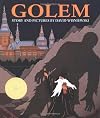
An absolutely amazing book, both for historic and for artistic merit. Admittedly, I ran across this book via watching a fantastic video essay by Jacob Geller on YouTube—discussing the importance of the golem within Jewish culture and lore. The visuals were so striking that I had to get my hands on it, just to really pore over what makes a book like this so evocative.
Can absolutely say, the art alone would be enough to suck anyone in. These layered paper cuts are so intensely intricate that show more I found myself rereading this book-for-children just to examine where each layer started or ended. My personal favorite bit is, without a doubt, the one depiction of the Hebrew God in the book. Rabbi Loew witnesses a dream in which his God shows him a single word of power, which will later be used to bring the mighty Golem to life. But instead of paper—God's hand is a slightly translucent glittery plastic, utterly removed from the textures of every other illustration, and in fact literally visually ABOVE the paper... because you can see the plastic is casting a shadow. Just really really really cool visualization of a higher being, witnessed by its lessers.
But the story. Wow. Golem is a being of clay, a giant that becomes even bigger in response to the unhinged hatred felt for the Jews living in Prague. Being a creation of man, he is therefore less than man, subservient to Rabbi Loew's commands of locating evil people who perpetuate conspiracy against his flock. But in that same vein, Golem is still a creation brought to life by the will of the Hebrew God, formed from clay just like the first human. So he's overcome with emotions at the sight of a sunrise or the singing of birds. He gets distracted, the way I used to when I was a teenager on a farm, by the casual existence of every-day life.
As a result, the end of the book is heartbreaking for me. Golem has served his purpose, and the king of Prague has ordered Golem destroyed as a show of good faith. The giant begs for mercy, pleads to be allowed to learn and know the world, but the word—set into his forehead—that gave him life is destroyed. It had to be done, because Golem was just a creation of man and not a true person, but. Ehh. I always feel for the allegory of non-persons. It speaks to me on an individual level.
Being a huge fan of "machines that are people" media as well as the archetype to which Golem belongs—the superhuman savior—makes this a genuinely wonderful book to read even as a jaded adult. Also: inspired me to learn Hebrew! I want to understand the nuance of the word set in Golem's forehead—that seems incredibly neat. This is a truly wonderful tale.
Had I read this as a child, it would have left me unbelievably distraught in the best way... and probably eager to rewatch The Iron Giant. show less
Can absolutely say, the art alone would be enough to suck anyone in. These layered paper cuts are so intensely intricate that show more I found myself rereading this book-for-children just to examine where each layer started or ended. My personal favorite bit is, without a doubt, the one depiction of the Hebrew God in the book. Rabbi Loew witnesses a dream in which his God shows him a single word of power, which will later be used to bring the mighty Golem to life. But instead of paper—God's hand is a slightly translucent glittery plastic, utterly removed from the textures of every other illustration, and in fact literally visually ABOVE the paper... because you can see the plastic is casting a shadow. Just really really really cool visualization of a higher being, witnessed by its lessers.
But the story. Wow. Golem is a being of clay, a giant that becomes even bigger in response to the unhinged hatred felt for the Jews living in Prague. Being a creation of man, he is therefore less than man, subservient to Rabbi Loew's commands of locating evil people who perpetuate conspiracy against his flock. But in that same vein, Golem is still a creation brought to life by the will of the Hebrew God, formed from clay just like the first human. So he's overcome with emotions at the sight of a sunrise or the singing of birds. He gets distracted, the way I used to when I was a teenager on a farm, by the casual existence of every-day life.
As a result, the end of the book is heartbreaking for me. Golem has served his purpose, and the king of Prague has ordered Golem destroyed as a show of good faith. The giant begs for mercy, pleads to be allowed to learn and know the world, but the word—set into his forehead—that gave him life is destroyed. It had to be done, because Golem was just a creation of man and not a true person, but. Ehh. I always feel for the allegory of non-persons. It speaks to me on an individual level.
Being a huge fan of "machines that are people" media as well as the archetype to which Golem belongs—the superhuman savior—makes this a genuinely wonderful book to read even as a jaded adult. Also: inspired me to learn Hebrew! I want to understand the nuance of the word set in Golem's forehead—that seems incredibly neat. This is a truly wonderful tale.
Had I read this as a child, it would have left me unbelievably distraught in the best way... and probably eager to rewatch The Iron Giant. show less

When the Jews of Prague are falsely accused of a terrible crime, and threatened with mob violence, their wise and learned leader, the Rabbi Loew ben Bezalel, makes the difficult decision to create a golem - a man formed from clay or sand, and brought to life through arcane cabbalistic ritual - to protect them. Although the golem - soon clothed in human garb, and given the name "Joseph" - does what is asked of him, in tracking down those who would plant false evidence, and fending off those show more who would attack the Jewish ghetto, it soon becomes apparent, from the questions he asks about himself, and his place in the world, that whatever the motives involved, bringing him to life was a dangerous undertaking, and an awesome responsibility. When the emperor, finally convinced of the Jews' innocence, and intimidated by the power of the golem, extends his protection to Prague's Jewish community, the rabbi, ignoring his creation's pleas for life, returns him to clay.
Awarded the Caldecott Medal in 1997, this outstanding picture-book pairs a powerful retelling of the Jewish folktale of the Golem of Prague with brilliantly detailed cut-paper artwork. The language used by Wisniewski is mature, as are the themes of the story itself, making Golem a picture-book better suited for slightly older children. I appreciated the fact that the narrative did not skip over the moral complexity of the golem's violence - even thought the Jews are threatened, the rabbi thinks, at one point, that the golem's violence is simply too much - or of his creation exclusively for human use. The scene in which he is returned to inert matter has a sharp poignancy that would have haunted me, I suspect, had I read this as a girl. The artwork is just as amazing as the text - dark, mesmerizing, and often quite frightening! I think Wisniewski's work in Sundiata: Lion King of Mali was superior - oddly enough, that title received no honors - but this was still superb!
All in all, an excellent picture-book retelling of this important nineteenth-century legend, one that has influenced so many subsequent literary efforts, from Mary Shelley's Frankenstein to Elizabeth Knox's New Zealand fantasies, Dreamhunter and Dreamquake. Those looking for other, more extensive retellings might also want to check out Isaac Bashevis Singer's The Golem (illustrated by Uri Shulevitz), or Elie Wiesel's The Golem (illustrated by Mark Podwal). show less
Awarded the Caldecott Medal in 1997, this outstanding picture-book pairs a powerful retelling of the Jewish folktale of the Golem of Prague with brilliantly detailed cut-paper artwork. The language used by Wisniewski is mature, as are the themes of the story itself, making Golem a picture-book better suited for slightly older children. I appreciated the fact that the narrative did not skip over the moral complexity of the golem's violence - even thought the Jews are threatened, the rabbi thinks, at one point, that the golem's violence is simply too much - or of his creation exclusively for human use. The scene in which he is returned to inert matter has a sharp poignancy that would have haunted me, I suspect, had I read this as a girl. The artwork is just as amazing as the text - dark, mesmerizing, and often quite frightening! I think Wisniewski's work in Sundiata: Lion King of Mali was superior - oddly enough, that title received no honors - but this was still superb!
All in all, an excellent picture-book retelling of this important nineteenth-century legend, one that has influenced so many subsequent literary efforts, from Mary Shelley's Frankenstein to Elizabeth Knox's New Zealand fantasies, Dreamhunter and Dreamquake. Those looking for other, more extensive retellings might also want to check out Isaac Bashevis Singer's The Golem (illustrated by Uri Shulevitz), or Elie Wiesel's The Golem (illustrated by Mark Podwal). show less
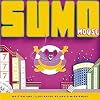
First, let me say that I got thoroughly sick and tired of this book after reading it six times a day to my two nieces, aged 3.5 and almost-6!
I understand why they love the book, though. It's written in a comic book style with bold, bright artwork, an exciting plot, and lots of LOUD sound words to scream with me! Plus, there's a song on the inside covers. (Alas, you have to make up the tune yourself.)
I understand why they love the book, though. It's written in a comic book style with bold, bright artwork, an exciting plot, and lots of LOUD sound words to scream with me! Plus, there's a song on the inside covers. (Alas, you have to make up the tune yourself.)
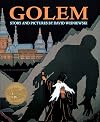
The story of Golem is one that has been told across several continents and has worked its way into the folklore of a variety of cultures. This particular rendition centers around a town in the 1600's in Eastern Europe where the local Jews were being tormented and treated cruelly. It has a much darker atmosphere from the dark, cutting illustrations, to the matter-of-fact style of speak used by the Rabbi and other characters in the story. A local Rabbi builds a giant clay Golem in which he show more inscribed the word "Emet" on his head. "Emet" is the Hebrew word for "life" and when he carved this word into the clay giant's forehead it brought him to life. The Rabbi told him that his only purpose was to protect the Jews which he began doing right away. But when the time came when he was no longer needed, the Rabbi erases the first letter from the Golem's forehead so that it read "met" or "death" and the giant crashed to the ground in a pile of clay. The story concludes in a way that many Jewish stories end with a ray of hope when they mention that the Golem was locked away in the Temple in case there ever came a day when he might need to protect the Jewish people again. show less
Lists
Awards


You May Also Like


Associated Authors
Statistics
- Works
- 16
- Also by
- 3
- Members
- 3,280
- Popularity
- #7,807
- Rating
- 4.0
- Reviews
- 151
- ISBNs
- 77
- Languages
- 2
- Favorited
- 2