

Craig A. Evans
Author of Dictionary of New Testament Background
About the Author
Craig A. Evans is Payzant Distinguished Professor of New Testament and director of the graduate program at Acadia Divinity College in Wolfville, Nova Scotia.
Series
Works by Craig A. Evans
How God Became Jesus: The Real Origins of Belief in Jesus' Divine Nature---A Response to Bart D. Ehrman (2014) 245 copies
Ancient Texts for New Testament Studies: A Guide to the Background Literature (2005) 242 copies, 1 review
Exploring the Origins of the Bible: Canon Formation in Historical, Literary, and Theological Perspective (Acadia Studies in Bible and Theology) (2008) 122 copies
Christian Beginnings and the Dead Sea Scrolls (Acadia Studies in Bible and Theology) (2006) 105 copies
Bible Knowledge Background Commentary: Matthew-Luke (Bible Knowledge Series) (2003) 85 copies, 1 review
The Bible Knowledge Background Commentary: John’s Gospel, Hebrews-Revelation (2005) 64 copies, 1 review
Jesus and His Contemporaries: Comparative Studies (Arbeiten Zur Geschichte Des Antiken Judentums Und Des Urchristentums, Bd. 25.) (1995) 58 copies
Jesus and the Ossuaries: What Jewish Burial Practices Reveal about the Beginning of Christianity (2003) 54 copies
New Testament Interpretation and Methods: A Sheffield Reader (The Biblical Seminar No. 45) (1997) 38 copies
Anti-Semitism and Early Christianity: Issues of Polemic and Faith (1993) — Editor; Contributor — 37 copies
The World of Jesus and the Early Church: Identity and Interpretation in the Early Communities of Faith (2011) 32 copies
Who Created Christianity?: Fresh Approaches to the Relationship Between Paul and Jesus (2020) 31 copies, 1 review
Word and Glory: On the Exegetical and Theological Background of John's Prologue (The Library of New Testament Studies) (1993) 30 copies
Jesus and the Jihadis: Confronting the Rage of ISIS: The Theology Driving the Ideology (2015) 21 copies, 1 review
The interpretation of scripture in early Judaism and Christianity : studies in language and tradition (2000) 20 copies
The Missions Of James, Peter, And Paul: Tensions In Early Christianity (Supplements to Novum Testamentum) (2004) — Editor — 20 copies
Jesus and the Remains of His Day: Studies in Jesus and the Evidence of Material Culture (2015) 19 copies
To See and Not Perceive: Isaiah 6.9-10 in Early Jewish and Christian Interpretation (The Library of Hebrew Bible/Old Testament Studies) (1989) 18 copies
The Book of Genesis: Composition, Reception, and Interpretation (Supplements to Vetus Testamentum) (2012) 17 copies
The Scrolls and the Scriptures: Qumran Fifty Years After (The Library of Second Temple Studies) (1997) 16 copies
Early Jewish and Christian Exegesis: Studies in Memory of William Hugh Brownlee (Homage Series) (1987) 15 copies
Studying the Historical Jesus: Evaluations of the State of Current Research (1994) — Editor — 13 copies
Early Christian Literature and Intertextuality: Volume 1: Thematic Studies (The Library of New Testament Studies) (2009) 13 copies
Early Christian interpretation of the scriptures of Israel : investigations and proposals (1997) 13 copies
Early Christian Literature and Intertextuality: Volume 2: Exegetical Studies (The Library of New Testament Studies) (2009) 12 copies
Searching the Scriptures: Studies in Context and Intertextuality (The Library of New Testament Studies) (2015) 10 copies
Jewish and Christian Scripture as Artifact and Canon (The Library of Second Temple Studies) (2009) 9 copies
Jesus in Context: Temple, Purity, and Restoration (Arbeiten Zur Geschichte Des Antiken Judentums Und Des Urchristentums, (1997) — Author — 7 copies
Matthew–Luke 4 copies
The Quest for Context and Meaning: Studies in Biblical Intertextuality in Honor of James A. Sanders (1997) — Editor; Contributor — 3 copies
New Testament: Mark Vol 34B 2 copies
Studies in the Synoptic Gospels 2 copies
The Historical Jesus: Jesus' Mission, Death, and Resurrection, Vol. 3 (Critical Concepts in Religious Studies) (2004) 2 copies
Archaeology and the New Testament 2 copies
History Connection 1: "Medieval Realms, 1066-1500" and "the World of Islam": 1 (History connections) (1995) 2 copies, 1 review
El Jesús deformado: como algunos estudiosos modernos tergiversan los evangelios (Presencia teológica, #161) (2007) 2 copies
The Pauline writings 1 copy
The Gospel of Judas 1 copy
The Old Testament in the New 1 copy
Messianic Expectations 1 copy
'Ex Oriente Lux' in Second Temple Texts: Eschatological and Heavenly Revelation (The Library of Second Temple Studies) (2026) 1 copy
Exorcisms and the Kingdom: Inaugurating the Kingdom of God and Defeating the Kingdom of Satan 1 copy
Acts?Philemon 1 copy
Associated Works
Dictionary for Theological Interpretation of the Bible (2005) — Contributor, some editions — 602 copies, 5 reviews
Jesus and the Restoration of Israel: A Critical Assessment of N.T. Wright's Jesus and the Victory of God (1999) — Contributor — 216 copies
Evidence for God: 50 Arguments for Faith from the Bible, History, Philosophy, and Science (2010) — Contributor — 212 copies, 1 review
Hearing the Old Testament in the New Testament (Mcmaster New Testament Studies) (2006) — Contributor — 111 copies, 1 review
The Bible at Qumran: Text, Shape, and Interpretation (Studies in the Dead Sea Scrolls and Related Literature) (2001) — Contributor — 96 copies, 1 review
The Reliability of the New Testament: Bart Ehrman and Daniel Wallace in Dialogue (2011) — Contributor — 81 copies
Oxford Readings in Philosophical Theology: Volume 1: Trinity, Incarnation, and Atonement (2009) — Contributor — 36 copies
Approaches to New Testament Study (Journal for the Study of the New Testament Supplement) (1995) — Contributor — 31 copies
The Concept of the Covenant in the Second Temple Period (Supplements to the Journal for the Study of Judaism (Formerl) (2003) — Contributor — 28 copies
Memories of Jesus: A Critical Appraisal of James D. G. Dunn's Jesus Remembered (2010) — Contributor — 21 copies
When Judaism and Christianity began : essays in memory of Anthony J. Saldarini (2004) — Contributor — 18 copies
Exile: Old Testament, Jewish, and Christian Conceptions (Supplements to the Journal for the Study of Judaism, Vol 56) (1997) — Contributor — 15 copies
Christian Mission: Old Testament Foundations and New Testament Developments (2010) — Contributor — 11 copies
The Book of Psalms: Composition and Reception (Supplements to Vetus Testamentum) (2004) — Contributor — 10 copies
"Non-canonical" religious texts in early Judaism and early Christianity (2012) — Contributor — 8 copies
Celebrating the Dead Sea Scrolls: A Canadian Collection (Society of Biblical Literature: Early Judaism and Its Literature) (2011) — Contributor — 5 copies
Christian Thought in the Twenty-First Century: Agenda for the Future (2012) — Contributor — 2 copies
Tagged
Common Knowledge
- Legal name
- Evans, Craig Alan
- Birthdate
- 1952-01-21
- Gender
- male
- Education
- Claremont McKenna College (BA|1974)
Western Baptist Seminary (MDiv|1977)
Claremont Graduate University (MA|1980, PhD|1983)
Karoli Gaspar Reformatus University (DHabil|2009) - Organizations
- Society of Biblical Literature
- Nationality
- Canada
USA - Birthplace
- Ontario, Canada
- Places of residence
- Wolfville, Nova Scotia, Canada
- Associated Place (for map)
- Canada
Members
Reviews
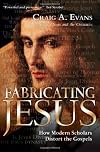
Craig Evans does a great job clearing the fray regarding who Jesus is, was, or could be. He lines up many of the claims such as cynic, magician, Essene, etc and evaluates all of the criteria and lays out a practical and nonsense understanding of why Jesus most likely was NOT these things. He backs it all up very well with history, dating, and archaeological data. The guy did his homework for this one. He takes MANY areas surrounding the study of the Historical Jesus and simply puts them show more under the microscope. Areas like the validity of the gospels of Thomas, Mary, Secret Gospel of Mark, etc are rightly explained why they should not be used for serious research on the historical study on Jesus. It was a fascinating and rather quick read.
His approach is very blunt and practical. In a respectful and tactful manner he calls out many scholars and their methods and I think, rightly disproves their theses and hypotheses. Esp Eherman,Funk,Borg, and Crossan and the whole Jesus Seminar.
Negatives: He does a great job bringing clarity to many of the debated issues, but I feel like he drops the ball in explaining how some of the other areas do shed light on our understanding of the Christian faith. The NT apocrypha is no doubt fascinating and important works of history, but after reading this you would think they have no importance at all, for historical Jesus research or anything. He does put forth his views after disproving common assumptions and I agreed with the majority of them. Last negative, it lacks a cohesive flow. Its a bit bumpy from chapter to chapter. Still a great read. Id recommend it especially to anyone interested in understanding who in fact Jesus was. One would enjoy it especially if you have read Schweitzer, Sanders, and Erhman. show less
His approach is very blunt and practical. In a respectful and tactful manner he calls out many scholars and their methods and I think, rightly disproves their theses and hypotheses. Esp Eherman,Funk,Borg, and Crossan and the whole Jesus Seminar.
Negatives: He does a great job bringing clarity to many of the debated issues, but I feel like he drops the ball in explaining how some of the other areas do shed light on our understanding of the Christian faith. The NT apocrypha is no doubt fascinating and important works of history, but after reading this you would think they have no importance at all, for historical Jesus research or anything. He does put forth his views after disproving common assumptions and I agreed with the majority of them. Last negative, it lacks a cohesive flow. Its a bit bumpy from chapter to chapter. Still a great read. Id recommend it especially to anyone interested in understanding who in fact Jesus was. One would enjoy it especially if you have read Schweitzer, Sanders, and Erhman. show less
Who Created Christianity?: Fresh Approaches To The Relationship Between Paul And Jesus by Craig Evans
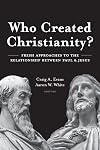
Summary: A festschrift in honor of David Wenham focused around the centerpiece of Wenham’s theology, the relationship between Jesus and Paul and Wenham’s insistence that Paul was not the founder of Christianity but a disciple of Jesus.
In 1995, David Wenham, a British theologian who has taught at Wycliffe Hall and Trinity College, Bristol, published Paul: Follower of Jesus or Founder of Christianity?, a groundbreaking work. He contended that Paul was significantly informed and influenced show more by the Jesus tradition, demonstrating parallels between Paul’s writing and what became the gospels. Much of critical scholarship at this time (and still) contended that Paul significantly re-shaped the Jesus tradition from what was a particular sect of Judaism to the faith that spread through the Gentile world and stood apart from Jesus and his earliest followers.
Defending and extending this work was an important aspect of Wenham’s scholarship, and the research he mentored with his graduate students. In this work, a number of those former students as well as an international group of scholars contribute works in his honor, pointing to ways biblical scholars have built on his signal insights.
David Wenham contributes a foreword to the work that serves as a review of his scholarly career and concludes that scholars like himself negotiate a path between parallelmania and parallelphobia, the challenge of seeing strong parallels between the teaching of Jesus and Paul. Aaron W. White’s preface adds biographical information on David Wenham and explains the organization of the work. Stanley E. Porter then introduces the history of the discussion of the continuities and discontinuities between Jesus and Paul, from the early Fathers to the present, noting the fluctuation between continuity and discontinuity..
The remainder of the work is organized in six sections. In “Jesus, Paul, and Gospel Origins,” N. T. Wright, somewhat provocatively argues that if not the founder of Christianity, Paul did invent “Christian theology,” the work of thinking deeply about God, the world, Israel, the Messiah, what it means to be human, and the future. Graham Twelftree considers the origins of Paul’s gospels: scripture, the Jesus traditions, and revelation. Stanley E. Porter advances the intriguing hypothesis that Paul may well have met Jesus and heard some of the teaching of Jesus and knew of the reports surrounding his life. Rainer Riesner explores the handing along of the Jesus tradition and its use by Paul, whose writings are the earliest in the New Testament corpus. Christoph W. Stenschke examines the continuities between the ministries of Jesus and Paul (including miracles, opposition, suffering, Jerusalem and the temple) and developments. Joan Taylor makes the striking proposal that the author of the “we” passages in Acts, was a woman, likely Thecla (I did not find this persuasive). Editor Aaron W. White concludes this section with an exploration of Paul’s use of possessives (‘my” and “our”) in speaking of the gospel.
Part Two on “Jesus, Paul and Oral Traditions” consists of two articles. Bruce Chilton explores the reliance of Paul on the oral traditions of Matthew’s “little apocalypse” in the writing of 1 Thessalonians 4:13-5:11 and the role Silas may have played in conveying “the word of the Lord.” Armin D. Baum considers the numerous parallels between 1 and 2 Thessalonians and contends on the basis of other documents in antiquity that Paul, using pre-formed material to materials and produced these parallels himself. Part Three explores “Themes in Jesus and Pauline Studies” Alister McGrath begins with a sparkling essay on metanoia and the transforming of the believing mind. Peter Turnhill turns to those who do not believe, particularly, those of Israel and how Paul wrestled with this in his apologetic. Craig Evans explores to what degree there is a connection between Paul on food and Jesus on what defiles and how this impacted Peter. He concludes that on food, Paul was not a “founder,” given the precedents set both by Jesus and Peter. “Women According to Jesus and Paul” consists of two studies of women in Paul. Sarah Harris considers how women are remembered in the gospels and Paul. Erin M. Heim focuses on Junia (who was in Christ before Paul, and thought by some to be the Joanna of Luke 8:2-3. and Phoebe, and more briefly on the other named women of Romans.
Part Five explore “Paul and The Synoptics.” Michael F. Bird observes twelve convergences between Matthew and Paul (not readily thought to converge on anything). Charles Nathan Ridlehoover considers the allusions to the Lord’s prayer in Colossians 1:9-14, as well as allusions elsewhere to much of the material in the Sermon on the Mount. Craig Blomberg considers Wenham’s case for a pre-Markan eschatological discourse to which Paul had access. Steve Walton considers Luke, who wrote on Jesus and Paul, and the parallels Luke draws between them. Part Six turns things around and looks at “Jesus in the Paulines.” Each chapter considers a specific text and its dependence on the Jesus tradition. John Nolland looks at “every sin that a person commits is outside the body” in 1 Corinthians 6:18b. Peter Davids examines 1 Corinthians 5 and the contention that “Jesus is Lord.” Greg Beale considers Colossians 1-2 in terms of the temple and anti-temple in Colossae. Finally, Holly Beers closes out the collection on a high note on Colossians 1:24 on the puzzling statement about “filling up what is lacking in Christ’s afflictions,” drawing on allusions to Isaiah’s Servant and the Servants in Second Temple Judaism.
The collection surveys the field of studies concerning Jesus and Paul quite ably. Stanley Porters proposal of Paul’s possible content with Jesus in Jerusalem before the crucifixion was something I’d not considered but makes sense from Paul’s own biography and the Acts accounts. The basic case of the parallels between the Jesus tradition and Paul showing both his dependence, and as Wright argues, his creative appropriation stirred me to think about how I read Paul in light of that tradition, rather than in the stand alone fashion I often do. The articles on women remind me of how we have often overlooked their importance in both the ministries of Jesus and Paul.
It is easy to take a pass on festschrifts but this is worth a look as an introduction to an important aspect of David Wenham’s work as well as the important questions of how the gospels and Pauline materials connect. The stellar line-up of scholars who write are a mark of the esteem with which Wenham is held and an indication of the scholarly work one will find in this volume.
____________________________
Disclosure of Material Connection: I received a complimentary review copy of this book from the publisher in exchange for an honest review. The opinions I have expressed are my own. show less
In 1995, David Wenham, a British theologian who has taught at Wycliffe Hall and Trinity College, Bristol, published Paul: Follower of Jesus or Founder of Christianity?, a groundbreaking work. He contended that Paul was significantly informed and influenced show more by the Jesus tradition, demonstrating parallels between Paul’s writing and what became the gospels. Much of critical scholarship at this time (and still) contended that Paul significantly re-shaped the Jesus tradition from what was a particular sect of Judaism to the faith that spread through the Gentile world and stood apart from Jesus and his earliest followers.
Defending and extending this work was an important aspect of Wenham’s scholarship, and the research he mentored with his graduate students. In this work, a number of those former students as well as an international group of scholars contribute works in his honor, pointing to ways biblical scholars have built on his signal insights.
David Wenham contributes a foreword to the work that serves as a review of his scholarly career and concludes that scholars like himself negotiate a path between parallelmania and parallelphobia, the challenge of seeing strong parallels between the teaching of Jesus and Paul. Aaron W. White’s preface adds biographical information on David Wenham and explains the organization of the work. Stanley E. Porter then introduces the history of the discussion of the continuities and discontinuities between Jesus and Paul, from the early Fathers to the present, noting the fluctuation between continuity and discontinuity..
The remainder of the work is organized in six sections. In “Jesus, Paul, and Gospel Origins,” N. T. Wright, somewhat provocatively argues that if not the founder of Christianity, Paul did invent “Christian theology,” the work of thinking deeply about God, the world, Israel, the Messiah, what it means to be human, and the future. Graham Twelftree considers the origins of Paul’s gospels: scripture, the Jesus traditions, and revelation. Stanley E. Porter advances the intriguing hypothesis that Paul may well have met Jesus and heard some of the teaching of Jesus and knew of the reports surrounding his life. Rainer Riesner explores the handing along of the Jesus tradition and its use by Paul, whose writings are the earliest in the New Testament corpus. Christoph W. Stenschke examines the continuities between the ministries of Jesus and Paul (including miracles, opposition, suffering, Jerusalem and the temple) and developments. Joan Taylor makes the striking proposal that the author of the “we” passages in Acts, was a woman, likely Thecla (I did not find this persuasive). Editor Aaron W. White concludes this section with an exploration of Paul’s use of possessives (‘my” and “our”) in speaking of the gospel.
Part Two on “Jesus, Paul and Oral Traditions” consists of two articles. Bruce Chilton explores the reliance of Paul on the oral traditions of Matthew’s “little apocalypse” in the writing of 1 Thessalonians 4:13-5:11 and the role Silas may have played in conveying “the word of the Lord.” Armin D. Baum considers the numerous parallels between 1 and 2 Thessalonians and contends on the basis of other documents in antiquity that Paul, using pre-formed material to materials and produced these parallels himself. Part Three explores “Themes in Jesus and Pauline Studies” Alister McGrath begins with a sparkling essay on metanoia and the transforming of the believing mind. Peter Turnhill turns to those who do not believe, particularly, those of Israel and how Paul wrestled with this in his apologetic. Craig Evans explores to what degree there is a connection between Paul on food and Jesus on what defiles and how this impacted Peter. He concludes that on food, Paul was not a “founder,” given the precedents set both by Jesus and Peter. “Women According to Jesus and Paul” consists of two studies of women in Paul. Sarah Harris considers how women are remembered in the gospels and Paul. Erin M. Heim focuses on Junia (who was in Christ before Paul, and thought by some to be the Joanna of Luke 8:2-3. and Phoebe, and more briefly on the other named women of Romans.
Part Five explore “Paul and The Synoptics.” Michael F. Bird observes twelve convergences between Matthew and Paul (not readily thought to converge on anything). Charles Nathan Ridlehoover considers the allusions to the Lord’s prayer in Colossians 1:9-14, as well as allusions elsewhere to much of the material in the Sermon on the Mount. Craig Blomberg considers Wenham’s case for a pre-Markan eschatological discourse to which Paul had access. Steve Walton considers Luke, who wrote on Jesus and Paul, and the parallels Luke draws between them. Part Six turns things around and looks at “Jesus in the Paulines.” Each chapter considers a specific text and its dependence on the Jesus tradition. John Nolland looks at “every sin that a person commits is outside the body” in 1 Corinthians 6:18b. Peter Davids examines 1 Corinthians 5 and the contention that “Jesus is Lord.” Greg Beale considers Colossians 1-2 in terms of the temple and anti-temple in Colossae. Finally, Holly Beers closes out the collection on a high note on Colossians 1:24 on the puzzling statement about “filling up what is lacking in Christ’s afflictions,” drawing on allusions to Isaiah’s Servant and the Servants in Second Temple Judaism.
The collection surveys the field of studies concerning Jesus and Paul quite ably. Stanley Porters proposal of Paul’s possible content with Jesus in Jerusalem before the crucifixion was something I’d not considered but makes sense from Paul’s own biography and the Acts accounts. The basic case of the parallels between the Jesus tradition and Paul showing both his dependence, and as Wright argues, his creative appropriation stirred me to think about how I read Paul in light of that tradition, rather than in the stand alone fashion I often do. The articles on women remind me of how we have often overlooked their importance in both the ministries of Jesus and Paul.
It is easy to take a pass on festschrifts but this is worth a look as an introduction to an important aspect of David Wenham’s work as well as the important questions of how the gospels and Pauline materials connect. The stellar line-up of scholars who write are a mark of the esteem with which Wenham is held and an indication of the scholarly work one will find in this volume.
____________________________
Disclosure of Material Connection: I received a complimentary review copy of this book from the publisher in exchange for an honest review. The opinions I have expressed are my own. show less
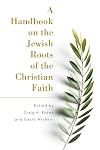
Summary: A topical handbook on the Jewish background of the Christian faith, informed by the perspectives of both Jewish and non-Jewish Christian scholars.
A variety of scholars have called attention to how important it is to understand the Jewish background to the ministry of Jesus and the origins and development of the Christian movement. This background is critical to understanding the New Testament, the relationship between the two testaments, and indeed, the relations between Jews and show more Christians.
What makes this handbook distinctive from others that cover similar ground is that it is a multi-authored work, in which some of the contributors are well-known scholars like Scot McKnight, Larry Hurtado, Craig A. Evans, Andreas Köstenberger, and George H. Guthrie, and most of the rest are Jewish and/or Israeli citizens who believe in Jesus as Messiah and have had some affiliation with the Israel College of the Bible. Because of this, the book has something of an "insider" feel of those who have lived the context about which they write.
The "Roots" in the title are reflective of the organization of the book around Soil, Roots, Trunk, and Branches. Here are the chapters under each:
Soil:
God's Plan for Israel
God's Plan for the Nations
Messianic Prophecies
Appointed Times
Tabernacle and Temple
Roots:
The Jewish World of Jesus
The Jewish Life and Identity of Jesus
The Jewish Teachings of Jesus
Trunk:
The Jewish Disciples
The Jewish Paul
The Jewish Message: Resurrection
Branches
The Parting of the Ways
The Mending of the Ways
While the title says this is a handbook, in the acknowledgements, the editors note that the impetus for this volume was an online course on the Jewish Roots of Christianity, and the book has the feel and continuity of a textbook, or supplemental text meant to be read sequentially, as I did for this review. That said, it was an engaging read that is both concise and surprisingly comprehensive, and reflective of recent scholarship. Each section of the chapter includes extensive bibliographies of source materials for further reading or research.
There were both reminders of past reading, and some delightful gems. One was the reminder of how God's plan for Israel and the nations works hand in hand and runs through scripture. I loved this summary of the major Jewish holidays: "They tried to kill us; we won; let's eat!" The article on Jewish groups in the first century is essential reading for any student of the New Testament, as is the article on messianic expectations. Andreas J. Köstenberger helpfully shows how Jesus was like and unlike other rabbis. I had never seen the connection between the Lord's prayer and the Kaddish until Scot McKnight pointed it out in his article. Much ink has been spilled in recent years on Paul. The chapter on the Jewishness of Paul covers much of this ground quite concisely.
A surprising chapter of this book was on the Jewish message of the resurrection. This argued for a much more significant basis for eschatological salvation, and eternal life, than one finds in most discussions of Jewish origins.
In the concluding section, the authors include a helpful summary of the parting of Jewish and Christian communities and some of the sad history of enmity between these. I appreciated the hopeful note on which the handbook concluded in describing the Messianic Jewish presence in Israel, and the relationships formed through the Israel College of the Bible between Jewish and Arab Christian pastors.
This is both a helpful reference work to have on one's self for biblical studies, and could be used as a text for an adult ed course on Jewish roots of the Christian faith or a college or seminary level course. It also makes for an enjoyable "refresher" course should one read through it.
________________________________
Disclosure of Material Connection: I received this book free from the publisher. I was not required to write a positive review. The opinions I have expressed are my own. show less
A variety of scholars have called attention to how important it is to understand the Jewish background to the ministry of Jesus and the origins and development of the Christian movement. This background is critical to understanding the New Testament, the relationship between the two testaments, and indeed, the relations between Jews and show more Christians.
What makes this handbook distinctive from others that cover similar ground is that it is a multi-authored work, in which some of the contributors are well-known scholars like Scot McKnight, Larry Hurtado, Craig A. Evans, Andreas Köstenberger, and George H. Guthrie, and most of the rest are Jewish and/or Israeli citizens who believe in Jesus as Messiah and have had some affiliation with the Israel College of the Bible. Because of this, the book has something of an "insider" feel of those who have lived the context about which they write.
The "Roots" in the title are reflective of the organization of the book around Soil, Roots, Trunk, and Branches. Here are the chapters under each:
Soil:
God's Plan for Israel
God's Plan for the Nations
Messianic Prophecies
Appointed Times
Tabernacle and Temple
Roots:
The Jewish World of Jesus
The Jewish Life and Identity of Jesus
The Jewish Teachings of Jesus
Trunk:
The Jewish Disciples
The Jewish Paul
The Jewish Message: Resurrection
Branches
The Parting of the Ways
The Mending of the Ways
While the title says this is a handbook, in the acknowledgements, the editors note that the impetus for this volume was an online course on the Jewish Roots of Christianity, and the book has the feel and continuity of a textbook, or supplemental text meant to be read sequentially, as I did for this review. That said, it was an engaging read that is both concise and surprisingly comprehensive, and reflective of recent scholarship. Each section of the chapter includes extensive bibliographies of source materials for further reading or research.
There were both reminders of past reading, and some delightful gems. One was the reminder of how God's plan for Israel and the nations works hand in hand and runs through scripture. I loved this summary of the major Jewish holidays: "They tried to kill us; we won; let's eat!" The article on Jewish groups in the first century is essential reading for any student of the New Testament, as is the article on messianic expectations. Andreas J. Köstenberger helpfully shows how Jesus was like and unlike other rabbis. I had never seen the connection between the Lord's prayer and the Kaddish until Scot McKnight pointed it out in his article. Much ink has been spilled in recent years on Paul. The chapter on the Jewishness of Paul covers much of this ground quite concisely.
A surprising chapter of this book was on the Jewish message of the resurrection. This argued for a much more significant basis for eschatological salvation, and eternal life, than one finds in most discussions of Jewish origins.
In the concluding section, the authors include a helpful summary of the parting of Jewish and Christian communities and some of the sad history of enmity between these. I appreciated the hopeful note on which the handbook concluded in describing the Messianic Jewish presence in Israel, and the relationships formed through the Israel College of the Bible between Jewish and Arab Christian pastors.
This is both a helpful reference work to have on one's self for biblical studies, and could be used as a text for an adult ed course on Jewish roots of the Christian faith or a college or seminary level course. It also makes for an enjoyable "refresher" course should one read through it.
________________________________
Disclosure of Material Connection: I received this book free from the publisher. I was not required to write a positive review. The opinions I have expressed are my own. show less
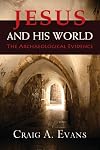
Craig A. Evans picks up the challenge laid down by modern non-Christian scholarship by addressing a number of objections to the historicity of New Testament culture. "Jesus and His World" is published by Westminster John Knox Press, ISBN: 978-0664-2341-33.
Evans' style is appreciated, dealing squarely with evidence without appealing to pity or tradition as the basis from which he proposes his themes. And although dissenting scholarship is addressed, it is not done so in a negative or show more demeaning manner. This is an honest, forthright study of archeological insights into uniquely historical events that have rightly come under the scrutiny of some of the most respected Biblical critics.
An example of his scholarly integrity can be seen in a chapter dealing with the supposed burial chamber of Christ and His family. Although the existence of the actual burial tomb of Jesus would arguably be a boon to Christian researchers, Evans takes a cautious route, analyzing Jewish funerary customs to show how Jacobivici and Cameron stepped too far over the edge of scholarship into a garden of unjustifiable speculation.
Evans turns the process of intensive archeological processes into a narrative that is accessible to the layman. His ability to address issues like Nazarene culture in the first century is simple, straightforward and compelling.
I could see every reason for including this book on the syllabus of any apologetic course, whether offered in the pew or in a post-secondary setting. Although certainly not an exhaustive examination of every cultural argument against first century Christian origins as portrayed in the New Testament canon, Evans comprehensively addresses the most speculative of contemporary sensationalistic rebuffs of the Christian faith.
I highly recommend "Jesus and His World" by Craig A. Evans. Its engagement of serious issues with sound reasoning and evidentiary based argumentation should certainly be in investigator's win column. show less
Evans' style is appreciated, dealing squarely with evidence without appealing to pity or tradition as the basis from which he proposes his themes. And although dissenting scholarship is addressed, it is not done so in a negative or show more demeaning manner. This is an honest, forthright study of archeological insights into uniquely historical events that have rightly come under the scrutiny of some of the most respected Biblical critics.
An example of his scholarly integrity can be seen in a chapter dealing with the supposed burial chamber of Christ and His family. Although the existence of the actual burial tomb of Jesus would arguably be a boon to Christian researchers, Evans takes a cautious route, analyzing Jewish funerary customs to show how Jacobivici and Cameron stepped too far over the edge of scholarship into a garden of unjustifiable speculation.
Evans turns the process of intensive archeological processes into a narrative that is accessible to the layman. His ability to address issues like Nazarene culture in the first century is simple, straightforward and compelling.
I could see every reason for including this book on the syllabus of any apologetic course, whether offered in the pew or in a post-secondary setting. Although certainly not an exhaustive examination of every cultural argument against first century Christian origins as portrayed in the New Testament canon, Evans comprehensively addresses the most speculative of contemporary sensationalistic rebuffs of the Christian faith.
I highly recommend "Jesus and His World" by Craig A. Evans. Its engagement of serious issues with sound reasoning and evidentiary based argumentation should certainly be in investigator's win column. show less
Lists
You May Also Like


Associated Authors
Statistics
- Works
- 127
- Also by
- 28
- Members
- 4,939
- Popularity
- #5,086
- Rating
- 4.0
- Reviews
- 25
- ISBNs
- 188
- Languages
- 4
- Favorited
- 1