
Dennis Linn
Author of Sleeping with Bread: Holding What Gives You Life
About the Author
Disambiguation Notice:
Only one Linn per page, please!
Works by Dennis Linn
Healing Life's Hurts: Healing Memories through the Five Stages of Forgiveness (1977) 283 copies, 2 reviews
Remembering Our Home: Healing Hurts & Receiving Gifts from Conception to Birth (1999) 23 copies, 1 review
Durmiendo con un pan 1 copy
Tagged
Common Knowledge
- Gender
- male
- Disambiguation notice
- Only one Linn per page, please!
Members
Reviews
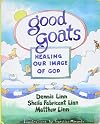
With their special gift for simplicity and solid research, the Linns have marshaled an impressive band of Catholic, Protestant and Orthodox theologians and exegetes to argue that God's love will continually search to save each of us, whether in this life or the next. This key shift of God image is essential for all healing. Thoroughly consistent with the Orthodox Catholic teaching, Good Goats is a refreshing and needed correction to the hell and brimstone preaching which has frequently show more turned the good news of the gospel into bad news for many men and women. show less
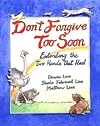
This is the fourth book by the Linns I've read. I don't really love their writing style and some of their illustrations are God awful (i.e. there is an illustration here about their need to process forgiving and doing non-violent resistance with a $3.50 lunch buffet because their salad bar was sub par). They say somethings well and I can see how some of their insights can be helpful.
The problem with this book is that it tries to do too much. By saying, "Don't Forgive Too Soon," the Linn's show more are not saying be slow to forgive, so much as advocating that we don't short-circuit real forgiveness. They suggest that each time forgiveness is necessary, we go through Kubler-Ross's five stages of grief (Denial, Anger, Bargaining, Depression). The Linn's offer some advice about how to handle youirself or talk to others in each stage of the forgiving/grieving process. But one gets the feeling that they are simply trying to explain their behavior in light of Kubler Ross, even if their examples do not fit particularly well. Still, I can see how looking at these five stages can be helpful for people in describing how they are processing their feelings (their main example works rather well, where the smaller ones don't).
But this is also a book advocating for creative non-violent resistance. I agree with some of their points, some of it reminding of John Howard Yoder's little volume, "What Would You Do?" but they do not develop this or really give adequate space to exploring this here. Perhaps this would work better in another book. Just saying.
All and all, I liked this book the least of what I have read from them. But I may still come back to some of this material, so it isn't all bad. show less
The problem with this book is that it tries to do too much. By saying, "Don't Forgive Too Soon," the Linn's show more are not saying be slow to forgive, so much as advocating that we don't short-circuit real forgiveness. They suggest that each time forgiveness is necessary, we go through Kubler-Ross's five stages of grief (Denial, Anger, Bargaining, Depression). The Linn's offer some advice about how to handle youirself or talk to others in each stage of the forgiving/grieving process. But one gets the feeling that they are simply trying to explain their behavior in light of Kubler Ross, even if their examples do not fit particularly well. Still, I can see how looking at these five stages can be helpful for people in describing how they are processing their feelings (their main example works rather well, where the smaller ones don't).
But this is also a book advocating for creative non-violent resistance. I agree with some of their points, some of it reminding of John Howard Yoder's little volume, "What Would You Do?" but they do not develop this or really give adequate space to exploring this here. Perhaps this would work better in another book. Just saying.
All and all, I liked this book the least of what I have read from them. But I may still come back to some of this material, so it isn't all bad. show less
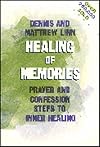
This is an early volume of the brothers (Sheila is not listed as author of this volume) and it is sparser on personal examples. It lays out a simple approach to healing memories of past hurts:
1. Thank God for our gifts.
2. Ask Christ what he wants to heal.
3. Share with Christ a painful memory that keeps you from getting healed.
4. Replace hurt with love by forgiving painful memories.
5. Replace hurt with love by becoming thankful for a painful memory.
6. Thank God for healing.
Like most models of show more inner-healing, the Linns hold up the healing power of forgiveness, but what I appreciated about their model was the space they give to gratitude. We begin by thanking God for the many gifts he's given us, the ways he's made us and the ways he has showed us his love through our lives. This leads us into reflecting on the grace of the moment, how Jesus was gracious to us and used that part of our story to make us into who we are and be thankful. Thanksgiving heals.
There are parts of their model that were opaque to me, but this simple and powerful. I wish somethings were fleshed out a little better. show less
1. Thank God for our gifts.
2. Ask Christ what he wants to heal.
3. Share with Christ a painful memory that keeps you from getting healed.
4. Replace hurt with love by forgiving painful memories.
5. Replace hurt with love by becoming thankful for a painful memory.
6. Thank God for healing.
Like most models of show more inner-healing, the Linns hold up the healing power of forgiveness, but what I appreciated about their model was the space they give to gratitude. We begin by thanking God for the many gifts he's given us, the ways he's made us and the ways he has showed us his love through our lives. This leads us into reflecting on the grace of the moment, how Jesus was gracious to us and used that part of our story to make us into who we are and be thankful. Thanksgiving heals.
There are parts of their model that were opaque to me, but this simple and powerful. I wish somethings were fleshed out a little better. show less
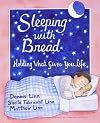
“Sleeping with Bread: Holding What Gives you Life” by Dennis Linn, Sheila Farbricant Linn and Matthew Linn. Paulist Press, 1995
It looks like a children's book. But it's not. It has an odd title, “Sleeping with Bread.” What? The subtitle “Holding What Gives You Life” is more to the point but still rather vague.
“Sleeping with Bread” is a book about a simple spiritual practice, formally known as “the examen” (I can never remember that formal name) that can be life-giving by show more bringing us to a place in our hearts and minds of intentional remembering and acknowledgment of both the good and not-so-good things in our lives, on a daily, weekly, monthly or occasional basis, however often we choose to use the practice.
In short it is a book about practicing thankfulness while at the same time acknowledging the things that are hard, frustrating, painful or disappointing in our lives. In a comfortable, conversational style, the authors share how this practice has helped each of them in their brokenness and how God has met them in various ways in the midst of their acknowledged thankfulness and disappointments. They share how, in using this practice, they have been better able to listen to God and pay attention to his leading.
The examen can be practiced alone or with others. It can be a lovely practice for a family to do together. With wisdom and honesty, they share many examples from their own lives and the lives of others of how practicing the examen in a variety of contexts and situations has been and can be life-giving.
This practice is not new. It dates back to the time of Ignatius. But the authors, leaders of retreats and spiritual direction, bring a freshness and practicality to the practice, bringing new insights from the field of psychology on how the practice can enrich our lives and bring us closer to being the people God created us to be.
Carolyn Vance show less
It looks like a children's book. But it's not. It has an odd title, “Sleeping with Bread.” What? The subtitle “Holding What Gives You Life” is more to the point but still rather vague.
“Sleeping with Bread” is a book about a simple spiritual practice, formally known as “the examen” (I can never remember that formal name) that can be life-giving by show more bringing us to a place in our hearts and minds of intentional remembering and acknowledgment of both the good and not-so-good things in our lives, on a daily, weekly, monthly or occasional basis, however often we choose to use the practice.
In short it is a book about practicing thankfulness while at the same time acknowledging the things that are hard, frustrating, painful or disappointing in our lives. In a comfortable, conversational style, the authors share how this practice has helped each of them in their brokenness and how God has met them in various ways in the midst of their acknowledged thankfulness and disappointments. They share how, in using this practice, they have been better able to listen to God and pay attention to his leading.
The examen can be practiced alone or with others. It can be a lovely practice for a family to do together. With wisdom and honesty, they share many examples from their own lives and the lives of others of how practicing the examen in a variety of contexts and situations has been and can be life-giving.
This practice is not new. It dates back to the time of Ignatius. But the authors, leaders of retreats and spiritual direction, bring a freshness and practicality to the practice, bringing new insights from the field of psychology on how the practice can enrich our lives and bring us closer to being the people God created us to be.
Carolyn Vance show less
You May Also Like


Associated Authors
Statistics
- Works
- 18
- Members
- 1,738
- Popularity
- #14,799
- Rating
- 3.9
- Reviews
- 14
- ISBNs
- 34
- Languages
- 2
- Favorited
- 2