
About the Author
Works by Lorna Oakes
Ancient Egypt: An illustrated reference to the myths, religions, pyramids and temples of the land of the pharaohs (2002) 984 copies, 6 reviews
Sacred Sites of Ancient Egypt: An Illustrated Guide to the Temples and Tombs of the Pharoahs (2001) 56 copies
Everyday Life in the Ancient World: Illustrated History Encyclopedia (2001) — Contributor — 48 copies
Keşfedin Mezopotamya 1 copy
Associated Works
Great Civilizations of the East: Illustrated History Encyclopedia (2001) — Contributor — 67 copies, 1 review
Tagged
Common Knowledge
- Gender
- female
Members
Reviews
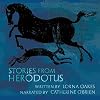
If you’ve ever tried to read Herodotus, then you know that most translations have a lot of repetition and ramble on a bit. Now Lorna Oakes gives us some great stories from Herodotus distilled down into thoughtful, sometimes action-packed, stories that will delight adults and entertain kids.
The book starts off with a little bit about Herodotus. He traveled extensively during his lifetime and wrote down historical events as best he could. Many of the events he wrote about happened show more generations before his time, so there’s bound to be some inaccuracies. Yet there’s a charm to his works as well. He made a grand attempt at recording the known world’s history and that account has survived to this day. All around, that is extraordinary. I, myself, have only read a bit of Herodotus but Oakes’s book makes it easy to absorb the essence of the tales Herodotus was trying to capture.
There’s 4 parts to this book. Part I is all about King Croesus in Lydia, which is in modern-day Turkey. He has a portentous dream and is concerned about his reign. I really like how he tested the various oracles. Very clever! Yet he then relies on the foretelling of the Delphi Oracle, misinterpreting the true meaning. Oakes does a great job here of just telling this tale, showing us how arrogance can color the meaning to any oracle riddle. It provides a great discussion point for adults and kids alike.
Part II is the Story of Cyrus. Part I flowed into Part II as both Cyrus and King Croesus are both influenced by the Delphi Oracle. This tale tells us how Cyrus came into power. It’s significant because Cyrus united two major families and became a significant Persian ruler. Cyrus was slated for death as a babe but he was saved by a cowherder and his wife. Later, of course, this is discovered and a reckoning must come out of it. I love that Oakes doesn’t leave out a rather bit of gruesome in this story. She doesn’t linger over it either and I feel it was essential to show motivation for one of the character’s vengeance.
Part III is about Herodotus’s time in Egypt. Of course, he visits the great pyramids and writes about how they were constructed. Herodotus gives us his version of how Psammeticus became king of the 26th dynasty of Egypt. This sections also includes the tale of King Apries and how he was overthrown by General Amasis and rebel forces. For me, it was the bits about the Great Pyramids that stood out most in this section.
Part IV is all about the Greeks and Persians. There’s some famous stories in this section, including the tale of Leonidas and how he and his small force repelled Xerxes’s army. This is a captivating story and the retelling of it here is well done. This section also includes the esteemed Greek physician Democedes. He was taken captive and bounced around a bit, sometimes as tribute. He ties Polycrates of Samos to the Persian king Darius.
All around, it’s a great collection of ancient tales based on Herodotus’s works. I love that Oakes has made these tales so accessible and I think this is a great way to introduce kids to ancient history.
I received a free copy of this book via Audiobook Boom!
The Narration: Catherine O’Brien did a great job with this book. There are several people and place names I had not heard pronounced before, so I can’t speak to the accuracy, but I can say she was consistent in her pronunciations all the way through. She was also great with portraying the emotions of the various characters. She sounded engaged and interested in the work all the way through. show less
The book starts off with a little bit about Herodotus. He traveled extensively during his lifetime and wrote down historical events as best he could. Many of the events he wrote about happened show more generations before his time, so there’s bound to be some inaccuracies. Yet there’s a charm to his works as well. He made a grand attempt at recording the known world’s history and that account has survived to this day. All around, that is extraordinary. I, myself, have only read a bit of Herodotus but Oakes’s book makes it easy to absorb the essence of the tales Herodotus was trying to capture.
There’s 4 parts to this book. Part I is all about King Croesus in Lydia, which is in modern-day Turkey. He has a portentous dream and is concerned about his reign. I really like how he tested the various oracles. Very clever! Yet he then relies on the foretelling of the Delphi Oracle, misinterpreting the true meaning. Oakes does a great job here of just telling this tale, showing us how arrogance can color the meaning to any oracle riddle. It provides a great discussion point for adults and kids alike.
Part II is the Story of Cyrus. Part I flowed into Part II as both Cyrus and King Croesus are both influenced by the Delphi Oracle. This tale tells us how Cyrus came into power. It’s significant because Cyrus united two major families and became a significant Persian ruler. Cyrus was slated for death as a babe but he was saved by a cowherder and his wife. Later, of course, this is discovered and a reckoning must come out of it. I love that Oakes doesn’t leave out a rather bit of gruesome in this story. She doesn’t linger over it either and I feel it was essential to show motivation for one of the character’s vengeance.
Part III is about Herodotus’s time in Egypt. Of course, he visits the great pyramids and writes about how they were constructed. Herodotus gives us his version of how Psammeticus became king of the 26th dynasty of Egypt. This sections also includes the tale of King Apries and how he was overthrown by General Amasis and rebel forces. For me, it was the bits about the Great Pyramids that stood out most in this section.
Part IV is all about the Greeks and Persians. There’s some famous stories in this section, including the tale of Leonidas and how he and his small force repelled Xerxes’s army. This is a captivating story and the retelling of it here is well done. This section also includes the esteemed Greek physician Democedes. He was taken captive and bounced around a bit, sometimes as tribute. He ties Polycrates of Samos to the Persian king Darius.
All around, it’s a great collection of ancient tales based on Herodotus’s works. I love that Oakes has made these tales so accessible and I think this is a great way to introduce kids to ancient history.
I received a free copy of this book via Audiobook Boom!
The Narration: Catherine O’Brien did a great job with this book. There are several people and place names I had not heard pronounced before, so I can’t speak to the accuracy, but I can say she was consistent in her pronunciations all the way through. She was also great with portraying the emotions of the various characters. She sounded engaged and interested in the work all the way through. show less
Ancient Egypt: An Illustrated Reference to the Myths, Religions, Pyramids and Temples of the Land of the Pharaohs by Lorna Oakes

The photographs and illustrations in this book are WONDERFUL but the book's organization leaves something to be desired. It tries to lay things out by theme but with so much jumping around in the time line it's difficult to get a good understanding of how Egyptian culture developed and changed over time.
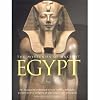
The mysteries of ancient Egypt is one of my favorite reads till now. This book is a fascinating guide to the mythology and religion of ancient Egypt, and to the awe-inspiring temples and tombs of the world's first great civilization. With maps, chronologies, and artworks supplementing with photographs, this book captures the essence of this fascinating epoch.
This book has chronological charts of events that happened in ancient Egypt. The ancient Egyptians emerged about 5,000 years ago and show more the society flourished for three millennia. Their most striking monuments - notably the pyramids and the Great Sphinx at Giza, and the royal tombs in the valley of the Kings - were tourist attractions in Classical times just as they are today.
The atmosphere created of mystery and speculation by ancient Egyptians gave a rise to a superstition that survived into the modern age. Religion was a fundamental part of the life of every Egyptian. Many archaeological sites were the focus of religious activity. For most of its ancient history, Egypt was ruled by all-powerful kings or pharaohs. This book is divided into two parts. First, consist of all the sacred sites of ancient Egypt. Second, consisting of Gods, myths and religion of ancient Egypt. I like the second part most.
This book is an illustrated reference to the myths, religions, pyramids, and temples of the land of the pharaohs. A compelling guide to the most famous burial sites, including Giza, Saqqara and the Valley of the Kings. It's like a tour to sacred sites from the impressive mortuary temples of the pharaohs to those dedicated to the many Gods and Goddesses. The author did an in-depth search before writing. It has information of the crucial role that religious beliefs and mythology played in one of the most intriguing periods of ancient history.
I find so many interesting facts about Egypt in this book. Egypt was one of the earliest places to accept Christianity, which was said to have been introduced in the middle of the first century AD by St Mark. Stories or myths evolved in all cultures in order to provide a divine explanation for the fundamentals of human existence. Many sources reveal that the King was identified with a God, both in life and after death.
The people of ancient Egypt were terrified by the prospect of dying away from their beloved Egypt in case this meant they would not be buried close to the Nile, and would not receive the all-important funeral. The intriguing process of mummification developed because of the belief that the survival of the body was necessary in order to reborn into the Afterlife.
Magic and superstition played a crucial part in daily life and were by no means considered unorthodox or an alternative to the religion of the state temples. A priest used to perform rituals in the cult of a state deity could also be called upon to carry out what we would term magic or sorcery. State and popular religion were clearly interrelated.
The Egyptian history is vast and it is very difficult, to sum up, all the possible information in one book. The author tried her best in doing so. I like the detailed information on every topic. But sometimes the pictures and content are used again and again. I don't like that very much. This book is lavishly illustrated with more than 750 photographs. But I really recommend this book, especially to all the history lovers. It's a must-read.
Actual rating - 4.5 stars
Read more - https://bookscharming.blogspot.com/2018/09/book-review-mysteries-of-ancient-egyp... show less
This book has chronological charts of events that happened in ancient Egypt. The ancient Egyptians emerged about 5,000 years ago and show more the society flourished for three millennia. Their most striking monuments - notably the pyramids and the Great Sphinx at Giza, and the royal tombs in the valley of the Kings - were tourist attractions in Classical times just as they are today.
The atmosphere created of mystery and speculation by ancient Egyptians gave a rise to a superstition that survived into the modern age. Religion was a fundamental part of the life of every Egyptian. Many archaeological sites were the focus of religious activity. For most of its ancient history, Egypt was ruled by all-powerful kings or pharaohs. This book is divided into two parts. First, consist of all the sacred sites of ancient Egypt. Second, consisting of Gods, myths and religion of ancient Egypt. I like the second part most.
This book is an illustrated reference to the myths, religions, pyramids, and temples of the land of the pharaohs. A compelling guide to the most famous burial sites, including Giza, Saqqara and the Valley of the Kings. It's like a tour to sacred sites from the impressive mortuary temples of the pharaohs to those dedicated to the many Gods and Goddesses. The author did an in-depth search before writing. It has information of the crucial role that religious beliefs and mythology played in one of the most intriguing periods of ancient history.
I find so many interesting facts about Egypt in this book. Egypt was one of the earliest places to accept Christianity, which was said to have been introduced in the middle of the first century AD by St Mark. Stories or myths evolved in all cultures in order to provide a divine explanation for the fundamentals of human existence. Many sources reveal that the King was identified with a God, both in life and after death.
The people of ancient Egypt were terrified by the prospect of dying away from their beloved Egypt in case this meant they would not be buried close to the Nile, and would not receive the all-important funeral. The intriguing process of mummification developed because of the belief that the survival of the body was necessary in order to reborn into the Afterlife.
Magic and superstition played a crucial part in daily life and were by no means considered unorthodox or an alternative to the religion of the state temples. A priest used to perform rituals in the cult of a state deity could also be called upon to carry out what we would term magic or sorcery. State and popular religion were clearly interrelated.
The Egyptian history is vast and it is very difficult, to sum up, all the possible information in one book. The author tried her best in doing so. I like the detailed information on every topic. But sometimes the pictures and content are used again and again. I don't like that very much. This book is lavishly illustrated with more than 750 photographs. But I really recommend this book, especially to all the history lovers. It's a must-read.
Actual rating - 4.5 stars
Read more - https://bookscharming.blogspot.com/2018/09/book-review-mysteries-of-ancient-egyp... show less
Ancient Egypt: An Illustrated Reference to the Myths, Religions, Pyramids and Temples of the Land of the Pharaohs by Lorna Oakes
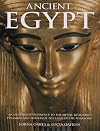
I really enjoyed this book. The photos are amazing. The topics cover a wide range of Egyptian history, including their religious practices, their burial rituals, their pharaohs, and their political structure. The information is not in-depth and does not cover Egyptian history in chronological order. Instead, Oaks divides the book into specific topics and offers just enough information to give the reader the feel of what Egyptian life was like
Lists
You May Also Like


Associated Authors
Statistics
- Works
- 13
- Also by
- 2
- Members
- 1,251
- Popularity
- #20,508
- Rating
- 3.6
- Reviews
- 9
- ISBNs
- 57
- Languages
- 4