
Dwight V. Swain (1915–1992)
Author of Techniques of the Selling Writer
About the Author
Works by Dwight V. Swain
Dark Destiny 3 copies
You Can't Buy Eternity! 3 copies
Cry Chaos! 2 copies
So Many Worlds Away... 2 copies
Battle Out of Time 2 copies
Drummers of Daugavo 1 copy
Short Fiction Collection 1 copy
Planet of Dread 1 copy
The Terror Out of Space 1 copy
The Weapon From Eternity 1 copy
The Weapon from Eternity 1 copy
Associated Works
A Century of Great Western Stories-An Anthology of Western Fiction (2000) — Contributor — 125 copies
Authentic Science Fiction Monthly No. 32 (April 1953) — Author — 1 copy
Tagged
Common Knowledge
- Legal name
- Swain, Dwight Vreeland
- Birthdate
- 1915-11-17
- Date of death
- 1992-02-24
- Gender
- male
- Nationality
- USA
- Birthplace
- Rochester, Michigan, USA
- Place of death
- Norman, Oklahoma, USA
- Associated Place (for map)
- USA
Members
Reviews
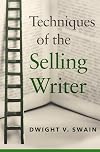
This is definitely going into my top 3 books about writing. I doubled back and re-read passages, not just because I was tired and distracted, but also because I could instantly see the implications for various stories I've written and/or am working on. I plan to go back and take notes on most of the book, because there's so much in here that I feel I, personally, need to absorb. It hit all my weak points as a writer, and the author's beliefs on why writers write, and how to do your own best show more work pretty much coincide with my own thoughts on the matter... which I guess makes me almost 50 years out of date!
The book was published in 1965, which makes for a staggering amount of miscellany that's out of date, from the author's casual sexism to "a scientist says that a machine to play unbeatable chess would have to be 'slightly larger than the universe.'" Uh. Yeah. He had quaint little complaints about distraction in the pre-internet world. Those things aside, I think this book has the potential to do more for my writing than any other how-to-write book I've read, but it wouldn't be right for everyone. show less
The book was published in 1965, which makes for a staggering amount of miscellany that's out of date, from the author's casual sexism to "a scientist says that a machine to play unbeatable chess would have to be 'slightly larger than the universe.'" Uh. Yeah. He had quaint little complaints about distraction in the pre-internet world. Those things aside, I think this book has the potential to do more for my writing than any other how-to-write book I've read, but it wouldn't be right for everyone. show less
Although Dwight V. Swain's Techniques of the Selling Writer is older than I am (which is pretty darn old), it stands the test of time and remains a valuable read for writers, especially beginners and those still striving to perfect their craft. So, you may be asking, why bother reviewing a 49-year old book? Fair question. It's one of the most cited and referenced books on writing I've encountered, and after reading it, I can understand why. If you haven't heard of it, or given it a try, I'll show more attempt to convince you.
Techniques of the Selling Writer focuses on the premise of understanding your reader’s motivation for reading. With that goal in mind, the book then provides instructions on how to successfully assemble your story to give your readers a powerful emotional experience. Dwight V. Swain's book can be thought of as a builder's manual for crafting a satisfying and rewarding story.
Possibly the most well-known concept Swain presents in this book is the Motivation-Reaction Unit (MRU). The core building block of storytelling, MRUs are comprised of something that your point-of-view (POV) character experiences (sees, hears, thinks, or even tastes or smells), which motivates him/her to react to. At its basic level, a story consists of a character experiencing life (and its inevitable conflict) and reacting to it, over and over again. Techniques of the Selling Writer explains MRUs in fine detail and provides a plethora of examples. Swain then shows you how to take MRUs and use them to build scenes and sequels using structure and simple patterns, which in turn comprise chapters, and, ultimately, your novel.
Swain's scene pattern consists of Goal-Conflict-Disaster combinations, followed by a corresponding sequel, which is comprised of a Reaction-Dilemma-Decision trio. If this process seems formulaic and too structured for your taste, understand there is nearly an infinite amount of flexibility in how you can apply and interpret these suggestions. They are guidelines to help you build your story without gaps that leave your reader confused.
For me, Techniques of the Selling Writer was not a quick read, as the concepts and multitude of examples required time to digest, and I found myself reading much slower than I do with a fiction novel, for fear of skimming through something important.
And, as nothing is perfect, I found a few issues that could be potentially off-putting. I think the book offers more examples than most people probably need. I felt like I understood Swain's points after reading about half of the provided examples. In addition, as can be expected with a book published in 1965, some portions are outdated, based on today's technology, markets, and culture. I would recommend focusing on the storytelling advice and not worrying about the dated content (it comprises only a small part of the book). show less
Techniques of the Selling Writer focuses on the premise of understanding your reader’s motivation for reading. With that goal in mind, the book then provides instructions on how to successfully assemble your story to give your readers a powerful emotional experience. Dwight V. Swain's book can be thought of as a builder's manual for crafting a satisfying and rewarding story.
Possibly the most well-known concept Swain presents in this book is the Motivation-Reaction Unit (MRU). The core building block of storytelling, MRUs are comprised of something that your point-of-view (POV) character experiences (sees, hears, thinks, or even tastes or smells), which motivates him/her to react to. At its basic level, a story consists of a character experiencing life (and its inevitable conflict) and reacting to it, over and over again. Techniques of the Selling Writer explains MRUs in fine detail and provides a plethora of examples. Swain then shows you how to take MRUs and use them to build scenes and sequels using structure and simple patterns, which in turn comprise chapters, and, ultimately, your novel.
Swain's scene pattern consists of Goal-Conflict-Disaster combinations, followed by a corresponding sequel, which is comprised of a Reaction-Dilemma-Decision trio. If this process seems formulaic and too structured for your taste, understand there is nearly an infinite amount of flexibility in how you can apply and interpret these suggestions. They are guidelines to help you build your story without gaps that leave your reader confused.
For me, Techniques of the Selling Writer was not a quick read, as the concepts and multitude of examples required time to digest, and I found myself reading much slower than I do with a fiction novel, for fear of skimming through something important.
And, as nothing is perfect, I found a few issues that could be potentially off-putting. I think the book offers more examples than most people probably need. I felt like I understood Swain's points after reading about half of the provided examples. In addition, as can be expected with a book published in 1965, some portions are outdated, based on today's technology, markets, and culture. I would recommend focusing on the storytelling advice and not worrying about the dated content (it comprises only a small part of the book). show less
This is an excellent guide for those who are interested in writing professionally. Swain has laid out the book in a way that makes sense, so that you can skim or skip any section that doesn't interest you. That being said, I read every word, as interested as I would have been with a work of fiction. Swain's suggestions are brilliant, and at the same time he advises you to be as flexible as possible when using his advice. I'll come back to this book again and again.
A word of warning: This show more book was written decades ago, and that's clear--it's very sexist and at times racist. But don't let that stop you. Just ignore the gendered references and accept Swain's suggestions for writing. show less
A word of warning: This show more book was written decades ago, and that's clear--it's very sexist and at times racist. But don't let that stop you. Just ignore the gendered references and accept Swain's suggestions for writing. show less
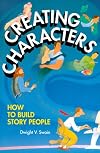
Creating Characters – How to Build Story People by Dwight V. Swain is a non-fiction title for writers that delves into the art of character creation.
The Cover: I’ll start by saying that this book is almost 30 years old. Yet, while the cover art feels somewhat dated, it is only due to the character images and the clothing they wear. But then, they are characters and no doubt represent the stories they are set in. The colours are vibrant, the font is clear and it is a simple and clean show more cover. Combine this with the title and it represents a great match for the contents of this book. It clearly depicts the topic in a visual representation of the content inside.
The Good Stuff: There is solid advice within this book that will help writers create better characters. The advice is explained well, simple to understand, and helpful. There are things that I know that I’d say are common sense, yet the author made me stop and think about them, considering them more than I would have if I had not read this title. I found the book interesting in places and breezed through these sections with gusto.
The Bad Stuff: I felt there was unnecessary wordage in places that stunted the read for me. It was explaining things more than once or a little too much. I didn’t feel this way all through the book though, only in places, and it was easy to scan over and pick up the thread further on.
Overall, this is a good book for anyone who wants to gain a clear insight into creating interesting characters. If all it does is stimulate your mind to think a little more about people’s drives, quirks, and mannerisms, I’d say it has done its job. I’m giving this one a thought-provoking 4 out of 5 golden bookmarks. show less
The Cover: I’ll start by saying that this book is almost 30 years old. Yet, while the cover art feels somewhat dated, it is only due to the character images and the clothing they wear. But then, they are characters and no doubt represent the stories they are set in. The colours are vibrant, the font is clear and it is a simple and clean show more cover. Combine this with the title and it represents a great match for the contents of this book. It clearly depicts the topic in a visual representation of the content inside.
The Good Stuff: There is solid advice within this book that will help writers create better characters. The advice is explained well, simple to understand, and helpful. There are things that I know that I’d say are common sense, yet the author made me stop and think about them, considering them more than I would have if I had not read this title. I found the book interesting in places and breezed through these sections with gusto.
The Bad Stuff: I felt there was unnecessary wordage in places that stunted the read for me. It was explaining things more than once or a little too much. I didn’t feel this way all through the book though, only in places, and it was easy to scan over and pick up the thread further on.
Overall, this is a good book for anyone who wants to gain a clear insight into creating interesting characters. If all it does is stimulate your mind to think a little more about people’s drives, quirks, and mannerisms, I’d say it has done its job. I’m giving this one a thought-provoking 4 out of 5 golden bookmarks. show less
Lists
You May Also Like


Associated Authors
Statistics
- Works
- 29
- Also by
- 8
- Members
- 785
- Popularity
- #32,426
- Rating
- 4.0
- Reviews
- 18
- ISBNs
- 34
- Languages
- 1
- Favorited
- 1