

Jeanne Willis
Author of Susan Laughs
About the Author
Series
Works by Jeanne Willis
Winnie-the-Pooh and the Party: A brand new Winnie-the-Pooh adventure in rhyme, featuring A.A. Milne's and E.H. Shepard's beloved characters (2024) 2 copies
El regalo de Rex / ladridos de Jeanne Willis ; arañazos de Tony Ross ; [traducción, Concha Cardeñoso] (1999) 1 copy, 1 review
Bebe monstre a peur 1 copy
Project X Origins: Light Blue Book Band, Oxford Level 4: Toys and Games: Shoo Mouse, Shoo! (2014) 1 copy
Juro que vi um dinossauro! 1 copy
Zvezdnaja pylinka 1 copy
The Tiger Protector 1 copy
Zizanie au zoo 1 copy
Ŏmma, nae ka agi yŏssŭl ttae ŏttŏtkʻe saenggyŏnnayo? (Saenggak i kʻŏjinŭn myŏngjak kŭrim chʻaek) (2000) 1 copy
Winnie the Pooh, the party 1 copy
Associated Works
Tagged
Common Knowledge
- Birthdate
- 1959-11-05
- Gender
- female
- Nationality
- UK
- Birthplace
- St. Albans, Hertfordshire, England, UK
- Map Location
- England, UK
Members
Reviews
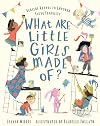
Witty remixed nursery rhymes give little girls power, purpose, and presence.
The original version of the nursery rhyme “Georgie Porgie” has not aged well. To kiss a girl and make her cry smacks of harassment. Author Willis gives the young White girl a voice, telling Georgie: “Don’t kiss me unless I say!” Many well-known nursery rhymes are here similarly reworked: Humpty Dumpty has a Black woman doctor; instead of wringing her hands over her lost sheep, Little Bo Peep (a pale-skinned show more girl with a long, brown braid) rescues them from a pit of slime. With laugh-out-loud humor, the equitable spin refocuses these traditional vignettes. Knowing the originals intensifies the impact but is not necessary. With a sophisticated color palette and clever visuals, Follath’s precise illustrations bolster the rewordings; readers will lose themselves in the detail and the content. Inherent in these poems is the kernel of truth that girls can choose to do or be anything. For that matter, boys can, too. Although this title keeps gender clearly binary, this diverse bunch of girls can choose to be fairy queens or crocodiles. The very last lines turn the spotlight on a dancing Black boy, capturing the essence of empowerment: “Ray is dancing a ballet—we play what we want to play!”
More relevant, possibly more entertaining, and certainly more appropriate than the originals. (Picture book/poetry. 3-8)
-Kirkus Review show less
The original version of the nursery rhyme “Georgie Porgie” has not aged well. To kiss a girl and make her cry smacks of harassment. Author Willis gives the young White girl a voice, telling Georgie: “Don’t kiss me unless I say!” Many well-known nursery rhymes are here similarly reworked: Humpty Dumpty has a Black woman doctor; instead of wringing her hands over her lost sheep, Little Bo Peep (a pale-skinned show more girl with a long, brown braid) rescues them from a pit of slime. With laugh-out-loud humor, the equitable spin refocuses these traditional vignettes. Knowing the originals intensifies the impact but is not necessary. With a sophisticated color palette and clever visuals, Follath’s precise illustrations bolster the rewordings; readers will lose themselves in the detail and the content. Inherent in these poems is the kernel of truth that girls can choose to do or be anything. For that matter, boys can, too. Although this title keeps gender clearly binary, this diverse bunch of girls can choose to be fairy queens or crocodiles. The very last lines turn the spotlight on a dancing Black boy, capturing the essence of empowerment: “Ray is dancing a ballet—we play what we want to play!”
More relevant, possibly more entertaining, and certainly more appropriate than the originals. (Picture book/poetry. 3-8)
-Kirkus Review show less

A dreamy young artist becomes separated from his class on a field trip to the moon in this wordless picture-book, drawing a picture of the Earth as it hangs in space, and then falling asleep. He awakens to find that he has been left behind, and has a magically artistic encounter with the previously unsuspected lunar residents while waiting to be rescued...
A debut title for artist John Hare, who has worked as an illustrator and graphic designer, Field Trip to the Moon is a delight, spinning a show more humorous and heartwarming tale of an alien encounter in which art spans a wide cultural (and biological, one presumes) gap. Hare's illustrations are more than capable of carrying the story along, and are quite expressive, involving the reader in the young human's exciting adventure. I thought the aliens were really quite adorable, and while the conclusion is a clear violation of the Prime Directive (Star Trek fans will understand!), it is nevertheless satisfying. Recommended to fans of wordless picture-books, and to anyone looking for science fiction for younger children. show less
A debut title for artist John Hare, who has worked as an illustrator and graphic designer, Field Trip to the Moon is a delight, spinning a show more humorous and heartwarming tale of an alien encounter in which art spans a wide cultural (and biological, one presumes) gap. Hare's illustrations are more than capable of carrying the story along, and are quite expressive, involving the reader in the young human's exciting adventure. I thought the aliens were really quite adorable, and while the conclusion is a clear violation of the Prime Directive (Star Trek fans will understand!), it is nevertheless satisfying. Recommended to fans of wordless picture-books, and to anyone looking for science fiction for younger children. show less
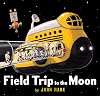
Oh my gosh I love this book. It is an anti-book. It is gloriously illustrated and has no text, telling a story in pictures about a school field trip (complete with a space shuttle painted school-bus yellow), during which a kid gets left behind with their crayons. Aliens appear and much is communicated (evidently; again, there are no words) and the child is picked up at the end, but not without a twist in the story. Depending on how the pictures are read, the ending could be happy or show more sad.
There are several ways this book could be read. A pre-reading child could read it to the adults in their life, writing the story to fit the pictures for themselves. An adult could tell the story straight, as implied by the pictures. I know how I'd read it, once in a while: I'd try to tell the story using dialogue that is completely irrelevant to the pictures, prompting an outcry of "no, that's not right!" from my kid, and then I'd invite them to give me better dialogue. Or, since most of the characters are aliens, I could choose to make them say nonsense alien words, just for the giggles that would ensue. Neep norp! Goggle flurg banana. show less
There are several ways this book could be read. A pre-reading child could read it to the adults in their life, writing the story to fit the pictures for themselves. An adult could tell the story straight, as implied by the pictures. I know how I'd read it, once in a while: I'd try to tell the story using dialogue that is completely irrelevant to the pictures, prompting an outcry of "no, that's not right!" from my kid, and then I'd invite them to give me better dialogue. Or, since most of the characters are aliens, I could choose to make them say nonsense alien words, just for the giggles that would ensue. Neep norp! Goggle flurg banana. show less
I'm probably going way deeper into this than necessary, but hey, that's what I got a degree in English literature for. An interesting observation is that the child in this book is not given a specified gender. What I take that to mean is that boys, girls, and even non-binary readers can relate to this character, which I think is excellent in a picture book. Additionally, I found this to be a sort of found-family story. During the field trip, the child remains separate from the group, show more prefering to draw art instead of participate with everyone else, indicating that they may feel like they don't fit in with the rest of the class. Even though the child is reunited with the group on the space bus at the end, while they are separated, the child make friends with the aliens on the moon, even giving away the colored crayons which are obviously so important to them and keeping the gray one so that they can draw their new friends for memory keeping. show less
Lists
Awards


You May Also Like


Associated Authors
Statistics
- Works
- 270
- Also by
- 4
- Members
- 7,109
- Popularity
- #3,453
- Rating
- 3.9
- Reviews
- 326
- ISBNs
- 1,057
- Languages
- 22
- Favorited
- 1
