
Sefi Atta
Author of Everything Good Will Come
About the Author
Works by Sefi Atta
Lawless and Other Address 1 copy
Associated Works
New Daughters of Africa: An International Anthology of Writing by Women of African Descent (2019) — Contributor — 117 copies, 1 review
The Penguin Book of Migration Literature: Departures, Arrivals, Generations, Returns (2019) — Contributor — 96 copies
Of This Our Country: Acclaimed Nigerian Writers on the Home, Identity, and Culture They Know (2021) — Contributor — 21 copies
Jungfrau and other short stories: The Caine Prize for African Writing 7th Annual Collection (2007) — Contributor — 19 copies
Tagged
Common Knowledge
- Birthdate
- 1964
- Gender
- female
- Education
- University of Birmingham
- Occupations
- accountant
author
playwright - Awards and honors
- Wole Soyinka Prize for Literature in Africa (2006)
Noma Award for Publishing in Africa (2009) - Nationality
- Nigeria
- Birthplace
- Lagos, Nigeria
- Places of residence
- Nigeria
UK
USA - Associated Place (for map)
- Lagos, Nigeria
Members
Reviews
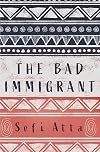
Lukmon hadn't been keen on immigrating to America, but his wife, Moriam, was a force not lightly denied. She convinced him that their two children would get better educations in the US than in Nigeria, and, educated in London himself, he let himself be convinced. They first stay with his cousin in New Jersey, but soon find their own place. Moriam begins studying for the nursing credentials she needs to practice in the US, and Lukmon begins looking for a job in academia.
Moriam and the kids show more seem to adjust relatively easily, but Lukmon has a harder time. For him, racism in the US is a complex and pervasive force that is a constant threat to his family.
I was so prepared for being black in America that I could separate the racist from the person and deal with the unracist part of them. In fact, racism was a given now. Yes, because it was safer for me to assume white people were racist until proven otherwise. It was also reasonable to, because if I were white, it would take a lot of effort not to be racist in America. You passed someone sleeping on a street, what color was he or she likely to be? You watched breaking news about an innocent suspect shot to death by the police, well, you could easily misconstrue that black people were inferior.
As for black-on-black crime, or whatever it was called, I wasn't worried about that. I was coming from a country where practically every crime committed was black on black.
As he tries to untangle both interracial and intra-racial relationships in America, he find himself becoming isolated from his wife and children. To them, he is making everything a race issue. To him, they are denying essential parts of themselves in order to fit in.
I was winding {Moriam} up again and she was in no mood. To be honest I was nervous about meeting Alice's parents. I hoped they were my kind of immigrants—bad ones, not the kind who aspired to be honorary whites.
For most of the book, Lukmon is an observer, and the reader sees everything—race, politics, gender roles—through his eyes. It is only at the very end of the book that he acts, and it is in an unexpected and uncomfortable way.
I was very impressed with this novel, the first I've read by Atta. The writing is superb, the plot compelling, and the ideas thought-provoking. The characters are complex, with no easy passes for anyone. It's a book that begs to be discussed, and it would make a great book club selection. show less
Moriam and the kids show more seem to adjust relatively easily, but Lukmon has a harder time. For him, racism in the US is a complex and pervasive force that is a constant threat to his family.
I was so prepared for being black in America that I could separate the racist from the person and deal with the unracist part of them. In fact, racism was a given now. Yes, because it was safer for me to assume white people were racist until proven otherwise. It was also reasonable to, because if I were white, it would take a lot of effort not to be racist in America. You passed someone sleeping on a street, what color was he or she likely to be? You watched breaking news about an innocent suspect shot to death by the police, well, you could easily misconstrue that black people were inferior.
As for black-on-black crime, or whatever it was called, I wasn't worried about that. I was coming from a country where practically every crime committed was black on black.
As he tries to untangle both interracial and intra-racial relationships in America, he find himself becoming isolated from his wife and children. To them, he is making everything a race issue. To him, they are denying essential parts of themselves in order to fit in.
I was winding {Moriam} up again and she was in no mood. To be honest I was nervous about meeting Alice's parents. I hoped they were my kind of immigrants—bad ones, not the kind who aspired to be honorary whites.
For most of the book, Lukmon is an observer, and the reader sees everything—race, politics, gender roles—through his eyes. It is only at the very end of the book that he acts, and it is in an unexpected and uncomfortable way.
I was very impressed with this novel, the first I've read by Atta. The writing is superb, the plot compelling, and the ideas thought-provoking. The characters are complex, with no easy passes for anyone. It's a book that begs to be discussed, and it would make a great book club selection. show less
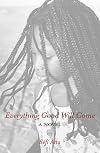
Everything Good Will Come is a novel about Enitan, a child of Nigeria, a child of privilege, a child who becomes a young woman, who through the process of fulfilling one dream, the dream of becoming a mother also fulfills another dream, one that had existed, unspoken, but constantly present in her inner unrest, the dream of becoming not just a woman, but a person who decides for herself, not just accepting the decisions others make for her, a citizen.
Much of the beginnings of the book are show more rooted in Enitan's childhood, in her friendship with Sheri, and in the ways she is both sheltered and privileged. In some ways the book seems like two novels, the novel of the young Enitan and Sheri, which occupies the first two sections of the novel, and a second novel about Enitan's road to self-actualization. In truth the first part is just the necessary underlayment for the second, but the reader may be surprised by the shift, and it does in fact take some time for the structure to play out, and the interleaving of thoughts, memories, stories, to coalesce.
I personally found the last portion of the novel to be the strongest but I can admit that it took some time and patience for me to grow into the rhythm of the narrative. Enitan is not always likable, but he is human, and thoughtful, and kind. She is also argumentative, and she struggles with her own demons, her thoughts often sabotaging her own happiness.
Her father always told her that people have choices. He didn't say that those choices were equal, in his world-view they were not. But Enitan also realizes that choice is a "condition of the mind" and that most of the time "I was as conscious of making choices as I was of breathing." As are most of us.
Atta takes care to show us how Enitan's thoughts and actions develop and evolve, often in small steps, often repeating and circling back upon themselves. How she struggles with her own internal dialogue about separating the personal from the political, the way that life is compartmentalized in her milieu, and her gradual realization that she cannot separate the two, that the personal and the political are one and the same.
There are flaws in the narrative, spaces where the prose shimmers with light, and other places where this reader stumbles. I can see how readers may become lost in the weeds, but through it all, I do think Sefi Atta achieves something marvelous here, and the book is well worth reading.
Favorite passage:
"When people speak of turning points in their lives it makes me wonder. I can't think of one moment that me me an advocate for woman prisoners in my country. Before this, I had opportunities to take action, only to end up behaving in ways I was accustomed; courting the same old frustrations because I was sure of what I would feel: wronged, helpless, stuck in a day when I was fourteen years old. Here it is: changes came after I made them, each one small. I walked up a stair. Easy. I took off a head wrap. Very Easy. I packed a suitcase, carried it downstairs, put it in my car. When situations became trickier my tasks became smaller. My husband asked why I was leaving him. "I have to," I replied. three words; I could say them. "What kind of woman are you?" Not a word. "Wouldn't you have tried to stop me too?" he asked. Probably, but he wouldn't have had to leave me to do what he wanted. show less
Much of the beginnings of the book are show more rooted in Enitan's childhood, in her friendship with Sheri, and in the ways she is both sheltered and privileged. In some ways the book seems like two novels, the novel of the young Enitan and Sheri, which occupies the first two sections of the novel, and a second novel about Enitan's road to self-actualization. In truth the first part is just the necessary underlayment for the second, but the reader may be surprised by the shift, and it does in fact take some time for the structure to play out, and the interleaving of thoughts, memories, stories, to coalesce.
I personally found the last portion of the novel to be the strongest but I can admit that it took some time and patience for me to grow into the rhythm of the narrative. Enitan is not always likable, but he is human, and thoughtful, and kind. She is also argumentative, and she struggles with her own demons, her thoughts often sabotaging her own happiness.
Her father always told her that people have choices. He didn't say that those choices were equal, in his world-view they were not. But Enitan also realizes that choice is a "condition of the mind" and that most of the time "I was as conscious of making choices as I was of breathing." As are most of us.
Atta takes care to show us how Enitan's thoughts and actions develop and evolve, often in small steps, often repeating and circling back upon themselves. How she struggles with her own internal dialogue about separating the personal from the political, the way that life is compartmentalized in her milieu, and her gradual realization that she cannot separate the two, that the personal and the political are one and the same.
There are flaws in the narrative, spaces where the prose shimmers with light, and other places where this reader stumbles. I can see how readers may become lost in the weeds, but through it all, I do think Sefi Atta achieves something marvelous here, and the book is well worth reading.
Favorite passage:
"When people speak of turning points in their lives it makes me wonder. I can't think of one moment that me me an advocate for woman prisoners in my country. Before this, I had opportunities to take action, only to end up behaving in ways I was accustomed; courting the same old frustrations because I was sure of what I would feel: wronged, helpless, stuck in a day when I was fourteen years old. Here it is: changes came after I made them, each one small. I walked up a stair. Easy. I took off a head wrap. Very Easy. I packed a suitcase, carried it downstairs, put it in my car. When situations became trickier my tasks became smaller. My husband asked why I was leaving him. "I have to," I replied. three words; I could say them. "What kind of woman are you?" Not a word. "Wouldn't you have tried to stop me too?" he asked. Probably, but he wouldn't have had to leave me to do what he wanted. show less

The struggles of unexceptional people living in 1980’s Nigeria are the focus of Sefi Atta’s moving and gripping second novel, Swallow. The story is narrated by Tolani Ajao, a young Yoruba woman living in Lagos who has moved there from her home in Makoku village seeking a brighter future and a better, more modern way of life. Tolani shares a simple apartment with another young woman, Rose Adamson, a city girl with an impetuous manner who is not shy about voicing her dissatisfaction with show more the state of the country and her marginal existence. For Tolani, life in the big city is nothing like what she had hoped it would be. The infrastructure is dilapidated. Power outages are frequent. Tolani and Rose both work at the Federal Community Bank and find the daily commute back and forth to their office long and tedious. Financial pressures are relentless. One day Rose is fired from her job for refusing to submit to the sexual advances of her boss, the odious Mr. Salako, and Tolani is shocked when Salako approaches her to fill the position. But Tolani is accustomed to doing what she is told. Unwillingly, she becomes Salako’s administrative assistant, and is not surprised when he makes similar advances toward her and then becomes belligerent when she rebuffs him. Meanwhile, Tolani is growing impatient with her unambitious boyfriend Sanwo, who is content to drift through life eking out a modest living making “deals” while giving little thought to their future together. At Rose’s urging, Tolani presents him with an ultimatum regarding their marriage plans, but immediately regrets her actions when he grows sullen and annoyed. Trying to appease, she allows Sanwo to talk her into investing in his next deal, a sure thing that will produce a large return in a short time. When the deal turns out to be a scam and Sanwo confesses that her money is gone, she breaks up with him. Rose, who has not found another job, has been spending her time with a shadowy character named OC, and one day she approaches Tolani with a drastic and dangerous scheme that will solve their money problems once and for all. Tolani, knowing that losing her job at the bank is a distinct possibility after she files a complaint against Mr. Salako, considers the ramifications of Rose’s offer, which requires that she become party to a criminal enterprise. In the end, Tolani, facing a decision about the kind of future she wants for herself, flees the city and ends up back in Makoku living with her mother and considering her options. Atta’s disturbing and deeply affecting novel tells a story of ordinary people facing heartbreaking choices. Tolani is smart and enterprising but lives in a world where prosperity is a dream for all but an elite minority of the most fortunate and the most corrupt. Can she learn to accept the hand that life has dealt her? And if she cannot, what can she do about it? When all is said and done, it is her past that seems to hold the answer. show less
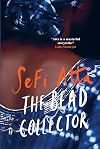
Lagos, Nigeria in early 1976: two women meet at an art exhibition launch party - Remi Lawal is a Nigerian socialite and businesswoman, and Frances Cooke is an American who describes herself as a "bead collector", in Lagos to buy West African trade beads. Remi is a bit surprised by this but is happy to chat to someone she sees as a potential customer for her own business selling cards. Her husband, Tunde, suggests that Frances may be a spy for the US government, and Remi is telling her too show more much.
The Bead Collector is a society novel, reminding me of stories about social elites in England and the US decades earlier. The dramatic political upheavals of this time in Nigeria are offstage, as Remi tells her story by describing a series of social and networking events and conversations, between Remi and family, friends and customers. Remi and her husband are from a privileged background. Like many of their friends and associates, they initially welcomed the new government established by a military coup a few months ago, and the new Head of State, Murtala Mohamed. But the regime's clearout of the civil service is affecting people like them - Tunde has lost his senior government position but has been offered a new one by a private bank. There are well-founded rumours that there may be another coup attempt coming.
This was Sefi Atta's fifth novel and I would love to read some of her other work. show less
The Bead Collector is a society novel, reminding me of stories about social elites in England and the US decades earlier. The dramatic political upheavals of this time in Nigeria are offstage, as Remi tells her story by describing a series of social and networking events and conversations, between Remi and family, friends and customers. Remi and her husband are from a privileged background. Like many of their friends and associates, they initially welcomed the new government established by a military coup a few months ago, and the new Head of State, Murtala Mohamed. But the regime's clearout of the civil service is affecting people like them - Tunde has lost his senior government position but has been offered a new one by a private bank. There are well-founded rumours that there may be another coup attempt coming.
This was Sefi Atta's fifth novel and I would love to read some of her other work. show less
Lists
Awards


You May Also Like


Associated Authors
Statistics
- Works
- 10
- Also by
- 6
- Members
- 387
- Popularity
- #62,498
- Rating
- 3.9
- Reviews
- 17
- ISBNs
- 53
- Languages
- 6
- Favorited
- 1